
A Swedish botanist, Daniel Solander, accompanied Captain Cook on his first voyage to New Zealand in 1768-1771, and there’s an island in the Foveaux Strait named after him.
So maybe we have to go back more than 300 years to find a week of such cultural connection between our two nations.
We’ve never had a Swedish royal visit or even a prime ministerial one as far as I can see.
You have to head a long way down the rabbit hole to find conspiracy theorists wacky enough to make the case that the Vikings made it here.
Thanks to Scandinavia’s colonial success in Britain and France’s Normandy, we probably share a lot of genetic history, though.
Anyway, in a weird coincidence, furniture and homeware Ikea opened its doors and shared its meatball-flavoured vision for cheap designer homeware the same week that we välkommened our new Swedish Reserve Bank Governor.
The media feasted on the opening of Ikea Sylvia Park in Auckland this past week. Photo / Annaleise Shortland
The Swedish phrase at the top of this column, according to my best AI-assisted research efforts, says: “Welcome to our strange little country”.
I know enough about the Swedish (I’ve visited once and have Swedish friends) to recognise that they might themselves share some affinity with being a slightly weird small country.
We are both actually quite big countries, but with small populations.
If you put New Zealand on a map of Europe we’d stretch from London to Italy.
Sweden is about 70% larger by landmass but has double the population, at 10 million.
It’s the largest of the Scandinavian countries. We are the largest of the Polynesian Island groups.
I’m sure we both like to think we punch above our weight on the world stage.
We also both copped weird peripheral characters in The Muppets.
If the meatball-loving Swedish Chef represents a problematic stereotype to be overcome, I don’t know where to begin with the maniacal fish-throwing Lew Zealand.
The Swedes also take their dairy industry very seriously, even though their economy is no longer based on agricultural production.
One of the strongest business connections between our two countries has been the relationship with Swedish dairy agricultural machinery manufacturer DeLaval. A specialist in milking technology, it has had a foothold in New Zealand since 1924.
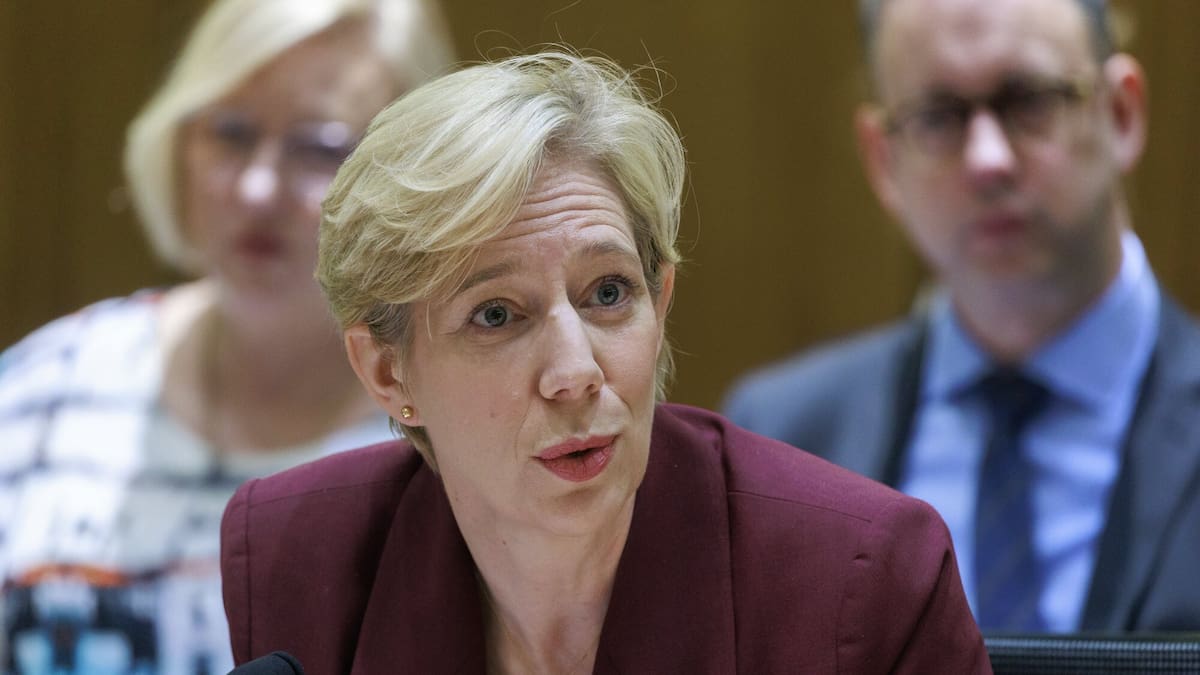
I suspect our new Governor, Dr Anna Breman’s first clue that we’re an odd place would be the asymmetric media coverage around the two debuts.
If you based their relative significance on the local media, you’d assume the arrival of Ikea was vastly more auspicious.
We have a deep-seated cultural insecurity in this country around the need to attract global retail chains.
Speculation about the prospect of Ikea opening in New Zealand dates back to 2004, according to New Zealand Herald records.
No wonder we were so excited this week.
We’ve been triumphantly celebrating the arrival of international chains since Kentucky Fried Chicken opened here in 1974.
I’m old enough to remember the collective joy at the opening of each new McDonald’s location through the 1980s.
We’ve got a Costco now and a Taco Bell and a Krispy Kreme.
If only we could convince Aldi to open a cut-price supermarket chain, we could finally relax and take our place in the realm of fully developed economies.
The Prime Minister turned out to cut the ribbon at Ikea and bask in the warm populist glow of the news coverage.
I’m sure Ikea will create some jobs and make some consumers happy, but its arrival does strike me as bad news for many local retailers.
And I’m pretty sure its owners will be planning to add to the drain on our current account by taking profits back home to Sweden.
I’m sure the PM was equally enthusiastic about welcoming Bremen privately in Wellington.
Finance Minister Nicola Willis definitely was when she introduced her at a press conference in September.
In the grand scheme, Breman’s arrival is considerably more important in my clearly biased view.
It is significant for many reasons. She is our first female Reserve Bank Governor.
That doesn’t tell us anything one way or another about how she will shape monetary policy or banking regulation. But, as Willis has already noted, it is great to see just from a “breaking the glass ceiling” point of view.
Much more important for the Reserve Bank is that she is from anywhere but here.
Given the horror year (some would argue several) that the RBNZ has had, it needs a clean break.
Breman is unencumbered by political baggage. In what little we’ve seen of her publicly so far, she seems to be considered, articulate and a consummate professional.
It will be interesting to see to what extent that buffers her from the intense public scrutiny the Reserve Bank can face.
Monetary policy is followed like a sport in New Zealand, and that’s not quite the case in many other countries, including Sweden.
It’s big news, of course, but often confined to financial and economic news.
Here, the major news organisations (including the Herald) live blog the decisions.
I think that has something to do with the way Kiwis fix their mortgages for a variety of relatively short terms.
In Sweden and Australia, most people float along at variable market rates. In the US, people fix for decades.
But here, we try to pick the best term, between six months and five years, to lock in and beat the bank.
That makes monetary policy a national obsession rivalling our passion for rugby. That is to say, we have a lot of armchair experts.
I hope Breman has been warned that she is stepping into a role that might be the equivalent of being the first international All Blacks coach.
Next year, as the media hype around Ikea fades, the focus on interest rates and inflation will grow.
New Zealand might be in recovery, but it is not yet recovered.
The Reserve Bank’s role next year will likely be more nuanced than it has been in the past few years. I hope it is.
The world remains a volatile place, and the next monetary policy challenge will not be far away.
I wish Breman well in her efforts to guide policy and in the more difficult task of communicating that policy to this strange little country.
Liam Dann is business editor-at-large for the New Zealand Herald. He is a senior writer and columnist, and also presents and produces videos and podcasts. He joined theHeraldin 2003.
Catch up on the debates that dominated the week by signing up to our Opinion newsletter – a weekly round-up of our best commentary.