
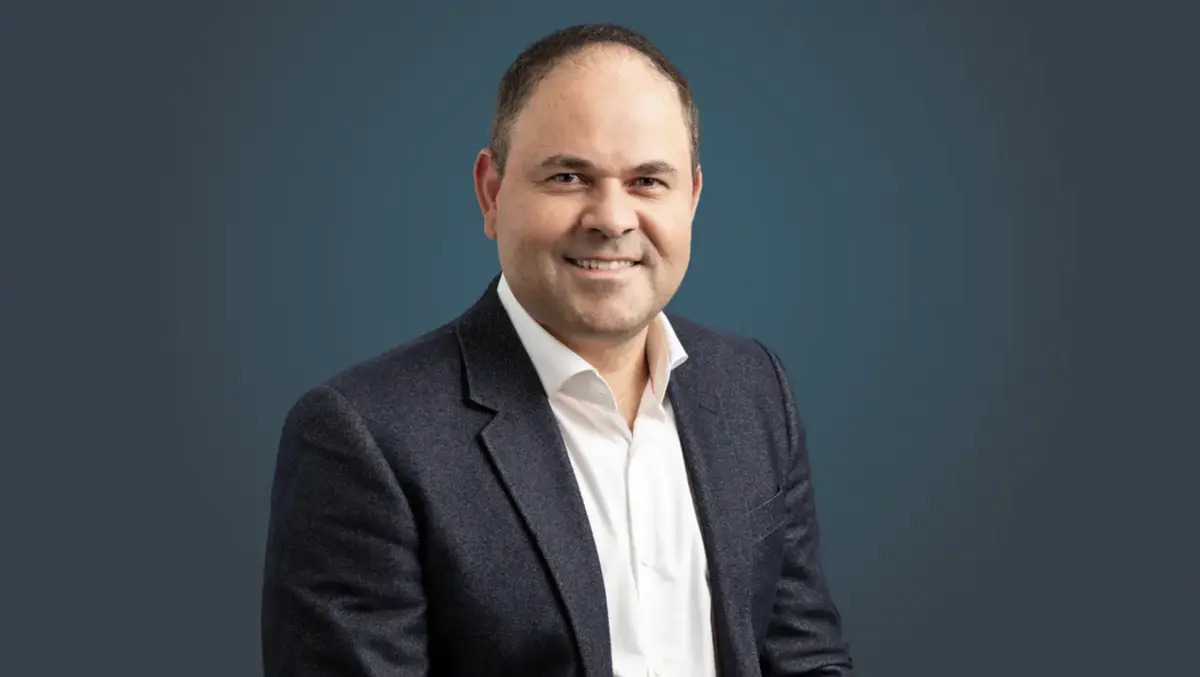
Cloudera’s Australia and New Zealand chief technologist has forecast a rapid shift from AI experimentation to industrial-scale deployment across the region’s economy by 2026, as boards focus on resilience, privacy and measurable returns.
Vini Cardoso, Chief Technology Officer at Cloudera ANZ, said AI was entering a new phase in which organisations move beyond pilots and visible tools such as chatbots and coding assistants. He said the focus was turning to core processes and hard performance metrics.
Cardoso linked the trend with rising technology spending in the country. Gartner has forecast Australian IT expenditure will exceed AUD $172 billion, with software investment rising 13 per cent.
He said this new stage would test how well organisations can run AI at scale under tighter expectations around governance, security and business impact.
“Over the past two years, AI has shifted from buzzword to business enabler. Industries from finance to government have experimented with agentic workflows and automation to boost productivity. But 2026 marks a new phase: industrialisation,” said Cardoso, Chief Technology Officer, Cloudera ANZ.
The comments follow broader projections about AI’s macroeconomic role. Separate estimates suggest AI could contribute as much as AUD $142 billion a year to the Australian economy by 2030.
Industrial AI shift
Cardoso said AI adoption in 2026 would move deeper into the operational fabric of organisations. He said the emphasis would sit on process optimisation and workforce efficiency in response to skills shortages and productivity pressures.
He said organisations would increasingly reuse existing AI building blocks and apply AI-driven workflows to more complex processes. They would then judge projects on business outcomes and return on investment rather than model-level technical metrics.
Government buyers are also set to play a role. Cardoso expects increased public sector spending on hybrid and sovereign cloud infrastructure that can run sensitive or top-secret AI workloads within national boundaries.
He said continuity would become a defining requirement as AI systems move into critical functions.
“As this industrialisation accelerates, one truth will stand out: AI must be designed for continuity, not just innovation. The businesses that can sustain AI operations through disruption will be the ones that will succeed,” said Cardoso.
Privacy and trust
Data control and privacy sit at the centre of Cardoso’s outlook. He said every customer discussion now raises trust as a central theme.
As he sees it, the quality, governance and sovereignty of data will shape whether AI investments produce value or expose organisations to new risks. This is particularly relevant in highly regulated environments such as Australian financial services and the public sector.
Cardoso said the recent surge in use of public cloud tools and pre-built models had encouraged fast experimentation. He warned that the same pattern could create liabilities if organisations do not revise their data strategies and understand where data flows and how it is stored.
He pointed to tensions around proprietary models, which he described as powerful but closed and costly. He said these systems can require extensive data access, which raises concerns over control and potential exposure.
Cardoso expects more organisations to run AI models inside tightly governed environments. He said this would include keeping data within defined jurisdictions and using augmentation techniques that enrich responses with local context while preserving sovereignty.
He described this approach as “Private AI”.
“The future belongs to those who productionise models, preserving privacy, sovereignty and governance from end-to-end. That’s the essence of Private AI: deploying models within governed environments, maintaining jurisdictional assurance and using augmentation frameworks like retrieval-augmented generation (RAG) to enrich context without compromising sovereignty,” said Cardoso.
He said such methods would become a competitive requirement rather than a specialist concern. He said organisations would no longer see agility and governance as opposite goals.
Hybrid resilience focus
Cardoso also expects a structural change in infrastructure strategy. He said recent global outages had exposed dependencies on single cloud providers and highlighted gaps in continuity planning.
He predicted a shift towards “hybrid-by-design” architectures. Under this pattern, organisations distribute critical workloads across on-premise systems and multiple cloud environments.
Cardoso said customers would seek the ability to move workloads between environments without disruption in the event of failures. He said this would protect operations and customer relationships.
He added that many enterprises had not yet optimised existing IT and data estates. This had left them with higher costs, added complexity and compliance concerns at a time of closer board scrutiny.
He said boards now ask detailed questions about where data resides and how resilient systems are under stress. He described the current moment as an opportunity for organisations to revisit their hybrid infrastructure and improve control.
“Recent outages have exposed a hard truth: continuity cannot be assumed. Many enterprises haven’t fully optimised their existing IT and data investments, leaving cost, complexity, and compliance risks on the table. With boards now scrutinising where data lives and how resilient architectures truly are, we’re entering a renaissance for hybrid infrastructure, a chance to reimagine systems, extract more value, and build lasting control,” said Cardoso.
He said hybrid-by-design strategies would become standard rather than optional in larger enterprises. He linked these designs with uninterrupted operations and alignment with regulatory expectations.
Return on investment
Cardoso framed 2026 as a year in which AI projects will face tighter financial disciplines. He said organisations will judge initiatives on measurable outcomes rather than headline-grabbing model launches or large budgets.
He expects the most successful adopters to combine scaled deployment with strong governance and resilient architectures.
“The coming year marks a new phase in AI maturity, one that won’t be defined by flashy AI models or exorbitant budgets but by measurable outcomes. The real winners will be those who scale responsibly, govern rigorously and architect for resilience while delivering impactful value,” said Cardoso.
He said trusted AI would depend on trusted data that sits on a stable and well-governed foundation.