
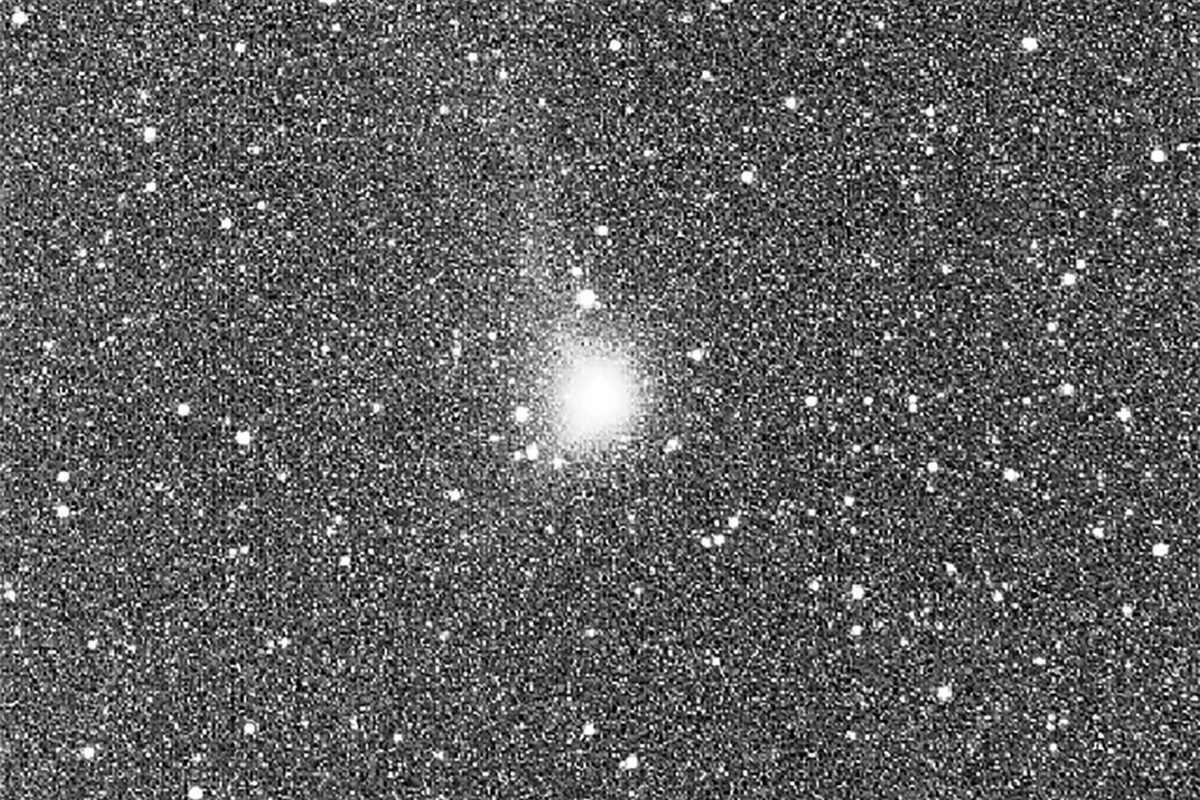
A brand new image of comet 3I/ATLAS has been captured by a European spacecraft on its way to Jupiter.
3I/ATLAS is an interstellar comet, meaning it originated in another corner of the Galaxy, far beyond our Solar System.
It’s one of only three such objects ever discovered in our Solar System.
 Credit: NASA/Goddard/LASP/CU Boulder
And while it’s temporarily passing through our cosmic neighbourhood, scientists are pointing every available telescope and camera at it, to try and learn as much as possible before it disappears from our view forever.
In November 2025, it was the turn of the European Space Agency’s (ESA) Jupiter Icy Moons Explorer (Juice) spacecraft to catch a glimpse.
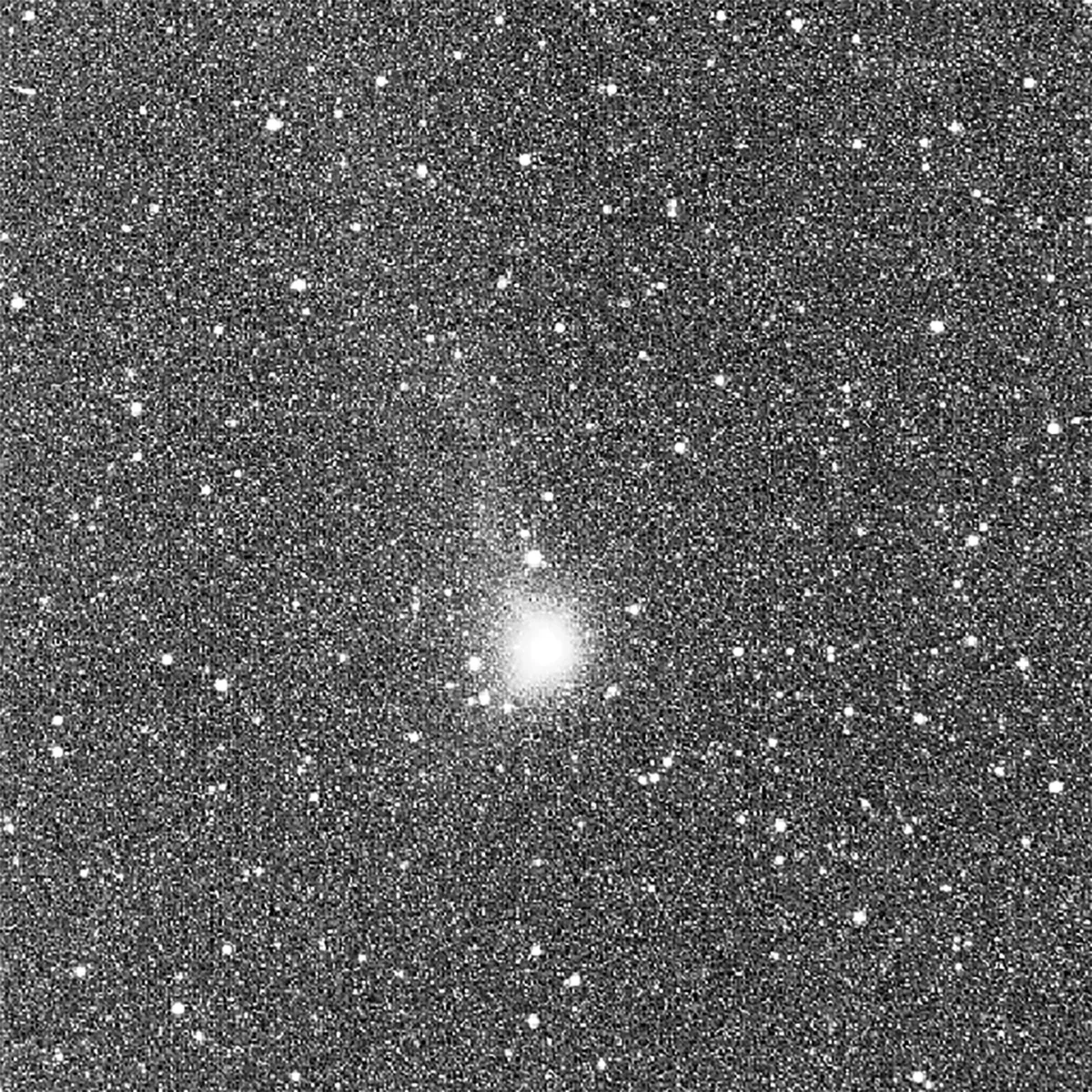 A single frame image of comet 3I/ATLAS captured by the European Space Agency’s June mission. Credit: ESA/Juice/NavCam
An icy moon investigator
As the name suggests, Europe’s Juice spacecraft is primed for studying the large icy moons that orbit Jupiter.
These frozen satellites – Ganymede, Callisto and Europa – are known to have subsurface oceans beneath their icy crusts.
And because water is a prerequisite for life as we know it on Earth, that makes these frozen moons in the outer Solar System some of the most tantalising places to search for signs of habitability.
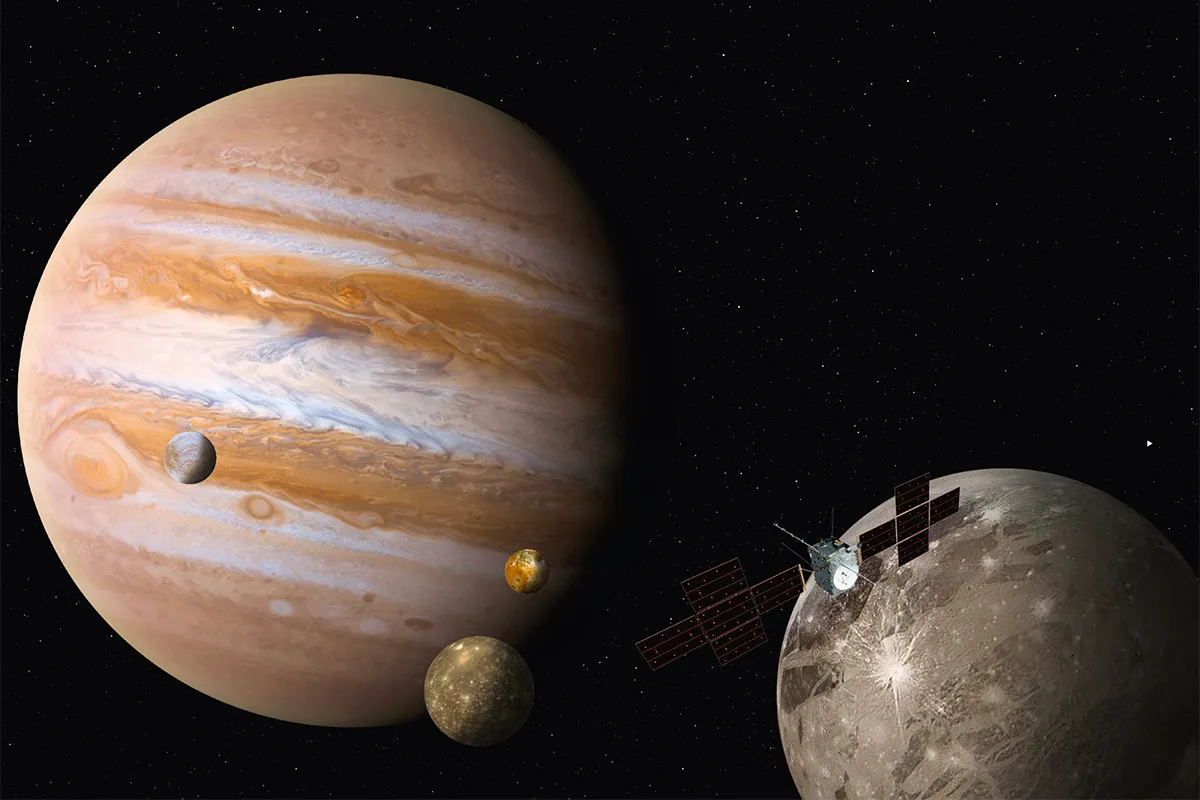 Artist’s impression of the Juice mission exploring Jupiter’s moons. Credit: ESA/ATG Medialab, Getty Images
Turning a gaze to 3I/ATLAS
Comet 3I/ATLAS was discovered on 1 July 2025, and its brief visit to our Solar System means there hasn’t been time to launch a dedicated mission to visit it.
However, scientists think that future interstellar comets could be visited by dedicated spacecraft.
Discovering an interstellar comet like 3I/ATLAS is a rare thing indeed. The vast majority of comets we know of originated from within our Solar System.
3I/ATLAS comes from beyond our Solar System, and astronomers believe it could be at least 7 billion years old.
That’s almost twice the age of our Sun, and makes 3I/ATLAS potentially the oldest comet we’ve ever discovered.
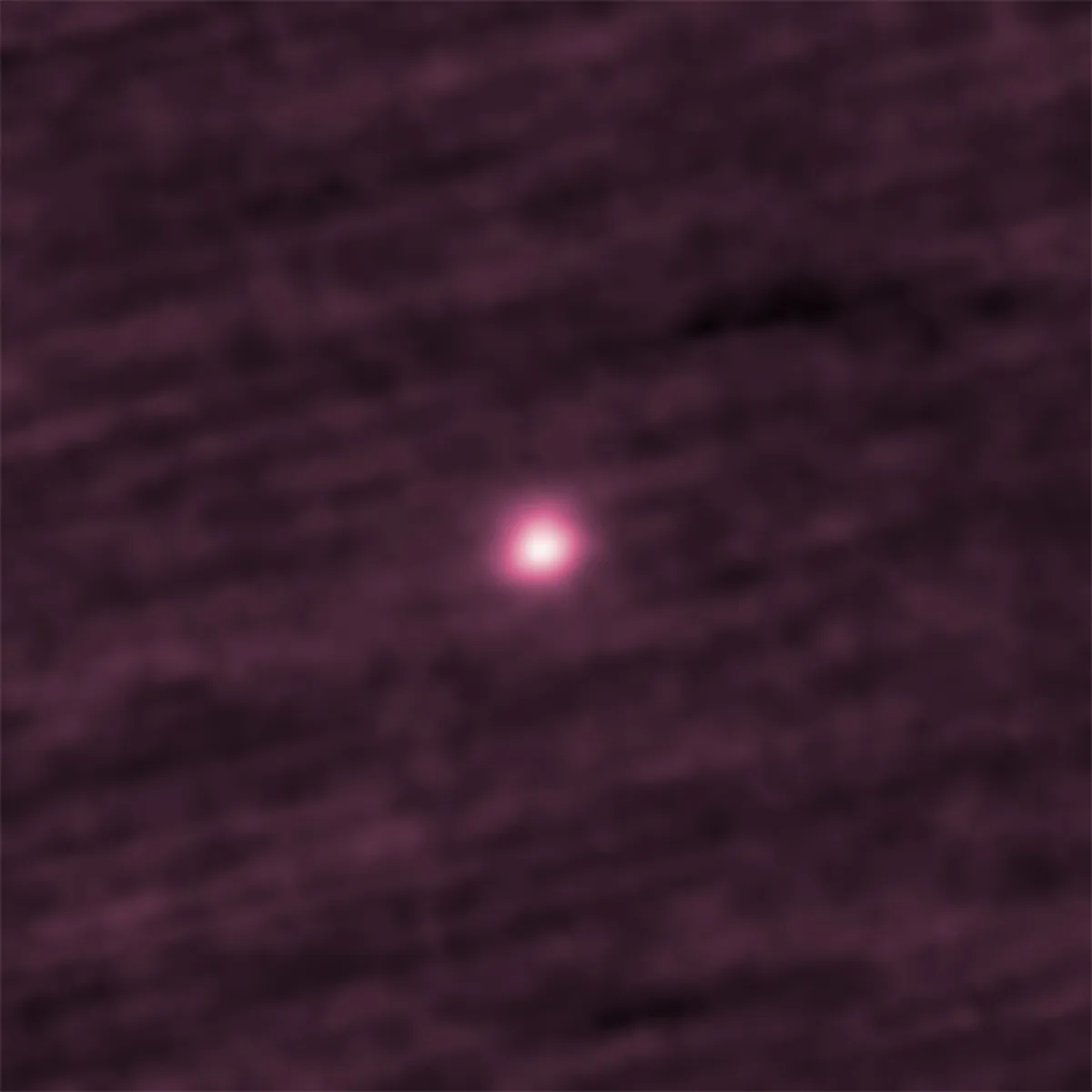 Comet 3I/ATLAS as seen in stacked images captured by NASA’s STEREO-A (Solar Terrestrial Relations Observatory) spacecraft, 11–25 September 2025. Credit: NASA/Lowell Observatory/Qicheng Zhang
In autumn 2025, 3I/ATLAS disappeared behind the Sun from our perspective on Earth.
In order to keep track of its activity, scientists decided to use some of the many spacecraft we’ve sent out across the Solar System to continue capturing images and data.
Both European and NASA Mars spacecraft captured images of 3I/ATLAS from their vantage point at the Red Planet.
And a fleet of NASA solar observing missions captured images of 3I/ATLAS, too.
In early November 2025, the Juice spacecraft caught a glimpse of the interstellar comet.
It used five of its science instruments to observe 3I/ATLAS, gathering information about how the comet is behaving and what it’s made of.
Juice was also able to capture an image of the comet with its Navigation Camera (NavCam), which is designed to help Juice navigate Jupiter’s icy moons once it arrives there in 2031.
The NavCam isn’t a high-resolution science camera, but was still able to capture an image of 3I/ATLAS.
ESA scientists say the full trove of 3I/ATLAS data gathered by Juice’s science instruments won’t arrive on Earth until February 2026.
However, the Juice mission team decided to take a sneak-peek by downloading just a quarter of a single NavCam image.
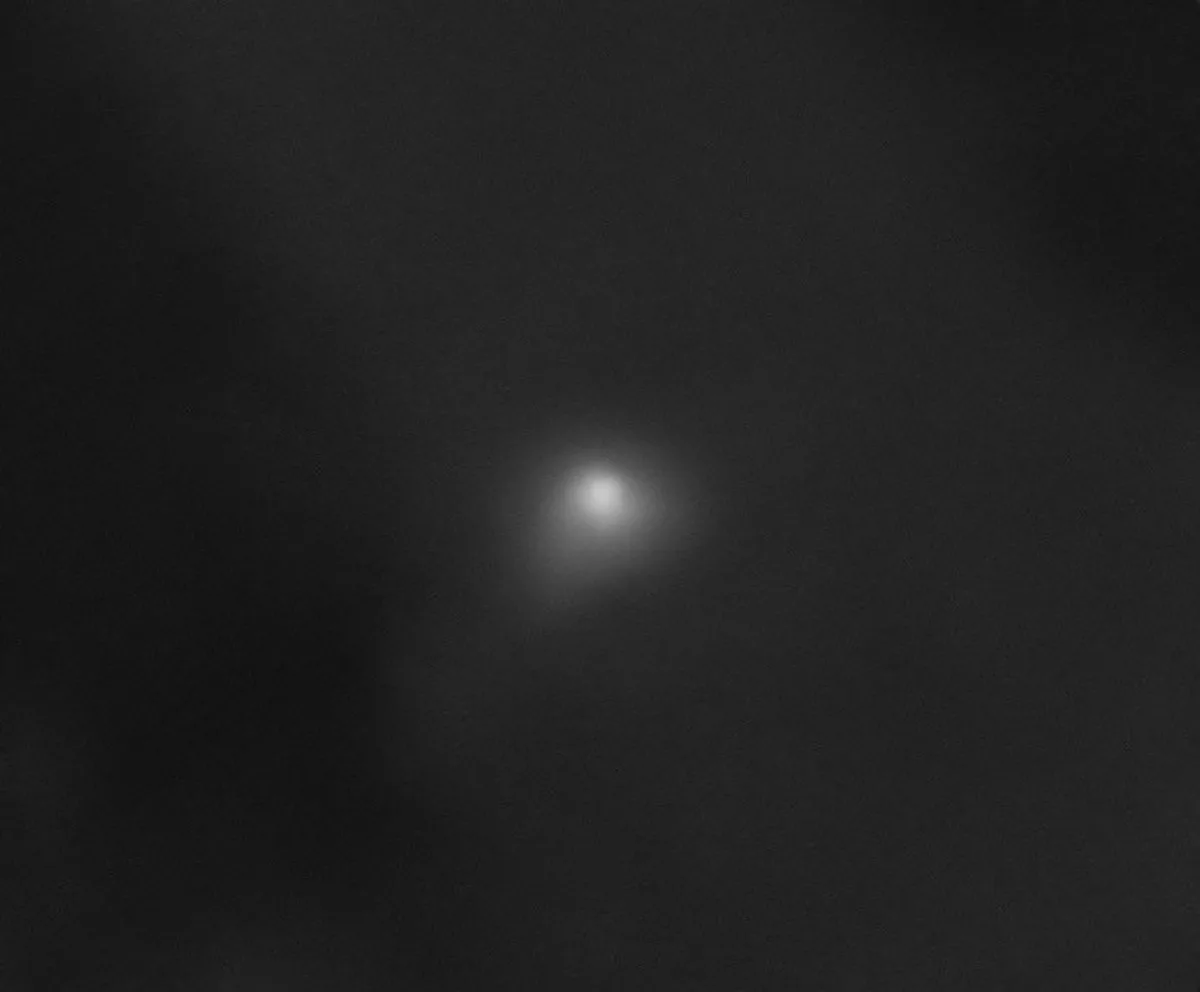 Image of comet 3I/ATLAS captured by NASA’s Mars Reconnaissance Orbiter, 2 October 2025. Credit: NASA/JPL-Caltech/University of Arizona
What Juice saw at 3I/ATLAS
Juice’s image of 3/ATLAS was captured on 2 November 2025, during the spacecraft’s first comet observing session.
It was two days before Juice’s closest approach to the comet, which happened on 4 November at a distance of 66 million km (41 million miles).
In the image below, we can clearly see the comet undergoing a hive of activity just after its closest approach to the Sun, which caused its ices to sublimate into a gaseous outflow.
Juice may have been further from 3I/ATLAS than ESA’s Mars orbiters were back in October 2025, but the spacecraft observed it just after the comet’s closest approach to the Sun, meaning it was in a more active state.
The image shows a glowing halo of gas surrounding the comet, known as its coma.
And there are not one, but two tails. The main tail is made of electrically charged gas and stretches out towards the top of the frame.
A fainter dust tail made of tiny solid particles stretches to the lower left of the frame.
But scientists say there’s more to come from Juice’s observations of 3I/ATLAS.
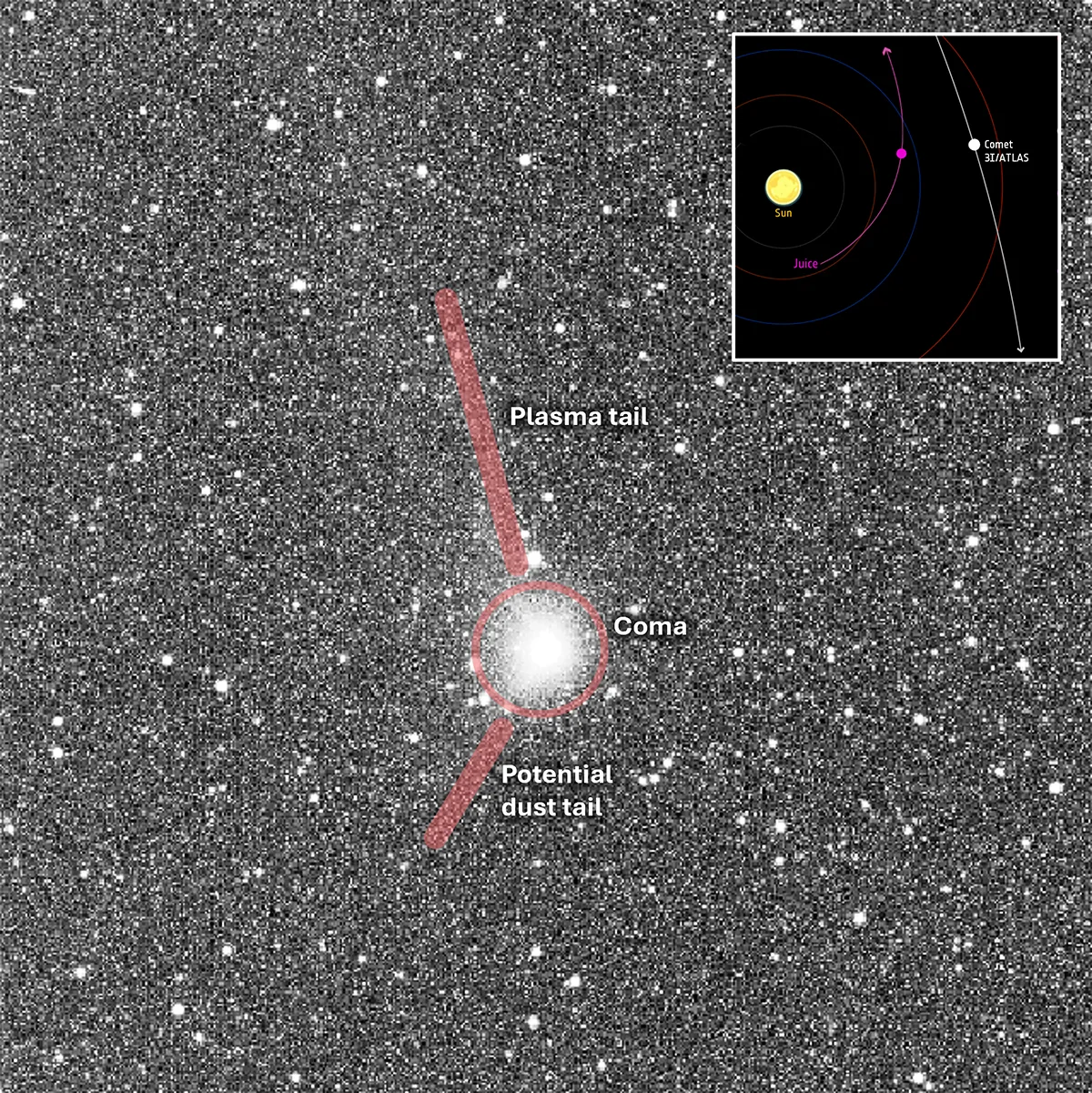 A single frame image of comet 3I/ATLAS captured by the European Space Agency’s June mission. Credit: ESA/Juice/NavCam
“We expect to receive the data from the five scientific instruments switched on during the observations – JANUS, MAJIS, UVS, SWI and PEP – on 18 and 20 February 2026,” ESA says.
“The delay is because Juice is currently using its main high-gain antenna as a heat shield to protect it from the Sun, leaving its smaller medium-gain antenna to send data back to Earth at a much lower rate.”
Mission scientists say they expect the full trove of data on 3I/ATLAS will include more images from JANUS – Juice’s high-resolution optical camera – as well as spectrometry data, composition data and particle data.
That means we could be about to find out even more about what 3I/ATLAS is made of.