
Can the U.S. beat China to the moon, and will NASA have the resources to do so?
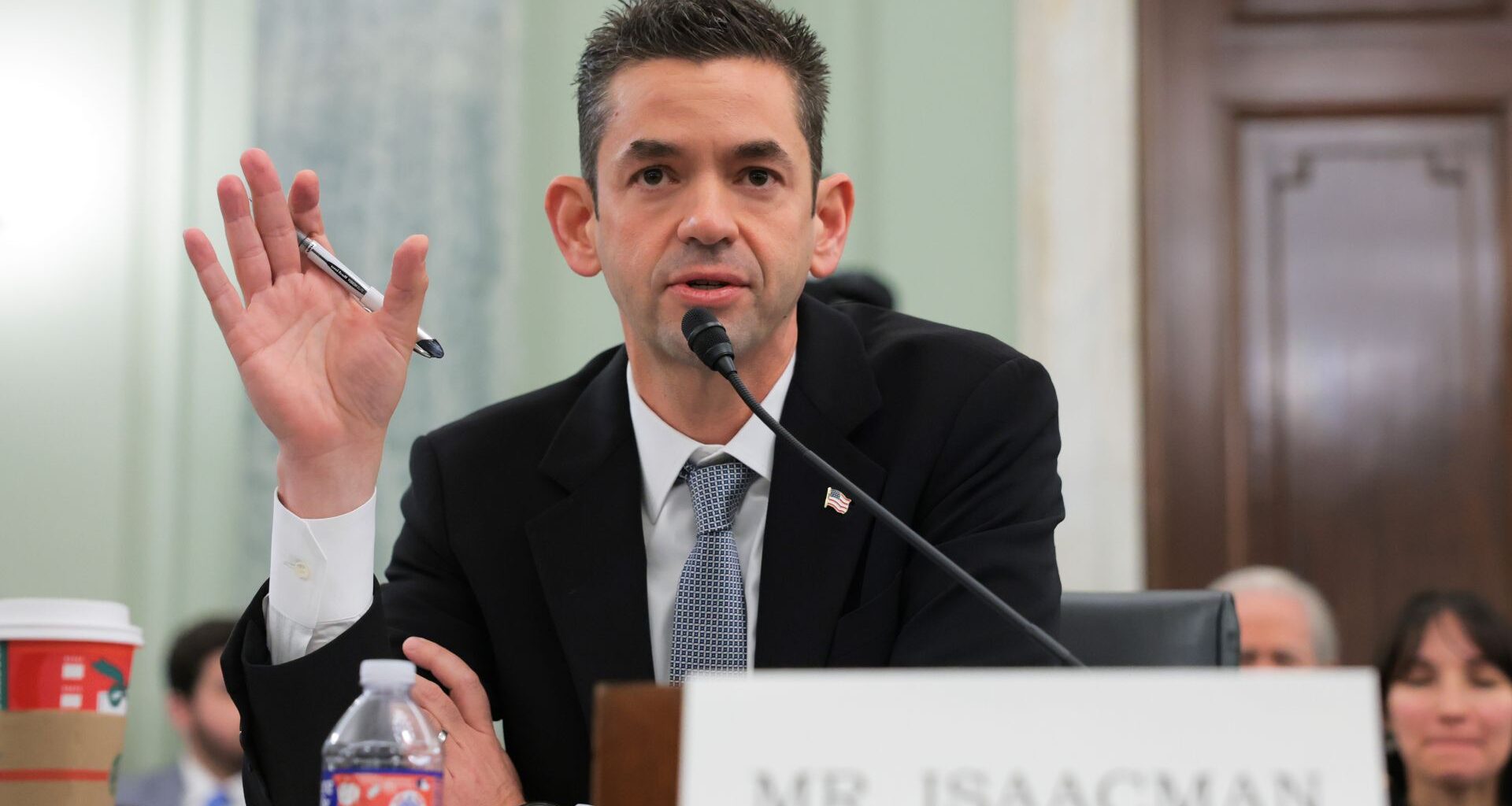
These were just some of the considerations raised when SpaceX billionaire private astronaut Jared Isaacman once again appeared before a Senate committee Wednesday (Dec. 3) for a bid at NASA chief.
You may like
There might be a narrow window of time to confirm Isaacman before even more change arises. NASA’s continuing resolution for funding only gives it money until the next deadline for the U.S. budget at the end of January—and if fiscal 2026 is not agreed upon, the government will shut down again.
Here are five key findings from the hearing showing some of the important things to Isaacman, and the committee, as the nomination enters an expected committee vote on Monday (Dec. 8).
1. Déjà vu
Like that black cat in ‘The Matrix’, Isaacman made a repeat appearance before the Senate committee on Dec. 3. He appeared to sail through the O.G. hearing on April 9, impressing the committee and space fans alike with his testimony: not only was he an advocate for NASA’s moon and Mars aims, but his space experience included funding and commanding two SpaceX missions to Earth orbit in September 2021 and September 2024.
But to the space world’s surprise, President Donald Trump abruptly revoked his required nomination for Isaacman on May 31, just days before Congress appeared to be ready to confirm Isaacman as administrator. It was said that Trump was not impressed with Isaacman’s past donations to the Democrats, and aside from that, SpaceX CEO Elon Musk finished his 130-day appointment as a “special government employee” just the day before. (We didn’t know this when Isaacman’s nomination was pulled, but Musk and Trump were clearly unhappy with each other as their “very public bromance”, as NPR put it, descended into attacks and insults on social media in early June.)
Isaacman said at the time that some folks had “axes to grind” and he was a convenient target. NASA was led in an acting capacity by former reality TV star and Secretary of Transportation Sean Duffy. Then in November came another development: after weeks of rumors, Trump reversed course for a renomination on Nov. 4 amid a reported power struggle for NASA’s governance.
Isaacman definitely got questions from lawmakers about what happened; while he said he “wouldn’t even begin to want to speculate”, it was pointed out that he lately has made donations to organizations close to the U.S. president’s ideals. But Isaacman maintained a middle course, emphasizing the donations were because he was interested generally in politics, and adding: “I was grateful for the opportunity in the first place.”
2. Is the current Artemis plan feasible?
Isaacman told lawmakers that his testimony was tinged “with a message of urgency” in the final months before the expected liftoff of Artemis 2, a four-astronaut around-the-moon mission with three NASA astronauts and a Canadian astronaut on board. That could fly in February 2026 if schedules hold, marking the first moon mission by any humans since 1972.
You may like
Artemis 2 seeks to test out the Orion spacecraft and Space Launch System (SLS) rocket for humans ahead of the landmark Artemis 3, which may put boots on the surface later in the decade if a human landing system (HLS) is ready in time. But there’s a rub: following years of NASA concerns about SpaceX’s progress on the Starship lander, Duffy pledged in October to reopen competition for the Artemis 3 moon-landing contract, which SpaceX won back in 2021.
Isaacman (whose ties to SpaceX were also a feature of the hearing, as discussed below) didn’t quite answer if he plans to follow through on Duffy’s threat, but he had this to say: Jeff Bezos’ Blue Origin has since won an Artemis astronaut-landing contract as well for HLS, and it is good to have more than one company available for all Artemis landings.
“I think that competition is fantastic. I think the best thing for SpaceX is a Blue Origin right on their heels, and vice versa,” Isaacman said. “I have no particular interest in one provider versus another. My interest is in making sure the objective is achieved.”
If you’re wondering what the rush is to land humans on the moon quickly, it’s mainly because of China — which Isaacman also discussed extensively in the hearing. “Artemis is the key, I believe, to both beating China to the lunar surface and to maintaining a U.S. presence at the moon,” Isaacman said.
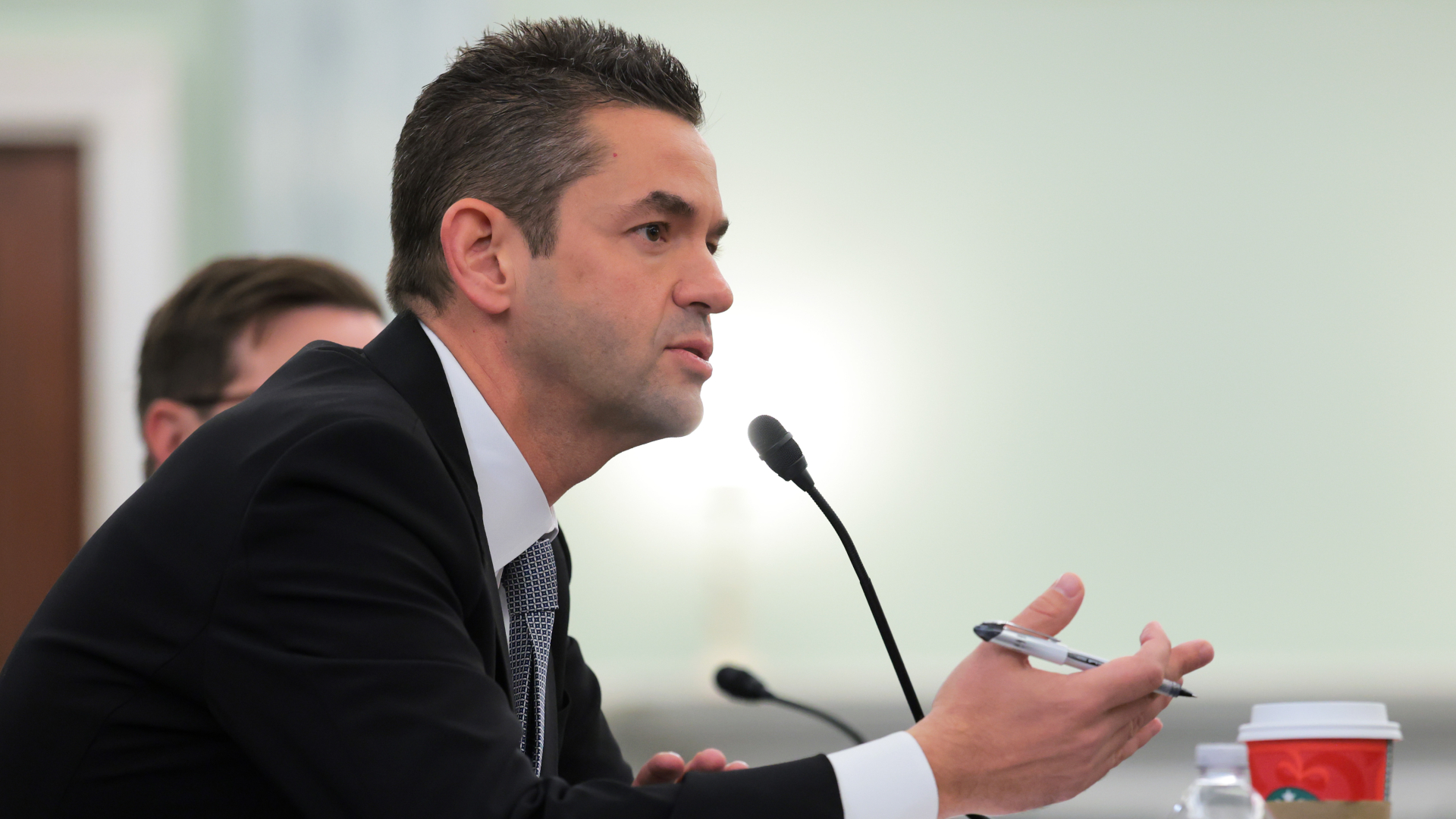
Jared Isaacman fielded questions at the recent Senate hearing. (Image credit: Anna Moneymaker /Getty Images)3. Winning the space race against China
Isaacman’s opening statement made lots of reference to China, which the Trump administration (and in latter years, the Biden administration) framed as a threat to U.S. security in space. China has been very active beyond Earth in the past decade, with multiple moon missions, a Mars mission, and its growing Tiangong space station that hosts both astronauts and science experiments. Aside from that, there are rumors that China is engaging with U.S. satellites in space critical to infrastructure like communications.
“We are in a great competition with a rival that has the will and means to challenge American exceptionalism across multiple domains, including in the high ground of space,” Isaacman said of China. “This is not the time for delay, but for action, because if we fall behind — if we make a mistake — we may never catch up, and the consequences could shift the balance of power here on Earth.”
Simply put, China has been framed as a threat on three fronts: concerning satellite security, because it is trying to put astronauts on the moon by 2030 (alongside Russia and and before the U.S. can get there), and because the International Space Station is slated to retire in the early 2030s with no clear path to planned American private stations (creating a possible gap in lucrative private research dollars that Tiangong could use.)
Isaacman said he would “will never accept a gap” that China could fill. His testimony also emphasized that the U.S. has a strong network of companies (dating back to the Soviet Union-U.S. rivalry in the 1960s) that can help out. Many other companies, he noted, are much newer and a few of them could grow quickly to help out against the Chinese situation if given the right support.
“Where NASA can play a role is consistent in the past, which is sharing its expertise and talent to help these new companies. When NASA does tend to figure out the near-impossible, and it’s matured enough technology to hand it off to industry, […] innovation can improve upon the capability and lower cost. That’s a great outcome,” he said.
4. The future of NASA’s science programs
On May 30 — one day before Isaacman’s first nomination was pulled — the Trump administration revealed its budgetary plan for NASA, to the chagrin of space advocates. While the administration said changes were needed to focus on moon and Mars missions, the measures proposed to meet that goal were drastic.
The proposal slashed NASA funding by nearly 25%, from $24.8 billion to $18.8 billion, mainly in science. It said NASA would cancel the Gateway moon-orbiting space station (a keystone of agreements for international partners in the Artemis Accords). It would phase out much of the existing Artemis hardware: SLS and Orion. And NASA’s workforce would drop by a third.
Congress extensively debated the budget, and some pieces were put back together (Gateway was brought back in, and the SLS and Orion were funded through Artemis 5, for example.) But other pennies began to drop. Roughly 4,000 NASA employees exited swiftly under a deferred resignation program offered before the budget was finalized. Lab closures at the heart of NASA science, its Goddard Space Flight Center in Maryland, were said to happen during the height of the government shutdown; although NASA has said it has authorization to proceed, the matter recently attracted Congressional scrutiny.
The NASA budget remains unfinalized, with jobs and as many as 41 active and planned science missions hanging in the balance, as Congress continues negotiations for the greater U.S. 2026 fiscal-year budget. Meanwhile, in November Politico received a leaked, 62-page “Project Athena” plan from Isaacman’s team that proposed moving some NASA missions to the private sector, and treating the agency more like a business.
When asked about NASA’s science portfolio and Project Athena, Isaacman repeated two themes.
For science, he said a few times that he would be best poised to make budget decisions only after getting a detailed look at the plans for NASA (implying that he also believes they have been shifting quickly); he also said Goddard “is very important to spearheading the scientific efforts of NASA.”
At the same time, if made administrator, Isaacman promised to spend his allocated funds per the direction of Congress; officially, the NASA administrator is responsible for “overseeing successful implementation” of the agency’s mission with accountability to the U.S. president himself”, according to the agency.
As for Athena, Isaacman reiterated what he has said since the document was made public: it was a tentative plan containing “ideas, thoughts on the direction of the agency, research requests” that were supposed to be revised after he learned more about NASA as its chief.
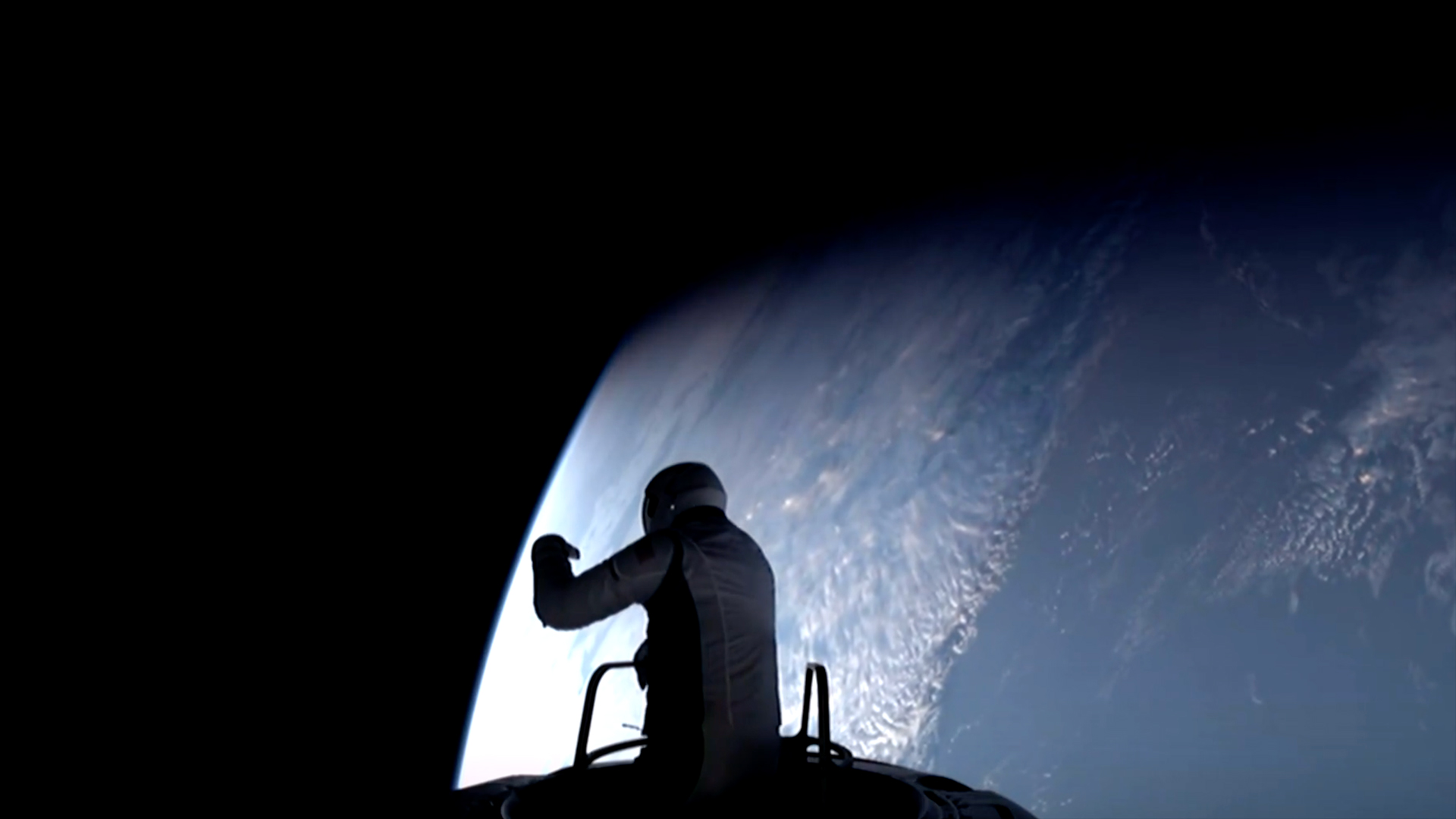
Polaris Dawn commander Jared Isaacman is silhouetted against Earth as he becomes the first private astronaut to perform an EVA (extravehicular activity) on Thursday, Sept. 12, 2024. (Image credit: SpaceX)5. The shadow of Elon Musk
Isaacman’s relationship with SpaceX — remember, he paid the company undisclosed amounts of money for two missions in space — has been a feature of both nomination hearings, especially in questioning from Senator Ed Markey (D-MA).
In April, Markey repeatedly asked if Musk was there in-person at Mar-a-Lago, Trump’s Florida estate, when Trump interviewed Isaacman for NASA’s top post late last year. Back then, Isaacman declined to answer directly. Markey once again put the question to Isaacman on Wednesday.
“I wanted to give you one more chance to set the record straight. Was Elon Musk in the meeting at Mar-a-Lago when President Trump offered you the job?” Markey asked.
After Isaacman said the interview happened in a “ballroom-type setting” with “dozens of people moving in and out,” Markey persisted. “It’s a very simple question,” Markey said. “Was Elon Musk in the room when President Trump offered you the job?”
“Senator, my interview, my conservations, were with the president,” Isaacman answered, then repeated his previous point: “There were dozens of people moving in and out of the room, and I don’t think it’s fair to bring any of them into this matter.”
“So once again, you’re refusing to tell us whether Elon Musk was in the room that day, and that actually makes me think that Elon Musk was in the room that day, but that you understand that it’s a clear conflict of interest that he was there,” Markey said.
Markey also asked how much the billionaire paid for his spaceflights. Isaacman didn’t answer that question, apparently because he had a non-disclosure agreement (NDA) with SpaceX. But Isaacman also pointed out that he bought the missions from SpaceX because it is the only American company capable of orbital missions from the U.S. If there had been competition, he noted, he might have paid less.
When asked by Markey, Isaacman also said he would have no issue asking SpaceX to release him from the NDA to disclose how much he paid SpaceX. But Isaacman also emphasized that to the best of his knowledge, to date he has been making the required ethical (and conflict-of-interest) disclosures required for his nomination.