


Listen to this article
Estimated 4 minutes
The audio version of this article is generated by text-to-speech, a technology based on artificial intelligence.
More Canadians have a family doctor or nurse practitioner compared with three years ago, but satisfaction remains low, a comprehensive new survey suggests.
An estimated 5.9 million Canadians don’t have regular access to a primary care provider, down from 6.5 million in 2022, according to OurCare, a national project to define good primary care and recommend policy changes to achieve it.
“That’s still a big number, but it is a big improvement at a time when we’ve actually had some population growth,” said Dr. Tara Kiran, a family physician and researcher who led the initiative from her base at St. Michael’s Hospital, part of Unity Health Toronto.
Kiran worked with the Canadian Medical Association (CMA) on the latest online survey of more than 16,000 Canadians, who were asked about their experiences with primary care following panel discussions nationwide when the project launched.
Just 28 per cent of respondents said they were satisfied or very satisfied with how our primary care system is working.
“To me, that’s a huge call to action,” she said.
WATCH | Lining up for a family doctor: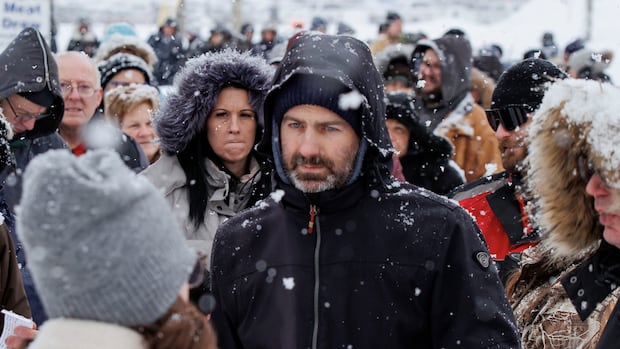
Hundreds wait in the snow to get a family doctor in rural Ontario
More than 1,000 people lined up in the snow in Walkerton, Ont., on Wednesday to try to get a family doctor — but only the first 500 would be successful. More than just having a doctor
It’s not just about having a doctor, Kiran said, but also about having timely, ongoing, culturally safe, wellness-oriented and empowering care. Patients should have the data and the information they need to navigate the health-care system, she said.
What will it take to improve? Both Kiran and the CMA pointed to scaling up team-based care, where family doctors and nurse practitioners cross cover for each other during the day and after hours.
In team-based care, the patient may also see a nurse, social worker or pharmacist, who work together with a family doctor or nurse practitioner to take a holistic view of someone’s health.
Ontario, Manitoba and Nova Scotia are among the provinces where governments have invested in primary care teams, Kiran said, often with clearer expectations for what the public should be able to receive.
Family medicine providers and patients continue to also struggle with access to specialty care and diagnostics, Kiran said.
The survey exposed “concerning gaps in access,” with 37 per cent of respondents with a regular provider saying they could be seen the same or next day for an urgent concern.
Accessing health care is vulnerable for anyone, said Dr. Sarah Cook, president of the College of Family Physicians of Canada, who works in Yellowknife and wasn’t involved in the survey beyond an advisory capacity.
Having an ongoing relationship with a family doctor would help patients share their health concerns more openly. It would also give physicians the chance to spot trends over time and offer preventive care and screening for issues like cancer and mental illnesses before they become severe, Cook said.
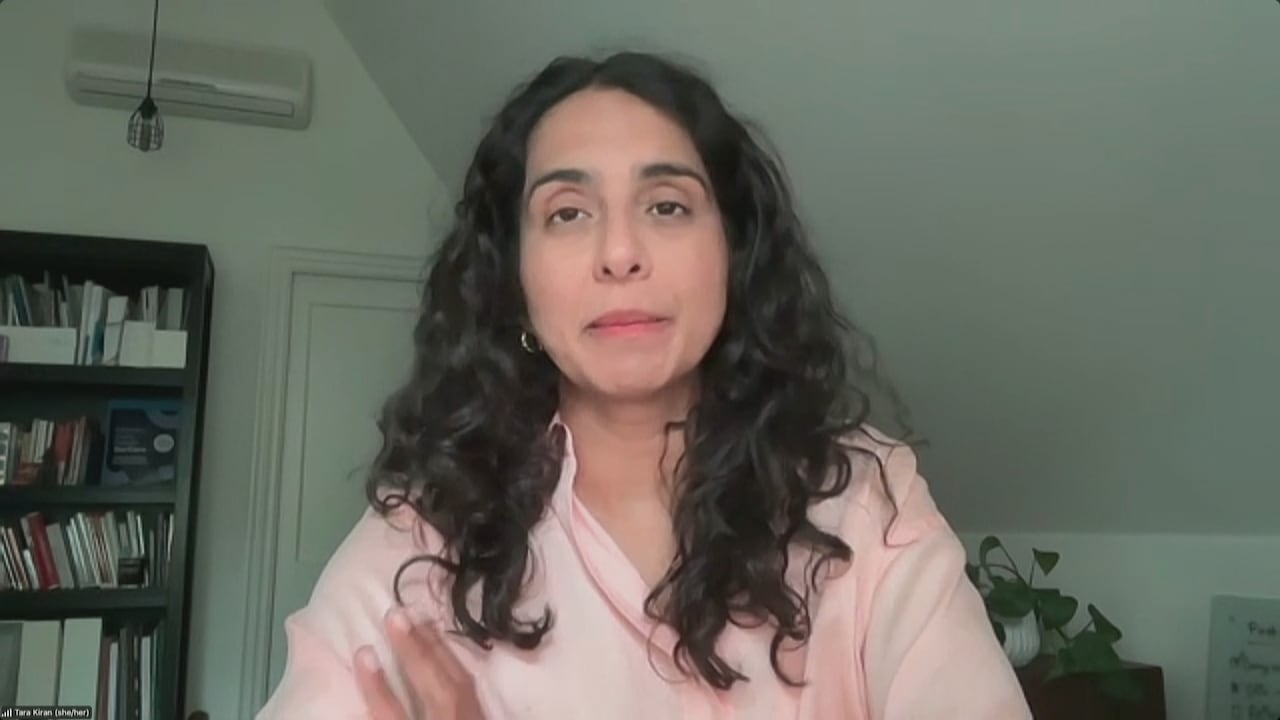 Dr. Tara Kiran, who leads OurCare, says every person in Canada should be able to expect primary care with certain features. (CBC)
“There are many, many pockets in this country of people who have figured out solutions, who have innovated, who are really providing excellent primary care,” she said.
Addressing physician burnout, excessive paperwork and training to make family medicine more sustainable would help, Cook said.
The survey suggested people in a higher income bracket, defined as a pre-tax household income of $200,000 or more, tend to have a higher rate of having a regular clinician compared to those in a lower income bracket.
There were also differences in paying out of pocket for a primary care service. People with a family doctor or nurse practitioner were more likely to fork out for services like completing a form required by insurance, at 26 per cent, or a sick note, at nearly 21 per cent. In comparison, about 71 per cent of respondents without a primary care provider said they paid out pocket for an appointment or consultation.
It’s an indication “we need to do better,” Kiran said.