1
Founded in 2017 in Golden, Colorado, Lunar Outpost has rapidly evolved from a commercial lunar mobility startup to a key player in NASA’s Artemis program. On December 4, 2025, the company announced its selection for the Artemis IV mission, marking a significant transition from purely commercial operations to direct integration with NASA’s flagship crewed lunar exploration program.
The announcement marks the culmination of years of technical development and validation, including the company’s March 2025 Lunar Voyage 1 mission, which made its Mobile Autonomous Prospecting Platform (MAPP) rover the first U.S. commercial rover to reach the lunar surface. Although Intuitive Machines’ IM-2 lander came to rest on its side, preventing rover deployment and mission completion, several critical subsystems successfully operated in the cislunar environment and on the lunar surface.
Lunar Outpost reported that specific subsystems—including the navigation computer, autonomous thermal control system, stereo cameras, and power management—achieved Technology Readiness Level 9, NASA’s highest maturity rating, indicating a system has been “proven through successful mission operations” in actual operational conditions. However, the rover’s mobility systems, including its suspension, drive motors, and autonomous navigation during traverse, could not be validated because it could not leave its deployment garage throughout the mission.
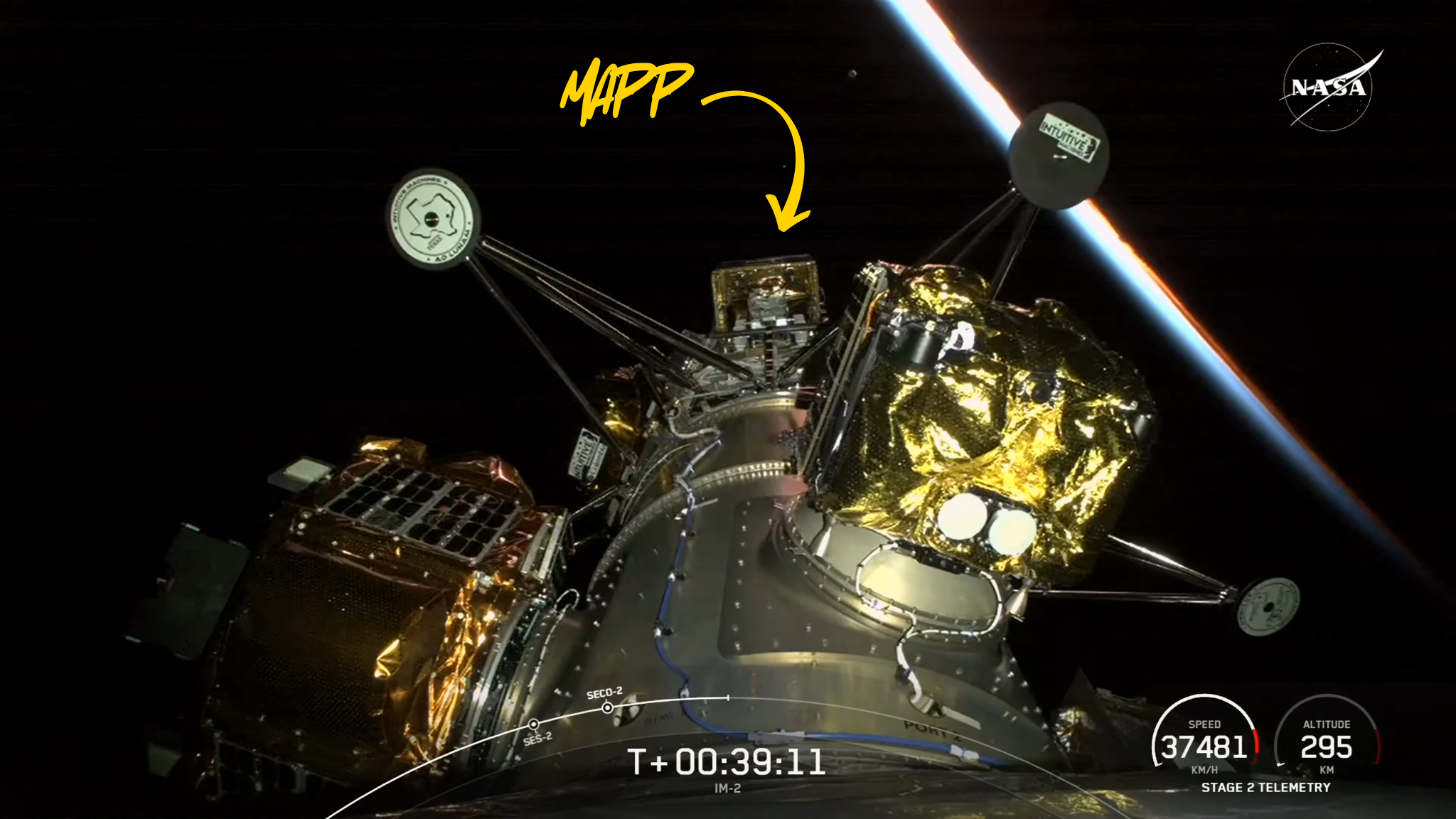
MAPP’s Lunar Voyage 1 on the Intuitive Machines IM-2 mission. (Credit: Lunar Outpost/NASA/Intuitive Machines)
For Artemis IV, Lunar Outpost will partner with the Laboratory for Atmospheric and Space Physics (LASP) at the University of Colorado Boulder, the University of Central Florida, and the University of California, Berkeley to support the DUSTER investigation to study lunar dust and plasma.
Unlike previous MAPP missions delivered via commercial landers, the Artemis IV rover will be deployed directly by astronauts at the mission’s South Pole landing site. The rover will carry two LASP-built instruments—the Electrostatic Dust Analyzer (EDA) and the Relaxation SOunder and differentiaL VoltagE (RESOLVE)—to characterize surface plasma and dust behavior during landings, liftoffs, and extravehicular activity.
The mission will study both disturbed regolith from crew operations and undisturbed lunar surface conditions, advancing NASA’s understanding of lunar space weather, electrostatic dust levitation, and micrometeoroid impacts. These data are critical for crew safety and long-term surface operations planning.
Lunar Outpost has developed a graduated series of rover platforms, each engineered for specific mission profiles.
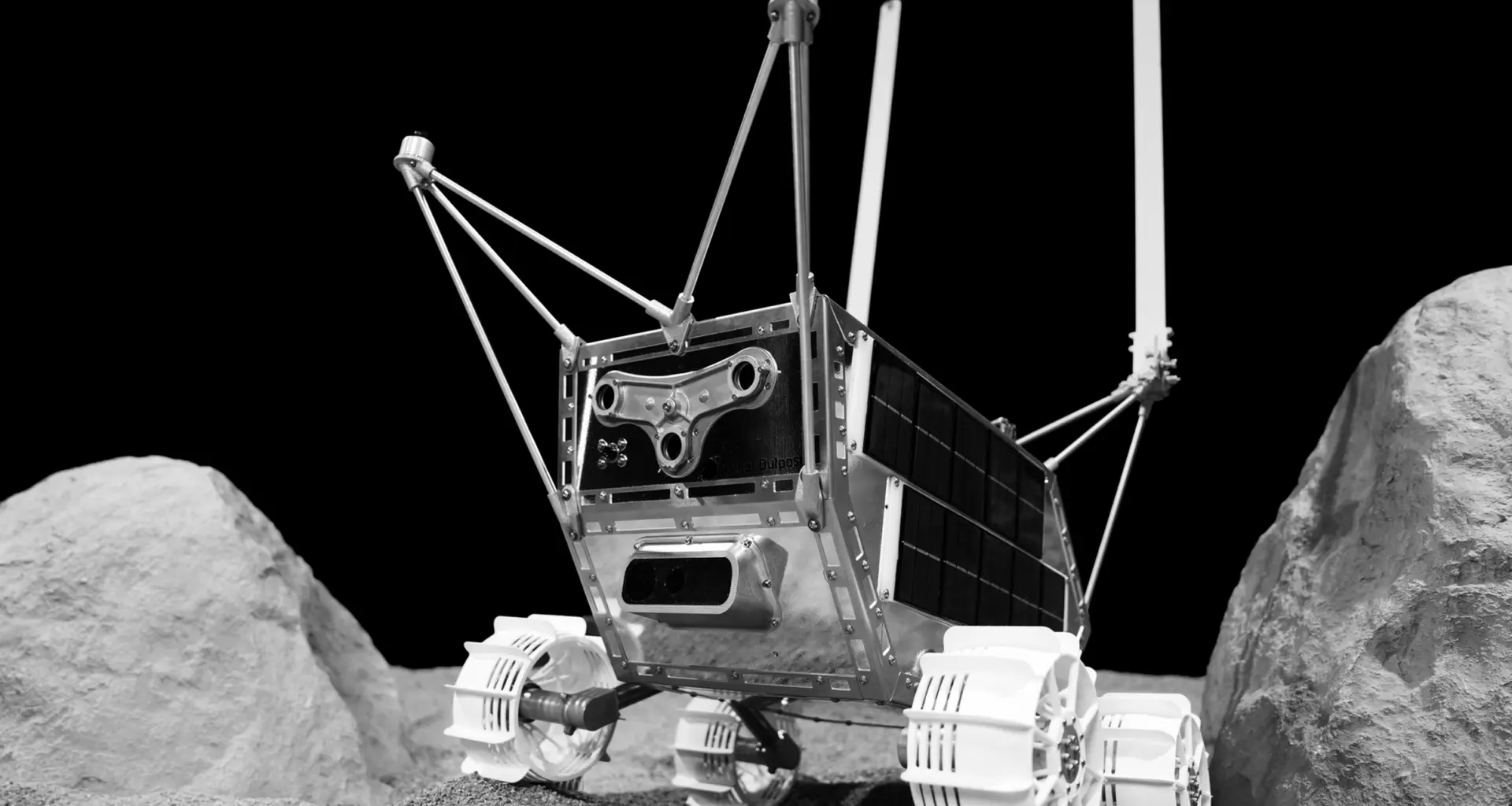
First, MAPP’s standard configuration consists of a 5 to 10 kg base vehicle, which carries up to 15 kg of payload in a 45 x 38 x 40 cm package. It features four-wheel drive with articulated suspension, solar panels with battery storage, and optional lunar night survival capability. Maximum velocity is 10 cm/s, with S-band and X-band communications and autonomous navigation via visual-inertial odometry.
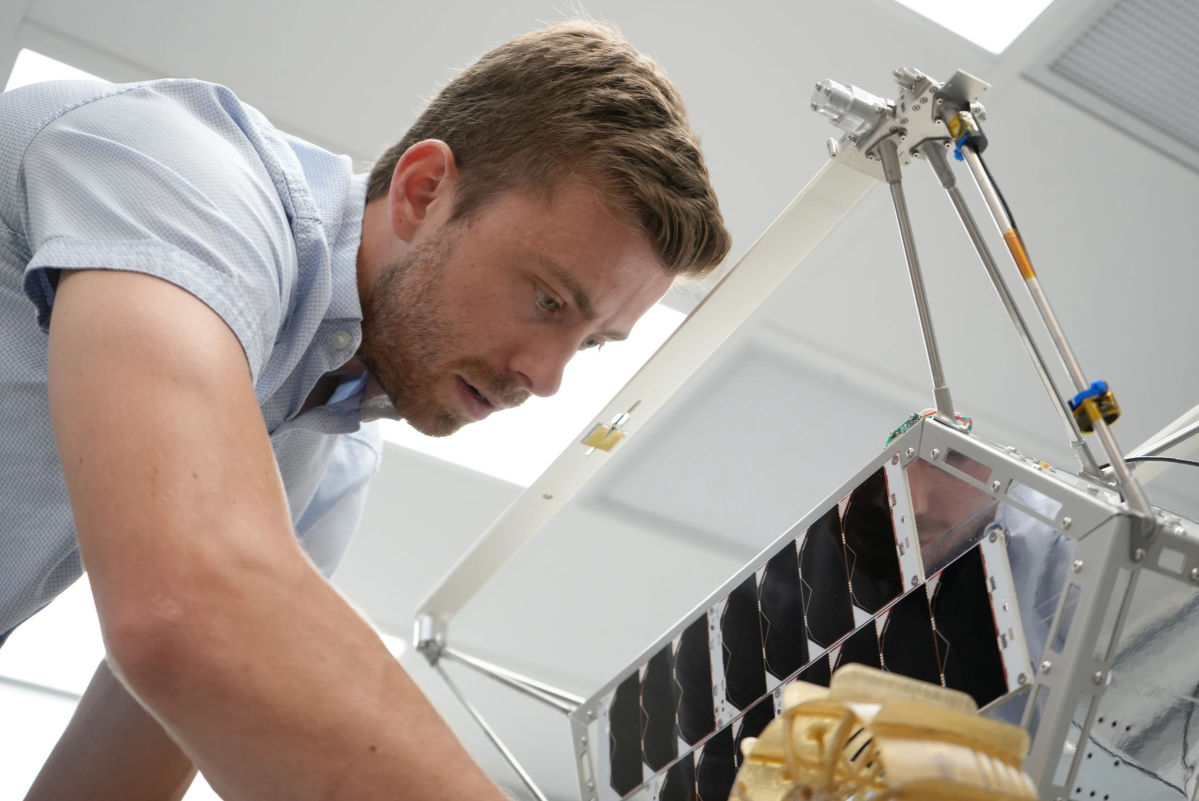
MAPP Rover Development. (Credit: Lunar Outpost)
Second, MAPP-Ultra is a 30 kg platform carrying 30 kg payloads in a 1x 2 x 1m configuration. This variant operates at 1 m/s—ten times faster than the standard MAPP—with enhanced solar collection and larger battery capacity for extended traverse missions.
Finally, MAPP’s heavy-lift variant, HL-MAPP, masses 250 kg and supports 200 kg payloads with standard lunar night survival, and is designed for In-Situ Resource Utilization (ISRU) equipment transport, habitat support infrastructure, and large-scale scientific apparatus deployment.
The lunar thermal environment presents extreme challenges, with surface temperatures ranging from -173°C during the 14-day lunar night to +127°C during the lunar day. Rather than conventional Radioisotope Heater Units, Lunar Outpost is developing multiple alternative thermal management solutions.
The MAPP series employs a proprietary dynamic suspension system that maintains continuous four-wheel contact with the surface, enabling traversal of obstacles up to half the height of the rover. Key components include independent wheel articulation, active suspension dampening, and distributed torque across all drive motors.
For power systems, Lunar Outpost partnered with General Motors to leverage advanced battery technology adapted from electric vehicle applications. Navigation systems utilize visual-inertial odometry, including stereo vision cameras and autonomous navigation capabilities. The navigation system’s ability to provide precise real-time positioning data is vital for missions like Artemis IV, where the rover must coordinate with astronaut operations on the lunar surface.
The Stargate Ground System Software achieved TRL-9 certification during Lunar Voyage 1, maintaining 99.998% uptime and demonstrating readiness for Class A human spaceflight missions.
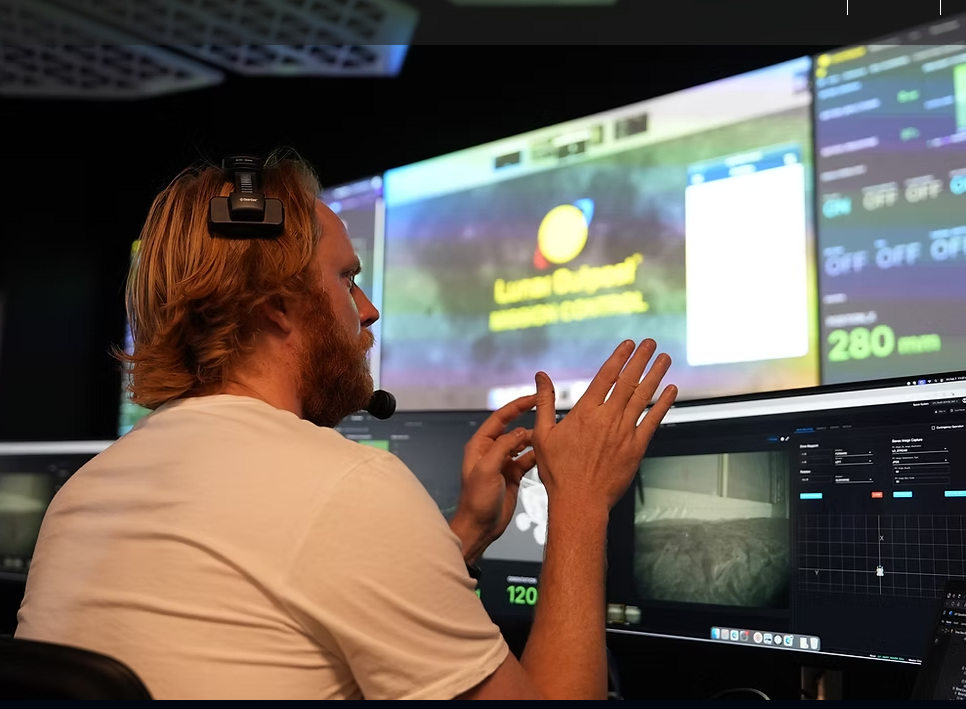
Lunar Outpost Mission Control. (Credit: Lunar Outpost)
Lunar Outpost has secured seven contracted missions spanning commercial, scientific, and crewed operations.
The first contract, Lunar Voyage 1, successfully launched in February 2025, achieving critical technical milestones despite the lander’s off-nominal touchdown. The mission validated the high-performance navigation computer, the autonomous thermal control system, the stereo navigation cameras, and the patent-pending Talon rover deployment system while carrying Nokia’s Lunar Surface Communications System and MIT payloads.
Next, Lunar Voyage 2 will deploy to Reiner Gamma aboard Intuitive Machines’ IM-3 mission, carrying a vector magnetometer from Johns Hopkins APL and a multispectral microscope to study the region’s mysterious magnetic anomalies. “Having the mobility provided by the MAPP is key to accomplishing the science goals of the Lunar Vertex investigation,” emphasizes David Blewett, principal investigator at Johns Hopkins APL.
Lunar Voyage 3 is scheduled for 2027 with SpaceX as launch provider and Intuitive Machines providing landing services for scientific and commercial payloads.

Illustration showing MAPP on the Moon during the Lunar Voyage 3 mission. (Credit: Lunar Outpost)
The Australian Roo-ver mission represents a $42 million Australian Space Agency contract awarded in December 2024 to the ELO2 Consortium, which Lunar Outpost Oceania is part of. The consortium aims to launch Australia’s first lunar rover in 2026 or 2027.
The MARS-1 contract, announced in October 2025, will evaluate the company’s Mobile Autonomous Robotic Swarms software for U.S. Air Force and Space Force defense applications.
See Also
Beyond the MAPP series, Lunar Outpost leads the Lunar Dawn team developing the Eagle Lunar Terrain Vehicle for NASA’s $4.6 billion Lunar Terrain Vehicle Services program. The team underwent restructuring in September 2024 when Lockheed Martin departed; Leidos subsequently joined the team, bringing human factors expertise, while Lockheed’s previous roles were redistributed among the partnership.
Eagle is being developed with a 20 km operational range, a maximum speed of 15 km/h, and lunar night survival capability. NASA is expected to select at least one contractor for the final phase, with the first delivery around 2030.
In November 2024, Lunar Outpost announced a partnership with SpaceX to deliver Eagle to the Moon aboard Starship. “Lunar Outpost’s LTV is designed to be the backbone of lunar surface operations,” said Justin Cyrus, Lunar Outpost’s Founder and CEO. The company secured Series A funding co-led by Type One Ventures and Industrious Ventures to ensure the program moves forward regardless of NASA’s contract selection.
The company has been conducting extensive field testing at a 1,000-acre facility in Colorado, completing seven iterations of astronaut-pressurized-suit testing at the site and at NASA’s Johnson Space Center.
Lunar Outpost partnered with LEGO to create the Technic Lunar Outpost Moon Rover Space Vehicle set, released in 2025—the first LEGO product designed with a commercial space company. “You can’t build lunar rovers as we do without being creative, imaginative, and fun,” said Cyrus. The set includes a bonus mini-build of the actual MAPP rover that reached the Moon in March 2025.
Dust mitigation remains a significant challenge for landing on the surface of any foreign planet or moon, as lunar regolith particles are highly abrasive, electrostatically charged, and prone to adhering to surfaces. The Artemis IV DUSTER investigation will provide critical data to inform the development of dust-resistant bearing designs, electrostatic repulsion systems, and self-cleaning mechanisms.
BREAKING: @NASA has selected two science instruments, designed for #Artemis IV astronauts to set up on the lunar surface, that will advance space exploration. ⬇️
🔗: https://t.co/erYQtyFTxO pic.twitter.com/V92lATTtYC
— NASA Science (@NASAScience_) December 4, 2025
Extended lunar night operations require advanced battery chemistry with low-temperature performance, more efficient insulation systems, and strategic hibernation protocols for the 14-day night cycle with temperatures below -170°C.
Communications infrastructure development continues, with MAPP rovers designed to interface through direct-to-Earth S-band and X-band, Nokia’s LTE/4G lunar network (demonstrated during Lunar Voyage 1), and mesh networking between multiple rover units.
The MAPP series technical architecture supports Lunar Outpost’s “mobility as a service” business model, enabling resource prospecting, site preparation, communication network deployment, and ISRU support operations.
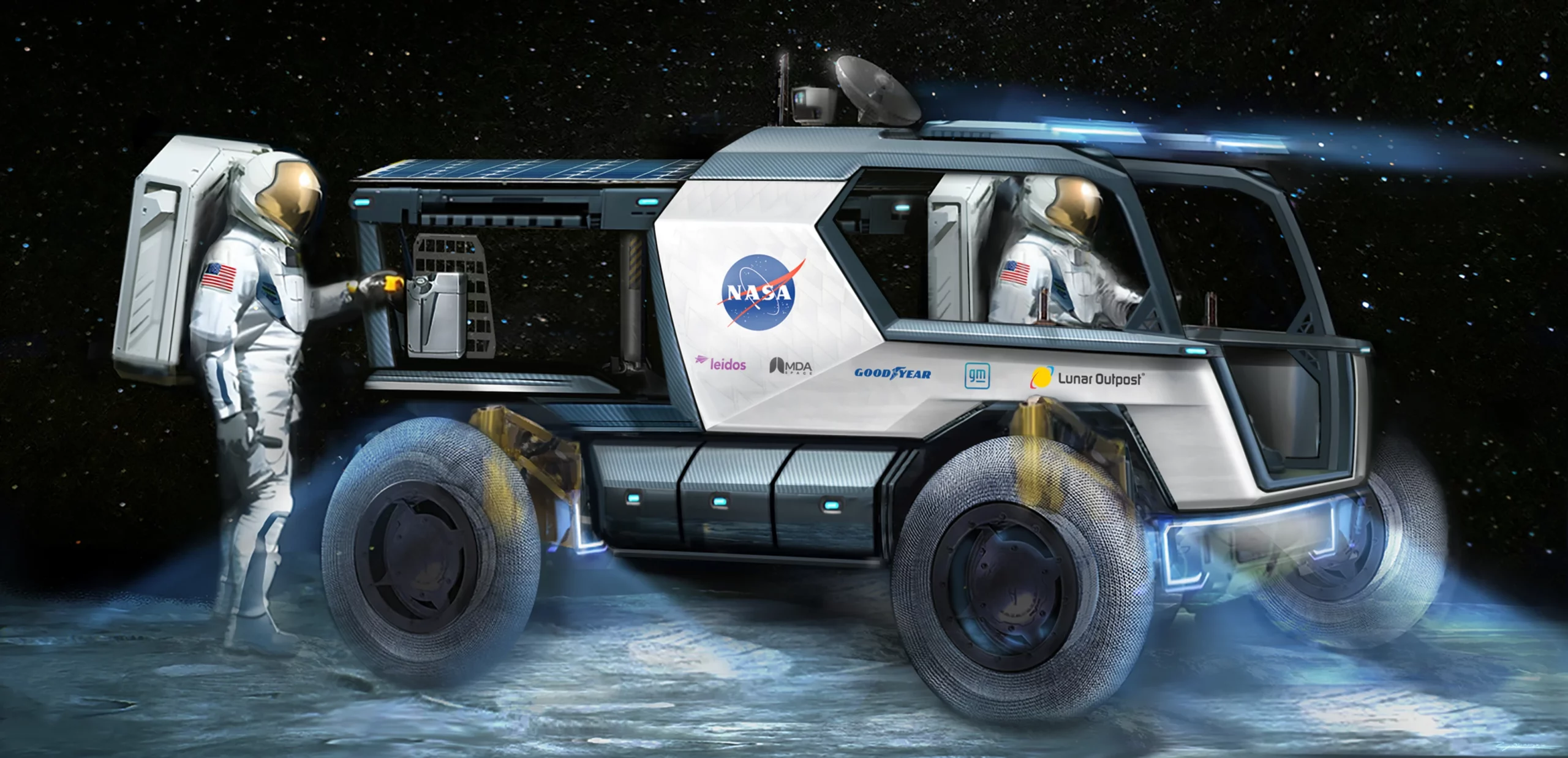
Illustration depicting the Eagle Space Truck on the lunar surface. (Credit: Lunar Outpost)
With flight heritage from Lunar Voyage 1, upcoming missions to Reiner Gamma and the South Pole, the Australian Roo-ver Mission, a planned uncrewed demonstration in the late 2020s ahead of integration with the crewed Artemis program (targeting Artemis V and beyond), and Eagle LTV development progressing toward 2029 Starship delivery, Lunar Outpost’s graduated rover architecture is transitioning from promising technology to operational infrastructure.
The Artemis IV for MAPP/DUSTER (robotic science support) selection validates the company’s technical approach and demonstrates NASA’s confidence in commercial mobility providers supporting crewed operations. As NASA prepares to announce the final LTV contract selection, Lunar Outpost stands positioned to provide the transportation infrastructure for humanity’s sustained return to the moon—from 10-kilogram prospecting rovers to human-rated terrain vehicles.
(Lead image: Artist’s impression of Lunar Outpost’s MAPP Rover. Credit: Lunar Outpost)