
In our assessment, no other sector or group in the New Zealand economy can make this contribution to New Zealand prosperity.
The total 2025 Māori economy assets is estimated to have a value of $132 billion. A significant increase from $69b in 2018. This is an uplift of 92%, which is more than double the increase for the rest of New Zealand for the same period.
Assessment by Ngao-tu Ngao-pae Rauawa Limited indicates a part of the increase in the value of these assets can be attributed to a combination of the completion of Treaty of Waitangi settlements, faster increases in the Māori population workforce and those self-employed, inflation and the improvement in data.
This highlights that despite certain constraints — such as access to capital, transitioning from settlement to enterprise, building capability and navigating rules and regulations that do not recognise collectively owned assets — the Māori economy is clearly high performing when it comes to asset growth.
The mix of Māori assets is weighted to agri-food, forestry, administration and social services, and property — that is traditional asset classes.
To transition the Māori economy to achieve faster growth and higher productivity and wellbeing, a new asset mix is needed on top of traditional assets. Assets such as: Healthcare and social services, professional services, construction, infrastructure and subsectors of manufacturing (technology and robotics). There is also an opportunity in education, information and media.
We have factored future growth will be driven by these new sectors.
Poised to thrive
The Māori economy is beginning to operate as a single system.
Much of Māori economic activity is starting to converge, drawing on the best of what has worked in the past with the ideas that are right for the future. The actions underway (through various collaborations) are not radical or complex but are “bloody hard” and require discipline, perseverance and generally a transformational and/or executional mindset.
We have leaders who can navigate these challenges. For more than a decade the National Iwi Chairs Forum (NICF) has strengthened their network (which now includes 88 iwi), with a focus on pou (thematic pillars) that traverse matters of national significance, to advance the wellbeing of Māori and iwi.
At the heart of the National Iwi Chairs Forum is the whakatauki: He waka kōtuia kāhore e tukutukua ngā mimira — A canoe that is interlaced will not become separated at the bow. In unity there is strength.
Using the forum structure, iwi regularly engage with key stakeholders, Government and officials to advance agreed priorities. That is enhance the policy settings and programmes of work, job creation, business growth and infrastructure — areas where the greatest uplift in Māori wellbeing can be achieved, in the interests of growing the Māori economy and therefore the quality of life of Māori.
The spirit of their focus is inclusivity — what benefits Māori benefits all of New Zealand.
There is no expectation that the Government should fix everything, quite the contrary. In fact, there is strong aversion to Government funding dependency.
However, this current political cycle has heightened the impact of begging bowl politics and installed a resolve by iwi and Māori to transform our future.
A paradigm shift
Iwi recognised a decade ago the need for iwi to come together, kotahitanga, to change leadership paradigms, engage with our rangatahi (our youth) and build new capital systems more conducive to doing things the Māori way by developing enduring collective models.
The NICF economic Pou Tahua, currently chaired by Jamie Tuuta of Ngāti Mutunga, provides leadership toward that end game with an unapologetic focus on how iwi/Māori collectives play a pivotal role in the ownership of New Zealand’s strategic assets.
To support the achievement of the 15-year (2040) growth forecast, the NICF economic Pou Tahua established Rauawa — a Māori-led charitable financial intermediary to address structural barriers to Māori access to capital.
Working alongside iwi, the Government and private capital partners, this aims to unlock a range of financial solutions, build long-term investor confidence and enable Māori/iwi to invest together at scale.
Notwithstanding Rauawa, the Māori economy comprises Māori Trusts, Incorporations and other Māori enterprises.
There is also the significance of the Kīngitanga and the call to action from Te Arikinui Kuini Nga Wai hono i te po and the inaugural Indigenous Economic Summit Oranga ki te Ao held on November 29, 2025.
Te Arikinui Kuini Nga wai hono i te po. Photo / The Office of the Kiingitanga
The Summit programme was designed for global and local leaders with a passion for Indigenous people’s success and prosperity.
The Māori way is wide and varied.
We work and hui tribally, we grow and learn and converge as Māori. Our ultimate success depends on doing many things well and ensuring they integrate effectively over intergenerational time horizons.
This is no mean feat. Execution is the key without losing a deep understanding of our purpose, that is our obligation to our mokopuna.
New Zealand needs us to succeed — a symbiotic future to accelerate growth.
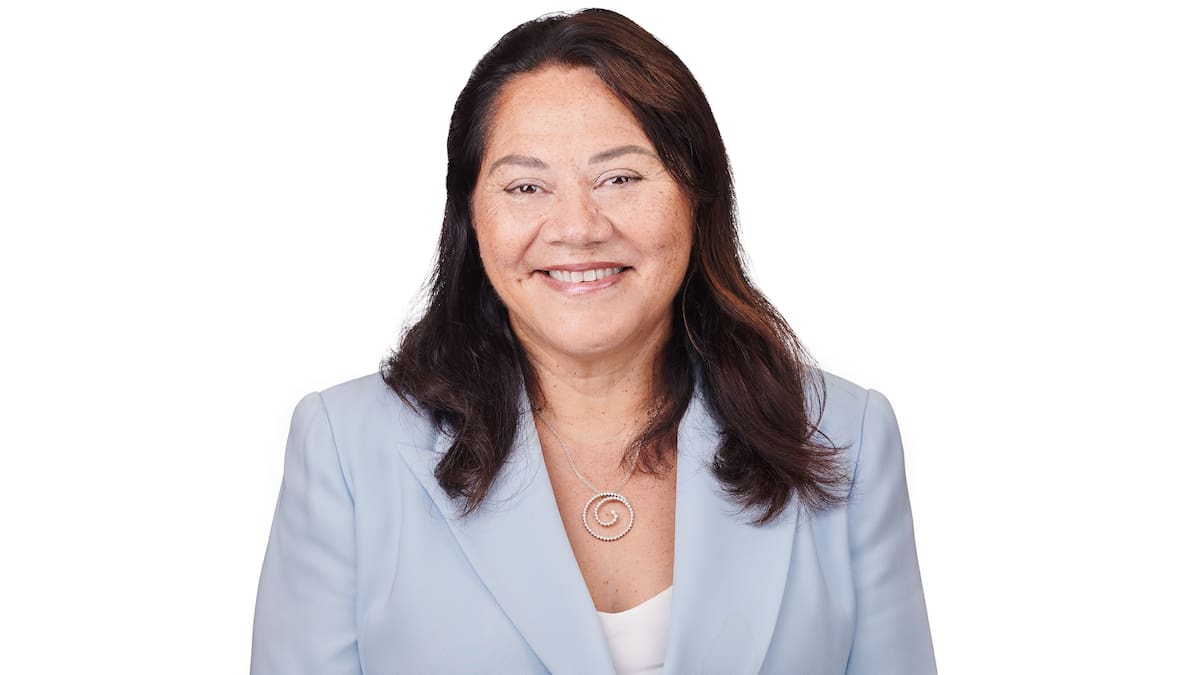
June McCabe is leading the establishment of Rauawa – a Māori-led charitable financial intermediary to address structural barriers to Māori access to capital.
McCabe, who is affiliated with Te Rarawa, has a lengthy track record in banking and the capital markets.
The National Iwi Chairs Forum economic Pou Tahua established Rauawa to support the achievement of the 15-year (2040) growth forecast to grow the Māori economy from $35,000 in 2025 t0 $70,000 by 2040 on a per capita basis.
Economic analysis and projections used in this article were provided to Ngao-tu Ngao-pae Rauawa Limited by Simon Hunter from MHS Aotearoa Limited.