
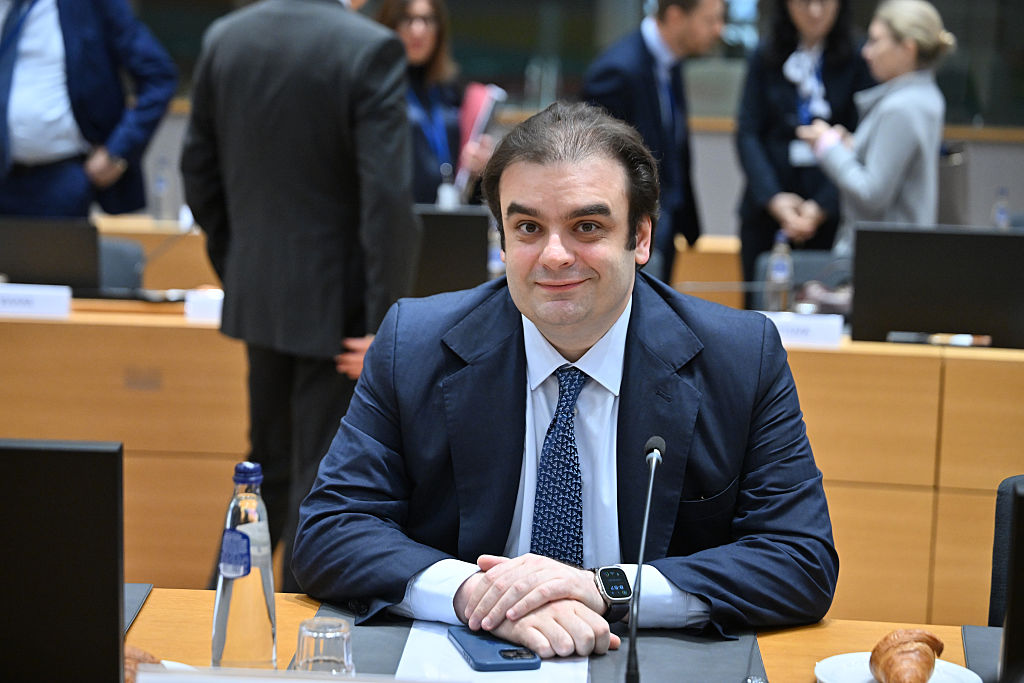
Athens has welcomed the election of its finance minister, Kyriakos Pierrakakis, as president of the group of EU economy and finance ministers, amid mounting pressure over ongoing probes that have caused severe reputational damage in Brussels.
Pierrakakis, a widely regarded technocrat with a socialist background, secured the support of his EU colleagues on Thursday, winning the Eurogroup presidency over Belgian Deputy Prime Minister Vincent Van Peteghem.
Greek conservative Prime Minister Kyriakos Mitsotakis described the outcome as a resounding message of optimism. “The former ‘black sheep’ of the financial crisis now rises to the top of the economic council of the continent’s most developed countries,” he said.
The Eurogroup played a central role in Greece’s debt crisis in the 2010s. It was in this forum that decisions were taken on bailout loans, spending cuts and economic reforms that reshaped Greece’s economy and led to years of austerity, deep recession, and social unrest.
Greece’s Pierrakakis clinches Eurogroup presidency
Greek Finance Minister Kyriakos Pierrakakis was elected Eurogroup president on Thursday, defeating Belgian Deputy Prime…
3 minutes
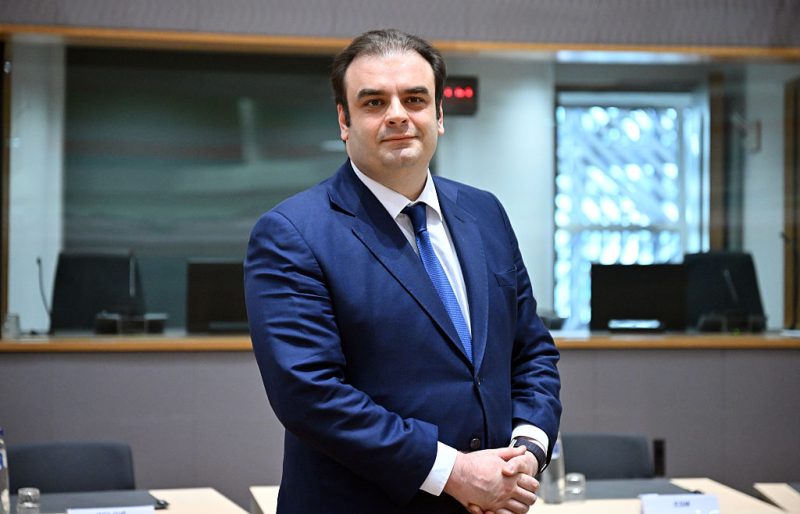
Local media report that Pierrakakis’ election is seen as a vote of confidence from Brussels, at a time when scandals, including illegal wiretapping of politicians, and a deadly train crash that killed 57 people, have tarnished Greece’s image in Brussels in recent years.
For his part, Pierrakakis has largely avoided domestic controversies, maintaining distance from politically charged disputes with the left opposition. He is instead known for his work to digitise state services, producing tangible results.
Public anger over farm scandal
The timing of this election is critical, as the conservative New Democracy government confronts domestic turmoil amid an ongoing parliamentary inquiry into an EU farm funds scandal.
The dispute arose after EU prosecutors, who investigate crimes involving EU funds, uncovered last June cases in which subsidy applicants had falsely claimed land ownership, declared farms or pastureland far from their residence, or submitted fake addresses and forged leases. Around 44,000 farmers have been blocked from receiving advance subsidy payments in 2025 as a result.
On the same day of the Eurogroup election, a Greek parliamentary committee examined the main suspect in the farm scandal, who invoked his right to remain silent when asked key questions. Greece’s anti-money laundering authority later revealed that it had identified about €2.5 million in the suspect’s bank accounts. It also said he owned eight vehicles, including a Jaguar, and had failed to submit a legally required asset declaration.
The inquiry sparked a massive public outrage, with many citizens on social media commenting on what they described as a “Greece with two faces in one day.”
(mm)