
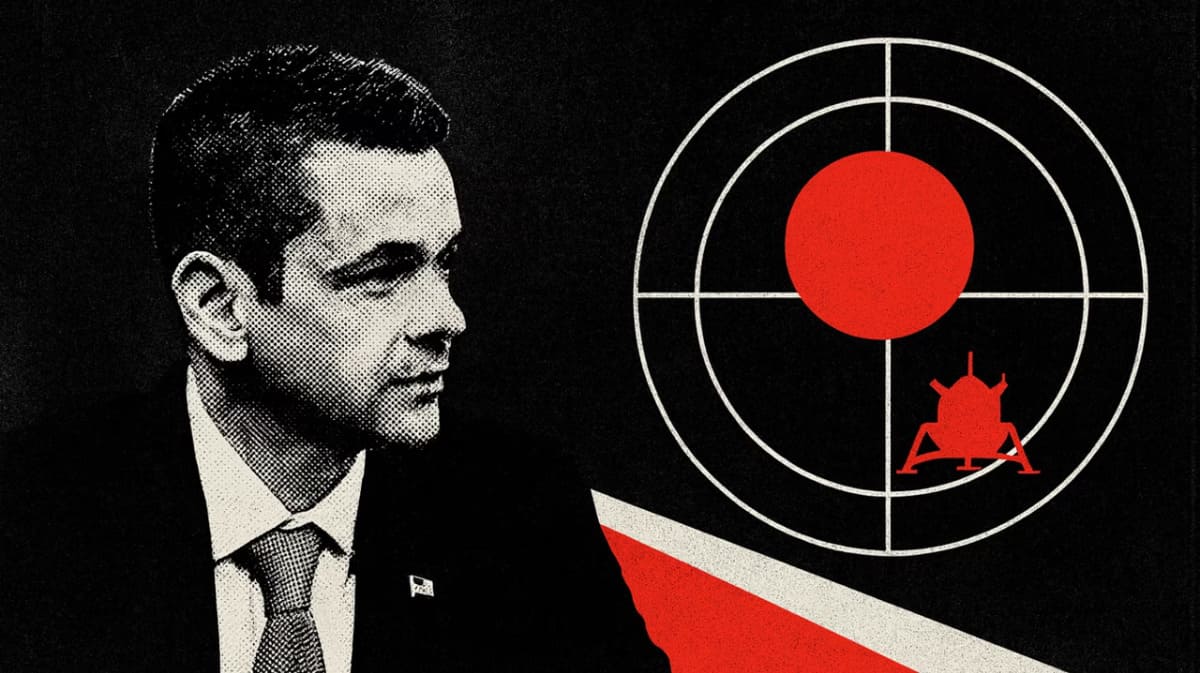
During a Senate hearing this week, Jared Isaacman—billionaire entrepreneur and likely future head of NASA—delivered a clear message: America won’t be beaten to the Moon.
“The United States will return to the Moon before our greatest rival,” he declared confidently. “And this time, we’ll build a lasting presence there.”
Isaacman, nominated by former president Donald Trump, appeared before senators for the second time after a rocky confirmation process. His first hearing took place eight months ago, before Trump abruptly withdrew his nomination. Now, after reversing course again in November, the president has put Isaacman back in the spotlight.
China’s rapid progress raises alarm
Since his first appearance, Isaacman—known by his call sign “Rook”—has stuck to the same promises: to restore American leadership in space, protect scientific research, and deepen cooperation with the private sector to keep NASA competitive.
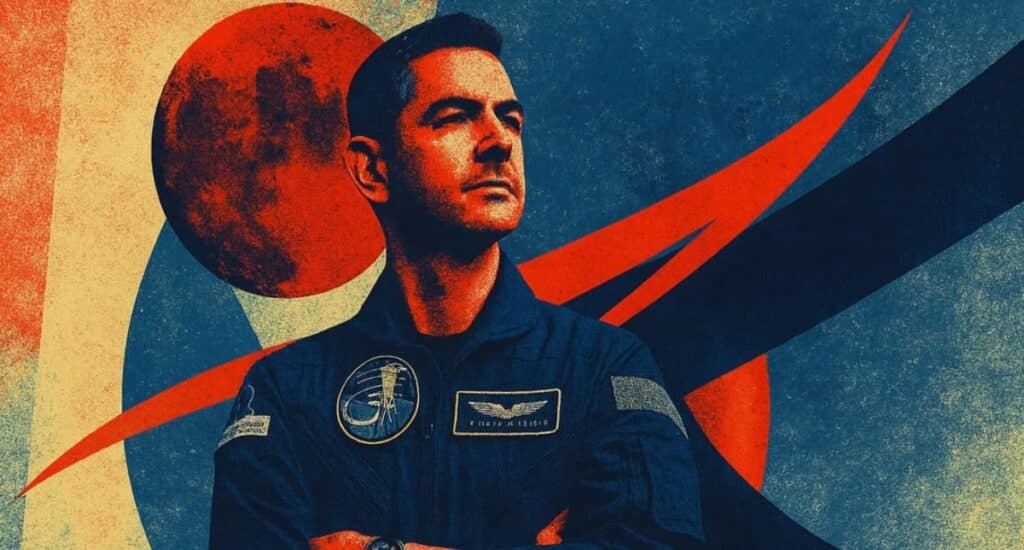
“Rook” Isaacman is now extremely well-positioned to take over as head of NASA. © NASA
There’s been a subtle but important shift, though. While Mars dominated the conversation during his first hearing, the focus this time was squarely on the Moon. And with good reason.
Experts are increasingly anxious that China’s fast-moving lunar program could outpace the U.S. and put Chinese astronauts on the surface first. As China racks up successful tests, NASA’s Artemis III mission—reliant on SpaceX’s Starship system—faces technical and scheduling hurdles. The pressure is on.
The risk of falling behind
Before the Senate, Isaacman’s tone was urgent—even combative. “This is not the time to wait, but to act,” he said. “Because if we fall behind, if we make a mistake, we may never catch up. The consequences would be a profound shift in the balance of power here on Earth.”
His warning was clear: if China lands on the Moon first, the U.S. would lose its claim to space dominance. China’s current timeline targets a 2030 mission, but Isaacman insists NASA will be ready well before then.
As the new space race heats up, his nomination appears to be gaining traction among senators—more support than he enjoyed during his first confirmation. Many astronauts have also voiced their approval.
A leader aligned with industry
Isaacman also faced questions about how he plans to execute NASA’s lunar return, especially after acting administrator Sean Duffy suggested that if Starship doesn’t meet expectations, contracts could reopen to competitors—namely Jeff Bezos’s Blue Origin.
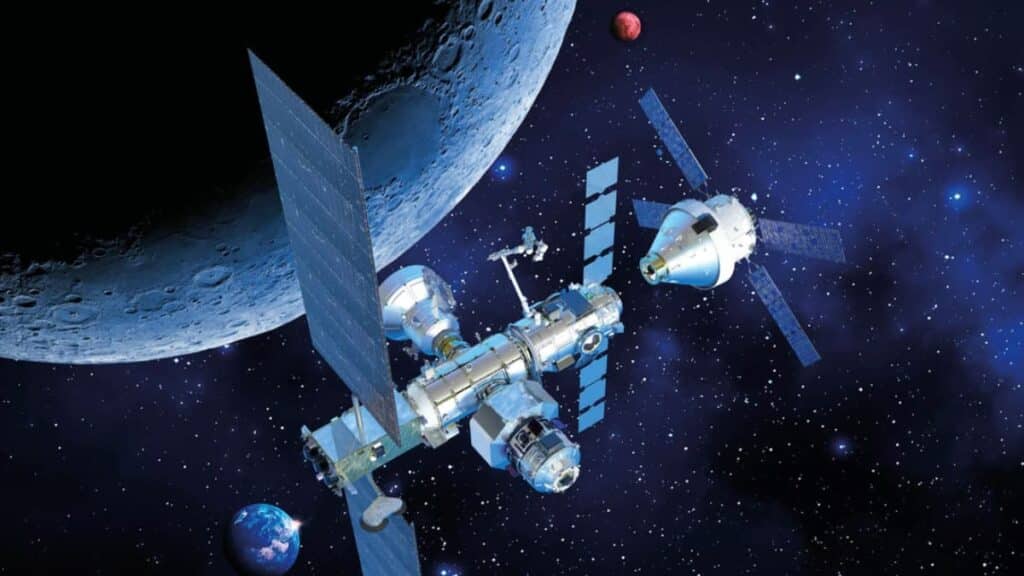
The Gateway lunar station would be maintained and supported by Isaacman. © Thales Alenia Space
A longtime ally of Elon Musk, Isaacman was quick to clarify: “I have no interest in favoring one over the other. My only goal is to make sure the mission succeeds.” Still, his appointment would likely benefit both tech titans, since his vision emphasizes tighter collaboration between NASA and the private sector.
That approach echoes his “Project Athena,” a proposal leaked by Politico, which outlined how a more industry-driven NASA could regain its edge and remain globally competitive.

Hugo Ruher
Science journalist
Science journalist, I am above all passionate about space, which is what inspired me to pursue this specialty. Drawn to science in general, I also closely follow news related to the environment and technology.
After earning a degree from Sciences Po Toulouse, I began working in radio, covering general news, international issues, and even local problems. At the same time, I started a career as a science journalist, first focusing on space and later on environmental topics.
Making complex information simple
A large part of my work involves reading scientific studies published in various journals, texts that are often complex or downright indigestible! My goal is to extract information from them and make it accessible to a broader, non-expert audience. This ambition is what truly drives me.
This path has led me to write for teen magazines like Cosinus, highly specialized publications such as Industrie & Technologies, as well as more mainstream outlets like Numerama or Le Monde.
In addition to that, I also sometimes write about topics that are a bit more “lightweight.” The digital world, ranging from the use of social media to AI, and even the culture around video games—are areas that I find fascinating and worth covering with a serious approach.