
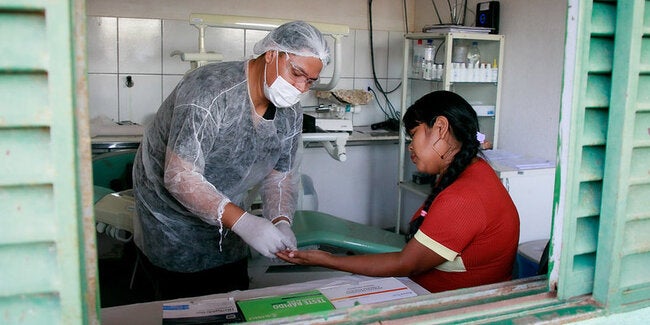
Reaching every region of Brazil
In Salvador, Bahia, Maria, a mother of two, received her positive diagnosis in week 24 of her pregnancy. She had gone to the primary care unit to schedule a prenatal appointment when she took the HIV rapid test, which came up “reactive.” She was referred to the HIV treatment unit.
The next day, after meeting with the infectious disease specialist, she started antiretroviral therapy. By her second test, her viral load was already undetectable, ensuring an HIV-free pregnancy. Throughout the process, doctors, nurses, social workers, and the cleaning staff created an environment of care that she describes as warm and compassionate.
“Mass testing and this connection with the community are what make primary care strong. We’re able to reach the largest number of pregnant women and possibly prevent and avoid mother-to-child transmission,” explains Nurse Hanna Silva, who works in the HIV treatment unit of Salvador’s Liberdade Hospital.
Her son, Ariel, was born by C-section for medical reasons, underweight but healthy. “Just seeing my son healthy—it’s such a big emotion. He changed my life. He’s my angel,” Maria says.
Primary care as the gateway
Across Brazil, stories like Maria and Isabella, are connected by a common thread: care. Their stories begin before prenatal care, with rapid testing, welcoming environments, active surveillance, the sensitivity of health professionals, and the trust built with each woman.
Rapid testing is simple, free, and accessible, and for Maria Priscila, a prenatal nurse who has been providing rapid tests at Cacoal Hospital’s primary care unit for years, it can be transformative: “In 20 minutes, we can guide them, initiate care, and lift a huge weight of fear. When they understand that the diagnosis doesn’t prevent their children from being born healthy, everything changes.”