
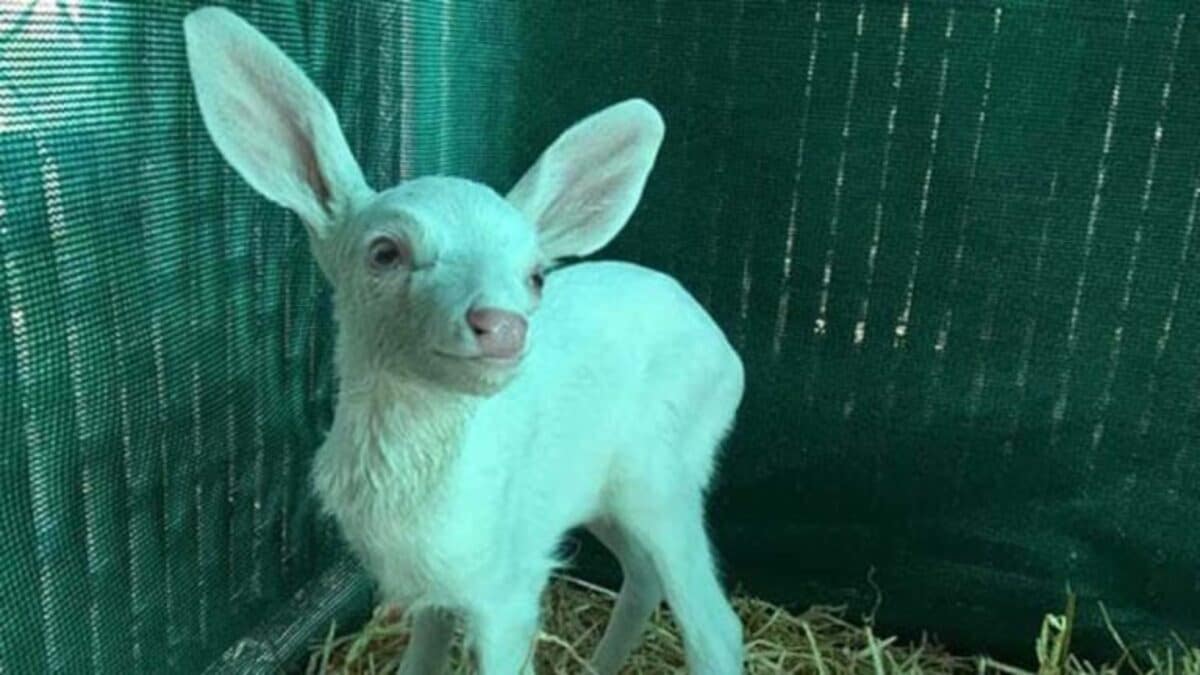
It looked like a lost sheep from the road: a bright, trembling bundle in the grass. Up close, it turned out to be something far rarer—and far more fragile—than anyone expected.
A Rescue Gone Delightfully Wrong
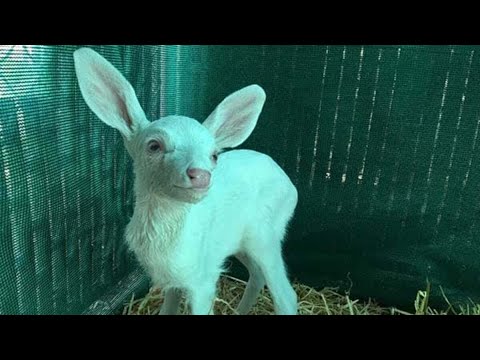
Sometimes life serves up a moment so unexpected that it feels plucked straight from a feel-good film. That’s what happened to John Becker, a Texas local who thought he was stopping to help a lost sheep on a quiet country road. The day began like any other — a drive through the rolling countryside, windows down, the radio humming softly. Then he spotted it: a small, white bundle by the roadside, trembling in the tall grass.
“From a distance, its coat was so bright and fluffy, I was convinced it was a sheep,” John later said. But as he edged closer, the creature lifted its delicate head, revealing not the face of a farm animal, but the fine, startled features of a tiny white deer — a creature far rarer than any sheep.
A Rare and Fragile Beauty
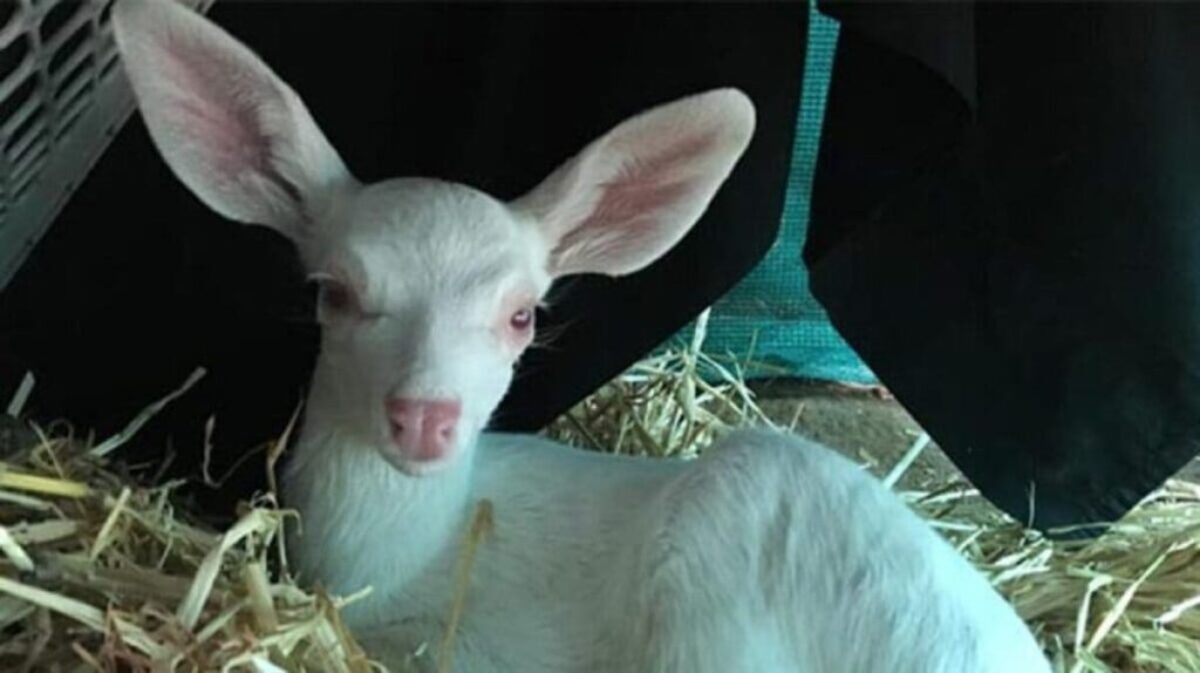
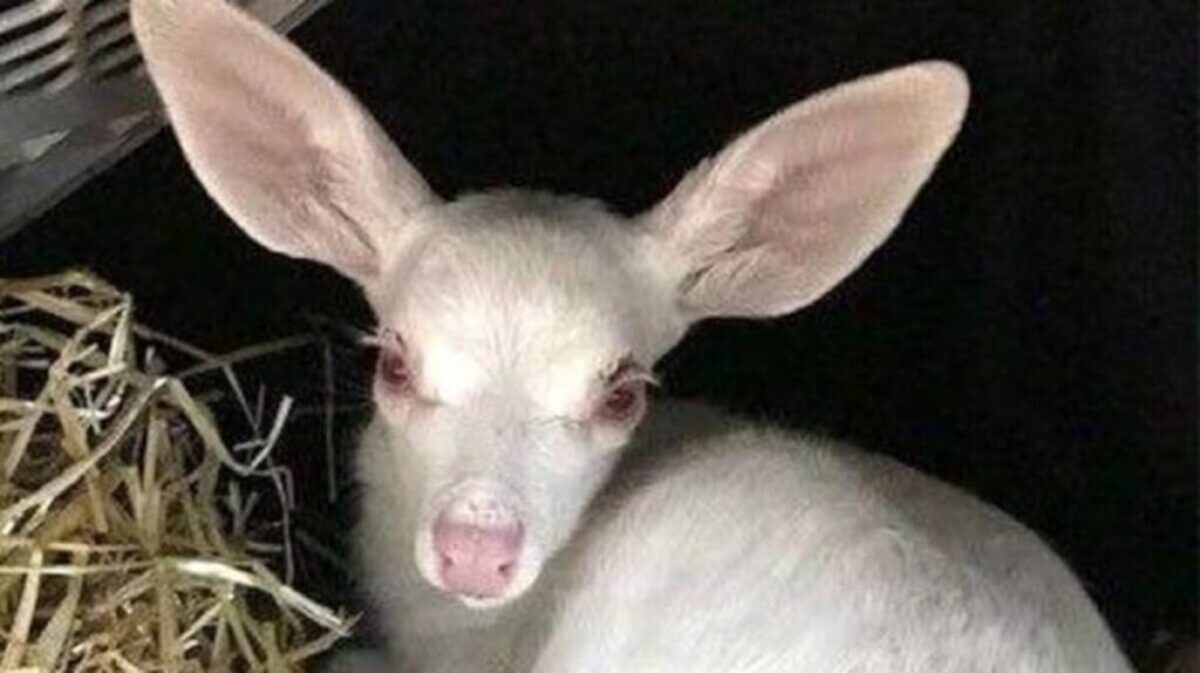
The animal John found was an albino fawn, a young deer with a genetic condition that results in little or no melanin, often producing a white coat and pink eyes.¹ Its snowy fur and pink-tinged eyes gave it an almost magical look — as though it had stepped out of a winter dream. Wildlife officials note that true albinism in deer is extremely uncommon, sometimes estimated at roughly one in 30,000.²
He gently lifted the fawn, cradling it in his jacket, and drove straight to a nearby wildlife rehabilitation center. There, staff confirmed it was indeed albino and still very young. Even more importantly, the fawn had likely been separated from its mother — and in cases like this, timing and professional help matter.
Did you know?
A fawn lying quietly by itself may not be orphaned at all; does often leave their young hidden while they forage nearby.³
The team named the little deer Spirit — a fitting choice for such a fragile creature that had already overcome so much.
Life at the Rescue Center
Spirit quickly became something of a local celebrity. Children from nearby schools sent in drawings, and families stopped by to ask after the fawn’s progress. A staff member at the center described the situation as unusual — not only because of Spirit’s coloring, but because truly white deer are so rarely seen.
Under the team’s care, Spirit began to grow stronger. The staff worked tirelessly to prepare the fawn for life back in the wild. They introduced it to a small group of other young deer and, in time, to a few older deer already in their care. These interactions were crucial: in nature, knowing how to forage, socialize, and stay alert are the difference between survival and danger.
The Promise of a Wild Future
Spirit’s story soon spread beyond the quiet Texas countryside. For many, it became a reminder of how small acts of kindness can ripple into something larger. The center says Spirit is adapting well and showing the right instincts. The team plans to release the fawn once it’s strong enough, in a protected area where it can live freely while minimizing risk from predators.
Albino deer can face particular challenges in the wild. Their bright coloring may make them more visible, and wildlife agencies have noted that albinism can be associated with poor eyesight and other issues that can affect survival.⁴ But with a bit of human help and a safe habitat, Spirit stands a real chance.
A Simple Act with Lasting Meaning
What began as a simple roadside stop turned into a lesson in compassion — and perhaps in perspective, too. We’re often in such a rush that we forget the world around us still holds moments of wonder. John Becker certainly didn’t expect to become the hero of a wildlife rescue story that day, but his quick thinking may have saved one of nature’s rarest creatures.
Spirit’s journey from a frightened fawn by the roadside to a symbol of hope, care, and resilience is a quiet testament to the good that still exists in the world — even on an ordinary Texas afternoon.
Footnotes
West Virginia Legislature — “Fiscal Note (Albino Deer Definition)” — URL: https://www.wvlegislature.gov/Fiscalnotes/FN%282%29/fnsubmit_recordview1.cfm?recordid=798724675&submitID=10432
North Carolina Wildlife Resources Commission — “Deer Diseases” — URL: https://www.ncwildlife.gov/connect/have-wildlife-problem/wildlife-conflicts/common-wildlife-diseases/deer-diseases
Texas Parks & Wildlife Department (Texas.gov) — “Leaving Wildlife Alone Is Best Practice” — URL: https://tpwd.texas.gov/newsmedia/releases/?req=20240404a
Missouri Department of Conservation — “Miscellany (Albino Deer Frequency and Survival Challenges)” — URL: https://mdc.mo.gov/magazines/conservationist/2012-11/miscellany
Similar Posts

Brian is a journalist who focuses on breaking news and major developments, delivering timely and accurate reports with in-depth analysis.
[email protected]
Find and win
A treasure is hidden in this article! Share it to start the game and try to uncover the secret word.
The first 10 people to submit it via the form that appears after you share will win a surprise prize!
Good luck