
The Rotorua Daily Post reported that a potential sale collapsed after Health NZ refused to transfer its contracts, which represented 80% of the business’ income.
Para cyclist Siobhan Terry, 25, said she had used QE Health’s orthotic services since she was 12 for bilateral talipes (clubfoot).
She initially used plastic prosthetics, but these were uncomfortable, painful, and potentially could have led to an amputation.
In 2019, staff helped her get carbon fibre prosthetics from the United States, which eased her daily pain.
Terry said she owed “so much to the team” at QE Health.
“They’ve just allowed me to see so much more capability within having a disability and what’s possible for the future.”
She was “quite positive” she would have her leg for a “long time”.
Rotorua’s Siobhan Terry in action at the UCI Para-cycling Track World Championships in Brazil. Photo / SWPix
She said the closure was “heartbreaking” for staff.
“For myself, it creates a whole lot of difficulty in terms of where do I go now? Am I going to have to go back to plastic?”
She had “some starting points” for other clinics.
Terry thanked staff for creating “a welcoming and supportive environment” and the orthotics team for their work.
Sue Gardner, 66, said she had done QE Health’s ReCharge pain management programme three times, which attracted people nationally and internationally.
“Where are they going to go now? There’s nothing like it in New Zealand.”
Gardner, from Rotorua, used the QE Health gym’s “big flatbed” for stretching and Pilates.
She found that alternative gyms online did not offer a flatbed.
Gardner said her health would “decline faster” without a suitable gym.
“It brings broken people together and helps them cope with what they’ve got.”
Waikato resident Nicola Amos said she recently did the ReCharge programme.
After living with decades of pain, she often told herself things were “too hard” or that she was too tired.
Consequently, “I avoided many activities for much of my life”.
She said the programme was “genuinely eye-opening” and helped her understand how long-term pain had shaped her thoughts, behaviours and choices.
The closure was “an absolute shame”, and she was heartbroken for the staff who would lose their jobs.
Palmerston North resident Liz Corbett said she was referred to QE Health’s ReCharge programme in 2018 by her local pain management team.
Liz Corbett, of Palmerston North, said she did the ReCharge programme in 2018 after having “blood clots” in her lungs.
“Basically, every time I was breathing, it was like inhaling glass.”
She was highly medicated for pain and “struggling to function”.
The programme helped her get diagnoses of fibromyalgia and myalgic encephalomyelitis.
“You are given the tools to then, long-term, be able to hopefully reduce your pain.”
Corbett said she still lived with chronic pain but could now breathe comfortably.
QE Health former interim chief executive Craig Wilson said he met Health NZ representatives on Monday to discuss the services it delivered for the agency.
Wilson advised that QE Health had about 1200 active Health NZ patients with more than 2300 appointments scheduled until December 2026.
“Health NZ expressed surprise at the scale of activity and acknowledged they do not currently have the capacity or staffing to absorb these services.”
He said QE Health was the Lakes region’s only provider with a rheumatologist and there was no alternative orthotics provider regionally.
The ReCharge programme – “the only publicly funded programme of its kind” – treated about 250 patients annually.
“The only alternative is an ACC-funded programme in Auckland, which currently has a six-month wait just for assessment.”
Twenty-five patients had their treatment cancelled because of the lack of an alternative provider, and there was “widespread concern” about medical care continuity.
Wilson said it had arranged for a local gym to offer discounted memberships to affected clients, but QE Health’s “highly specialised” gym services “will be difficult to replicate elsewhere”.
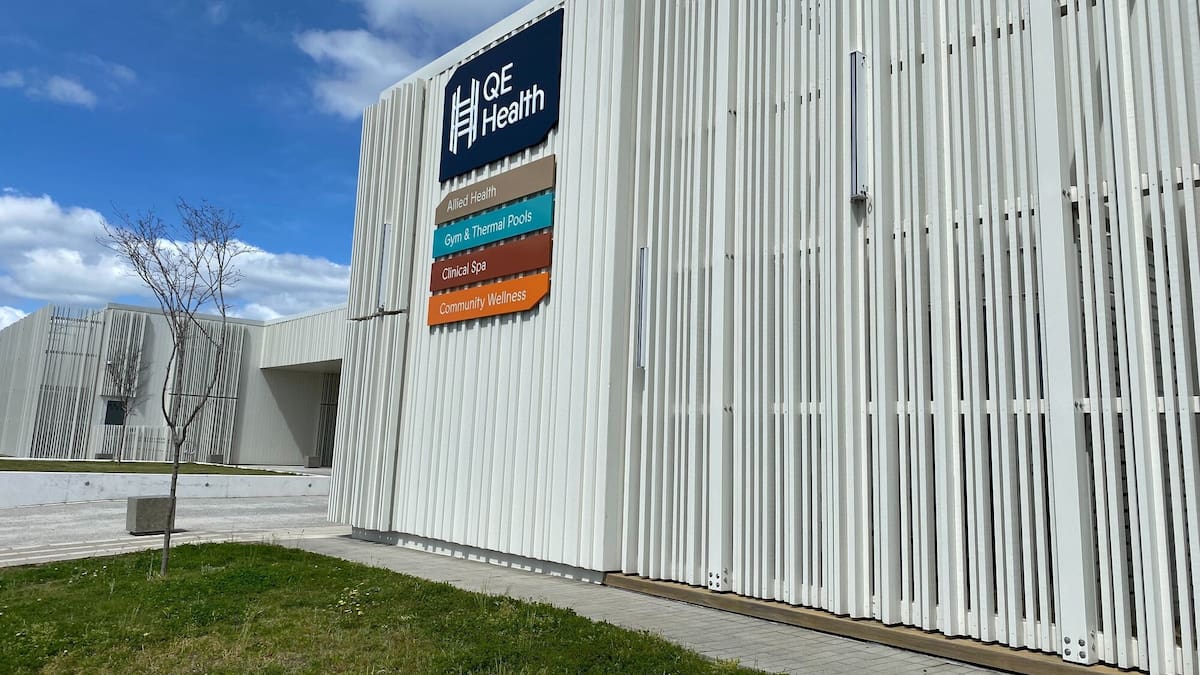
QE Health in Rotorua was put into voluntary liquidation in November. Photo / Ben Fraser
Wilson said responses such as those shared with the Rotorua Daily Post by Terry and Gardner were “all too familiar” from patients and gym members.
“Our gym is not like others in that it is very inclusive, with staff that help and take care of people to get the best outcome for them.
“Healthcare is a people business, and we have some of the best …”
Nicola Ehau, Health NZ’s Midland Te Manawa Taki regional planning, funding and outcomes director, said it was working with QE Health to transition patients to appropriate services.
That included working with clinical teams to ensure rheumatology services remained available.
Planning was underway to maintain orthotics service delivery, with several options being considered, including support from Waikato-based services.
Health NZ was assessing immediate, medium-term and longer-term options for a multidisciplinary pain management care model, she said.
Its priority was ensuring everyone on a referral or waitlist was contacted and kept informed.
Megan Wilson is a health and general news reporter for the Bay of Plenty Times and the Rotorua Daily Post. She has been a journalist since 2021.