
After ChatGPT took some of its search traffic, Alphabet rebounded by introducing AI Overviews and AI Mode.
Alphabet’s Gemini 3 is considered a leading LLM.
Management will increase the tech giant’s capital expenditures in 2026.
10 stocks we like better than Alphabet ›
It’s clear that artificial intelligence (AI) is changing the world in significant ways, and the major hyperscalers are all investing hundreds of billions of dollars in their efforts to capitalize on the trend. Companies like Amazon, Meta Platforms, and Alphabet (NASDAQ: GOOG) (NASDAQ: GOOGL) are all developing robust AI businesses that are driving the charge, and companies like Nvidia and Broadcom are providing key parts of the hardware infrastructure that supports the technology.
If 2025 was a year of expansion, 2026 could be a year when those companies’ investments start showing results, and when that happens, Alphabet could be a big winner.
The current types of large language models (LLMs) were first introduced to the public through OpenAI’s ChatGPT three years ago, but Alphabet has actually used similar tech to power its Google search engine for years. However, the ChatGPT launch changed the AI landscape and led to a new LLM race, and Alphabet now offers its own generative AI services.
Although it looked for a time like Google was in danger of losing its dominance in search as more people just asked questions to ChatGPT and had it do the legwork, Alphabet has responded effectively by rolling out its own competitive LLMs, and it flipped the script by offering AI Overview and AI Mode on its search pages. Recently, paid clicks have been accelerating, and Alphabet’s revenue is soaring. Sales increased 16% year over year in the third quarter, with strong performances across the business.
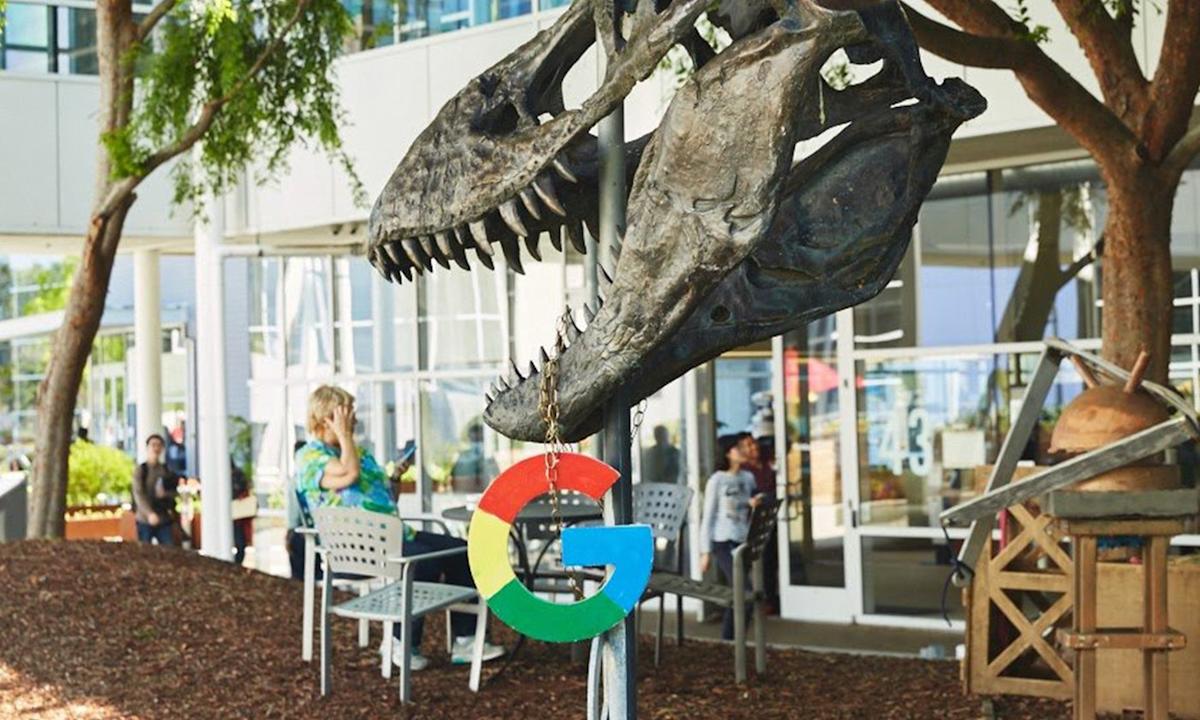
 Image source: Alphabet.
Today, its operation includes a broad spectrum of products and services, including YouTube, Android, Waymo autonomous vehicles, and others. Google Search remains its core business, but there’s a lot more going on. Its varied revenue streams will provide it with diverse growth drivers in 2026 and beyond.
However, of particular importance recently is the Google Cloud Platform. Alphabet’s cloud services are where its clients engage with generative AI to create their own apps and agents, and cloud services revenue increased 34% year over year in Q3. The accelerating pace of growth in this area implies that the opportunity to create with AI is attracting more clients to the cloud, and Alphabet’s newest LLM, Gemini 3, has been rated the top LLM to use right now according to several leaderboards. Gemini has 650 million active users, and the company is capitalizing on its strong user base to monetize these services.
Story Continues
Beyond its robust LLMs, which may be winning the LLM wars at least for now, and its search feature, which still holds a market share of about 90%, Alphabet has other AI products that are driving growth. It designs its own AI accelerator chips, called Tensor Processing Units (TPUs), which it uses to train and power its LLMs, along with the Nvidia graphics processing units (GPUs) that most of its rivals are using today.
“Our extensive and reliable infrastructure, which powers all of Google’s products, is the foundation of our stack and a key differentiator,” CEO Sundar Pichai said.
Alphabet has made several important deals recently for its TPUs, which are specialized chips designed for deep learning and inference workloads, in contrast with Nvidia’s more general-purpose GPUs. TPUs give Alphabet an edge in AI development, especially as LLMs become more sophisticated and need more of this kind of processing power to deliver the results users want. Alphabet signed a key partnership with Anthropic, which makes the popular Claude LLM, and is rumored to be in talks with Meta to supply it with chips.
On the Q3 earnings call, management told investors that it expects to spend between $91 billion and $93 billion on capital expenditures in 2025, up from its previous forecast figure of $85 billion. It also plans a “significant increase” in capex in 2026.
The results of all this spending are already showing up in accelerated cloud growth, accelerating paid clicks, and higher overall sales, and those trends could get even better next year.
Before you buy stock in Alphabet, consider this:
The Motley Fool Stock Advisor analyst team just identified what they believe are the 10 best stocks for investors to buy now… and Alphabet wasn’t one of them. The 10 stocks that made the cut could produce monster returns in the coming years.
Consider when Netflix made this list on December 17, 2004… if you invested $1,000 at the time of our recommendation, you’d have $511,196!* Or when Nvidia made this list on April 15, 2005… if you invested $1,000 at the time of our recommendation, you’d have $1,047,897!*
Now, it’s worth noting Stock Advisor’s total average return is 951% — a market-crushing outperformance compared to 192% for the S&P 500. Don’t miss the latest top 10 list, available with Stock Advisor, and join an investing community built by individual investors for individual investors.
*Stock Advisor returns as of December 15, 2025
Jennifer Saibil has no position in any of the stocks mentioned. The Motley Fool has positions in and recommends Alphabet, Amazon, Meta Platforms, and Nvidia. The Motley Fool recommends Broadcom. The Motley Fool has a disclosure policy.
This “Magnificent Seven” Company May Now Be Winning the AI War was originally published by The Motley Fool