
A physicist at the University of Cincinnati was able to crack a problem that was presented as unsolvable in the famous sitcom, ‘The Big Bang Theory’.
Professor Jure Zupan and colleagues figured out how to, theoretically, produce subatomic particles called axions in fusion reactors.
Fictional particle physicists Sheldon Cooper and Leonard Hofstadter worked on the problem in three episodes of the show’s fifth season, but were unable to solve it. “The general idea from our paper was discussed in ‘The Big Bang Theory’ years ago, but Sheldon and Leonard couldn’t make it work,” Zupan said in a press statement.
Investigating axions
UC physics Professor Jure Zupan worked with a team of theoretical physicists at the Fermi National Laboratory, MIT, and Technion-Israel Institute of Technology to find a solution to the problem. The team published their findings in a new study in the Journal of High Energy Physics.
Axions are hypothetical particles that could help explain dark matter, the mysterious invisible substance that makes up 85 percent of the universe. Unlike normal matter, dark matter does not absorb or reflect light. Scientists know it exists due to its gravitational impact on galaxies and star clusters. One well-known theory is that dark matter is a very light particle called an axion.
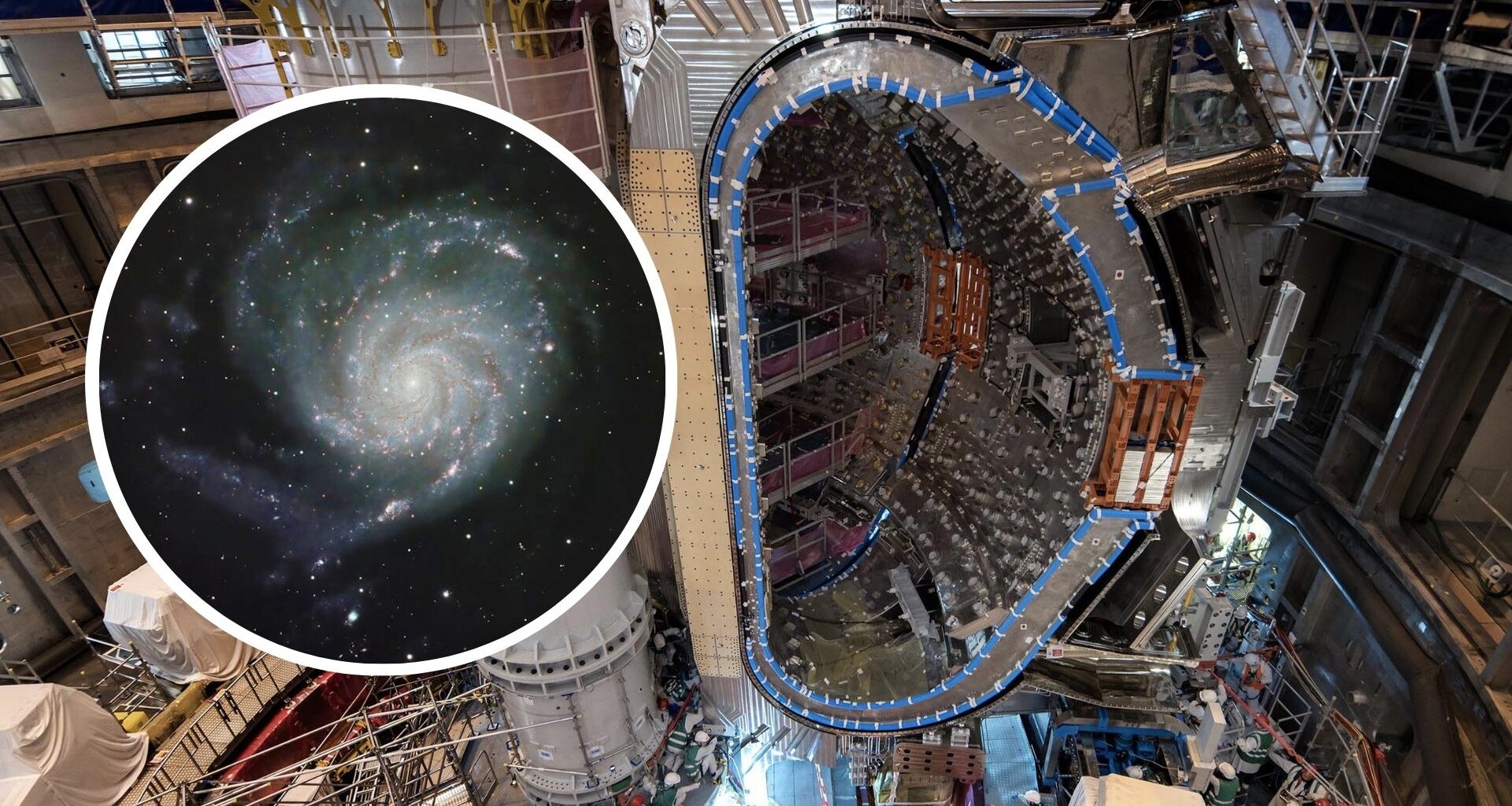
Physicist cracks fusion reactor problem that ‘Big Bang Theory’s’ Sheldon Cooper couldn’t solveZupan and his colleagues set out to discover how axions can be produced in a fusion reactor. They considered a specific type of reactor powered by deuterium and tritium in a vessel lined by lithium. One such reactor is being developed in the south of France as part of a global collaboration. According to a University of Cincinnati press statement, this reactor will produce dark sector particles due to a flux of neutrons.
“Neutrons interact with material in the walls. The resulting nuclear reactions can then create new particles,” Zupan said in the statement.
Another method would see axion particles generated when neutrons bounce off other particles, slowing them down. This releases energy in a process known as bremsstrahlung, or “braking radiation.” According to the scientists, these new particles could be axions, or axion-like particles.
The Big Bang Theory
In ‘The Big Bang Theory’, the characters never actually talk about axions when they are trying to solve the problem. Instead, their calculations are shown on whiteboards—an Easter egg for physicist fans of the show.
“That’s why it’s fantastic to watch as a scientist,” Zupan said. “There are many layers to the jokes.”
The ‘Big Bang Theory’ is famous for incorporating well-known scientific concepts like Schrodinger’s cat into its writing. It also featured famous names in the world of science and technology, including a cameo from SpaceX CEO Elon Musk.
The series aired its final episode in 2019. The show won 10 Emmy awards out of 55 nominations throughout its roughly 12-year run.