
These steps have confirmed long-standing structural weaknesses and past mismanagement: non-performing loans (NPLs) surged to 36% of total loans by September 2025, while system-wide bank capital ratios plunged to 4.5% in June, less than half the 10% regulatory minimum
Jean Pesme
20 December, 2025, 03:40 pm
Last modified: 20 December, 2025, 03:56 pm
Illustration: Ashrafun Naher Ananna/TBS Creative
“>
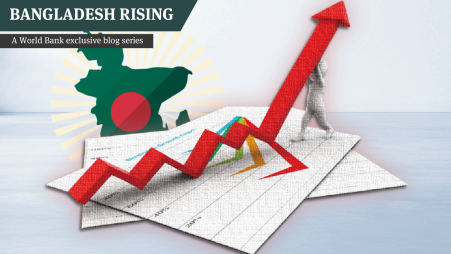
Illustration: Ashrafun Naher Ananna/TBS Creative

Bangladesh’s robust growth narrative stalled in recent years, and substantial capital flight has weakened the financial sector’s health. Can Bangladesh climb the middle-income ladder without a strong and accountable financial sector?
The country’s vision of becoming an upper middle-income nation requires unprecedented investment and private capital mobilisation. However, the financial sector remains shallow overall and the banking sector, which accounts for 88% of total financial sector assets, faces mounting stress. Years of weak corporate governance, unchecked regulatory capture, and practices of lending to connected groups have worsened the financial sector’s performance and solvency. Instead of enforcing discipline, prolonged regulatory forbearance encouraged risky behaviour and delayed reforms. The consequences have been staggering: billions of dollars are alleged to have been siphoned off from banks.
The interim government and the Bangladesh Bank have initiated significant reforms to enhance transparency and disclosure by aligning the regulatory framework with international standards, while intensifying supervision. An asset recovery task force was established due to the magnitude of potential claims arising from misconduct in the banking sector.
These steps have confirmed long-standing structural weaknesses and past mismanagement: non-performing loans (NPLs) surged to 36% of total loans by September 2025, while system-wide bank capital ratios plunged to 4.5% in June, less than half the 10% regulatory minimum. State-owned banks suffer from high NPLs and severe capital shortfalls, making eventual restructuring essential. Moreover, the state’s direct interventions in the financial sector, through directed lending and implicit guarantees, distort market efficiency.

Keep updated, follow The Business Standard’s Google news channel
Restoring financial stability
Restructuring the banking system requires at least 10% of GDP for recapitalisation, which would further strain fiscal resources, crowd out private sector credit, and deepen the sovereign-bank nexus due to greater government borrowing. Domestic banks held 36.1% of total public debt at the end of FY25, up from 34.7% in FY24. Further, the FY26 budget projects that 47% of the government’s total borrowing will come from the banking sector. Delaying action would only increase costs and amplify risks.
Banking crises impose heavy economic costs, and the economic impacts of joint government debt and banking crises are most severe. They are associated with declines in median real GDP per capita of 7%, one year from their onset (World Bank, 2024), as financial instability disrupts economic activity and weakens investor confidence. Global experience offers lessons: countries that acted decisively not only stabilised their systems but also returned to strong growth.
While Bangladesh’s context is unique, these lessons remain highly relevant. Establishing a well-regulated banking system will attract investment, reduce NPLs, and revive private sector credit, creating more and better-paying jobs. With support from the international community, Bangladesh is also working to recover assets believed to have been illicitly transferred abroad.
To regain macro-economic and financial stability, four priorities stand out:
First, the Central Bank’s operational independence is a precondition for protection from political interference and financial sector stability. But law alone isn’t enough, real change demands tough regulatory enforcement and vigilant, risk-based supervision.
Second, the banking sector’s much-needed restructuring should prioritise viability and profitability, avoid regulatory forbearance, and ensure transparent burden sharing. A time-bound implementation plan is essential. Bangladesh must address legal and market gaps, especially slow court processes, by strengthening bankruptcy laws and creating a secondary NPL market.
Third, reforming state-owned banks, alongside policies to crowd in commercial financing for SMEs, women, and youth, will reduce fiscal costs and expand access. Asset quality reviews can inform a time-bound reform strategy for state-owned banks to restore financial stability by phasing out regulatory forbearance and implementing sound corporate governance and risk management.
Fourth, deposit insurance covers most depositors but only a fraction of total deposits, and payout processes are slow. The Deposit Protection Fund is limited in size, leaving small depositors exposed. The new Deposit Protection Ordinance is a vital step, but it’s not enough. Fully operationalising the system, expanding the fund, and raising public awareness are critical.
Expanding financial inclusion and access to finance
After a decade of steady progress, Bangladesh’s momentum in financial inclusion has stalled, especially for women. Today, just over half of adults have a bank account or access to mobile money, with one of the world’s widest gender gaps. Access to finance remains a major hurdle for businesses. Without restoring stability in the financial sector, efforts to expand financial inclusion and access will falter. Building on recent progress, Bangladesh can focus on accelerating digital finance adoption by enabling mobile financial services to issue and validate merchant e-wallet accounts, enhancing transparency on pricing and fees, and broadening credit information bureau reporting and data access.
Financial sector stability is not just a technical goal, it is the foundation for inclusion, where finance works for everyone, not just a few. This means not only fixing the banking sector, but also developing long-term finance and deepening capital markets. With a strong and accountable financial system, Bangladesh can drive inclusive growth and create quality jobs for its citizens.
Jean Pesme is the World Bank Division Director for Bangladesh and Bhutan
This article, part of the #BangladeshRising Blog Series, has been published under special arrangement with The World Bank