
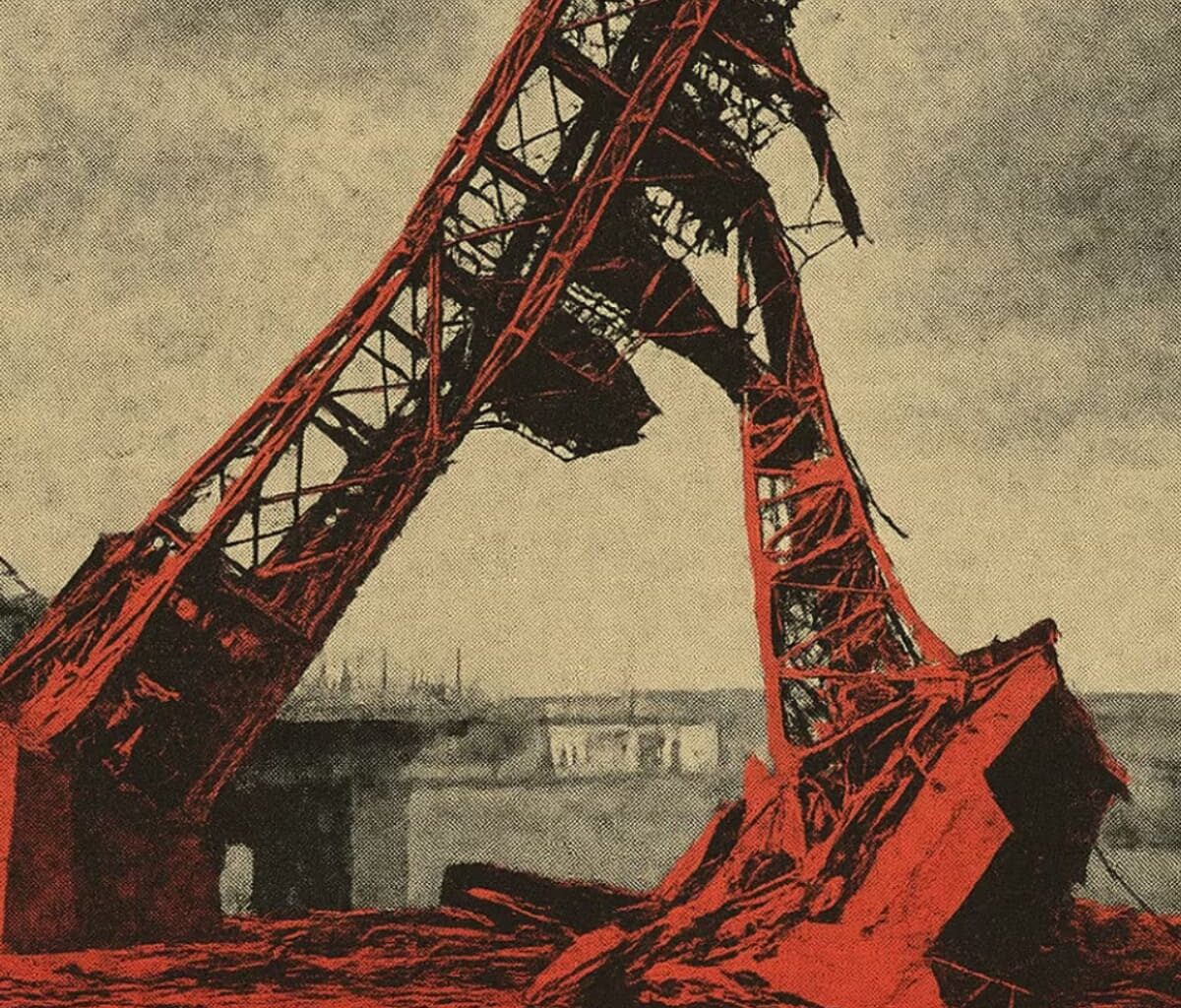
The Baikonur Cosmodrome has sustained serious damage following the recent launch of the Soyuz MS-28 mission to the International Space Station (ISS). While the crew arrived safely in orbit, the launch pad itself is reportedly out of commission.
On paper, everything looked routine. The Soyuz spacecraft lifted off on schedule the morning of November 27, carrying two Russian astronauts and one American crew member. The capsule successfully docked with the ISS, and all three joined their colleagues already aboard the station.
A smooth flight—but chaos on the ground
Things were far less successful back on Earth. Russia’s space agency, Roscosmos, confirmed that the Baikonur launch pad suffered significant structural damage during liftoff but assured that the situation was under control. The agency stated that such wear and tear is common after launches and that standard inspections and quick repairs are already underway.
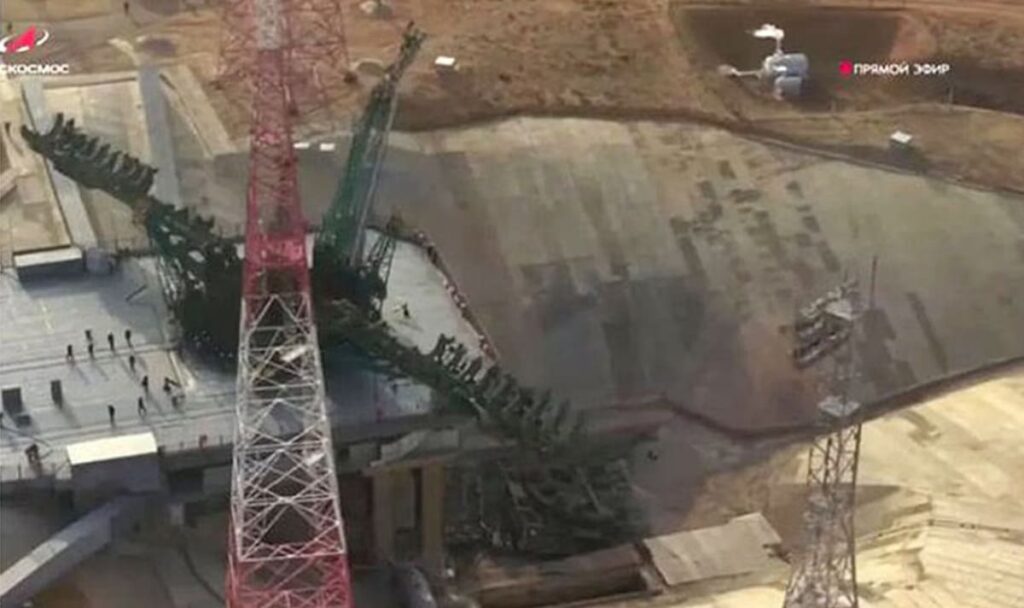
The Baikonur launch pad after the accident. © Roscosmos
However, independent experts are far less optimistic. According to Russian Space Web, a site specializing in the country’s space program, the damage is much worse than officials admit. Photos from the site appear to show that part of the service tower has collapsed.
The fallen structure is reportedly the service cabin—a critical access platform at the base of the rocket—that crumbled right after launch. Fortunately, no one was injured. The bad news? Full repairs could take up to two years.
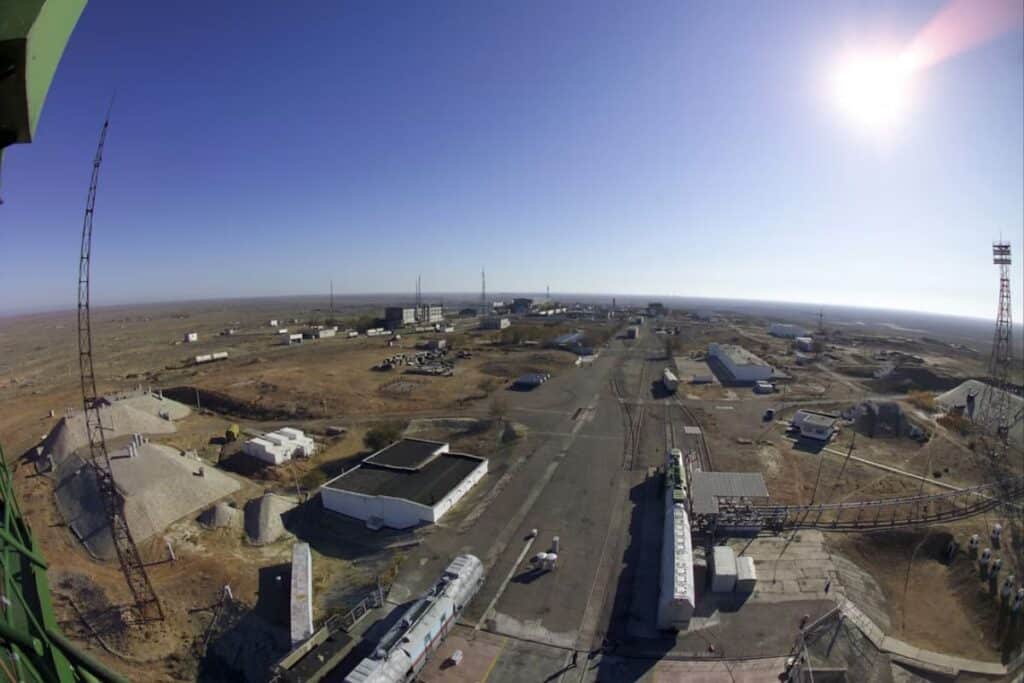
The Baikonur complex. © ESA
Can Russia still access space?
That doesn’t necessarily mean Russia is grounded for good. Experts believe partial repairs could restore the pad to limited use within a few months, even if full reconstruction takes much longer.
Still, the clock is ticking. The next launch from Baikonur was already scheduled for December 21—a Progress MS-33 cargo mission to resupply the ISS. It remains uncertain whether the pad will be ready in time or if another player, like SpaceX with its Dragon spacecraft, will have to handle the job instead.
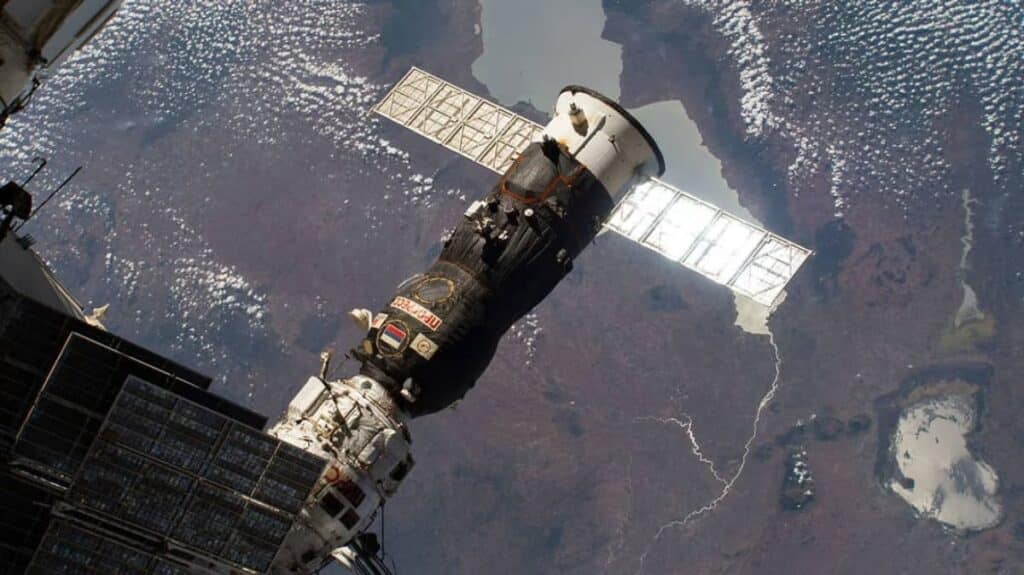
The Russian cargo ship Progress 72. © NASA
A crucial test for Russia’s space future
The next crewed mission, Soyuz-29, is planned for June and will again carry two Russian cosmonauts and one American astronaut to the ISS. If the repairs aren’t complete by then, it would be another blow to Russia’s space ambitions, which have already been facing mounting technical and political challenges.
For now, Baikonur—once a symbol of Soviet and Russian space power—faces one of its toughest tests in decades. Whether it can rebound quickly will determine how much longer Russia can remain a key player in human spaceflight.

Hugo Ruher
Science journalist
Science journalist, I am above all passionate about space, which is what inspired me to pursue this specialty. Drawn to science in general, I also closely follow news related to the environment and technology.
After earning a degree from Sciences Po Toulouse, I began working in radio, covering general news, international issues, and even local problems. At the same time, I started a career as a science journalist, first focusing on space and later on environmental topics.
Making complex information simple
A large part of my work involves reading scientific studies published in various journals, texts that are often complex or downright indigestible! My goal is to extract information from them and make it accessible to a broader, non-expert audience. This ambition is what truly drives me.
This path has led me to write for teen magazines like Cosinus, highly specialized publications such as Industrie & Technologies, as well as more mainstream outlets like Numerama or Le Monde.
In addition to that, I also sometimes write about topics that are a bit more “lightweight.” The digital world, ranging from the use of social media to AI, and even the culture around video games—are areas that I find fascinating and worth covering with a serious approach.