
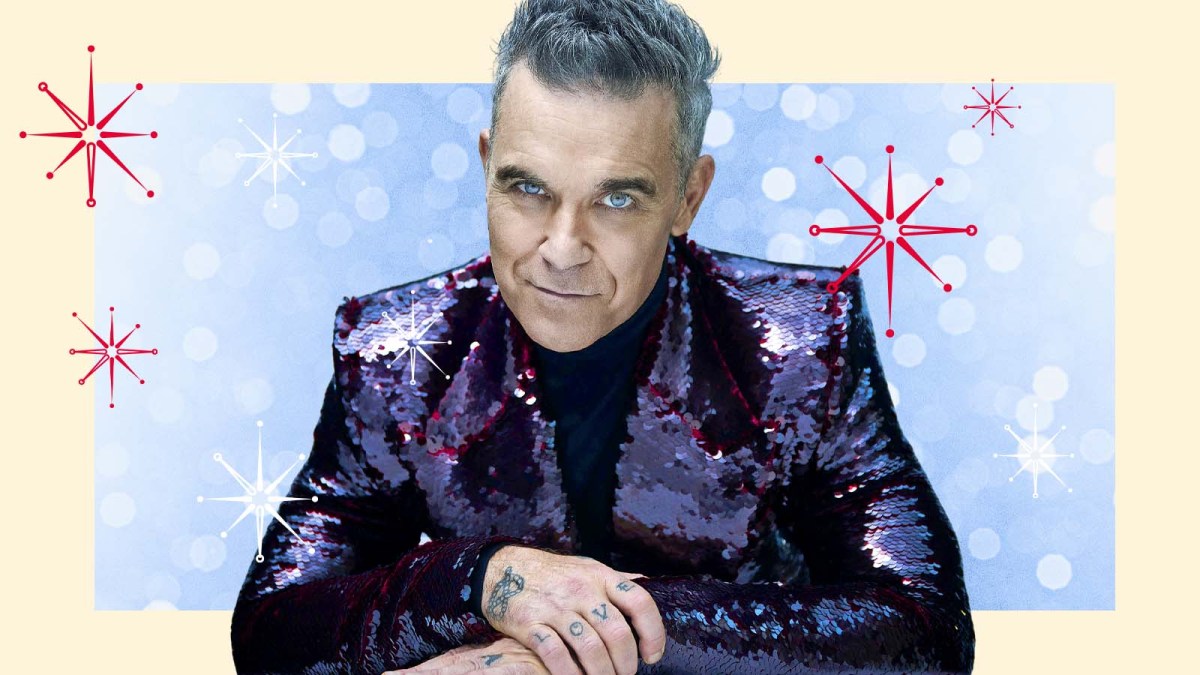
It is sleigh bells and whistles at Christmas with Robbie Williams, an entertainer who treats the festive period like his career: more is more. He has come a long way from the first Christmas that he remembers, as a four-year-old in Stoke-on-Trent in the 1970s — a “magical” time with an Evil Knievel toy. Now he lives in Los Angeles with his wife, Ayda Field, and their four young children. They have two trees and an indulgent amount of gifts for their kids (to “overcompensate for my needs not being met when I was growing up”).
On Christmas Day, Williams will eat a Chocolate Orange and go back to bed. Later a chef cooks a lavish dinner. “I absolutely adore Christmas,” he says, then pauses. “But I don’t get birthdays.” Why not? “It is your day to be a celebrity, but I’m already a celebrity — so I get celebrated all the time. Birthdays are pointless for me.”
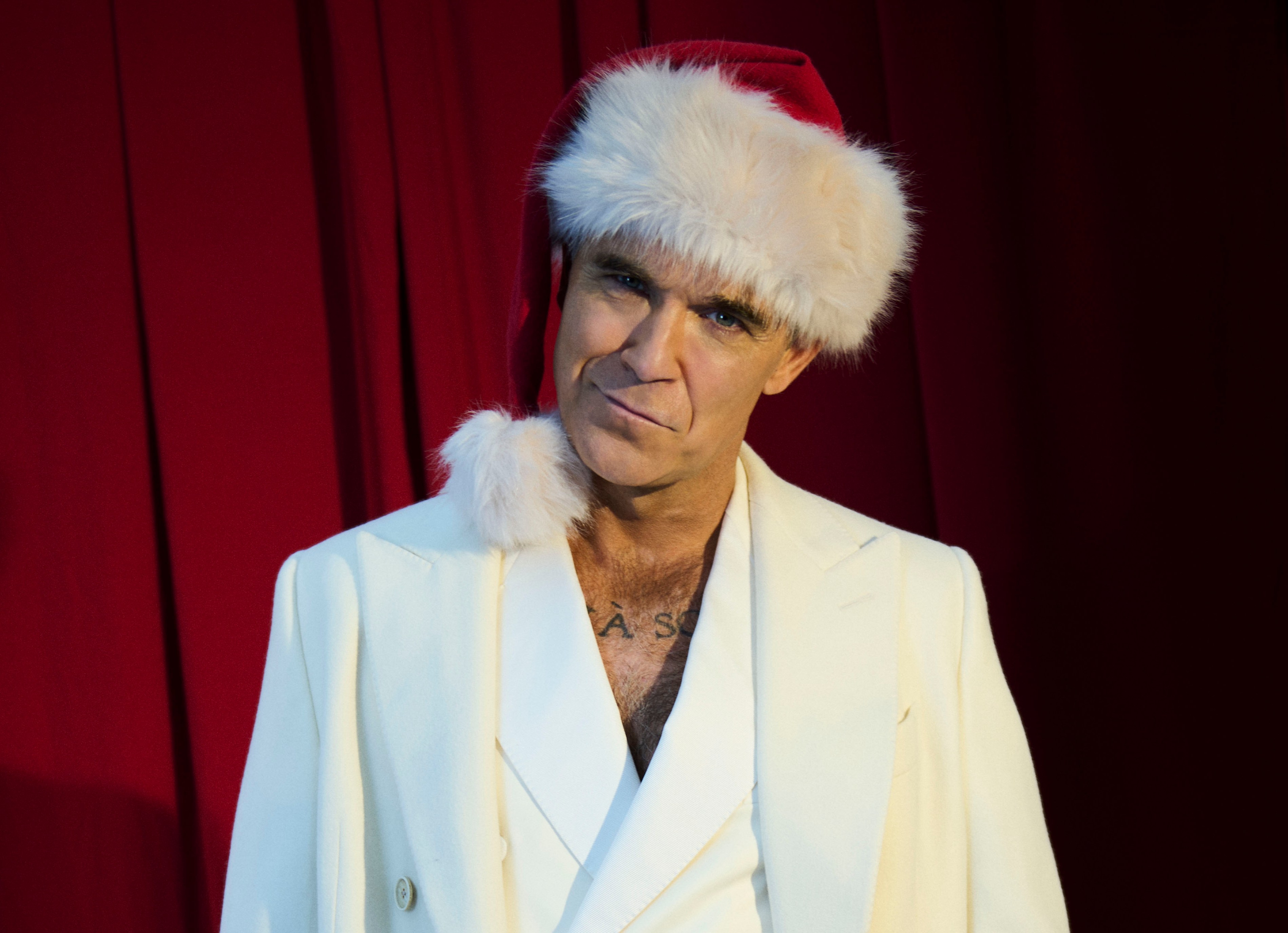
Williams is a big fan of Christmas
JASON HETHERINGTON. WHITE SUIT: CARUSO
Williams is a lot — of fun, pain, vulnerability, stories and songs. Having broken out of Take That in 1995, he has spent the past 30 years delivering hits and headlines. Angels is this country’s modern hymn, while No Regrets, She’s the One and Rock DJ proved equally cross-generational. He even made a Christmas album of covers in 2019. Come February he will release his first set of new songs in a decade. It is a rock riot of attitude, melody and self-awareness called Britpop, with the single Spies the most irresistible Williams has sounded since the 1990s. Another song contains the extremely Williams line: “I know I’ll die, but I’ll never leave the stage.”
We meet in London, in the studio where he recorded some of the album, and he is a sight to behold. He is tall — almost 6ft, but with an imposing personality that makes him seem even bigger, never breaking eye contact. My gaze wanders to his many tattoos and his clothes — a cap from his fashion label, Hopeium; a huge pair of trainers; a T-shirt that he made emblazoned with a photo of all five members of One Direction under an Oasis logo. He shows me another one in this copyright-infringing series, this time with Morrissey’s photo from the front of his Bona Drag album, but with “Gary Barlow” written on it instead.
Williams has had a busy 12 months. First, he was involved in narrating the bizarre, if rather brilliant, biopic Better Man, where he is played by a CGI chimp. “Commercial failure, cult classic,” is his summation. Then he took on a role as Fifa ambassador and turned up at the Club World Cup final in July and the draw this month for the 2026 World Cup. “Well,” he says with a grin, “the chatter, the chaos in my head is insane and for a long time I was in my reactionary ‘Everything can f*** off’ era. But now I’m in my grateful era and so if I’m asked to do something of note as a 51-year-old? I love it.”
His “grateful era”, though, has not dampened his competitive nature. Britpop was due for release in October, but that moved when Taylor Swift announced The Life of a Showgirl, so Williams would have a better chance of a 16th No 1 album and, therefore, beat the record set by the Beatles.
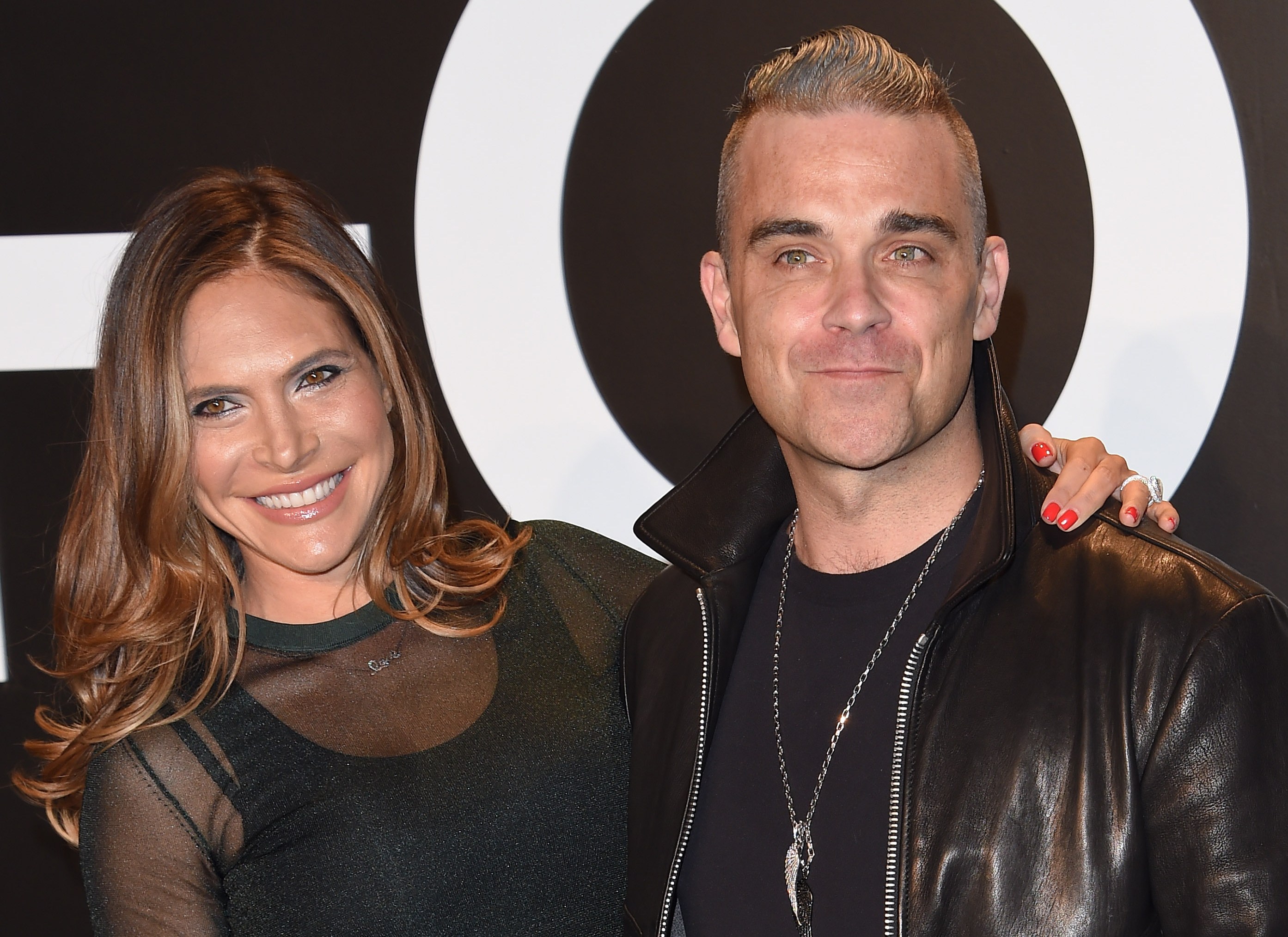
With his wife Ayda Field
AXELLE/BAUER-GRIFFIN/FILMMAGIC/GETTY IMAGES
Why do such accolades still matter? “Because, through the rapids of life, as I am dragged downstream, I grab on to any branch to steady myself,” Williams says. “And a record like that gives me meaning. I have this chance to achieve something nobody’s ever achieved in British music. Also, the safety of success is a nice cushion and there’s still a chubby 11-year-old who needs assurance that I’m valid. That’s the therapy level. But also it’s just, ‘Great, I want more.’ I have a ‘more’ problem.” Is wanting more a problem? “If you point it in the right direction, it’s not. Otherwise it’s a gun going off — which is what happened in my past.”
• The 20 best Robbie Williams and Take That songs — ranked
He largely means drink and drugs — in the 1990s. “There were 18 months of acute alcoholism and addiction,” he says. “And when I reached rock bottom, I got a spade and dug a basement. If I had carried on, I would have died. Look, the 1990s were a great time to have a bad time. The decades that followed were beige, but in the 1990s everybody was at it, from the radio plugger to the bin man. Hedonism was the north star to most people, but hedonism just made me fat.”
Williams was the useful bad boy, a mainstream celebrity off the rails at Glastonbury in 1995 in a red Adidas top that appears on his Britpop album cover. What did the big 1990s rock movement make of their pop hanger-on? “I was despised,” Williams says. “I set out my stall that I am an entertainer, so they looked down at me like I was a walking fart. They were pretentious bullies. People thought I was a c***.”
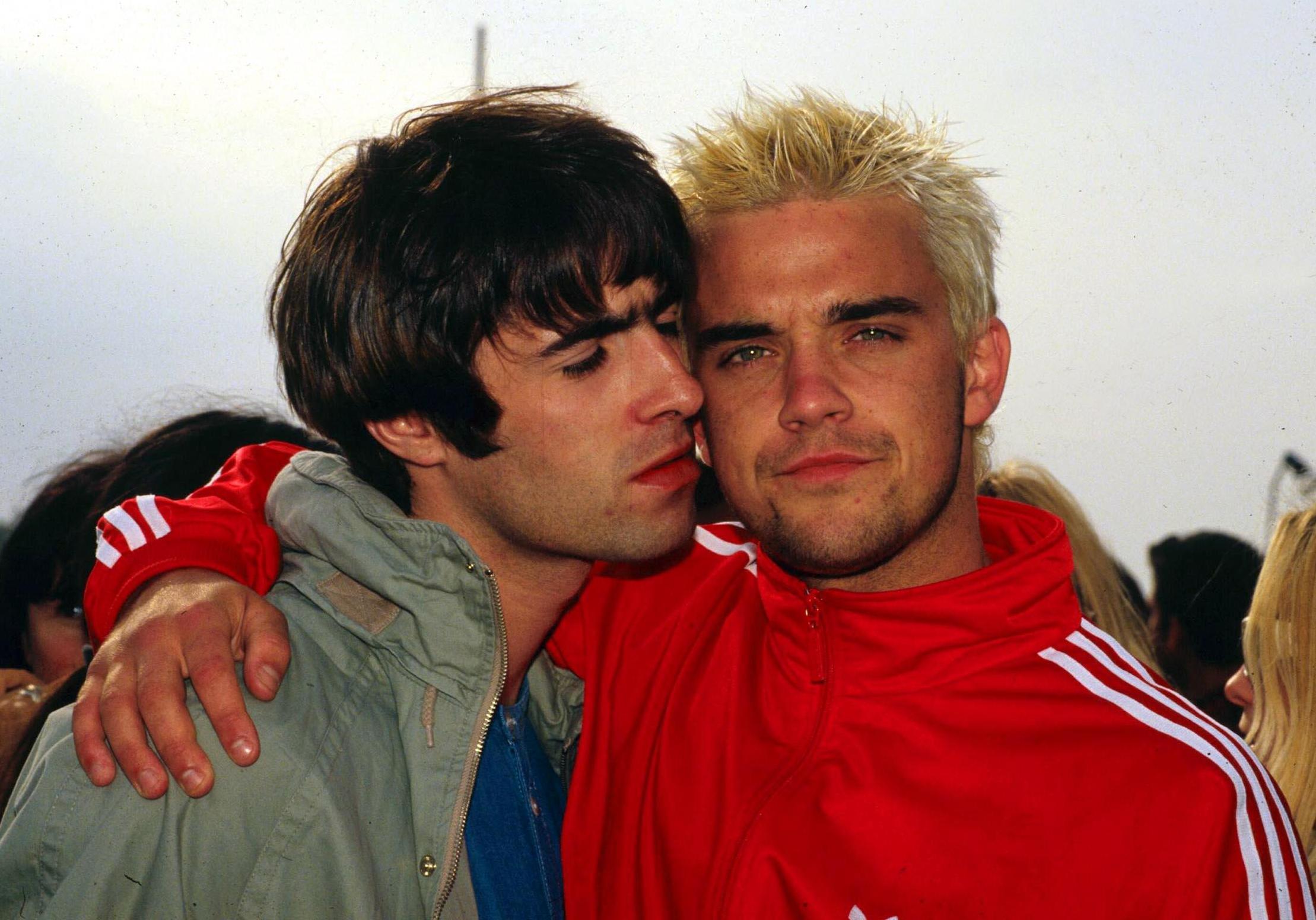
With Liam Gallagher at Glastonbury in 1995
BRIAN RASIC/GETTY IMAGES
Has he dealt with any of these bullies since? “Yes, but I can tell that I am still a figure of fun,” he says. “Look, I’m not asking for respect. I’m just asking to be treated like a human. I know which lane I’m in, but there was definitely this indie archetype with rules set in stone. ‘You can’t sell out.’ But I never bought in. I did the Do What U Like video for Take That naked with jelly on my bum when I was 17, so my dignity was never there. Having dignity wouldn’t have served me.”
Age, sobriety, success, therapy and family — he met Field in 2006 — have calmed him and given him control, but has he talked to his children (Teddy, 12; Charlie, 10; Coco, 7; Beau, 5) about his wilder years? “It all exists in a very humorous place,” he says. “All the addictions, alcoholism, ADHD, dyspraxia, dyslexia, dyscalculia, self-obsession and narcissism — Teddy, in her iPad contacts, has me under ‘Narcissistic Dad’. So we exist in this place of humour and they wouldn’t understand how problematic real life is, but my wife’s and my love language is taking the piss out of each other and we have this gallows humour that the kids are picking up on.”
I hear this wit in Britpop: honesty couched in catchy tunes. “I’m just trying to make self-obsession a pretty colour,” Williams says. “We are told from an early age that fame and fortune is a salve to fix all, which is why I sought it. But actually it causes an existential crisis and I will be explaining my findings about that until the day I die.” He grins, full of mischief. “I’m a journalist, but with one subject: me.”
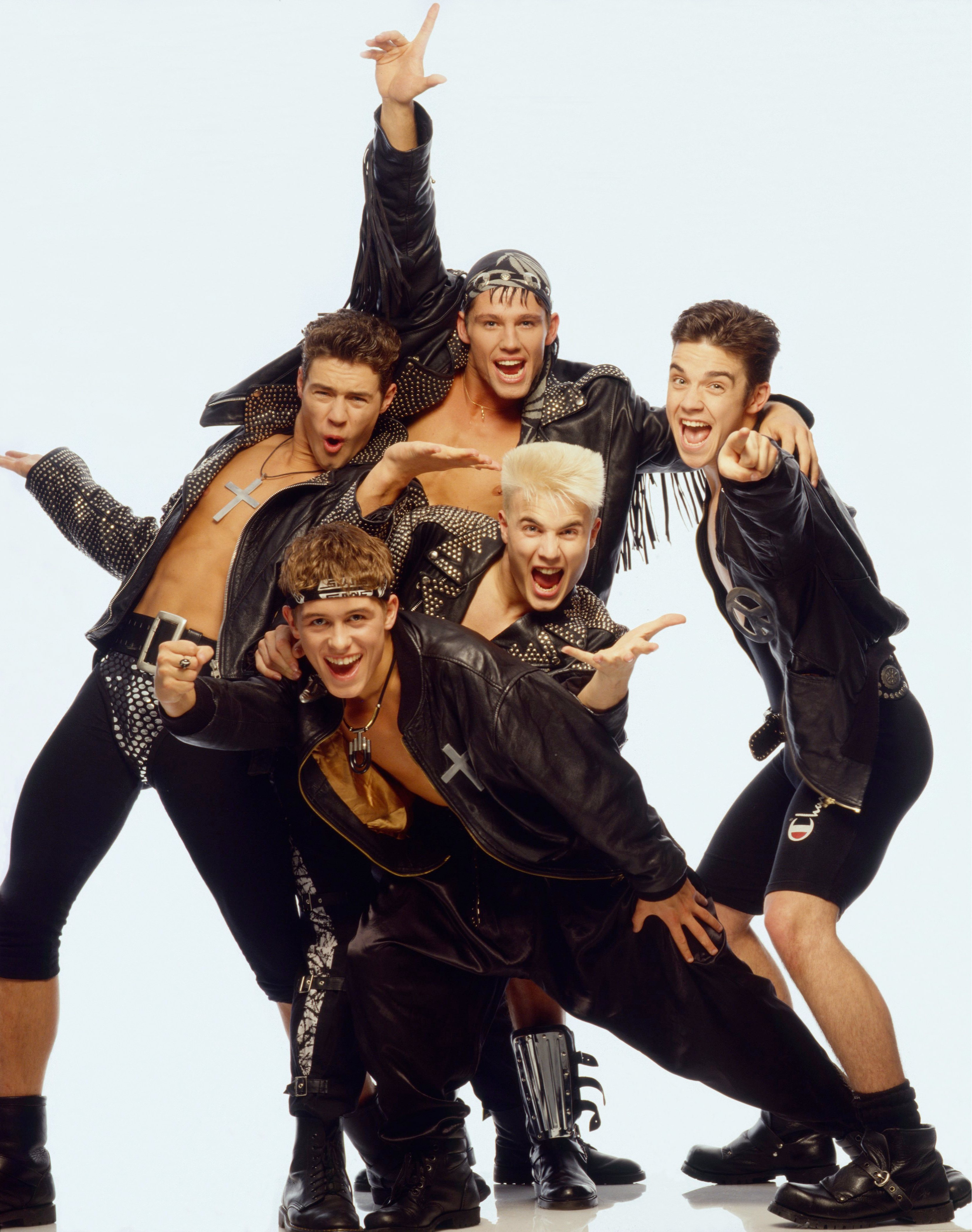
With Take That in 1991
PAUL RIDER/CAMERA PRESS
And so on the subject of him, in Better Man Williams says that the best thing Nigel Martin-Smith, the Take That manager and a longtime foe, did for him was to suggest he change his name from Rob to Robbie. But surely the best thing he did was to choose him for Take That? “Well,” Williams says, with his eyebrow very arched, “a bit of me thinks, ‘Do I have to thank him for noticing I am great?’ The question to you is: I turned up, someone spotted my wares. They have their own wares and we combine and sell our wares together. Who thanks who?” He pauses. I say nothing. “Seriously, I’m asking you a question.”
So is Williams suggesting that, without Martin-Smith, his talent would have been found anyway? “Talent,” he near spits. “I was 16. What did I have? A bit of charisma and a wink. Let’s not say I wandered in there as Leonard Cohen.” So Martin-Smith did discover something? “I would have forged my path one way or another,” Williams insists. “I’ve got a very good work ethic and a bottomless pit of need. Those two things are explosive. So I’m very grateful to have had my life transformed, but I turned up with my own set of goods and I can thank him, but it would be empty of me.”
Take That took off quickly — how was it going home after that? “I became alien,” Williams says, sadly. “All of a sudden I was on Mars. My reality shifted and I was too young to understand what was happening.” After years of public animosity in the wake of Take That’s split, Williams is now on good terms with his former bandmates (and Barlow even co-wrote a song, Morrissey, on Britpop).
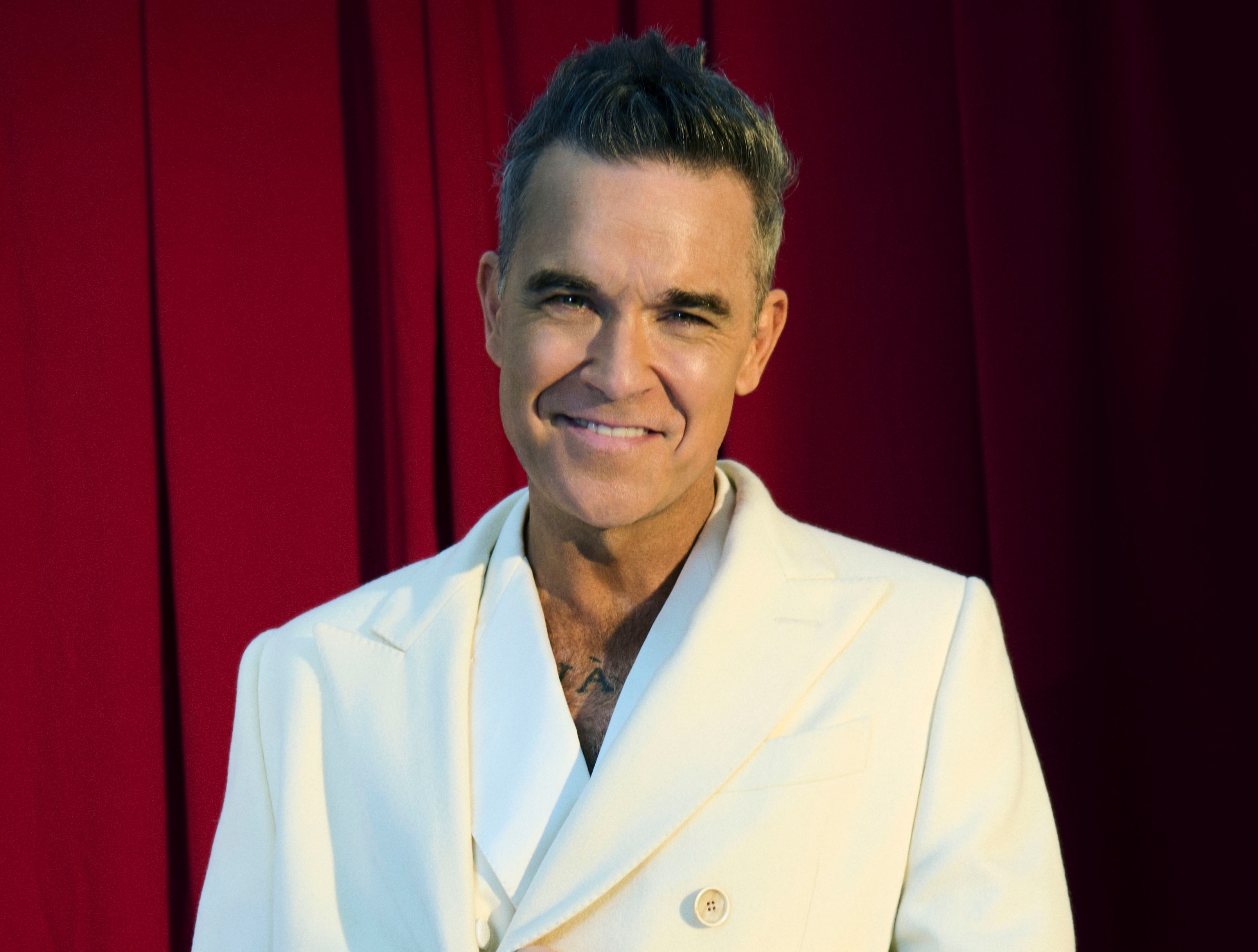
“Apparently I’m cool, but also cringe,” Williams says
JASON HETHERINGTON. WHITE SUIT: CARUSO
Now, though, Williams seems — physically, mentally — in a good place? “I am,” he says, proudly. He thinks after “decades of being misunderstood and maligned” that Better Man and his Netflix documentary in 2023 changed public perception. Also, at a gig this year, he pointed out how ripped his body looks now. “Yes, this is a product of Big Pharma,” he says, laughing — he was an early adopter of weight-loss jabs. “But it also comes from being called ‘Blobby Robbie’ in the press for a decade, when it was pointed out that a pop star shouldn’t be fat. So if I’m the opposite? I am going to point it out. Which is not to say that hedonism once again might make me fat.”
• Read more music reviews, interviews and guides on what to listen to next
What a showman — the last great one this country produced before Simon Cowell turned pop bland: as camp as Christmas with Halloween skeletons in the closet and nobody knows it better than him. He grabs his laptop. He has been looking up comments online. He starts to scroll through a document he has compiled of the yin and yang ways that he has had to deal with public scrutiny since he was a teenager.
“So apparently I’m cool, but also cringe,” he starts reading. “People love seeing how relaxed I am, but also I’m on coke. I look like Freddie Starr, but I’m also really sexy. I’m a cruise-ship singer who is the best entertainer on the planet. I get better with age, and should just stop.” He laughs loudly. He is truly the only person who gets a kick out of reading about themselves online, but then all of his life is material. “And they call me an attention seeker but, well, my profession is seeking attention.” He bellows, a man with the last, loudest laugh. “Being desperate for relevance? That’s my job.”
Britpop is out on Feb 6
What’s your favourite Robbie Williams single? Let us know in the comments below