
Losing weight hasn’t quite been the hardest part of modern obesity treatment. Keeping it off is.
That’s exactly the problem Eli Lilly (LLY) seems to have cracked with its weight-loss pill.
In a late-stage trial, patients switching from weekly injections to Lilly’s oral drug were able to maintain their lost weight, perhaps the biggest frustration with GLP-1 drugs.
For many patients, shots work, but not something they’d want to take forever. Cost, convenience, long-term health care risks, and simple fatigue tend to get in the way. Historically, that’s also when the weight creeps back.
However, Lilly’s data points to a different path where, once you’re done losing weight through injections, you could switch to a pill to maintain it.
If that approach holds up, we’re likely to see a fundamental shift in long-term obesity care.
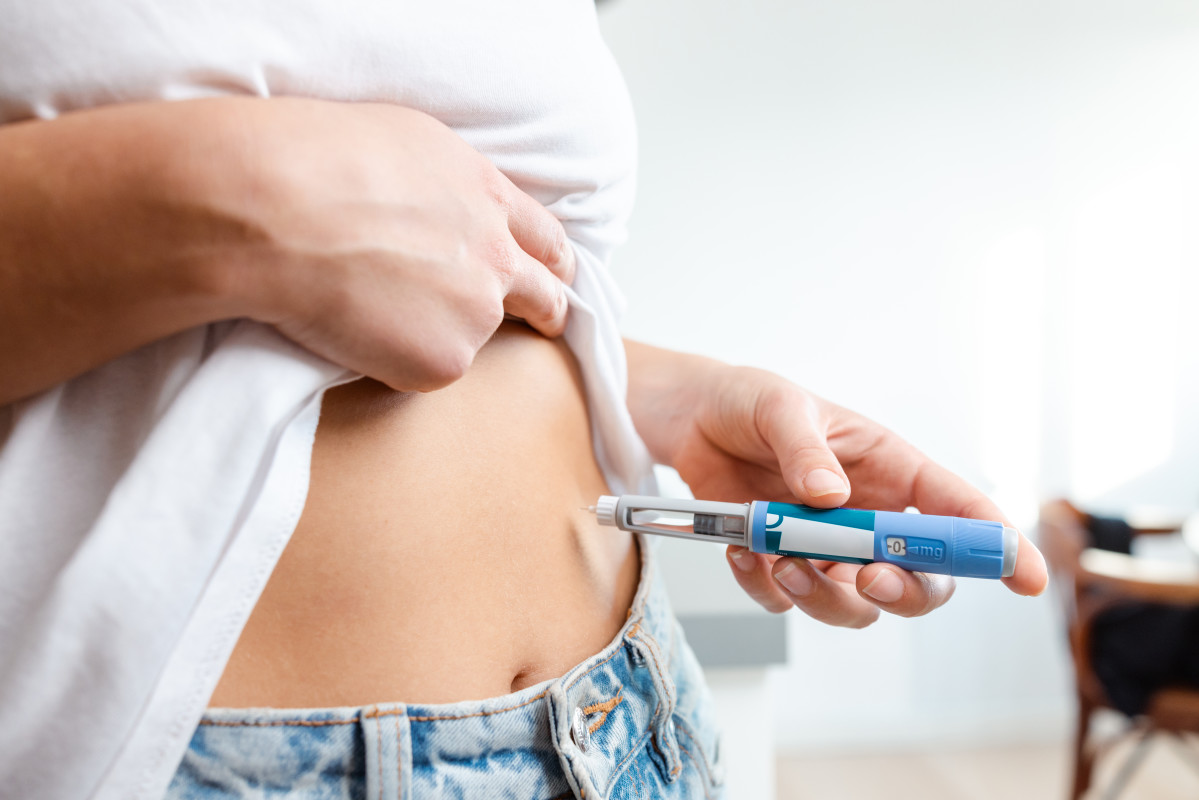
 Eli Lilly’s obesity pill helped patients maintain weight loss after switching off weekly GLP-1 injections.Photo by Peter Dazeley on Getty Images
Halting GLP-1 injections typically results in weight regain because the drug’s appetite suppression doesn’t linger for a long time.
More Health Care:
In a major semaglutide study, patients losing nearly 17% of body weight regained approximately two-thirds of it within a year after stopping treatment.
We see a similar trend with tirzepatide, where patients who stopped using the drug regained nealry 14% over the following year.
That’s because the hunger signals return, metabolism adjusts, and the body resets to its old baseline.
The real test for obesity drugs is once the injections stop.
Related: Top-rated analyst drops curt 8-word take on Tesla stock
Historically, that’s also when the weight creeps back up, and that’s also true for patients who saw encouraging results.
Eli Lilly’s latest trial points to a completely different outcome, though, and one that might reshape how long-term treatment works.
Key trial details:
After 72 weeks on weekly GLP-1 injections, patients who moved to Lilly’s daily pill were tracked for another year.
Those on Lilly’s pill outperformed the placebo on weight loss maintenance.
Former Wegovy users on the pill regained just 2 pounds, maintaining nearly 95% of their previous weight loss.
Patients who moved from Zepbound to the pill regained almost 11 pounds, still preserving around 80% of the weight lost.
Lilly has filed for FDA approval, with a potential decision slated for March 2026, backed by a priority review voucher.
Kenneth Custer, president of Lilly Cardiometabolic Health, weighed in on the results, saying it could,
Key players in the weight-loss drug market
Eli Lilly has taken center stage with tirzepatide, marketed as Zepbound and Mounjaro, helping patients shed around 20% of body weight in trials.
In Q3 2025, the drugs contributed to a massive $10.1 billion in sales, more than doubling a year earlier while blowing past Merck’s Keytruda, the top-grossing drug. Lilly is also now looking to spread its tentacles with orforglipron, a daily pill controlling up to 60% of a projected $22 billion obesity pill market by 2030.
Novo Nordisk virtually built the category with its pioneering Ozempic and Wegovy brands, delivering nearly 15% weight loss while still holding nearly 68% of global GLP-1 volume.
Other drugmakers, including Pfizer and Amgen, are in the race to catch up with pills and next-generation therapies in what’s now a more crowded market.
Obesity drugs are creating a market that pharma hasn’t seen before
The weight-loss drug market continues blowing up, and Mr.Market’s taking notice.
Wall Street analysts forecast annual sales to jump to $100 billion by 2030, while some forecasts indicate it could surge past $150 billion in the early 2030s, as treatments expand globally.
Related: Palantir secures quiet contract win with big implications
That level of expansion is virtually unheard of in the pharmaceutical industry, drawing comparisons to tech-sector booms.
Eli Lilly’s incredible rise shows exactly why.
Spearheaded by its powerful obesity and diabetes franchise, it reached a $1 trillion market cap in November 2025, the first healthcare company ever to do so.
LLY stock is up a whopping 39% year-to-date, and 37% alone in the past six months.
From a financial standpoint, Lilly’s results underscore that the obesity boom is directly translating into bottom-line strength.
In Q3 2025, sales surged 54% year-over-year to $17.6 billion, blowing past market expectations.
Tirzepatide spearheaded the surge, generating a massive $10.1 billion in quarterly sales, up substantially from $4.4 billion a year earlier.
Moreover, this also made Lilly’s GLP-1 franchise the top-grossing drug on a global sales basis for the quarter, surpassing Keytruda.
On the back of that expansion, Lilly bumped its full-year 2025 sales outlook to nearly $63 billion, pointing to 30%+ growth.
Related: Bank of America sets AI stocks to buy list for 2026
This story was originally published by TheStreet on Dec 20, 2025, where it first appeared in the Health section. Add TheStreet as a Preferred Source by clicking here.