
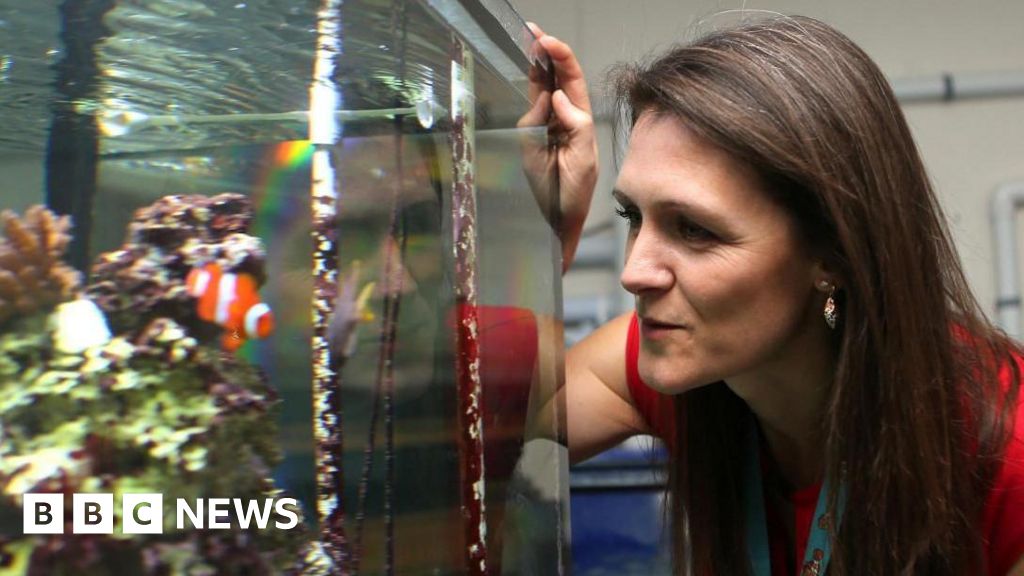
 Michelle Taylor

Dr Michelle Taylor’s research team made international headlines when they discovered an elusive colossal squid
As Dr Michelle Taylor took a moment to breathe in the icy Antarctic air, a stark realisation sunk in. The nearest humans, aside from her immediate colleagues, were hundreds of miles away on the International Space Station. The researcher and her team were on a quest to find undiscovered marine life in one of the most remote places on the planet. What was it like hunting in the deep sea for the unknown?
University of Essex academic Dr Taylor was in the south Chilean city of Punta Arenas earlier this year when she received a text.
It was sent by a woman she had met in a pub a few days before, who said she was looking to find an elusive colossal squid.
This woman, Kat Bolstad, had seen a video shared by Dr Taylor’s team of researchers from their deep sea expedition, which was blowing up on social media.
“Michelle, people keep tagging me in this video,” she wrote.
“I’ve taken as good a look as I can and I’m 80% sure you’ve filmed a colossal squid.”
Not many people outside of scientific circles were aware of Ocean Census’s 35-day quest when the R/V Falkor set off from Chile in March.
But Dr Taylor knew filming this squid, so rare that it still straddles the line between legend and reality today, was about to propel her work to the world.
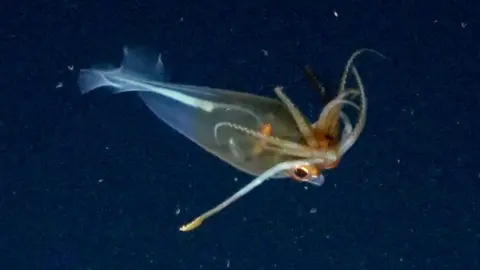
The discovery made headlines across the globe. A colossal squid had not been seen for 100 years, let alone caught on camera.
The colossal squid was found during an expedition in the south Atlantic Ocean
“We were just in awe, we couldn’t believe it. This is a world exclusive,” Dr Taylor, who is the head of science at Ocean Census, said.
“I sent [Kat] the video and she consulted with a few other experts, and they came back and said ‘yeah, pretty sure this is the first ever video footage of the colossal squid’.”
The 30cm-long (11.8in) juvenile was spotted at a depth of 600m (1,968ft), near the South Sandwich Islands in the south Atlantic Ocean.
Experts believe colossal squid can grow up to 7m (23ft) in length and weigh up to 500kg (1,100lb) – making them the heaviest invertebrate on the planet.
Dr Taylor, who is based in Colchester, said: “We think we caught the juvenile by surprise. It was transfixed.
“It just stayed still and hoped we would go away, which we did. That’s how we came to find the unexpected.”
 Supplied
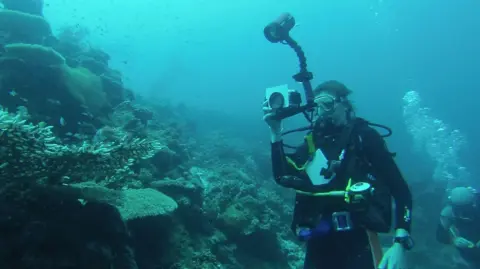
Dr Taylor is an expert in coral taxonomy
The footage was captured via The Nippon Foundation-Nekton Ocean Census and Schimdt Ocean Institute livestreaming its deep-sea dives, undertaken by a remotely operated vessel.
However, it was initially missed by coral expert Dr Taylor and her team who thought it was a more common glass squid.
Enthusiasts watching the livestream at home were instead the ones who realised how significant the find was, and they shared the footage on social media.
 Schmidt Ocean Institute
Despite initial confusion, the research team did also film a glass squid for the first time
“The Schmidt Ocean Institute decided very early on they wanted the world to see what they were finding on their expedition,” Dr Taylor said.
“They beam the video footage live from the deep sea. That was something extremely special about this whole experience.
“I’ve been to sea on eight, nine expeditions – ten maybe – and this is the first time my family has been able to watch exactly what I’m doing, live on YouTube.”
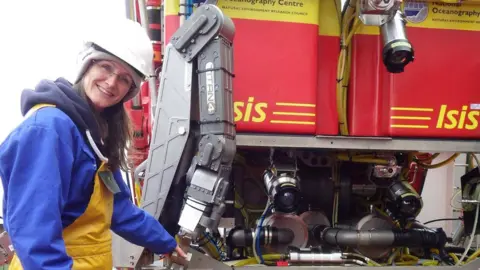 Supplied
Dr Taylor said some of the deep-sea discoveries were “extraordinary
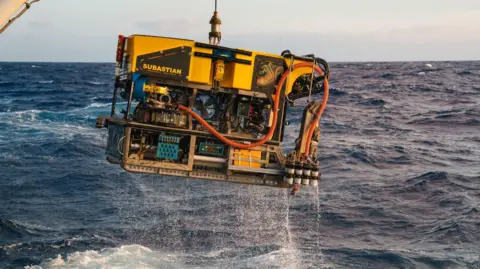 Schmidt Ocean Institute
The remotely operated SuBastian vessel was hooked up with a camera to livestream its finds
Dr Taylor recalled even her neighbour was texting her in amazement at some of the finds the livestream was picking up.
“That’s just the joy of this, right?,” she said.
“I can make some predictions about what we’ll find. But not this, this is extraordinary.”
Other landmark finds included zombie worms, a hydrothermal vent, dragonfish, breeding urchins and a carnivorous “death-ball” sponge 2.2 miles (3.5km) deep in a trench.
At one point the scientists had to take refuge near an active volcano after a huge storm closed in.
Dr Taylor was asked to lead the odyssey not long after being invited to a New Zealand-based Ocean Census workshop in 2023.
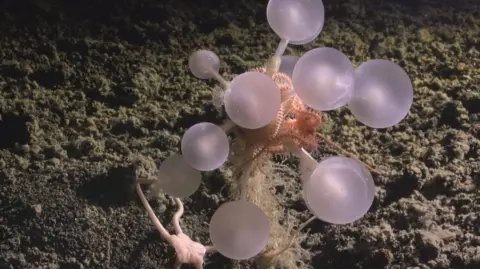 Jialing Cai/The Nippon Foundation-Nekton Ocean Census/Schmidt Ocean Institute
The “death-ball” sponge was found in a trench some 3,600m (11,811ft) deep
It took her team eight days to sail to the remote area they were examining – and the same time to return.
“It’s one of the most isolated places on the planet,” she said.
“There were points when we were there and there were no other ships around that the closest people to us were on the International Space Station.
“It’s a really unusual feeling,” she added.
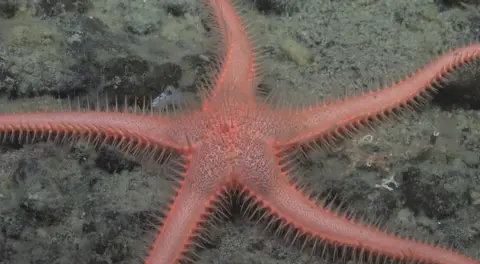 Jialing Cai/The Nippon Foundation-Nekton Ocean Census/Schmidt Ocean Institute
A previously unknown species of sea star found at 3,631ft (1,107m) at the Mystery Ridge dive site
Dr Taylor hopes the volume of biological discoveries her researchers made will inspire others to explore the world’s most untapped corners.
They collected almost 2,000 specimens across 14 animal groups, alongside thousands of high-definition images and hours of video.
“It gives me hope because we came across relatively unimpacted ecosystems, and there are some of them still out there,” Dr Taylor added.
“Climate change is impacting every single inch of our ocean, so it was magical to be in an area that has little human impact.”