
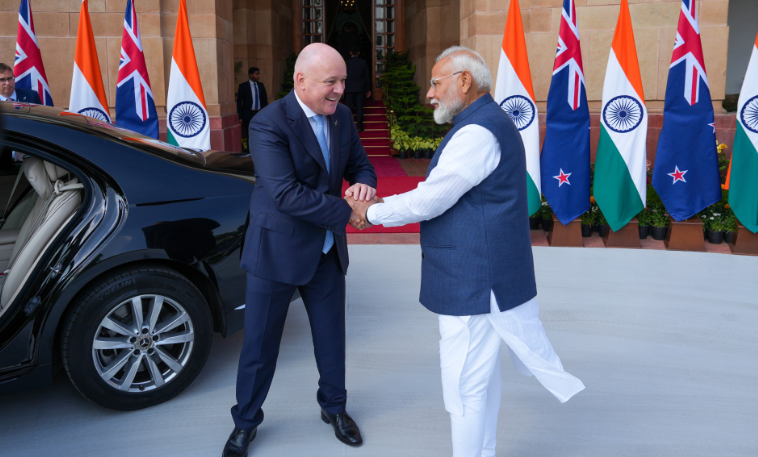
The New Zealand–India Free Trade Agreement (FTA) marks a significant milestone in the economic and strategic relationship between the two countries. After years of intermittent negotiations, the deal aims to substantially free up trade, reduce tariffs, and create new opportunities for businesses, workers, and investors on both sides.
For New Zealand, the FTA opens improved access to one of the world’s fastest-growing major economies. Tariff reductions and eliminations on a wide range of goods are expected to benefit exporters in sectors such as horticulture, forestry, manufacturing, and services.
India has explicitly left its dairy sector out of the tariff concessions in the FTA, meaning New Zealand cannot export dairy products duty-free into India under the deal. This reflects India’s determination to protect its enormous domestic dairy industry, which is politically and economically sensitive due to the large number of small-scale farmers, a significant voter base for the current PM Narendra Modi.
The agreement provides a long-term framework for growth and diversification beyond New Zealand’s traditional markets. It also strengthens New Zealand’s economic presence in South Asia at a time of global trade uncertainty.
For India, the agreement supports its broader strategy of securing high-quality trade deals. Indian exporters gain duty-free or preferential access to the New Zealand market, particularly in textiles, pharmaceuticals, machinery, and services. The FTA also includes provisions that support mobility, education links, and investment, benefiting Indian professionals, students, and businesses.
Beyond economics, the FTA deepens political ties and signals a shared commitment to open, rules-based trade, positioning both countries to cooperate more closely in the Indo-Pacific region.
Here’s just some of the coverage in NZ and Indian media over the last day or so:
NZ Media
Indian Media
Times of India
Hindustan Times
Navbharat Times (Hindi coverage)
Asia Media Centre