
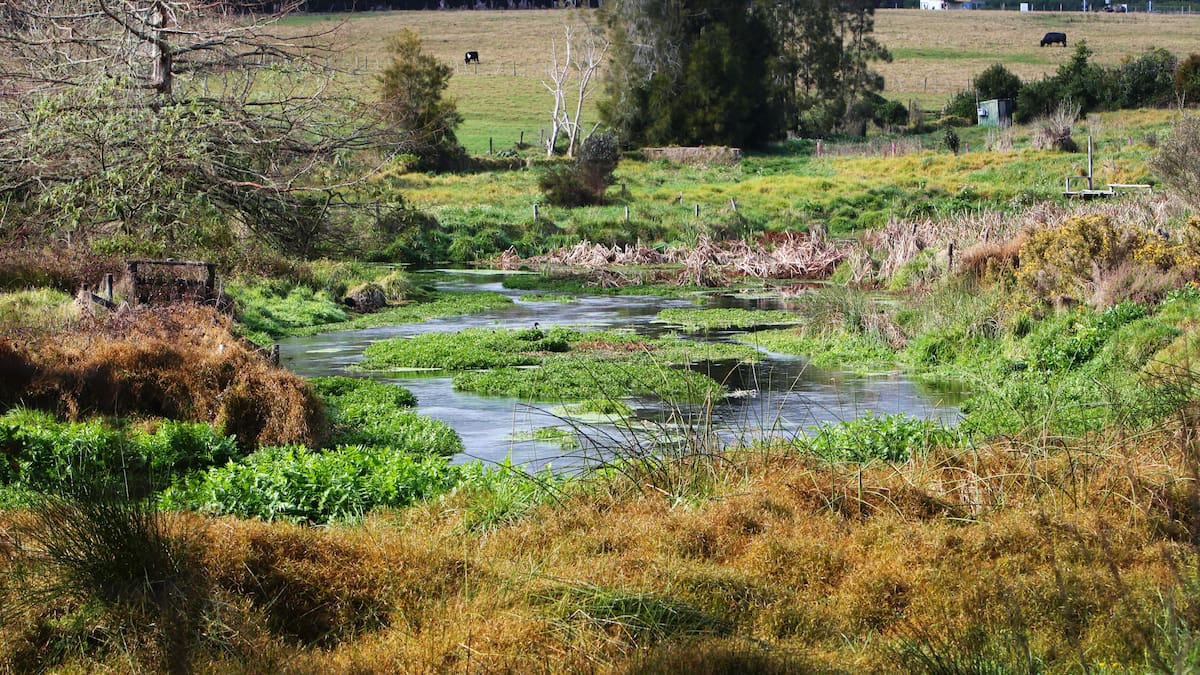
Sitting beneath Whatitiri maunga, local hapū Te Uriroroi, Te Parawhau, and Te Māhurehure ki Whatitiri regard the springs as a nurturing female ancestor.
Trustee Taipari Munro described the springs as “the breast of Papatūānuku giving life and sustenance with flowing cool pristine waters”.
Over the years, Munro has given evidence that the wai (water) and whenua (land) has remained unbroken despite Crown interventions and regulatory regimes that curtailed their authority.
The trustees hold the surrounding land, known as Whatitiri 13Z4, as Māori freehold land, but have had to battle several large corporations given resource consents to take large amounts of water.
In the 2000s, the trust repeatedly objected to the Northland Regional Council’s decisions to grant or reissue consents.
They argued they were never consulted over several resource consents, and the council had ignored their customary rights.
The trust celebrated a win in 2018 when Zodiac Holdings sold its land and resource consent to take 1.5 million litres of water a day to Te Ārawhiti, the Crown, to be used in future treaty settlement negotiations.
Then, after decades of negotiation, the trust signed an agreement with the Whangārei District Council, giving the trust first rights to the first 2000cu m of the daily allocation of 15,500cu m per day.
A hikoi opposing an application by Zodiac Holdings to take water from Poroti Spring went to the Northland Regional Council.
But the fight wasn’t over as the courts were still timetabling and working through another issue.
In December 2020, the hapū filed proceedings in the Māori Land Court seeking declarations their customary title to the water had not been extinguished, and damages of $100,000 against the Northland Regional Council for losses caused by over‑allocation of water rights.
This over‑allocation contributed to the springs running dry in the 1980s, a major environmental and cultural injury repeatedly referenced by the trustees.
They argued tikanga does not separate soil from water, and that the Māori Land Court was the right forum to reflect that.
The Attorney‑General and the council opposed the claim, saying the Māori Land Court lacked jurisdiction, and the parties agreed to resolve the issue by way of a declaratory judgment in the High Court.
In 2023, the High Court ruled the Māori Land Court does not have jurisdiction to make orders for customary title in respect of freshwater or to award damages for injury to such title.
The trustees appealed that decision, supported by the New Zealand Māori Council.
The Court of Appeal heard the case in August 2024 and delivered its judgment almost a year and a half later in December.
Millan Ruka has been fighting for the springs for decades. Photo / NZME
The court had to decide which court was the proper gateway to hear the trustees’ claims.
In its reasons, the court canvassed the Te Ture Whenua Māori Act 1993 and emphasised its design was to protect Māori land by anchoring jurisdiction in the status of land.
They noted the purpose of the Māori Land Court is to promote the retention, use and development of Māori land, and not to regulate water as a standalone resource.
The court stressed its decision was not about whether the trustees’ customary rights to Porotī Springs exist or have been infringed.
The court ruled the trustees’ grievances, essentially challenges to water allocation decisions, were therefore matters for the High Court.
“Challenges to the exercise of the Northland Regional Council’s statutory authority under the RMA must be brought by way of judicial review or through an Environment Court appeal. Claims to establish customary rights over resources must be brought before the High Court, against the Crown.”
A trust representative told NZME decisions on the next steps will be made next year.
Shannon Pitman is a Whangārei-based reporter for Open Justice covering courts in the Te Tai Tokerau region. She is of Ngāpuhi/ Ngāti Pūkenga descent and has worked in digital media for the past five years. She joined NZME in 2023.