
This rebroadcast originally aired October 13, 2025.
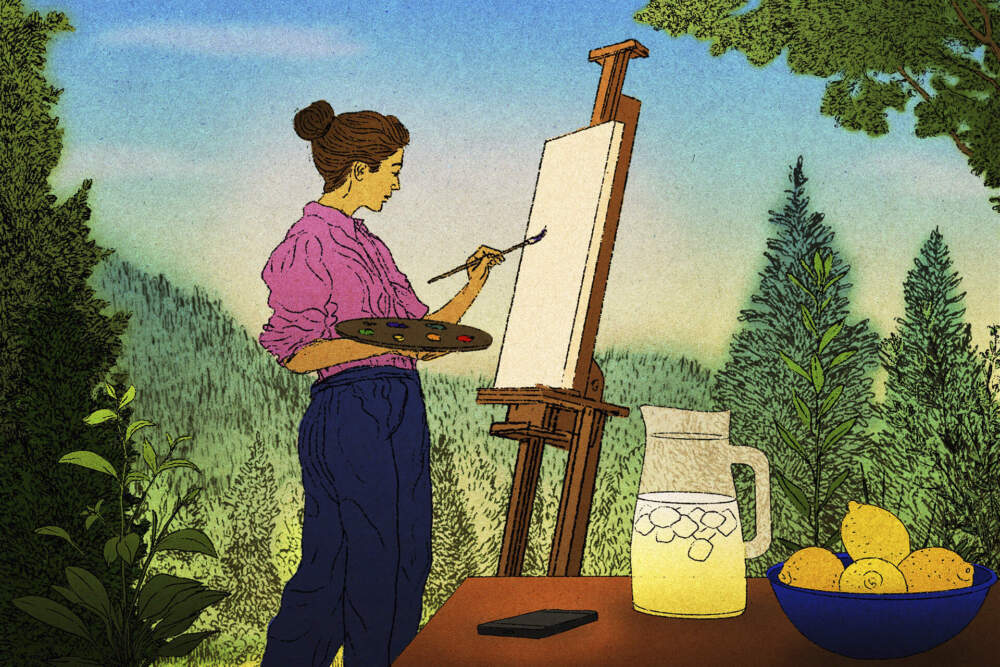
Sewing, scrapbooking, sports clubs. Many Gen Z’ers are taking up real-world hobbies as an antidote to doomscrolling. Why hobbies make us happy — and how to get one.
Guests
Lexi Bynum, content creator who goes by “Lexi The Hobbyist” on YouTube and “Lexi Hobby Ideas” on TikTok, where her tagline is “Hotties Need Hobbies.” Founder of the Atlanta Craft Club.
Daisy Fancourt, professor of psychobiology and epidemiology at University College London. Director of the World Health Organization’s Collaborating Center on Arts and Health. Author of the forthcoming book “Art Cure: The Science of How the Arts Save Lives.”
Also Featured
Zane Tekaucic, college student studying tuba at the Ohio State University. Member and board member of the board of the Central Ohio Model Railroad Club.
Brigid Schulte, director of the Better Life Lab at New America, where she researches work, family, gender and care.
The version of our broadcast available at the top of this page and via podcast apps is a condensed version of the full show. You can listen to the full, unedited broadcast here:
Transcript
Part I
MEGHNA CHAKRABARTI: Sewing, sports clubs, knitting, drone clubs, scrapbooking. Many Gen Z’ers are taking up real world hobbies as an antidote to doomscrolling.
If you think that your life’s boring, it’s because you have no hobbies. If you’re sad about a boy or a girl, it’s because you have no hobbies. In conclusion, hot girls have hobbies.
Hobbies I tried last month instead of scrolling my phone. First up on the list is painting.
Junk journaling. I love junk journaling so much. It’s like scrap booking’s cool older sister.
More and more Gen Z’ers and millennials are picking up our crochet hooks. I’m calling it the Great Craft Revival.
I made this dress from scratch and got so many compliments on it. So the first thing to do is to get some fabric.
In 2024, I tried over 18 new hobbies. Yeah. I was a little insane and I’m gonna teach you how you can do the same today.
CHAKRABARTI: And that last voice you heard is Lexi Bynum. She’s a content creator who goes by Lexi the Hobbyist on YouTube and Lexi Hobby Ideas on TikTok, where her tagline is ‘hot girls need hobbies,’ and she joins us now. Lexi, welcome to On Point.
LEXI BYNUM: Hi Meghna. Thanks for having me.
CHAKRABARTI: Alright, so tell me a little bit about how you got into the world of hobby content creation.
BYNUM: Yeah, I think I picked up hobby content creation or just seeking out hobbies at a time in my life where I felt very isolated.
So like we’re coming out of the pandemic. I had done a master’s program while working full time, so I just had no personal time. And as like my revolt to that, I was like let me go try and figure out what I want to do in my spare time and let me go try everything I can get my hands on.
CHAKRABARTI: That makes a lot of sense. I think the pandemic really tipped a lot of people over into searching for something to re-enrich their lives. I should mention you’re talking with us from Atlanta, Georgia. What do you do for, I guess quote-unquote your day job?
BYNUM: Yeah, so my day job, I work as a UX designer.
CHAKRABARTI: UX designer means user experience, right?
BYNUM: Yes.
CHAKRABARTI: Okay. Do you mind if I ask what kind of company.
BYNUM: Yeah, I work at an aerospace company.
CHAKRABARTI: Okay. I just wanted to get you to say that because it’s cool that you work at an aerospace company. Alright, so we obviously hobbies have been a thing for humanity for a long time.
We’re gonna, we’re starting our show today focusing on millennials and Gen Z’ers and their introduction to the world of doing stuff offline. If I had to ask you like what your primary hobby is, would you have an answer to that?
BYNUM: Oh man, I wouldn’t at this point. I think I’ve just, I’ve become, like my hobby is trying new hobbies.
I feel like at this point I do have favorites, but yeah, I think it’d be hard, especially now in my life. I just recently became a mother.
CHAKRABARTI: Oh, congratulations.
BYNUM: My hobbies are changing diapers.
CHAKRABARTI: (LAUGHS) I’ve definitely been there. I feel ya on that, changing diapers and caring for a beautiful baby. But when you have time, actually honestly, I think maybe it’s become even more important now whenever you do get that time. To either experiment with a new hobby or, I don’t know, go back to one you’ve already tried.
How does it make you feel? Do you feel like your mind and your body are in a different space?
BYNUM: Yeah, honestly, like I think it depends on the hobby, but if I’m practicing yoga, obviously, that’s very mindful. But if I’m trying something completely new, it’s like a new puzzle.
It’s like me, sitting down, playing Sudoku on my phone. Like it’s me like figuring out this puzzle where I fit in, how I want to add my perspective to this, because it’s been done a million times before, but what can I bring that’s unique to this hobby that’s uniquely me or that will fulfill me and make me happy with whatever end product I end up with.
CHAKRABARTI: Okay. So what have been some of the hobbies that you have indulged in?
BYNUM: Yeah, I think recently I’ve been, I’ve tried out polymer clay, so like kind of clay sculpting. But just in general I’ve tried a bunch of things. Letterpress, pottery wheels, zine making, collage making, sewing, embroidery.
A fake cake or like decadent making. There’s been so many over the time.
CHAKRABARTI: Some of these I’ve never even heard of. Early at the collection of voices we played at the top. Junk journaling. What’s that?
BYNUM: Yes. So I like to call junk journaling scrapbooks’ cool, older sister. Junk journaling is just like scrapbooking except in scrapbooking, like it’s more of a curated fuel.
You’re typically buying a bunch of scrapbooking papers and supplies and printing off a bunch of photos. Spending a lot of money on materials, honestly, whereas junk journaling is supposed to highlight and make use and recycle, find a second chance for maybe single use items and papers that you might come across in your day-to-day life.
It’s you’re supposed to preserve the junk that you come across and repurpose it into something beautiful. Oh, so you’re not actually just putting those things in a journal, you’re repurposing it.
BYNUM: Yeah. So you are putting them in a journal. Using them as ephemera, as like your background, making your spreads and following a prompt or something.
CHAKRABARTI: Oh, that’s okay. I honestly, I’ve never heard of that. I think that’s really awesome. Do you do this with other people?
BYNUM: Yes. I think I didn’t add in, but by night I run the Atlanta Craft Club. And so junk journaling is actually our most popular workshop. Like people love getting together to junk journal.
So I love to do that with my craft club. We meet monthly for bring your own craft night and people bring their own crafts to this big area and we just all sit together and connect over our love of crafting.
CHAKRABARTI: Oh, that’s awesome. Who comes to the crafting club?
BYNUM: Oh man, everyone. I’ve had guys trying to score dates there.
Grandmothers, granddaughters, everybody comes to craft club, definitely spouses that have been dragged along. Just everyone.
CHAKRABARTI: So it’s interesting to talk with you about this, Lexi, because not only are you actually doing right these various hobbies, but in a sense, I went into this thinking people are seeking out hobbies in order to get offline, but you’ve been able to like merge that with an online content creation presence.
Does that sort of, does that change the experience of the hobbies for you a little bit?
BYNUM: It can, especially if I’m not up to recording or I really didn’t want to, it can make it a little bit more about like catching cute shots or making things look super aesthetic. Whereas like sometimes you just need a hobby to get your hands doing something else besides scrolling, so I think definitely being, putting content creation with it can impair the experience that you’d normally have.
Sometimes you just need a hobby to get your hands doing something else besides scrolling.
Lexi Bynum
CHAKRABARTI: then also on the other hand, it’s allowed you to do things like create the craft club that’s bringing more people in.
BYNUM: Exactly. Yeah.
CHAKRABARTI: Yeah. Hey, can I go back to the fact that you’re a new mom? Once again, congratulations. But I remember my new mom days and the last thing I thought I ever had time for was a hobby at that time. Are you able to carve out any time to do this stuff?
BYNUM: Yes. Yeah. I definitely do. Me and my husband, we have a good, we share responsibilities really well.
So if I say, Hey I’m overwhelmed. I need two hours to go work on this craft. He’s so understanding and gives me that time and that space. And I get to come into my craft room, now our combined office, and get to escape for a little bit.
CHAKRABARTI: Okay, good. Is that a regular thing?
BYNUM: Yes. Yeah, my therapist said I needed to make it a very regular thing. I do my homework.
CHAKRABARTI: What would you advise people who are listening to this, who, you know, are thinking about, maybe I’ll just try something. Why do you think people should invest time? Time is the only resource we can never get back.
Why should they invest time in pursuing a hobby?
BYNUM: I think pursuing a hobby helps you better understand who you are as a person. When you’re trying something new, it’s a new challenge. It’s something that you don’t normally come across. And it gets you working and thinking in a new way. I feel like it’s like similar to learning a new language. Where your mind is getting to expand and explore something completely new from your work, from your day-to-day challenges, from your family.
Pursuing a hobby helps you better understand who you are as a person.
Lexi Bynum
And you get away from that identity, and you get to just be with yourself. And spend quality time with yourself and explore, okay, who am I when you strip away all the job titles and all the things, and what do I like to do? Who am, just that kind of vibe.
CHAKRABARTI: That’s a really important question. How have you been able to answer that? Who is Lexi? Once you strip away all the other. Than now, I’m guessing one of your primary definitions of self is mom. But how would you answer the who are you?
BYNUM: I think I’m like an innately curious person.
I’m always trying to figure out how things work, how to put things together. I’m also a tad bit of a perfectionist when I try a new hobby and I’m not good at it straight away, that kind of feels defeating and I try to overcome that and get really good at a craft. So I think just who am I?
I’m a person that loves to explore and try new things.
CHAKRABARTI: What’s the craziest hobby you’ve tried? Speaking of new things?
BYNUM: I think the craziest hobby I’ve tried is belly dancing. Just the dancing aspect of it, but also, it’s new movement. I think I’m not the best dancer in the world, but it takes a lot to feel comfortable in a space dancing around people you’re not familiar with. And then especially belly dancing. Like I could do a little two step, but belly dancing is definitely out of my wheelhouse.
CHAKRABARTI: Oh my God. Wait. I have to ask one more thing about belly dancing. So were you taking classes?
BYNUM: Yes. So there’s a person here and they teach a belly dancing class and locally, and it’s really fun, but it’s definitely something new.
CHAKRABARTI: I have to say, bravo, very brave. There’s no better example of getting out of your comfort zone and discovering who you really are. I feel like a lot of times people think, I want to start something new.
I want to experience something new. I just don’t know where to start. Because people feel, people just feel overwhelmed in general, what advice would you give to people who are seeking a way into having a hobby in their life?
BYNUM: Yeah, I always advise people to start with what you love doing as a child.
Think back and try to nurse that inner child that you have and whatever you were seeking out as a child. Like me, I was collecting rocks, I was coloring, I was doing a million personality test journals. So just find those things that you enjoyed as a child and those things that were fun to you then and reimagine them as an adult.
I always advise people to start [your hobbies] with what you love doing as a child.
Think back and try to nurse that inner child.
Lexi Bynum
What might that look like? Adult you. So I might still collect rocks, but maybe I go get a rock polishing machine and see what that looks like. So definitely go back to what you enjoyed as a child.
Part II
CHAKRABARTI: We heard from a lot of you about your hobbies.
JELANI: My hobby is building things with Lego. I built a Lego city in my basement during the pandemic.
CHRISTINE: My hobby is sewing. Redoing clothes, embellishing.
PAX: Musical theater, painting, and sculpting.
CLAUDETTE: I am a musician, a percussionist.
STACEY: We’re fly fishermen. Our species of choice is steelhead.
SADIA: I really love reading, totally underrated.
MARY: Fiber arts. I love crochet.
KEVIN: Building scale model dioramas of historical events.
VALERIE: I learned how to hula hoop.
ANNA: I picked up sword fighting, technically classical, historical rapier fencing.
CLAUDETTE: I’ve played with community bands and orchestras. We get together and we rehearsed just like we did back in high school or college.
KATE: There’s something really nice about having a night on your calendar where you know you will not be looking at your phone.
JELANI: It’s really therapeutic for me. It’s calming, it’s relaxing.
GREG: One of my many hobbies outside is to rock climb, and when I’m on the wall, all I can think about is what is my next move? What can I do to prevent from falling?
KATE: I started knitting for my mental health. I had really bad anxiety. I just loved the way it turned the good parts of my brain on and the bad parts of my brain off.
JUDY: The flow that you get into.
MARY: Pushing aside that perfectionism and just creating.
KEVIN: I can spend six hours, eight hours a day and feel refreshed, not tired.
STACEY: We adore the nature. This is our zen.
CHAKRABARTI: That was Jelani in Charlotte, North Carolina; Christina in Milwaukee, Wisconsin; Pax in Augusta, Georgia; Claudette in South Carolina; Stacey in Troutdale, Oregon; Sadia in Arlington, Massachusetts; Mary in Chicago; Kevin in Omaha, Nebraska; Valerie in Utah; Anna in Cambridge, Massachusetts; Kate in Pittsburgh, Pennsylvania; Greg in Cincinnati, Ohio; and Judy in Johns Creek, Georgia.
I love all of these hobbies. Now, this hour we are talking about why hobbies are good for you and good for your health. And of course, we started out by focusing on Gen Z and millennials. But from that just small sampling of On Point listeners, it’s obvious that hobbies are good for anyone no matter their age.
So with that thought, let’s turn to Daisy Fancourt. She’s a professor of psychobiology and epidemiology at the University College of London, director of the World Health Organization’s Collaborating Center on Arts and Health, and author of the forthcoming Art Cure: The Science of How the Arts Save Lives.
Professor Fancourt, welcome to On Point.
DAISY FANCOURT: Thank you. It’s lovely to be with you.
CHAKRABARTI: First, I’d love to get your definition of what a hobby is. Because I think the mind naturally goes to craft sort of activities, but is it as narrow as that?
FANCOURT: Crafts are great examples, but as we’ve just heard from those listeners, there are so many other things they can involve.
Essentially it’s any activity that we do for enjoyment in our leisure time, particularly things where we can be developing some extra skills or knowledge through doing them.
CHAKRABARTI: Yeah, I always thought it maybe a slightly different way of putting it. I don’t know if this is too narrow, but in my life it’s things that I do for pleasure, right? In my spare time where it’s some kind of pursuit of I’ll never get to mastery but an increasing expertise, so that can mean anything, cooking, even like things like traveling. You heard people there saying sports are a big part.
FANCOURT: Absolutely. Learning about new cultures, for example.
But I guess it might separate out things like binge watching television or just shopping, for example, that might not have that skill or knowledge or learning as part of it.
CHAKRABARTI: Although some people like, the excellent thrift amongst us might think that thrifting is a hobby.
FANCOURT: I’m sure that you could create it that way.
CHAKRABARTI: And would you include sports? Because we got a lot of responses from people saying, I do this sport or that sport, and it puts my mind in a completely,
FANCOURT: Absolutely. Those are ticking all of those definitions.
CHAKRABARTI: Okay. So then tell me more about what we know regarding what changes in the mind and the brain, in the body, when we are indulging. I don’t even want to indulge. When we were entering that space, that hobbies bring to us.
FANCOURT: I think what’s so remarkable about hobbies is they affect us in so many different ways. At the same time, it’s this incredible package all in one. So when we’re doing hobbies that make us feel happy, that’s helping our brains to release the neurotransmitter dopamine that’s involved in pleasure response.
When we’re doing hobbies that are involving other people, we are bringing in this social component that can reduce loneliness. Support social bonding. When we do hobbies that are developing that sense of skill or mastery that can actually enable us to feel like we can try other things in our lives.
It’s developing that sense of agency. Doing hobbies also helps to relax us. So we have reductions in our blood pressure and our heart rate when we’re doing calming hobbies, and we actually even see changes in immune activities, improvements in immune activity from people when they’re doing hobbies regularly.
We have reductions in our blood pressure and our heart rate when we’re doing calming hobbies.
Daisy Fancourt
CHAKRABARTI: Really, what kind of changes?
FANCOURT: One of the things we see is actually reductions in levels of inflammation when people are doing hobbies, like engaging in the arts. And inflammation is associated in higher levels with things like mental and physical health problems. And we also see even other changes happening different in the types of proteins that our bodies are expressing.
Even changes in how our genes are being expressed when we’re regularly engaged in hobbies like the arts.
CHAKRABARTI: So what is triggering all this? Because I think, again, going back to our initial definition, is it just that it’s an activity that we are doing for pleasure and just that one simple truth is what triggers this.
You’re talking about a cascade of body changes.
FANCOURT: Exactly. Pleasure is part of this. It’s really important to do things that make us feel happy, but there’s more to it than that. Often when we’re doing hobbies, they’re actually acting as a vehicle to helping us do behaviors that we know are good for our health that we probably should be doing more often.
So hobbies that are sports related, that’s bringing in that physical activity component that is so fundamental to health. Hobbies that are social. Again, bringing in that social interaction. Which helps to buffer against psychological challenges we might be facing and also improves our health, and also things that are multisensory, that might be engaging the way we touch and feel and taste.
Those are providing really unique cognitive stimulations to our brains, which is really important for supporting cognition and healthy brain aging.
CHAKRABARTI: That is so interesting. In a sense, it’s an antidote to the narrowing of experience that modern life brings. Most people or many people listening to this probably sit in front of a computer for many hours a day, which is the opposite of that sort of broad sensory experience that you’re talking about.
FANCOURT: Yes, and in fact we’ve actually, in the U.S. and the UK as well, we’ve often tended to package hobbies up as this leisure thing that you should only do once you’ve done your work. Once you’ve done your household chores, it’s quite easy to deprioritize them.
But I think what’s really exciting that we’re hearing more and more, particularly from younger generations, is exactly what you’ve been saying, this appreciation for the fact that hobbies are really important. They’re really fundamental to who we are as individuals, and there are things that if we can give them that greater priority and time and investment in our lives, we can be reaping all of these benefits from them.
[Hobbies] are things that if we can give them that greater priority and time and investment in our lives, we can be reaping all of these benefits from them.
Daisy Fancourt
Do you know what’s fascinating to me? There was a time in which I think when you said, oh, you should get a hobby. If one said, you should get a hobby, an initial thought might be, that’s what grandpa does in the basement, right? With his little ships in a bottle.
But the fact that people are seeking these things out now and again, let’s just focus for a moment onyounger folks. Does it tell us that we really are seeing this broader response to just the sheer over-digitization of life?
FANCOURT: I think over-digitization is definitely part of it.
I also think just overwork-ization. If that’s a word. Given that we can now all access emails and things outside of work, it can be much harder to have that work life balance. And therefore, actually deciding, no, I’m going to prioritize this evening on a hobby that will be taking up my time.
I can’t be tempted to check my email or get drawn into a work issue is a really healthy way of thinking about that.
CHAKRABARTI: Okay. Sorry, I want to get back to the health benefits part because I should have asked you, how is it that you’re amassing all this information about the body and health changes that happen?
FANCOURT: It is so many different types of studies. So there are lots of randomized control trials now that have actually looked at what happens if you give people hobbies and then you monitor them over the weeks and months that follow. Either healthy individuals or people who’ve got mental or physical health conditions.
So we see these strong causal effects coming through in these studies about these diverse health benefits. We also see it from other kinds of studies. Epidemiology studies, which are studies that involve tracking thousands of people over years or decades of their lives. And we can use these data, which have actually included questions on hobbies.
And we’ve actually looked at over a 100,000 people in 16 countries and shown that people who engage more often in hobbies, actually over the following decades, are less likely to develop depression. They’re happier, they have higher life satisfaction, and they have better overall health. So we’re seeing these very long-term benefits coming through.
CHAKRABARTI: Wow. And so these are data sets over decades, and they’re international. So there’s really nothing culturally specific about this.
FANCOURT: There may well be cultural nuances because we know that hobbies in certain cultures are much more interwoven. So thinking about singing and dancing, for example, we see that in some cultures, that’s very much part of day-to-day life, community, religion, ritual.
Whereas in other cultures it’s more of a leisure activity you do separated from other things. But we do nonetheless see the benefits across these different cultures. And of course you might question are people who are doing hobbies wealthier or healthier, or they’ve just got more spare time. But we can take account of all of these factors statistically, and we still see that people who do hobbies have these better health outcomes.
Even when we thought about all their other aspects in their lives and their other behaviors.
CHAKRABARTI: Can you talk to me a little bit more about the kinds of things that you’re learning from the cultures that you mentioned, where these activities are more consistently interwoven through, quote unquote, day-to-day life.
FANCOURT: One of the things that we see is very different rates of engagement. So we see that for example, in Sub-Saharan Africa, we’ve been doing work with some partners there who’ve identified that people are taking part in singing and in dancing as part of religious practices on a day-to-day basis.
So they’re getting daily doses of music and dance and arts through that. Actually, we’ve just completed a study in the U.S. where we asked U.S. adults, how often do you engage in arts activities? Did you do any arts activities yesterday? And only one in 20 U.S. adults were saying yes to that question. So we can see these very different rates of participation.
CHAKRABARTI: Oh wow. Okay. So then I’m really intrigued by this depression finding. So there is a long-term impact on not just your mental health, but it sounds like your overall experience of life from doing this.
Does that long-term benefit come with as you do a hobby more and more? You actually, I don’t know, maybe you know, that there was that book from many years ago from Malcolm Gladwell, I think about 10,000 hours. He had to do something for 10,000 hours to become a master of it. Did people see those mental health benefits after investing that much time in their hobbies?
FANCOURT: The 10,000 hours is something that gets quoted a lot for becoming kind of elite status in an activity, but actually we know that you don’t have to do as much as that to start getting the health benefits.
We heard from Lexi that she’s doing all kinds of hobbies and really enjoying them and getting benefits in the moment of even one session of doing them. I think if we really want to develop mastery and a sense of real skill from this, then doing things for longer and building up that skill is important.
But actually studies have shown that even just 50 hours of a hobby can get you to a level where you’ve got sufficient skill to really be able to engage quite deeply with that activity. And as I mentioned, even just one hour of a new activity can help you with things like stress reduction. So it can still have those brief short-term benefits.
Even just 50 hours of a hobby can get you to a level where you’ve got sufficient skill to really be able to engage quite deeply with that activity.
Daisy Fancourt
CHAKRABARTI: Do you have a hobby, Professor Fancourt?
FANCOURT: I have many hobbies. I love gardening. I love baking. I play the piano. I love reading, as well. I haven’t been quite as adventurous as Lexi has. But I do still see the value to having different hobbies. Because of course each hobby brings with it kind of different ingredients.
We could see them as, whether it’s the physical or the multisensory or the social. So having those different hobbies I find is really nice to pick the one that’s meeting your particular mood on a particular day.
CHAKRABARTI: I can’t wait to see you try out belly dancing, professor, like Lexi did. So focusing for a moment again on let’s say the U.S. culture and I believe that certain aspects are similar in the UK, even 50 hours sounds like a lot of time.
And I think one of the biggest problems that people might say is that I just don’t have enough time to even start doing something on a regular basis. Like I think maybe that’s something that I should plan for in retirement. Do you hear that often?
FANCOURT: Yes, people are always pushing their goals and things into retirement.
Aren’t they? So I think retirement’s normally an extremely busy period for people. But I think it depends on the kind of hobby that you’re doing. If you’re picking up a hobby that doesn’t require specific skills, like reading more often, sitting down and listening to new records and learning about the composers or the musicians.
That’s something you can get benefits from immediately. If you want to start knitting, for example, then yes, you might have fun for the first hour, but if you want to be able to knit well, you are going to need to put more time into it. But that time is an investment. We actually know that when we practice and we actually feel ourselves getting better at things, that builds our confidence.
It builds our sense of mastery. It even builds our sense that we could try other new things, our sense of what we call self-efficacy. And one of the things we’ve actually seen in studies is that people who build these skills through hobbies often then actually have the confidence to try other new things in life.
Whether it’s, for example, changing job for example, or trying a new relationship, so it can build that confidence to make other really important life changes.
CHAKRABARTI: Okay. I had mentioned the digitization of life, but let me ask you. Would you consider things like, for example, playing video games as a hobby that produces the kinds of health benefits you’ve been talking about?
FANCOURT: So actually, surveys that have asked Americans about what their favorite hobbies are. One in three people list video gaming as one of their favorite hobbies. So I think we can be including it, but I think it’s important to go back to that definition of hobbies or things that build skills and knowledge in an area.
If you’re doing video gaming where you are building up that sense of skill or knowledge or progress of some sort, then that does to me still sound like a hobby. If you’re doing gaming that doesn’t have that, those kinds of components to it, then I think that might be something where perhaps it’s leaning more towards the kind of scrolling on a phone type things that we wouldn’t consider hobbies.
CHAKRABARTI: Okay. So it’s the skill development that really matters. And the role of a screen in and of itself doesn’t negate something from being a hobby.
FANCOURT: That’s right. The screen itself doesn’t negate it. But I do have to say when we’ve looked at arts activities, when we’ve looked at things that involve a screen compared to things that don’t involve a screen, we have typically seen stronger benefits from the things that are not screen-based.
Now, it’s not entirely clear why that is scientifically at the moment. It might be to do with the fact that we already have so many screens in our lives that we’ve had a kind of screen overload. It might also be that screens can often remove other elements, like in-person interaction, which we know is so beneficial.
So I always say, if you can make your engagement offscreen, that’s wonderful, but obviously use the screen if that’s going to be the only way that you can engage.
CHAKRABARTI: Have you seen that difference in benefit from, say, I don’t know if someone has a digital art pad and they’re using a pencil, digital pencil in their hand and they’re drawing on that art pad, it seems physically similar to just doing that on a sheet of drawing paper.
But there’s different effects?
FANCOURT: To me that seems quite physically similar. But we ran a study where we looked at people in real choirs or virtual choirs where they would take part from their own homes singing, but they would be part of an online choir singing together. And we found that both of them did have benefits for their people’s emotions.
But we found that the benefits were greater for the in-person choir. And we found that people felt much more socially connected when they were with live with other people.
Part III
CHAKRABARTI: Zane Tekaucic is a model railroad hobbyist. His passion began with his grandfather, who kept a model train set up in his basement.
ZANE TEKAUCIC: Every time I’d go up there, I’d go down and run trains on it or just look at it. And I think that really sparked an interest in me. He was, my grandfather was a worker in the steel industry. And so he had a steel mill in his layout and it was cool. Little 6-year-old me looking up at this steel mill and it’s got all of the little details.
He put little people in the steel mill and posed them like they’re working. Looking in at that and saying, wow, I didn’t know that you could get so detailed on such a small scale.
CHAKRABARTI: Zane is 20 years old. He’s a junior at the Ohio State University in Columbus, where he’s a music major studying tuba, and he tinkers with his own model trains at the same work bench his grandfather used.
TEKAUCIC: I have a few locomotives in my workspace right now that I’m actively working on. I am adding a sound system and lighting to these engines. I personally use very tiny LEDs, sometimes working on these models, I need magnifying glasses to work on ’em. I’m adding things such as headlights. And wiring them up to the decoder to allow the engine to run. To make them look more like the real thing, we have a technique we call weathering, which is essentially using paint, pigments, whatever to add coloration of these models so they don’t just all look brand new.
CHAKRABARTI: Zane is also an active member of the Central Ohio Model Railroad Club. It has roughly 100 members. They rent space in an old workshop in the suburbs, and they’re working on a big brand new layout, around 30 feet by 70 feet.
TEKAUCIC: We have created two track plans that we’re going to be voting on. I have a favorite and it’s the one that I’ve drawn up. And from there, this committee will decide, alright, this is what we want to model. This is what. The scenes are gonna be. Being based in Ohio, we have the opportunity to model a whole bunch of different things, whether it be hills, mountains, or fields of corn and wheat as our scenes.
When it comes around to laying the track it takes a lot of time. Even just laying 10 feet of track can take an hour. A reasonable goal is that we start building this layout in January, and at the latest, trains are running in November, December. There are many model railroads that stay for the longest time as just track on plywood, because scenery is just such a long process, and it’s such a difficult process.
There are some layouts where you’re basically building an entire mountain out of foam and then painting it and then adding rocks. And that’s just for one Mountain, a layout of our size … the whole thing, to a high degree of realism, will take multiple years.
CHAKRABARTI: Zane says he’s learned a lot of new skills from model railroading. Things like soldering. Carpentry painting and he loves it even when it’s difficult.
TEKAUCIC: One of the things in this hobby is it develops your patience. It really is a tedious process. It’s a time-consuming process. Maybe weathering just this one freight car.
It may not seem like it really does much at first, but when you have an entire 70 to 80 car train with four or five engines, that’s all weathered and it looks like something I would see on the railroad outside. Then it really all comes together and it’s wow, I just created this. This is my own handiwork.
CHAKRABARTI: Zane Tekaucic.
He’s a 20-year-old member and board member of the Central Ohio Model Railroad Club. Professor Daisy Fancourt. What do you hear in Zane’s delightful experience?
FANCOURT: I absolutely love hearing about that, mainly because you can hear this enormous passion from him about what he’s talking about. It’s not actually just a hobby.
This is giving so much purpose and meaning to his life. And this is exactly why hobbies can be so valuable for our health because it’s actually really hard to find purpose and meaning in life. Many people find it really difficult, and if we don’t have that, it actually puts us at much greater risk of mental and physical health problems.
But just having that purpose and meaning is actually associated with living for longer, which is really why it’s so important to be taking hobbies seriously.
CHAKRABARTI: I also wonder if we could just focus on men for a moment, because Zane’s a young man, he’s only 20 years old. The model Railroad Club eat belongs to is mostly, if not all men. There have been, in parallel, so many studies that show that in a lot of cultures, the United States for sure, men are experiencing more or higher degrees of loneliness, less socialization, higher levels of mental health distress. Are hobbies a way to really counteract all of that?
FANCOURT: They absolutely are. One of the projects I love that’s developing around the world is called Mens Sheds and it brings men together in community sheds. So they can be doing woodwork, they can be doing gardening, but most of all they’re coming together to also have that sense of community. And that’s so important for buffering those negative things like loneliness, but also giving people a sense of identity.
They’re part of this club; they are one of the people that is building into this legacy of whatever hobby they’re working on. And that identity is really valuable. If we have these positive identities, it’s a strong buffer against mental illness.
CHAKRABARTI: I also hear something that Zane said where he talked about how he feels so proud of something that he’s worked on.
Because he made it. And then he uses a very specific word at the end. This is my own handy work. You answered this a little bit earlier, because you included reading, for example, as a very beneficial hobby. But I’m wondering if we know if there’s a different set or maybe an amplified set of benefits you get with hobbies that do actually engage your hands, that you’re making something.
FANCOURT: You are right. That if we’re actually contributing and directly participating in things, then it really can give us additional ingredients. There’s the tactile sense of this, but there’s also developing a product that you can see and feel proud of and exhibit or perform or whatever later on.
So that does activate additional mechanisms that are good for health, around our confidence, around our sense of achievement as well, but also our ability to deal with mistakes. Because when you’re building things, they do go wrong. There are problems. And actually being able to pick yourself up after that and be able to find the resilience to cope with it, that’s a transferable skill that can then be moved to other domains of your life as well.
CHAKRABARTI: Resilience. Okay. Does that building of resilience also have potential effects in terms of keeping the brain plastic and responsive even later in life?
FANCOURT: This is a really exciting area of research. Because there have now been randomized controlled trials and other studies that have looked at the effects of what happens if we are engaging regularly with hobbies and they’ve shown that they can enhance neuroplasticity.
That’s our ability of our brains to make new connections. And in fact, there have been observational studies tracking people over years and decades involving over 2 million participants now, showing that people who engage more in hobbies as leisure activities actually have a reduced risk of developing dementia.
And we think this is through enhancing the overall what we call cognitive reserve. So the resilience of the brain against cognitive decline.
CHAKRABARTI: Can you tell me more about that? Cognitive reserve meaning? Tell me more. … Yeah, go ahead.
FANCOURT: Even if we are developing the pathological symptoms of dementia in our brains, cognitive reserve is the concept that we can still actually maintain good levels of cognition and functioning day to day by building resilient brains.
And this is through doing activities that help to strengthen neural connections in the brain, doing things like exercise and healthy diet and education a part of this as well. And avoiding things that might be damaging to the brain, like substances, for example. But hobbies are very much part of the list of activities that build this cognitive reserve, and this means that we can then maintain good cognitive functioning for longer before we actually start to experience day-to-day symptoms of cognitive decline or dementia.
CHAKRABARTI: That is so fascinating. And so have these studies been able to determine at all that this is a causal effect? Or right now, are we just, we’re saying it’s correlated with a sort of a reduced risk of dementia later in life.
FANCOURT: It’s not just correlated with the reduced risk. There have also been studies that have looked, for example, at autopsy. So they’ve been able to look inside people’s brains after they’ve died from dementia and actually consider how strong were their pathological indications of dementia in the brain versus the amount of symptoms that they were experiencing.
So they’ve been able to give some more objective measures to demonstrate this. But we have also seen quarterly that if people increase their engagement in these cognitive activities. Then we can see improvements in cognitive function in older adulthood prior to when they would start to develop symptoms of dementia.
CHAKRABARTI: Oh, that’s fascinating. Okay, so let’s talk about going back to some of the cultural impediments towards hobbies. In terms of, even if people want to start them. Because we spoke with Brigid Schulte, she directs the Better Life Lab at New America, where she researches work, family, gender, and care.
And she says that Americans can really struggle with just even the idea of leisure. And hobbies.
BRIGID SCHULTE: We are very achievement oriented. We’re very productive. Look at all of the literature out there, the self-help books, and maximize your time and be more productive and get up at 4:30 and do more.
And so hobbies seem silly and stupid, or leisure time feels unproductive, to play the piano just for the joy of it, to knit just for fun. There are a lot of times people think I even have to monetize this. I have to like, I turn it into a side hustle. Really, the point of having a hobby or the point of leisure time is that it’s restorative.
The goal is to refresh the soul.
CHAKRABARTI: Professor Fancourt, I really think there’s something to this, because the grind culture, right, side hustle culture is just as strong as the desire to step back as well. What’s your response to her?
FANCOURT: I think my response is, this is why it’s so important for us to know about and talk about the science of why hobbies are beneficial.
Because I can see that if people feel that they’re trading productivity and work achievements versus something that feels vacuous, then of course people are not going to be as keen on engaging in hobbies. But if we’re actually saying, actually no, hobbies are really important. They’re fundamental to your mental and your physical health and making you in the best shape that you can be then to deal with everything else that you have to do in your life.
That’s a very different way of framing. You’re saying, invest time in hobbies, it’s going to support all of your life.
CHAKRABARTI: Brigid also talked about what she sees as a gendered aspect to, again, and this is in the U.S. context to the even the idea of leisure time and hobbies.
SCHULTE: Throughout history, there’s been this feeling that men deserve leisure time.
There’ve been lots of studies that show that men have this sense that I’ve worked hard. Now I get to play hard. But for women, there’s been really interesting research around the world that shows that most women, regardless of your age or your background, or the country that you’re in, don’t feel that they deserve leisure, that they have to earn it, what I call the if, then mentality.
If I finish all of these things on my to-do list and if I take care of everyone else, then I can do something fun or have a hobby or do something for myself. And the problem is there are so many demands you never get to the end of that to-do list. So you never get to then.
CHAKRABARTI: Then that’s Brigid Schulte, director of the Better Life Lab at New America. Professor Fancourt. Your response to this point about how women may conceive of the entire concept of leisure time.
FANCOURT: I found it really inspiring hearing Lexi talk earlier about her experiences as a new mother, actually saying to her husband, I need a couple of hours now to invest in leisure time.
Please, can you take on the childcare? Because you’re right that we do sometimes have to reframe about some of the identities that we might have assumed based on our gender or other characteristics about ourselves. I think we’re seeing from people like Lexi, particularly from Gen Z, who are questioning some of these norms quite strongly.
We’re seeing that it is possible to reclaim that and to say, actually no, I need to have this time. And I think that’s as well where understanding the health benefits of this mental and physical can be important in having those conversations.
CHAKRABARTI: When Brigid talked about the ‘if, then.’ I have to say, my eyes went wide at recognition because quite frankly, every weekend I wake up in the morning, the first thing I think is, okay, what are all the things I have to accomplish?
And then when I get through those things, then it’s maybe I can do this other stuff, which I actually find enjoyable. But this then gets me back to something you said earlier about. And actually, Lexi also talked about this. Sort of making it less a thing that you do when you have time and more of incorporating your hobby into your entire concept of what a successful day looks. In a sense, returning to those cultures that you talked about earlier, where the act of these hobbies or crafts or arts or whatnot become a seamless part of life. Rather than their own distinct and discreet activity.
FANCOURT: Yes, and I think we can also think a lot about the science of behavior change here.
We know that instead of trying to ring fence three hours that you’re going to spend on a hobby, start with small tweaks day to day. See if you can bring a hobby in for 10 or 15 minutes. If you’re going to be making some breakfast, for example, can you try a new recipe that’s going to be developing that skill and knowledge and is gonna be something that you enjoy doing?
Start with small tweaks day to day. See if you can bring a hobby in for 10 or 15 minutes.
Daisy Fancourt
Can you make these little substitutes where for example, you might be doing a hobby on your commute. Instead of scrolling your phone on the train, could you actually be reading a book or reading up on a new hobby that you want to be learning about? And then see where the passion goes from there in terms of being able to dedicate more time to it.
CHAKRABARTI: So you can really sort of peacewise get into it. I haven’t asked what I think is probably the most obvious question, but maybe because it’s so obvious, it’s not worth asking. But these things, also, most hobbies get you off your phone. And there has to be instant health benefit from that.
FANCOURT: There does, and what we’re really seeing is sometimes displacement effect. So if people are managing to get off their phones onto hobbies, that can be reducing some of the negative influences that they might have been feeling through use of their phone. But I don’t think we can simply consider hobbies as an antidote.
They bring so much in their own right. But it’s also really relevant for thinking about youth. For example, young people don’t have hobbies, then it’s natural that they might start to hang out on the streets more, for example, because they haven’t got that purpose of what to do. So we can use hobbies sometimes to fill time where we’re not quite sure what to do with it, but fill it in a way that’s not about scrolling, it’s not about just hanging out.
It’s bringing in these other ingredients that can be so beneficial to health.
CHAKRABARTI: In the final minute that we have, Professor Fancourt, can you describe to us as deeply as possible when you’re, say you’re gardening. What state is your mind in? How does your body actually feel when you’re doing it?
FANCOURT: When you’re gardening, you’re often having that intense focus onto one thing. It’s a kind of mindful focus, and this can mean that you’re actually avoiding giving your brain a space, distracting it from stresses and worries that might be going on. If you’re rhythmically gardening, like digging repeatedly, then we can have something called entrainment, which so then your body starts to synchronize with that beat that you’re doing the digging with. That can help to lower your heart rate, reduce your blood pressure if you’re outdoors.
You’re also going to be exposed to all kinds of sounds and multisensory stimulation. That can give you that sense of distraction and even creativity.
CHAKRABARTI: Those are things that you actually feel yourself when you’re out there digging in the dirt.
FANCOURT: Oh, all of those. And so much more.
The first draft of this transcript was created by Descript, an AI transcription tool. An On Point producer then thoroughly reviewed, corrected, and reformatted the transcript before publication. The use of this AI tool creates the capacity to provide these transcripts.