
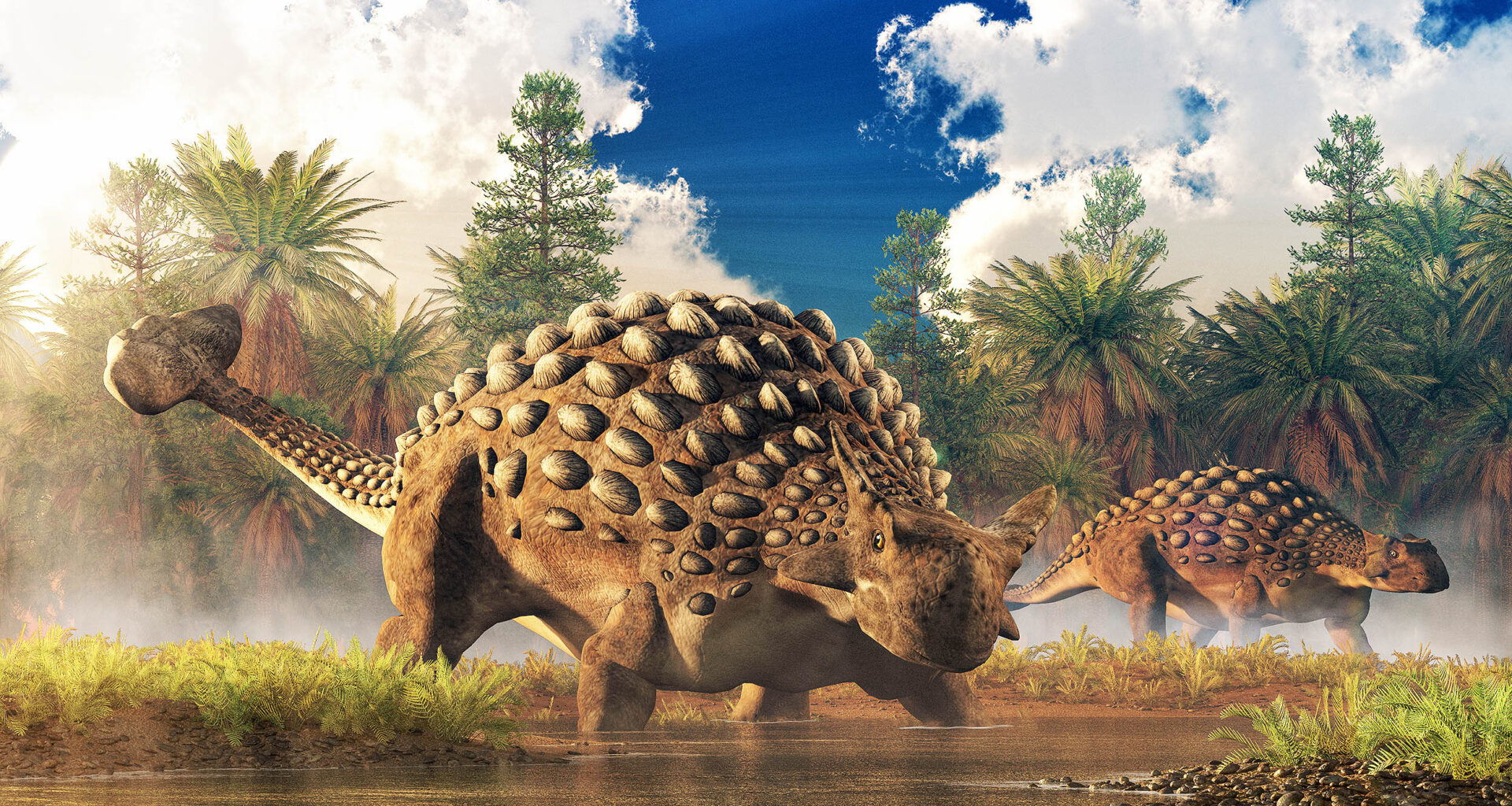
For years, a handful of unusually small dinosaur fossils from an anklyosaur species named Liaoningosaurus paradoxus puzzled scientists. Each specimen appeared complete, yet all were tiny, and no larger examples ever turned up.
The mystery sparked debate. Were these the remains of a rare, small-bodied armored dinosaur, or was something else being misread in the bones?

New research has now settled the question. The fossils belong to baby ankylosaurs, not miniature adults.
By revealing the youngest known members of this armored dinosaur group, the findings offer rare insights into how ankylosaurs grew during the earliest stages of life.
Finding Liaoningosaurus paradoxus
In 2001, researchers described a dinosaur named Liaoningosaurus paradoxus. The fossils came from Liaoning Province in northeastern China.
Every specimen measured less than 40 centimeters in length. This size puzzled experts because adult ankylosaurs usually grow over 3 meters long.
No fossil from a larger individual has ever been found. Because of this, some scientists suggested that Liaoningosaurus was a rare dwarf ankylosaur. Other researchers even proposed a semi-aquatic lifestyle.
A new study has now cleared up the confusion. The research shows that Liaoningosaurus fossils belong to very young ankylosaurs.
One fossil even shows signs of a recent hatchling. This makes it the youngest ankylosaur ever identified.
“Liaoningosaurus has caused a lot of debate because there is a lot we don’t know about this species, and we haven’t managed to identify an adult,” said Professor Paul Barrett from the Natural History Museum in London, who is a co-author of the study.
“But our research confirms that these are baby dinosaurs rather than small adults. Fossils of young ankylosaurs are rare, so there is a lot that these remains can tell us about the early development of armored dinosaurs.”
Fossils reveal true age
Size alone could not confirm the age of the fossils. All specimens looked similar, which made the problem harder. To find answers, researchers studied bone tissue under a microscope.
Bones grow in layers over time. These layers form growth lines, similar to rings inside a tree. Each line usually marks one year of life. The space between lines also shows how fast growth occurred.
The research team sampled bones from two Liaoningosaurus fossils. One sample came from the largest known specimen. The other came from one of the smallest.
Neither bone showed any growth lines. This result means both dinosaurs were less than one year old at the time of death.
Newborn Liaoningosaurus paradoxus
The smallest fossil revealed even more information. Its bone structure matched patterns seen in newborn dinosaurs from other species. One feature stood out clearly.
“The smaller fossil showed characteristics that we can see in other newborn dinosaurs, such as the presence of a hatching line,” said Barrett. “This is a small, ring-like feature in the bone that is laid down at the time the animal hatches from the egg.”
“So, we can say that this individual had very recently hatched at the time of its death, which would make it the first hatchling ankylosaur we’ve ever discovered.”
This discovery gives scientists a rare look at ankylosaurs right after hatching.
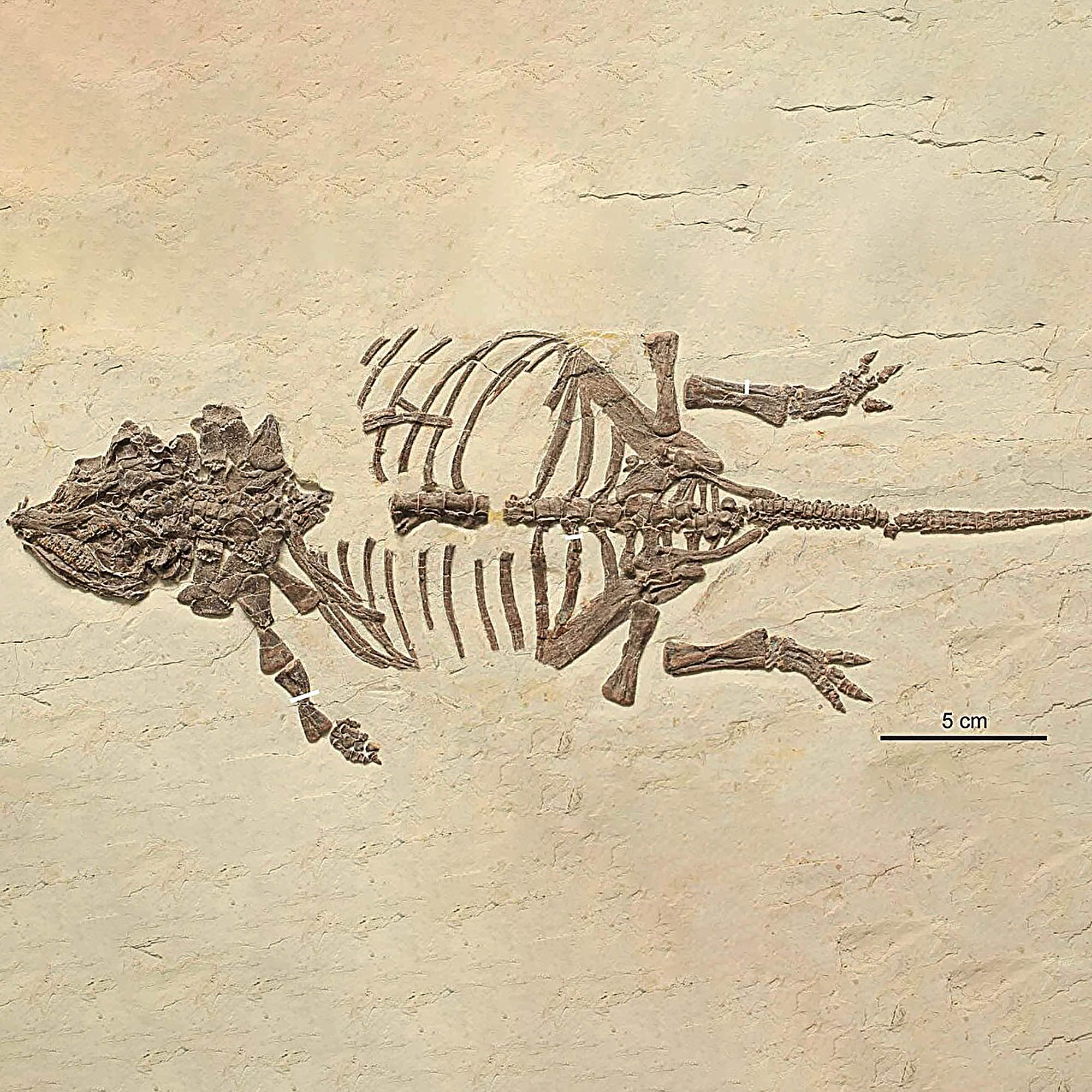 Numerous anklyosaur fossils of Liaoningosaurus paradoxus have so far been discovered. Credit: Journal of Vertebrate Paleontology (2025). Click image to enlarge.Where these dinosaurs lived
All Liaoningosaurus paradoxus fossils come from Liaoning Province in China. This area is known for very well preserved fossils from the Cretaceous Period, which lasted from about 145 to 66 million years ago.
Other dinosaurs found here include Microraptor and Sinornithosaurus.
During the Cretaceous Period, shallow lakes covered the land. Volcanic eruptions happened often. Ash from eruptions settled into the lakes and buried animals quickly.
This process protected bones and soft tissues from damage. As a result, fossils from this region show fine details that rarely survive elsewhere.
Ankylosaurs armored from birth
Adult ankylosaurs are known for thick armor plates. Fossils of young ankylosaurs are rare, and many lack visible armor. Because of this, some scientists believed armor developed later in life.
Liaoningosaurus tells a different story. Even at a very young age, these dinosaurs already showed early armor features. This suggests that armor began forming soon after hatching.
“As we have found so few fossil babies, Liaoningosaurus is really the only good window we have into what ankylosaurs are like just after they hatch,” said Barrett.
“The Liaoningosaurus fossils had already developed some armor. Now that we know they are babies and not miniature adults, we can say that these kinds of features came in quite early during the animal’s growth.”
Finding an adult specimen would provide even deeper insight, because it would allow scientists to compare adults and babies of the same species and see how key features develop over time.
The study is published in the Journal of Vertebrate Paleontology.
—–
Like what you read? Subscribe to our newsletter for engaging articles, exclusive content, and the latest updates.
Check us out on EarthSnap, a free app brought to you by Eric Ralls and Earth.com.
—–