
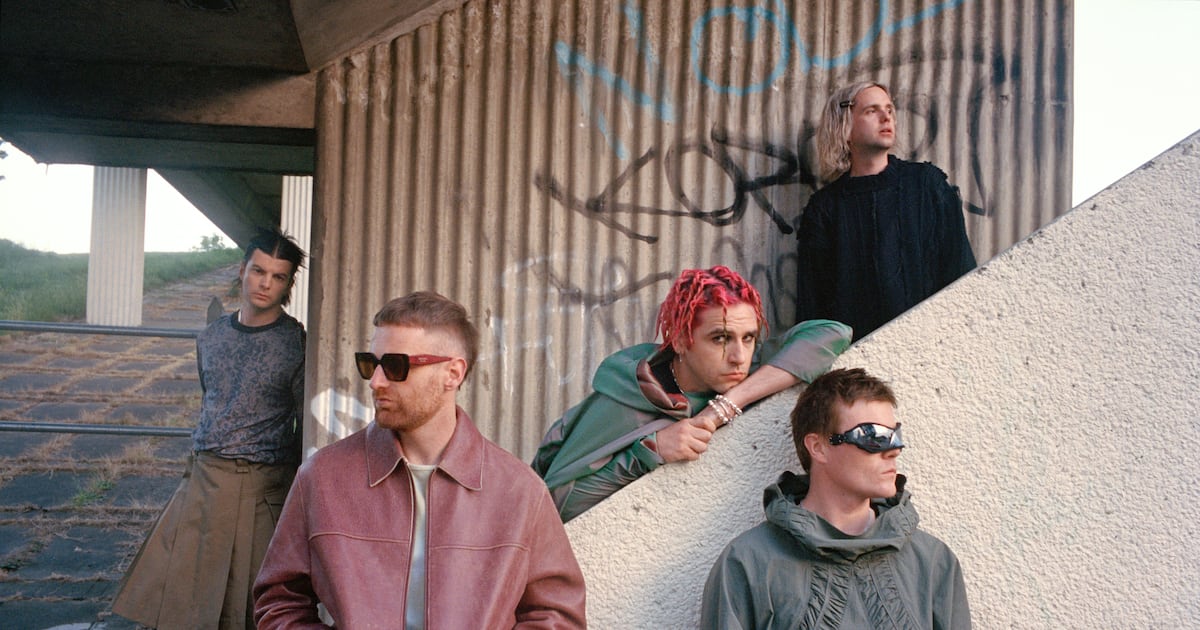
Trust Fontaines DC frontman Grian Chatten to correctly answer the question that has been put to Irish musicians for the past 20 years. In June 2024, when Chatten and his bandmates were on the Later… with Jools Holland show, the singer sat down with Holland for a chat. After a short preamble, he asked Chatten why Ireland, for a country with such a small population, “has an incredible amount of great artists and musicians who are globally recognised?” Chatten barely pauses for breath. “It’s just that we’re all really good-looking. I think that’s what it is.”
Ask anyone with even a passing interest in Irish music (pop, rock, folk, hip-hop, and most points in between and beyond) and they’ll tell you that, Covid months notwithstanding, the past five years have not only produced a batch of the best Irish music acts in several decades but also the most commercially successful.
Pre-Covid, very few industry insiders could have predicted that in less than 10 years, a batch of new Irish acts would take over Glastonbury, be nominated for Grammy Awards, Ivor Novello Awards, feature regularly in the Mercury Music Prize shortlists and, by no means less significant, consistently sell out shows in Dublin’s 3Arena and headline open-air festivals across the country. There comes a point when we can’t pretend we’re not good at what we do, and if any year is proof of that, then 2025 is it. Let’s look at some examples.
The past 15 months have been intense for Hozier, Irish music’s tallest songwriter. He hasn’t played in Ireland too often, either (Marlay Park in 2024, Electric Picnic earlier this year), having focused on touring America and elsewhere since before the release in 2023 of his third album, Unreal Unearth.
It is in the US, however, that he is continuing to make the greatest impact, having reached pole position in Billboard’s Top Alternative, Folk, and Rock album categories. Meanwhile, a single, Too Sweet (taken from his 2024 EP, Unheard), topped the US charts.
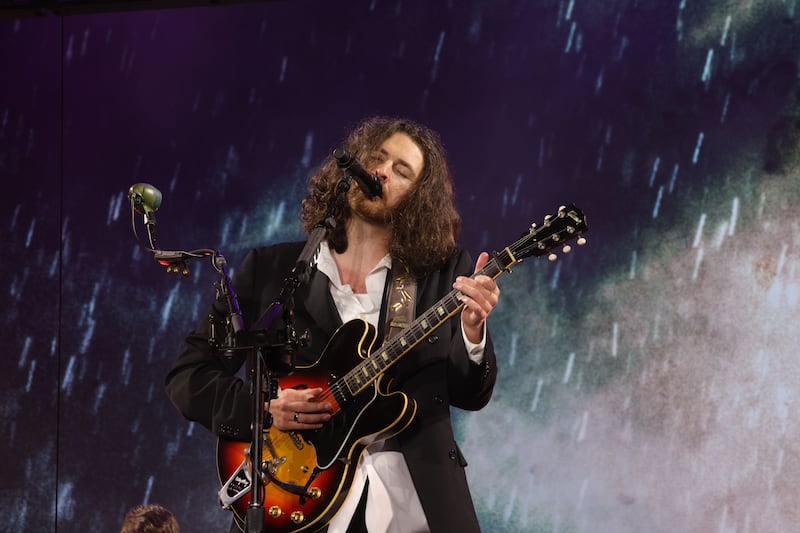 Hozier on the main stage at Electric Picnic 2025. Photograph: Alan Betson
The history books tell us that Hozier became the first Irish act to sit atop the Billboard Hot 100 in almost 35 years (since 1990 and Sinéad O’Connor’s version of Prince’s Nothing Compares 2 U), but context was overlooked: Hozier is the first Irish act since U2 to tour the US so painstakingly.
Such a gruelling series of shows over the past two years, however, has catapulted him into the A-list sector globally. Not even taking into consideration his online achievements (multibillion streams for numerous songs, and so on), he has more than laid the foundations for a lasting career. Touring in 2025 concluded with a show in Mexico City on October 14th, but a new album and a further slew of international live dates in 2026 will once again put him at the front of the Irish pack.
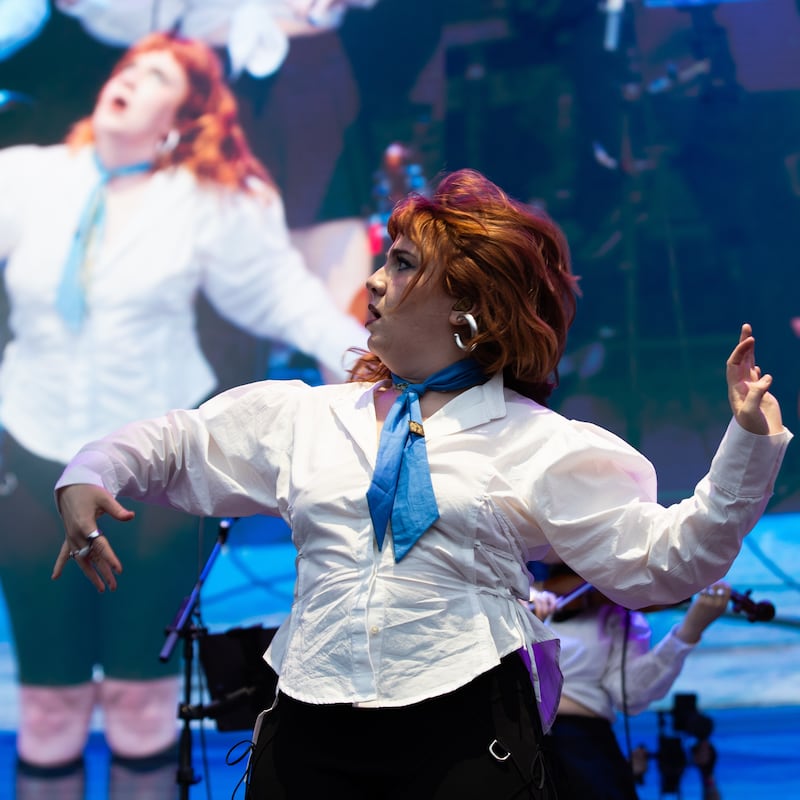 CMAT onstage during this year’s All Together Now festival in Waterford. Photograph: Kieran Frost/Redferns
Speaking of which, at this point, CMAT doesn’t need any introduction. In the past five years, Ciara Mary Alicia Thompson has achieved what no other female Irish musician has been able to do since Sinéad O’Connor more than 35 years ago: cut out a sizeable slice of the commercial cake while being inarguably, uniquely herself.
Each of her three albums (2022’s If My Wife New I’d Be Dead, 2023’s Crazymad, for Me, this year’s Euro-Country) has topped the Irish charts, but more meaningfully, she is gaining seriously marketable traction in the UK and US. Both Crazymad, for Me and Euro-Country have been nominated for the Mercury Music Prize, making her the only Irish woman to be nominated twice (as well as in consecutive years).
With CMAT, however, it’s more than statistics. She has grasped the proverbial nettle with both hands and made it work in her favour by being charmingly oblivious (or wilfully contrary – take your pick) to what the music industry wants from her: a songwriter and performer who is cookie-cutter, identikit and pliable. That she has gained what we now call “reach” is little or nothing to do with any marketing strategy and everything to do with a creative focus that is wholly distinctive. For more than a year, this writer has been receiving press releases promoting emerging female artists whose music is (in algorithm-speak) “for fans of” CMAT. Expect more of Dunboyne Diana’s influence to filter through in the months (and months) to come.
For the past several years, there have also been numerous PR pitches of music acts “for fans of” Fontaines DC. With a career trajectory that warms the proverbial cockles of the heart (yes, I was at their raw-as-red-meat performance in Geaney’s pub in Dingle, in 2016, during Other Voices), this year was especially important to the band, with last year’s fourth album, Romance, receiving two nominations (Best Rock Album, Best Alternative Music Performance) at the 67th Annual Grammy Awards, and a nomination for this year’s Mercury Prize (their second, after Dogrel, their debut, in 2019). Awards, of course, don’t really matter (or so we are always reminded), so this year was pivotal for the band in terms of audience awareness.
Similar to Hozier and CMAT, Fontaines DC are a touring music act and have spent the past 15 months systematically prising open geographical territories. They completed a lengthy string of US and European shows in the second half of 2024, and this year alone, they returned to the US, visited Japan, Australia and New Zealand, and sold out summer shows in the UK, including their biggest headline show to date (more than 45,000 at London’s Finsbury Park). “They are the most important band of this decade,” noted NME of that landmark show, adding that, “The crowd, dressed in their Bohemian FC shirts, continue Fontaines’ anime street gang aesthetic, its brash colours the makeshift uniform of a subculture.”
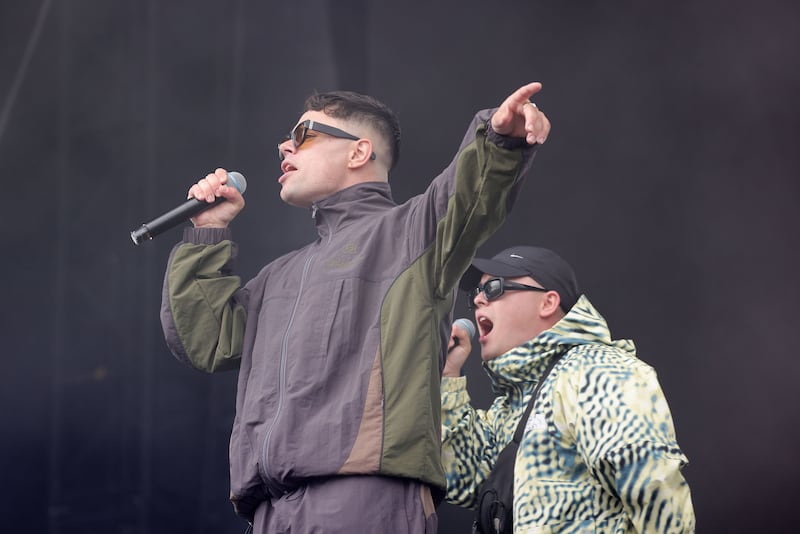 Kneecap’s Móglaí Bap and Mo Chara at Electric Picnic 2025. Photograph: Alan Betson
The year also belonged to two other Irish bands. Brothers in arms with Fontaines DC, hip-hop trio Kneecap (Mo Chara, Móglaí Bap and DJ Próvaí – respectively, Liam Óg Ó hAnnaidh, Naoise Ó Cairealláin and JJ Ó Dochartaigh) are the disruptive ying to the folksy yang of Amble. As has been widely reported elsewhere, Kneecap’s members are supporters of an end to the Israeli occupation of Palestine, and have repeatedly voiced their opinions on and off stage. To date, this has negatively affected their touring schedules (particularly following their appearance in April at the US music festival Coachella, when the band’s US booking agents dropped them), but the group remains unbowed.
By the end of this year, they will have concluded a UK and European tour, and will have played sold-out shows at INEC Killarney (December 12th/13th) and Dublin’s 3Arena (December 16th/17th). After that, it’s kon’nichiwa to Japan’s Rockin’ on Sonic Festival (January 4th) and hola to Barcelona’s Primavera Sound (June 3rd-7th). In other words, politicised business as usual.
For far less riotous but immensely successful Irish music, we have another trio. When Amble formed in 2022, it was, they said, to play cover songs in pubs in return for free pints. A year later, an employee of LA-based Warner Records heard a snippet of their music on TikTok, sourced a contact and expressed an interest in signing them.
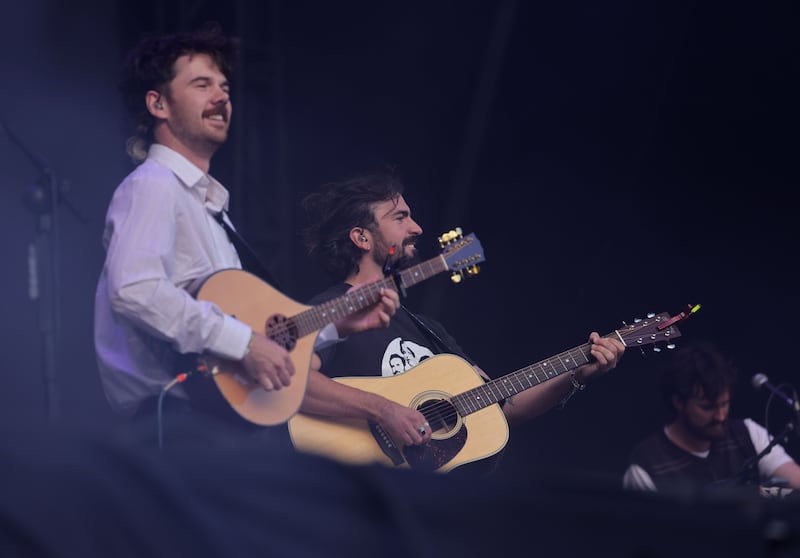 Amble at Electric Picnic 2025. Photograph: Alan Betson
In 2024, Ross McNerney, Robbie Cunningham and Oisin McCaffrey left their full-time jobs (respectively, a secondary schoolteacher, a primary schoolteacher, and a data scientist). This year, they released their debut album, Reverie (cue multimillions of streams), but more crucially, they massaged a nerve with their live shows, which connect with those who want to remove themselves from life’s disruptions and take sanctuary in a space with friends, perhaps a drink, and the dependability of a calm folk song.
[ The 10 best Irish albums of 2025 so farOpens in new window ]
If there is a lesson to be learned from Amble’s huge commercial gains in 2025, it’s that you don’t have to be inventive to be successful; you just need to trust your instincts and know your audience. Amble play sold-out Irish shows on December 4th/11th/12th (3Arena, Dublin) and December 10th (SSE Arena, Belfast), and if you can get a ticket, it’ll be a pre-Christmas miracle.
We haven’t even mentioned Picture This (sold-out shows at SSE Arena, Belfast, December 27th/28th and Dublin’s 3Arena, December 29th/30th) or Dermot Kennedy, whose pair of shows at Dublin’s Aviva Stadium on July 11th/12th next year are already close to being sold out.
And lest we forget, there is Sprints, the Dublin band whose fiercely executed guitars and melodies give the whinging opposition a well-deserved thrashing. From next January, the band, fronted by the force of nature that is Karla Chubb, will embark on a Canadian/US tour, followed in March by an exhaustive stretch of European shows. With a critically praised second album, All That Is Over (‘the songs are breathless pile-drivers, powered by Chubb’s ear for cut-glass melody,’ noted this paper’s reviewer) and an ambitious streak a mile wide, 2026 is surely theirs for the taking.
What else haven’t we mentioned? Since June of this year, at a conservative estimate, more than 100 albums by Irish artists have been released. Irrespective of whether even 10 per cent of these will be listened to, or manage to gain some level of attention, good-looking or not, the beat continues.