
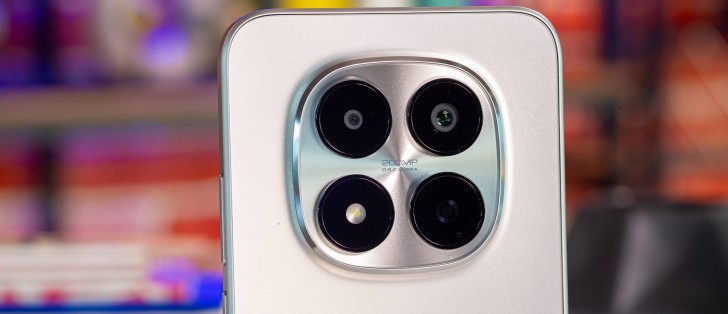
A sort of triple, but mostly dual camera system
Technically, the Redmi Note 15 Pro 5G has three lenses on the back. However, best we can tell, one of these is a very basic depth sensor and not even Xiaomi advertises it as a camera of any sort.
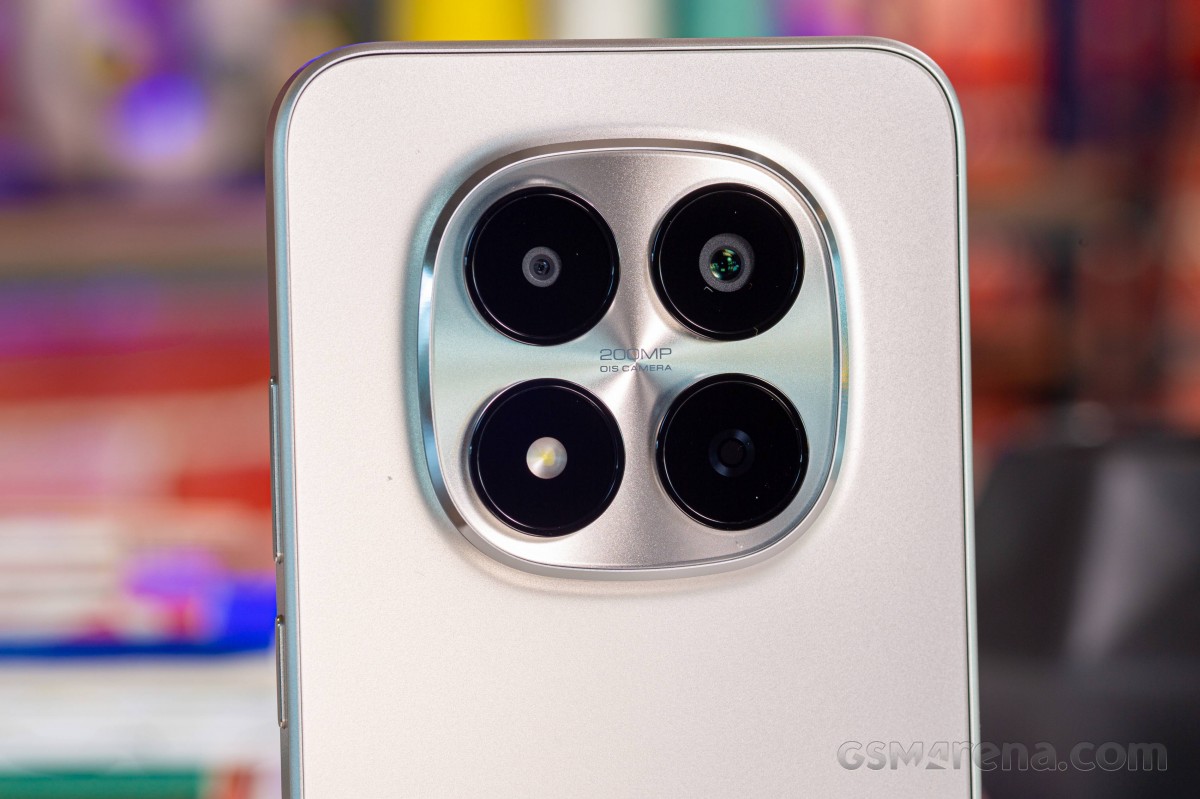
So, what you get in reality are two cameras – a main and an ultrawide. It’s nice to see the subpar 2MP macro camera from the previous generation finally retired.
Wide (main): 200 MP Samsung ISOCELL S5KHPE, TetraPixel, f/1.7, 1/1.4″, 0.56µm, OIS, multi-directional PDAF; 2160p@30fps
Ultrawide: 8 MP OmniVision OV08F10, f/2.2, 1/4.0″, 1.12µm, fixed focus; 1080p@60fps.
Front camera: 32 MP OmniVision OV20B, f/2.2, 1/5.0″, 1.75µm; 1080p@60fps
The main camera is based on the Samsung ISOCELL S5KHPE sensor. We couldn’t find much information about it besides the fact that it shares the same specs as the 200MP ISOCELL HP3 used in the previous model.
The ultrawide camera uses an 8MP sensor. The camera specs are the same as on the Redmi Note 14 Pro 5G, but that one had a Sony-made sensor, whereas this time around, Xiaomi has moved to Omnivision OV08F10. We’ll see how that has affected the image quality. For what that’s worth, it has added 60fps video recording. There is still no autofocus here.
Finally, on the front, there is a 20MP fixed-focus selfie. It’s the same camera as on the previous Redmi Note 14 Pro 5G.
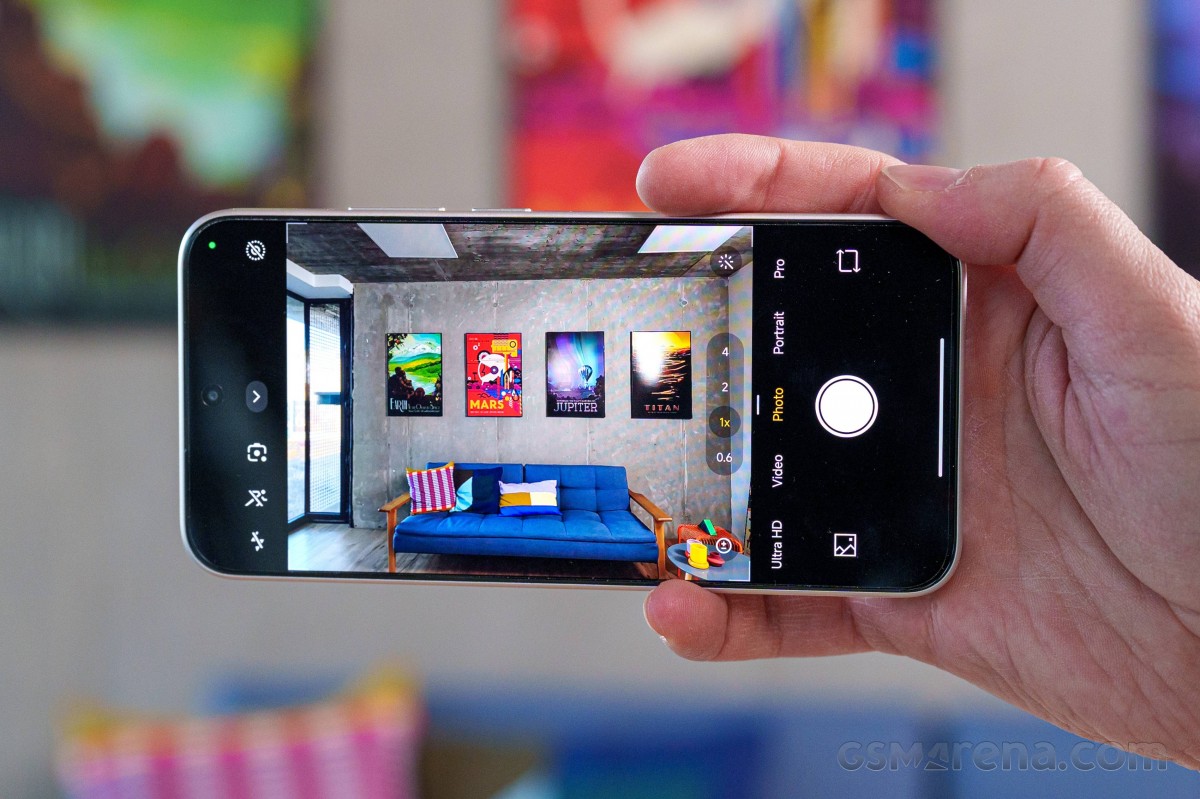
The Redmi Note 15 Pro 5G essentially gets the same camera hardware as its more expensive Redmi Note 15 Pro+ sibling (if we don’t count the different selfie camera). Of course, this phone here comes with a Dimensity chipset instead of a Snapdragon, so owing to the different Image Signal Processors (ISP), we might see some points of deviation between the two models.
Daylight photos
Main camera
The Redmi Note 15 Pro 5G’s main camera takes nice photos. Sharpness and detail are solid, and color reproduction is nice.
The contrast is not as nice as on the more expensive Redmi Note 15 Pro+, but the upside of that is that here, we get much better dynamic range – there are almost no clipped highlights, unlike what we saw on the more expensive sibling. That said, if that’s the tradeoff we have to make, we’d take the more contrasty images from the Note 15 Pro+ any day.
Compared to the outgoing Redmi Note 14 Pro 5G, the image rendition by the Note 15 Pro 5G is a tad nicer, too, owing to the new camera sensor. Still, it remains firmly in midrange territory.














Main camera samples (1x)
The 200MP full-res photos out of the camera are soft and poor in contrast. They also have poor dynamic range.
In this mode, the Note 15 Pro 5G trades blows with the Note 15 Pro+, with some photos coming out slightly nicer from the 15 Pro+, while others being nicer from the 15 Pro.
Compared to the previous-gen Note 14 Pro, the 200MP photos are a touch nicer, but we still see the same demosaicing artifacts on some photos as we did back there (a colorful pixelated mesh appears across parts of the image). Since we didn’t see any of these issues on the 15 Pro+ with its Snapdragon chipset, we are starting to suspect the Dimensity ISP might be to blame for those for a second year in a row.




200MP full-res samples
People shots by the Redmi Note 15 Pro look better than on the outgoing Redmi Note 14 Pro, but they still leave more to be desired.
Interestingly, the images here are more contrasty than the Redmi Note 15 Pro+, and we prefer the shots by the more expensive sibling not only because of that but also because they are cleaner. However, unlike the Note 15 Pro+, here, there was no issue with the autofocus reliability when shooting people.








1x people shots: Normal • Portrait mode
2x crop zoom
The Redmi Note 15 Pro 5G lacks a dedicated optical zoom camera, so it resorts to using crop zoom from the sensor from the main cam when needed.
The 2x zoom samples offer a similar rendering to the 1x mode, and we are happy with the results. They are also slightly nicer than the Note 14 Pro.
Compared to the Redmi Note 15 Pro+, the images are less contrasty and slightly noisier, but we like the one here better.












2x crop zoom samples
We also have a set of people shots at 2x zoom.








2x people shots: Normal • Portrait mode
4x crop zoom
Just like with the predecessor, the camera viewfinder also offers a direct toggle for 4x, but that’s stretching the capabilities of the camera. Image quality at this sort of magnification really takes a hit even in good lighting conditions.











4x crop zoom
Ultrawide camera
The image quality out of the 8MP ultrawide camera is par for the course. Images are not particulalry sharp or detailed.
The overall rendition is not very contrasty, which benefits the dynamic range but makes everything look even mushier. This makes us prefer the more contrasty output by the Redmi Note 14 Pro (a Sony sensor) or the Note 15 Pro+ (the same Omnivision sensor as here).
Ultrawide camera samples
Selfies
The selfie camera is unchanged in this generation – it still uses an unremarkable 20MP sensor. Unsurprisingly, the quality is the same as well.
Dynamic range is okay, and skin tones appear to be okay too but the level of detail is not great. Still, at least the mugshots come out in focus unlike on some other Redmis – the 15 Pro+ included.






Selfie samples
Low-light photos
The low-light photos out of the main camera look great just like on the previous generation. They are clean, sharp and quite detailed. The colors are punchy, and the dynamic range keeps both highlights and shadows in check. The photos here are pretty much identical to what you’d get from the more expensive Redmi Note 15 Pro+ and the previous-gen Redmi Note 14 Pro.




Main camera low-light samples (1x)
While the 2x crop zoom photos are decent, they are not very sharp. You get low contrast images with the upside that the dynamic range is better than on the Redmi Note 15 Pro+ and the shadows are not as dark. However, you also get more noise than the 15 Pro+. The overall image rendition here appears to be equivalent to the Redmi Note 14 Pro.




2x crop zoom low-light samples
The 4x photos are not great. The Redmi Note 15 Pro+ did a better job with this mode after dark.




4x crop zoom low-light samples
Unsurprisingly, the 8MP ultrawide camera does not perform great after dark. The photos are soft, and the nice dynamic range is the only thing they have going for them.




Ultrawide camera low-light samples
The image output from this camera in low light is the same as that of the Redmi Note 14 Pro. That said, we do prefer the more contrasty and cleaner photos by the Redmi Note 15 Pro+.
Photo quality verdict
We appreciate the small tune-ups in the Redmi Note 15 Pro 5G main camera. The new sensor has a better rendition of fine detail and takes nicer-looking people shots than the Redmi Note 14 Pro 5G. The 2x and 4x modes are also slightly better – even a bit nicer than the Redmi Note 15 Pro+’s. The 15 Pro has a distinctly different look than the 15 Pro+ – despite the identical hardware, we consistently get photos with a lower contrast on the 15 Pro. That’s fine as it benefits the dynamic range and details in the shadows, but the ultrawide’s image rendition takes a serious hit, and it’s even below the previous-gen phone. As for the selfie camera, it has not seen any changes in this generation – the selfies are okay, but nothing to write home about.
Video quality
The Redmi Note 15 Pro 5G offers 4K video recording at 30fps using its primary camera, and it has EIS in this mode. The ultrawide and the selfie cams are limited to 1080p. They both offer a 60fps framerate.
You can check out the playlist below, which includes multiple video samples.
As you will see from our walking test, video stabilization from the main camera is nice but a bit jerky, just like the Note 14 Pro. We like the Redmi Note 15 Pro+’s stabilization better.
Surprisingly, the daylight video was consistently more contrasty than the Redmi Note 15 Pro+, unlike what we saw with the photos so far.
That said, the daylight 4K video from the main camera is pretty solid. It has a wide dynamic range and is decently sharp.




Video screengrab: Ultrawide • Main cam • 2x crop • 4x crop
At 2x, the footage is about the same quality as the Redmi Note 14 Pro – it looks good and would do the job in a pinch. The 4x footage, however, is too soft for our taste.
The daytime ultrawide footage is soft too and with washed-out colors, but we do see an improvement over the previous model here.
The low-light footage from the main cam is excellent for the class, and we find it nicer than what we saw from the Redmi Note 15 Pro+, which shoots too contrasty low-light video.




Low-light video screengrab: Ultrawide • Main cam • 2x crop • 4x crop
The low-light footage at the other focal lengths has similar dynamic range, and we even liked the 2x video. The ultrawide footage after dark was unspectacular in every way possible.
Video quality verdict
The Redmi Note 15 Pro 5G’s main camera captures nice videos in both good light and low light. In both 1x and 2x modes, you get sharp footage with nice colors and dynamic range, and the video quality is, in fact, identical to the previous-gen Redmi Note 14 Pro 5G. The ultrawide camera video, however, is unspectacular regardless of the time of day. Despite the identical camera hardware to the Redmi Note 15 Pro+, there are noticeable differences in the video rendition between the two siblings. We prefer the Redmi Note 15 Pro’s videos as it captures consistently more contrasty footage in good light, while its low-light videos don’t have as dark shadows.