
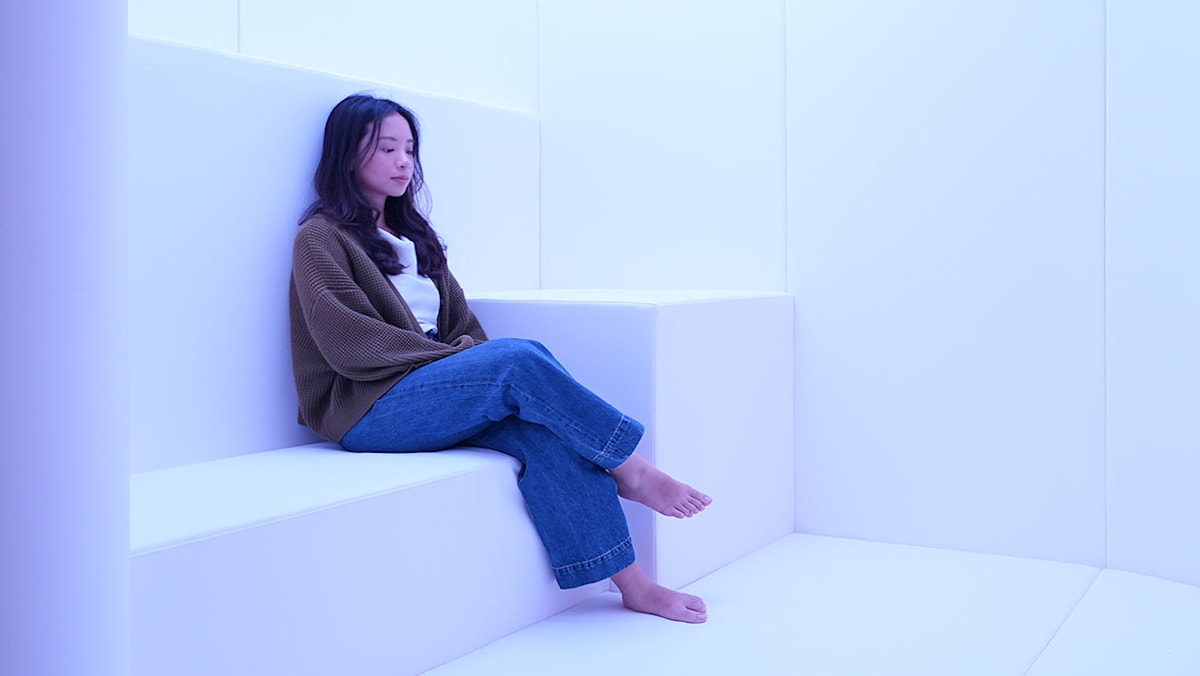
When her son was growing up, Ms Janice Tay often had to make a beeline to nursing rooms when shopping malls or other public settings became too overstimulating for him and he needed a quiet space to regulate his emotions.
Her son Emmanuel was diagnosed with different neurodevelopmental conditions, including autism, attention deficit hyperactivity disorder (ADHD), dyslexia and dyspraxia, which affects motor skill development and coordination.
To manage this, Ms Tay has taught her son, now 15, to independently use toilet cubicles as a “safe zone” to regulate himself, although this strategy can prove difficult in practice.
The 45-year-old, who is the founder of Bridging the Gap, an intervention centre for children with developmental needs, said that Emmanuel sometimes needs 20 to 30 minutes in the cubicle.
In male toilets, where there are often only a few stalls, other users can grow impatient, and repeated knocking from those waiting in the queue further heightens his stress.
Using accessible toilets is also not always a suitable alternative, she added, because his conditions are not visibly apparent and other users can become upset when he emerges after a long wait.
For others such as Ms Karen, who declined to give her full name, what should be a routine grocery trip can easily become troubling.
The 35-year-old – who was assessed by a psychologist in 2022 to have Level 1 autism, previously known as Asperger’s syndrome – said that supermarkets are among the most distressing places.
The harsh white lighting, compounded by densely packed product displays and hard tiled floors that amplify footsteps and other sounds, are overwhelmingly stimulating to her senses.
Noises ranging from rustling plastic bags to fishmongers cleaning fish to shoppers chatting also feel intensified, she added.
“I can hardly spend more than 10 minutes in the supermarket and, at times, when I needed more time to get my items, I’d fail to complete my buys and needed to leave the supermarket feeling extremely unwell so that I may calm myself down.”
For many neurodivergent individuals and their families or caregivers, navigating public spaces requires careful planning.
Neurodivergence is a non-medical umbrella term used to describe variations in how people think, learn, process information and interact with the world.
Crowded places, loud noises and bright or flashing lights can quickly become too much, turning routine errands or family outings into stressful experiences – particularly when there are limited choices in public settings to step away and manage sensory overload.
NEURODIVERGENT-SUPPORTIVE SPACES
That experience, however, is slowly changing, as more public spaces introduce infrastructure and design features aimed at supporting neurodiverse users.