
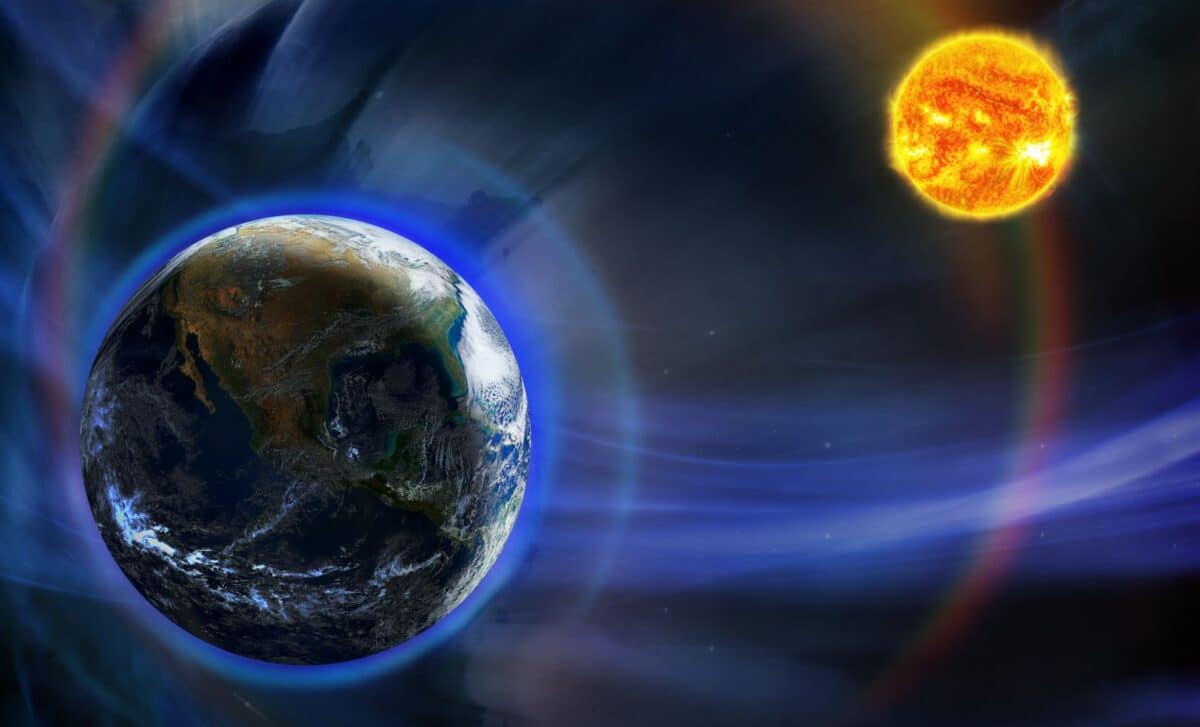
Every January, Earth reaches its closest point to the Sun, known as perihelion. Yet, it’s winter in the Northern Hemisphere. This may seem odd: why is it colder when we’re supposedly closer to the Sun? On January 3, 2026, Earth will be about 2.5 million kilometers (1.5 million miles) closer to the Sun than at aphelion, its farthest point. But despite this proximity, the Northern Hemisphere will still be in the middle of its coldest months. To understand why, we need to look at Earth’s orbit and its axial tilt.
How Earth’s Tilt Creates the Seasons
What actually defines the seasons on Earth is not our distance from the Sun, but the tilt of Earth’s axis. According to NASA, Earth is tilted at a 23.4-degree angle relative to its orbit. This means that some parts of the planet receive more sunlight at different times of the year, leading to summer in the hemisphere tilted towards the Sun and winter in the hemisphere tilted away.
Earth’s orbit around the Sun is elliptical, meaning it’s slightly oval-shaped. However, this elliptical orbit doesn’t have a dramatic impact on the temperatures we experience. The difference in distance between perihelion and aphelion is only about 3%, which is not enough to cause significant temperature changes between the two points.
Perihelion and Winter in the Northern Hemisphere
Even though Earth is closer to the Sun at perihelion, the cold temperatures in the Northern Hemisphere winter are caused by the planet’s axial tilt, not its proximity to the Sun. In January, the Northern Hemisphere is tilted away from the Sun, meaning it receives less direct sunlight, resulting in shorter days and colder temperatures. Meanwhile, the Southern Hemisphere experiences summer as it’s tilted towards the Sun.
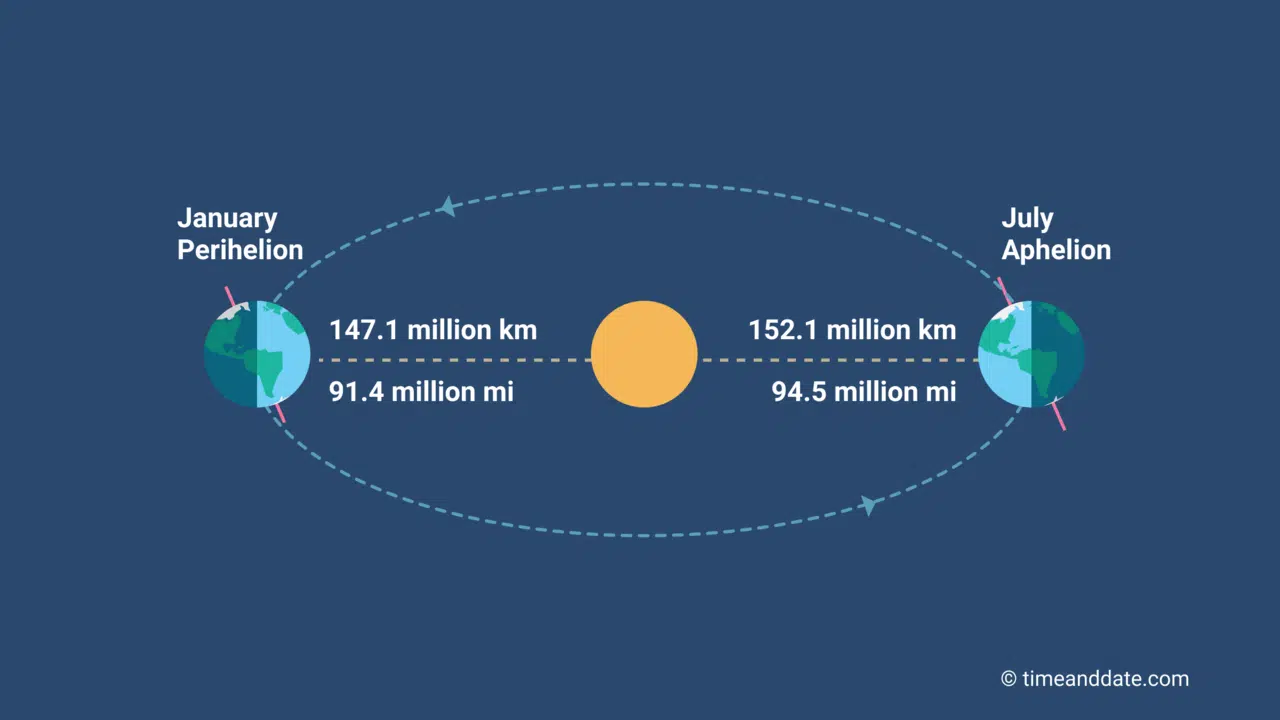 Earth’s orbit showing perihelion in January and aphelion in July. Credit: TimeandDate.
This coincidence of perihelion with winter in the Northern Hemisphere is simply that: a coincidence. While Earth’s orbit is elliptical, the positions of perihelion and aphelion relative to the solstices shift slowly over time. Currently, perihelion occurs in early January, but this won’t always be the case.
Perihelion and Aphelion: The Subtle Shift Over Time
The timing of perihelion and aphelion changes gradually over time due to the gravitational forces exerted by other planets, especially Jupiter and Saturn. According toTimeandDate, these forces cause a slow drift in the dates of these events. For example, right now, perihelion occurs a few weeks after the December solstice, but this alignment won’t last forever. In about 4,000 years, perihelion will coincide with the March equinox.
This gradual shift also affects the length of the seasons. Right now, summer in the Northern Hemisphere lasts about 4.5 days longer than winter, but this will change over time. One thing will remain constant, however: the tilt of Earth’s axis will always be the main factor driving the seasons, not the distance to the Sun.