
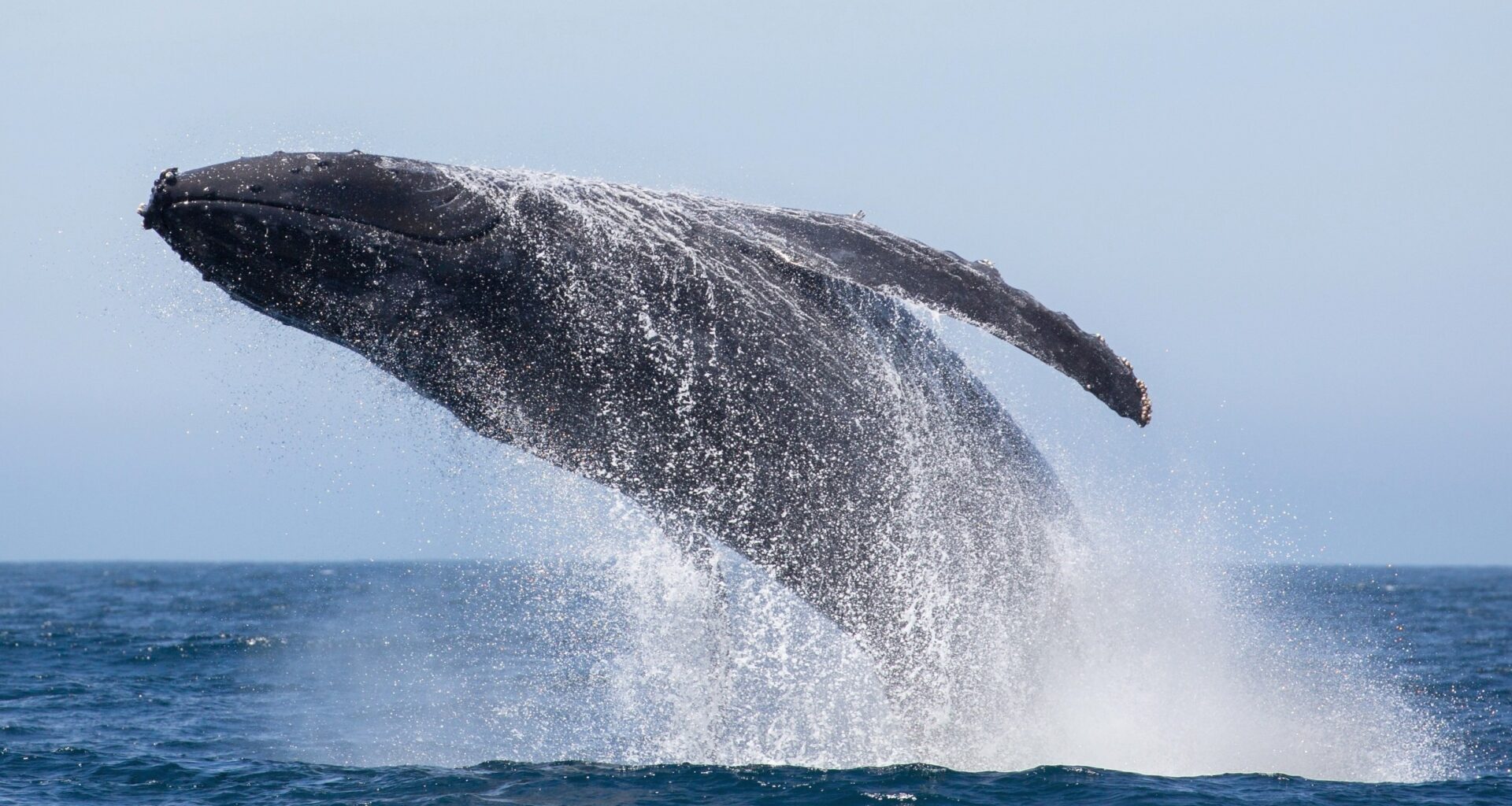
When people talk about humpback whales, they often tell a comeback story: humans hunted them hard, protections arrived, and some populations rebounded.
A new study led by the University of Groningen asks a tougher question: even if the number of whales climbs back up, does the crash still leave fingerprints inside the whales’ DNA?
Genomes as instruction books

To understand what the researchers did, picture a humpback whale genome as a gigantic instruction book written in a four-letter code. Every whale carries a slightly different version of that book.
Those differences matter because they give a population options. If the ocean warms, prey shifts, or new diseases show up, some whales may already carry gene versions that help them cope better.
Biologists call that “genetic diversity,” but you can think of it as variety in the population’s built-in tool kit.
Whaling as a genetic filter
Now imagine commercial whaling as a brutal filter that removes huge numbers of whales in a short time. When that happens, the population doesn’t just lose bodies – it loses unique versions of the instruction book.
And because whales live a long time and reproduce slowly, the population can’t quickly “print” lots of new genetic variety.
The study digs into that idea using whole genomes, which let scientists measure genetic variety with much finer detail than older DNA methods.
The researchers focused on humpback whales and looked at places with well-known whaling histories, including the Southern Ocean and the North Atlantic.
They didn’t just rely on modern samples. They also used DNA from whales that lived during the early whaling era, which gives a rare before-and-after comparison.
The scientists then compared DNA from living whales (taken from skin samples) with DNA from whale bones collected from the whaling era.
Population health over time
After they gathered the DNA, they used genome-wide “markers” (single-letter differences called SNPs) to measure several things that tell a story about population health over time.
First, they estimated changes in “effective population size.” A population might contain thousands of animals, yet only some of them successfully pass genes on to the next generation.
Effective population size describes how big the breeding population acts from a genetics point of view.
The researchers’ genomic estimates of effective population size matched what historians already know about whaling and how whaling technology improved over time.
In other words, the genome data didn’t show a random decline but lined up with the human timeline of exploitation.
Genetic diversity signals
Second, the team looked directly at genetic variety in today’s whales versus whales from the past. They calculated measures like heterozygosity (how often a whale carries two different
versions of a gene at a location) and homozygosity (long stretches where the DNA copies match closely, which can hint that a population went through a tight squeeze).
Those measurements act like clues in a mystery novel: they don’t show you a harpoon or a whaling ship, but they show you the genetic pattern you would expect after a population collapses and then grows again.
Harmful mutations in humpbacks
Finally, the researchers estimated “mutation load.” Mutations simply mean changes in DNA letters. Many do nothing, while some help or hurt.
The study doesn’t claim that modern humpbacks suddenly became unhealthy in an obvious way.
Instead, it reports something subtler: modern Southern Ocean humpback genomes show less genetic diversity and a higher load of moderately harmful mutations compared with historical genomes, which the authors link to the population crash caused by whaling.
Drift versus selection
That “moderately harmful” detail matters. If a mutation causes major problems – something that seriously reduces survival or reproduction – natural selection usually removes it from the population because carriers leave fewer offspring.
But if a mutation causes only a small disadvantage, chance can overpower selection when a population becomes small. Biologists call that genetic drift.
During a bottleneck, drift can let mildly harmful variants become more common simply because the population runs like a genetic lottery with fewer tickets.
The results fit that logic: the researchers saw an increase in slightly harmful mutations, while very harmful mutations did not rise in the same way.
What recovery really means
The whales can recover in headcount and still carry a long-lasting genetic scar.
Even if some populations now climb back toward pre-exploitation numbers, they may do so with reduced capacity to adapt to future environmental change and other threats.
That doesn’t mean recovery is fake. It means recovery has layers. A census count tells you how many whales you have. Genomes tell you something about how flexible that population may be when the world changes.
Why the result surprised experts
Many scientists expected a relatively short, recent bottleneck to leave only a small genomic mark because whales have long generation times.
Yet the comparison between modern and whaling-era genomes still revealed a detectable drop in diversity and an accumulation of potentially harmful variants.
That point should feel intuitive if you think about a library: if someone burns most of the books, the library can buy more copies of the remaining books pretty quickly, but it can’t magically recreate the rare titles that disappeared.
The researchers made their work transparent by pairing it with large public data resources and analysis scripts.
The associated dataset describes genome variant files used for population comparisons and demographic estimates, and it names specific analysis steps the team ran to estimate population history and genetic load.
Limitations and next steps
The study doesn’t pretend to answer everything. The strongest historical-versus-modern comparison came from one region of the Southern Ocean, and broader sampling across more populations could reveal more genetic variety in today’s humpbacks than this particular slice shows.
Conservation success isn’t only about bringing animal numbers back up. It also involves protecting the hidden genetic “options” that help a species handle whatever the future throws at it, such as warming seas, shifting food webs, noise, ships, fishing gear, and diseases.
The research shows that whaling didn’t just shrink humpback populations in a single moment. It likely changed the genetic starting point that today’s recovering whales carry forward.
The study is published in the journal Science Advances.
—–
Like what you read? Subscribe to our newsletter for engaging articles, exclusive content, and the latest updates.
Check us out on EarthSnap, a free app brought to you by Eric Ralls and Earth.com.
—–