

 BBC
BBC

Alain N’Guessan Bi (l) and Eiman Rostami work to keep the streets of south London tidier
Beside the main street through Ladywell in south-east London, a man carefully sifts through a plastic binbag full of rubbish.
“This is the bread and butter of the environmental enforcement team,” explains Eiman Rostami, as his colleague Peter delves among paper and plastic. “What we believe has happened here is some unauthorised waste has been dumped.”
Peter says he thinks the waste has come from a barber-shop before he triumphantly pulls out a scrap of paper revealing details of the business.
“So now we’ll use that evidence to issue a fixed penalty notice for fly-tipping on that address,” says Eiman, who is Lewisham’s planning enforcement manager and interim environmental enforcement manager.
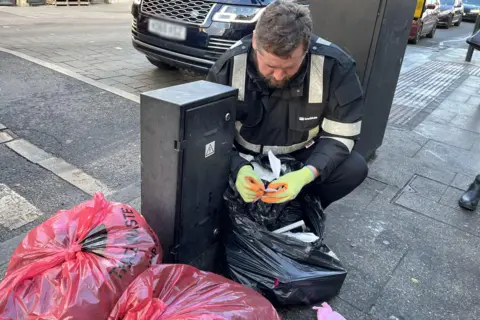
Peter found details of a business on a scrap of paper inside the dumped binbag
As with numerous areas across the UK, fly-tipping is a major problem in the borough.
Last year it received more than 38,000 reports of fly-tipped waste and spent £600,000 to clear up the mess, although it estimates the overall cost of the problem when including the likes of enforcement and the impact on businesses to be in the millions.
As such, it has a team of 17 enforcement officers who patrol its streets hunting out those dumping waste illegally.
We are on Alain N’Guessan Bi’s regular route and he points to a corner just off Ladywell Road where a mass of binbags and cardboard boxes sprawl across a street corner outside someone’s home.
This is one of the area’s hotspots. On a similar trip two weeks before, other bags, a wooden pallet and a broken office chair were among the dumped waste.
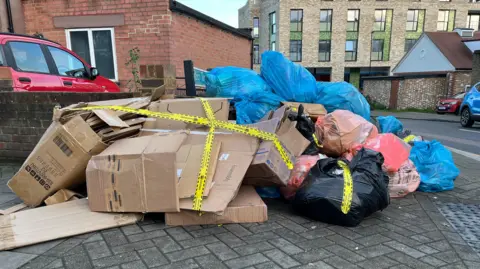
Yellow environmental crime scene tape is stuck across a fly-tip site once it has been investigated
Eiman says it has taken only one or two days for this latest pile to build up.
Some of the mess is allowed to be here as the blue, red and orange bags are used by road sweepers, flats above shops and businesses and this is the authorised collection point for them.
“But unfortunately, human nature, you see a big pile of rubbish bags on the side of the road, and you think, ‘oh, I’ve got some rubbish as well – I can’t be bothered to take it to the dump, I’ll just put it next to there’,” he says.
“It’s true, it does get cleaned up. However, we’re effectively cleaning up more than we’re authorised to do and it actually costs us.”
The team therefore undertake investigations “to discourage this from happening”, with a £1,000 fine set to be imposed on this particular culprit.
Earlier this year the council increased the maximum fine for fly-tipping from £400 to £1,000 as part of a crackdown, and the number of fines issued since October has nearly doubled compared to last year to almost 120 a month.
Yet government figures show what they are up against, with a massive increase in fly-tipping incidents reported in the borough in the past few years.
While this can partly be explained through the recent introduction of an app making it easier for residents to report dumped waste, Eiman says the team has also seen a huge rise in incidents.
The culprits, he says, tend to be a mix of “prolific people who consistently do the same thing over and over again” and “a lot of people that don’t know any better”.
 Handout
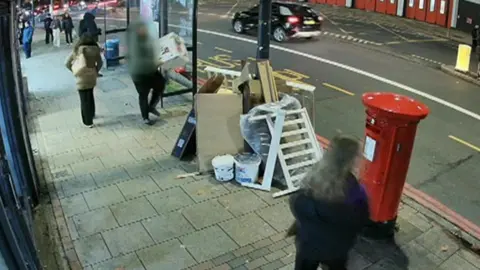
The team often use CCTV to help identify offenders
Further into Lewisham town centre is evidence of a house move with bedposts, metal poles and other domestic waste piled up against a green metal street cabinet.
“The problem with this kind of fly-tipping is it’s often very difficult to find evidence as to where it’s come from. I don’t know about you, but I don’t write my home address on my mattress,” says Eiman.
The team therefore look for other ways to find the culprits, such as using CCTV.
While they have their own set of portable cameras, in this case footage is provided by a nearby shop.
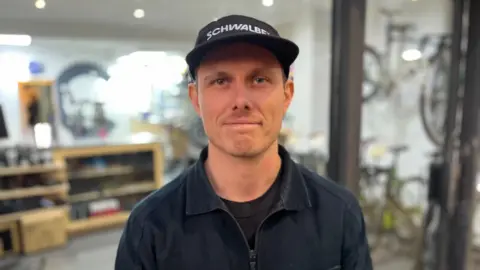
Max Geddes put up a CCTV camera outside his shop having become frustrated with fly-tippers
Max Geddess, owner of The Cyclery Lewisham, put a camera outside his shop having become tired of fly-tipped rubbish appearing on the pavement.
“There was one incident where somebody was putting out bags of cooking oil or fat and a woman fell on top of them while taking her pram off the bus… That was the final straw for us,” he says.
Two weeks ago he approached the team with footage of one repeat offender who had again abandoned rubbish outside the bike shop. His camera has also recorded this latest offence and the team say they’ll issue a fine.
“It’s a shame that we have to do it, but somebody does have to,” says Max. “The environmental agency can’t see everything, so we’ve got to work together and pitch in to clean it up.”
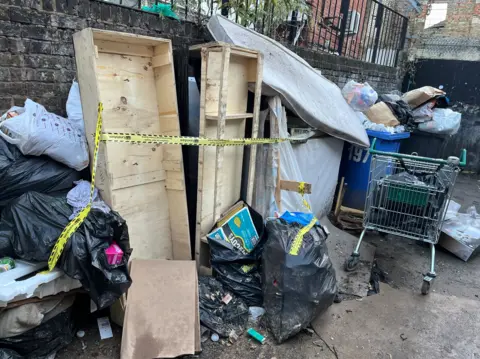
Fines cannot be issued over waste dumped on private land
A spot along an alleyway is another place that the team receives numerous complaints about.
Tucked behind a set of shops and homes, a mass of rubbish spills out of piles of plastic bags, beside wooden crates, a stained mattress and an abandoned shopping trolley.
Fines in this case aren’t possible as this is private land so Eiman says the team will “see what else can we do” to help those who live beside this mess.
Local landowners will first be spoken to and told about the situation and the need to rectify it, with the issue potentially being passed to colleagues in planning enforcement to use council powers to order for it to be cleaned.
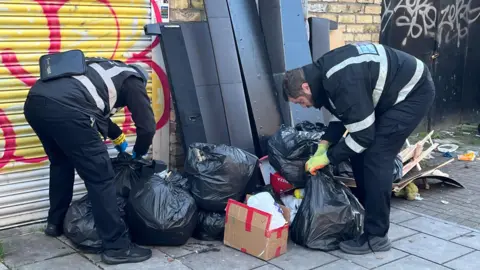
Once a fly-tip has been investigated, it is reported to the cleansing team
It is the educational side of the work which Eiman says is just as important as enforcement.
Asked about recent cases that have hit the headlines, such as one woman who received a £1,000 fine over an envelope, Eiman points out that the story “got shared in our WhatsApp work group” along with “a directive to just make sure you’re being proportionate”.
He says that while, “strictly speaking, that would be an environmental offence”, the team follow a different approach.
“If you’re here for the good of the community, I think it’d be quite hard to argue how much good you’ve actually done by potentially dragging someone [like that] into a criminal case,” he says.
The team will therefore speak to people and try to prevent fly-tipping happening in the first place.
“So people that are moving into new buildings, maybe we give them a leaflet, basically saying, ‘please be aware, these are environmental offences’.”
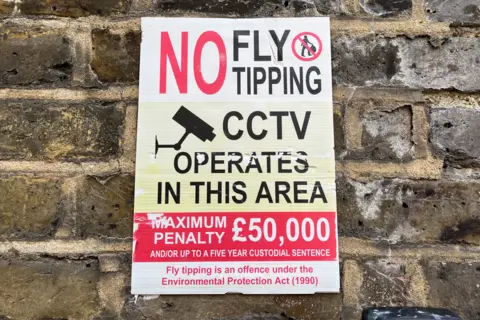
The council is investing in nine new automatic number-plate recognition cameras to help catch offenders
Other measures have been taken to try to make it easier for people to get rid of bulky waste, with the cost of removing items cut to £5 from a flat rate of £42 for up to four items.
Time banding, where people who use the coloured bags can only leave them at collection points between certain times, is also being introduced to try to stop people adding to those piles.
“A lot of our work is highlighting the gaps in our services,” says Eiman. “It’s not really fair to come in afterwards with heavy-handed enforcement if we haven’t provided an easy way to dispose of waste, so that’s why we try to keep pragmatic.
“We are doing this as a means to an end to clean up the borough, after all – not to punish.”