
North Cumbria Integrated Care is responsible for acute and community hospitals in the area as well as a range of community health services.
And while a number of exciting initiatives are underway in the trust, directors are working to drive improvements in key areas, ensuring patients in North Cumbria are safe and treatment is delivered within acceptable time frames.
Performance issues
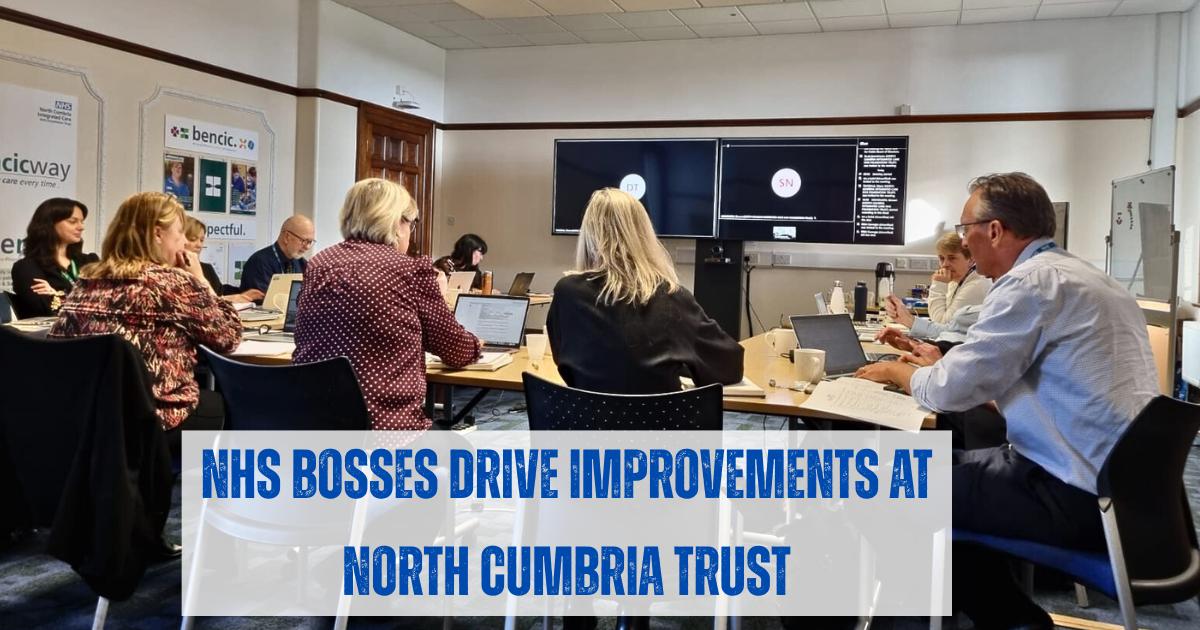
The meeting of North Cumbria Integrated Care directors, which took place on Wednesday November 19. (Image: Newsquest)
An update on performance at the trust’s sites, given to NCIC directors in November, revealed an increase in patients waiting more than 12 hours at A&E, from 7.9 per cent in August to nine per cent in September.
Performance also worsened on four hour waits. Trusts are expected to admit, transfer or discharge 76 per cent of patients within four hours.
NCIC met the four hour standard for 62.7 per cent of patients in September, this was a decrease from the 67 per cent seen in August.
Funds for key areas
The Cumberland Infirmary in Carlisle. (Image: Archive)
Three key performance concerns are set to be addressed by the redirecting of £2.1 million, they are: cancer performance, Referral to Treatment delays and A&E waiting times.
The trust hopes that redirected funding will help to bring the number of patients waiting 52 weeks for treatment down to 1.4 per cent by March.
Supporting staff
Trudie Davies, Interim Chief Executive of North Cumbria Integrated Care. (Image: Gateshead Health NHS Foundation Trust/Newsquest staff)
During a discussion about trust performance in the November 19 meeting, Non-Executive Director Claire Maxwell-Smith asked if staff would be “held to account” for non-performance.
Interim CEO Trudie Davies said: “I think there’s two things going on here, there’s supporting our staff to say ‘thank you for what you’re doing’ but there’s leaning into the fact that this is not an acceptable performance level.
“We can’t pretend everything’s okay because it’s not. We have a responsibility organisationally to turn this around and improve it and we need to be open and honest and transparent with our staff about that, because its an implicit quality and safety metric.
Dr Adrian Clements, Executive Medical Director said: “I don’t think we need to hold our clinicians to account. I think we should support our clinicians to do the right thing for patients.
“What we’ve not been able to do before is support them in the delivery that they want to give, our clinicians don’t want to deliver substantive care or poor care, but they’re frustrated in the fact that we’ve not enabled them to deliver better care.
“If you hear them, that’s one of their frustrations, that we as a board have not empowered them to deliver the care they aspire to deliver to people they serve.
“So it’s the other way round, it’s supporting them to deliver the care they need to deliver, the priority hasn’t been quite right.
“Yes if there’s poor practice, poor care, people being sloppy, we need to tease that away and that needs to be addressed but the vast majority of our clinicians are advocating to deliver better care than they currently can.”
Safety advice
NCIC’s Executive Medical Director, Adrian Clements. (Image: NCIC)
A pilot scheme launched in April is ensuring safety concerns are immediately flagged and addressed.
Staff of NCIC can now call an internal phone number for immediate advice and support regarding a safety issue they have identified.
The Safety Advice and Support Call is set to continue following a successful first three months which saw issues flagged-up and dealt with swiftly.
In one case, a potentially harmful fault with an airways device was reported, the device was then completely removed from sites across the North Cumbria trust within hours.