
The Catholic world is preparing for the centenary next year of the death of Antoni Gaudí, the Spanish architect who imagined the Sagrada Família church in Barcelona, a striking 20th-century conception of all creation singing the praises of God, in forms and shapes taken from the natural world.
The Sagrada Família is Spain’s most visited site and is yet unfinished, though there are plans to complete it for the Gaudí centennial. And there is a cause for canonization open for the devout Catholic architect.
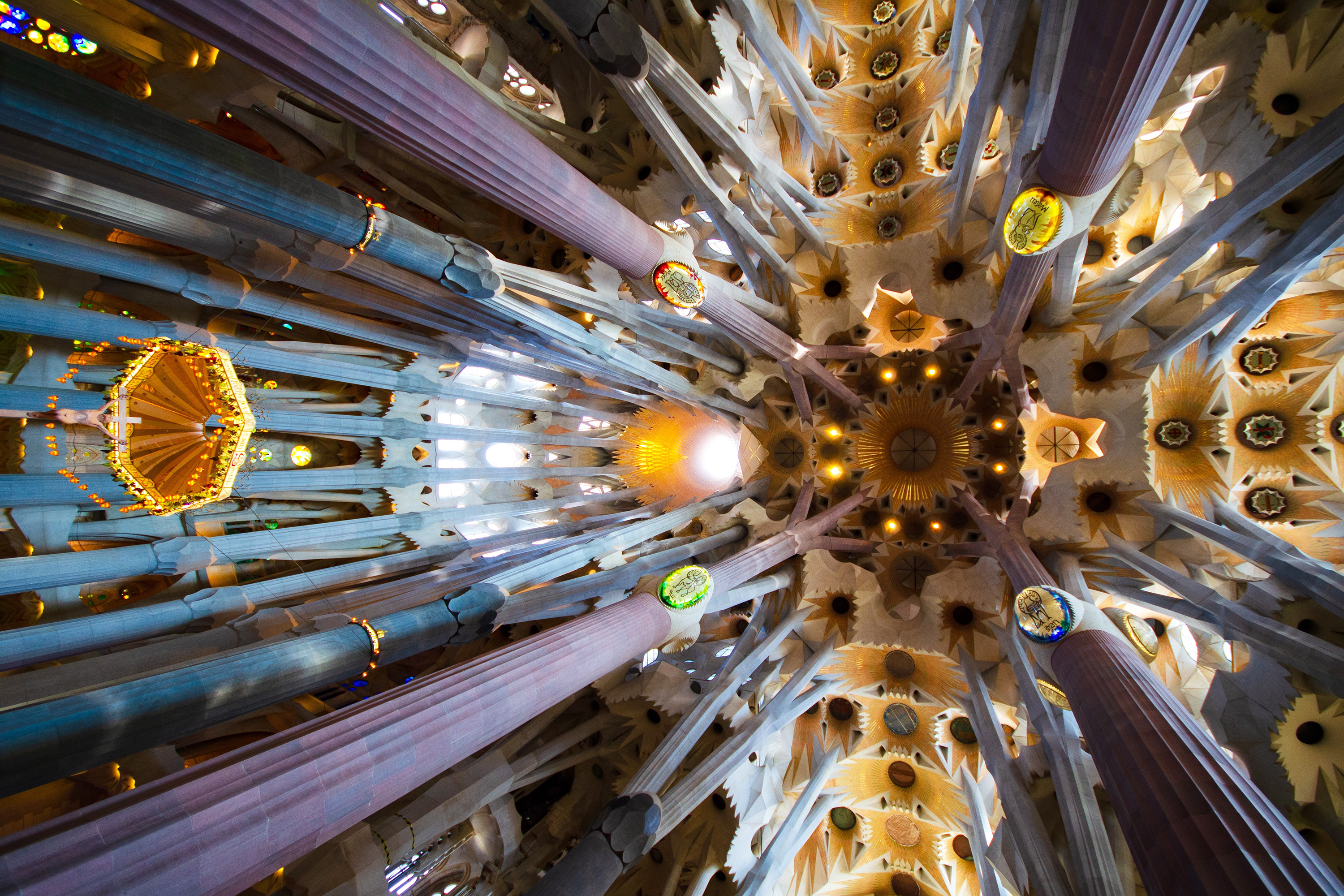 The interior ceiling of Sagrada Família, designed by Venerable Antoni Gaudí (Photo: EL_Images/Shutterstock)
There will be no cause for canonization for Frank Gehry, the most celebrated architect of our day, who died last week at age 96. Gehry was born and raised in Toronto before moving with his Jewish family to Los Angeles in 1947, where he lived the rest of his life. He changed his name to Gehry from Goldberg to avoid antisemitism in mid-century California.
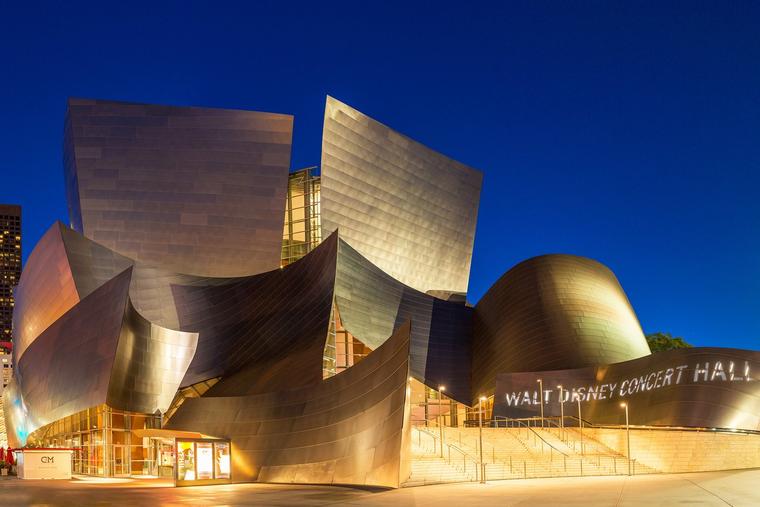
After the opening of his Guggenheim museum in Bilbao in 1997, Gehry vaulted to the top spot among the world’s “starchitects” and, at age 68, went on to author a series of stunning buildings. He adorned his two home cities with crowning achievements — the Walt Disney Concert Hall in Los Angeles (2003) and the Art Gallery of Ontario in Toronto (2008).
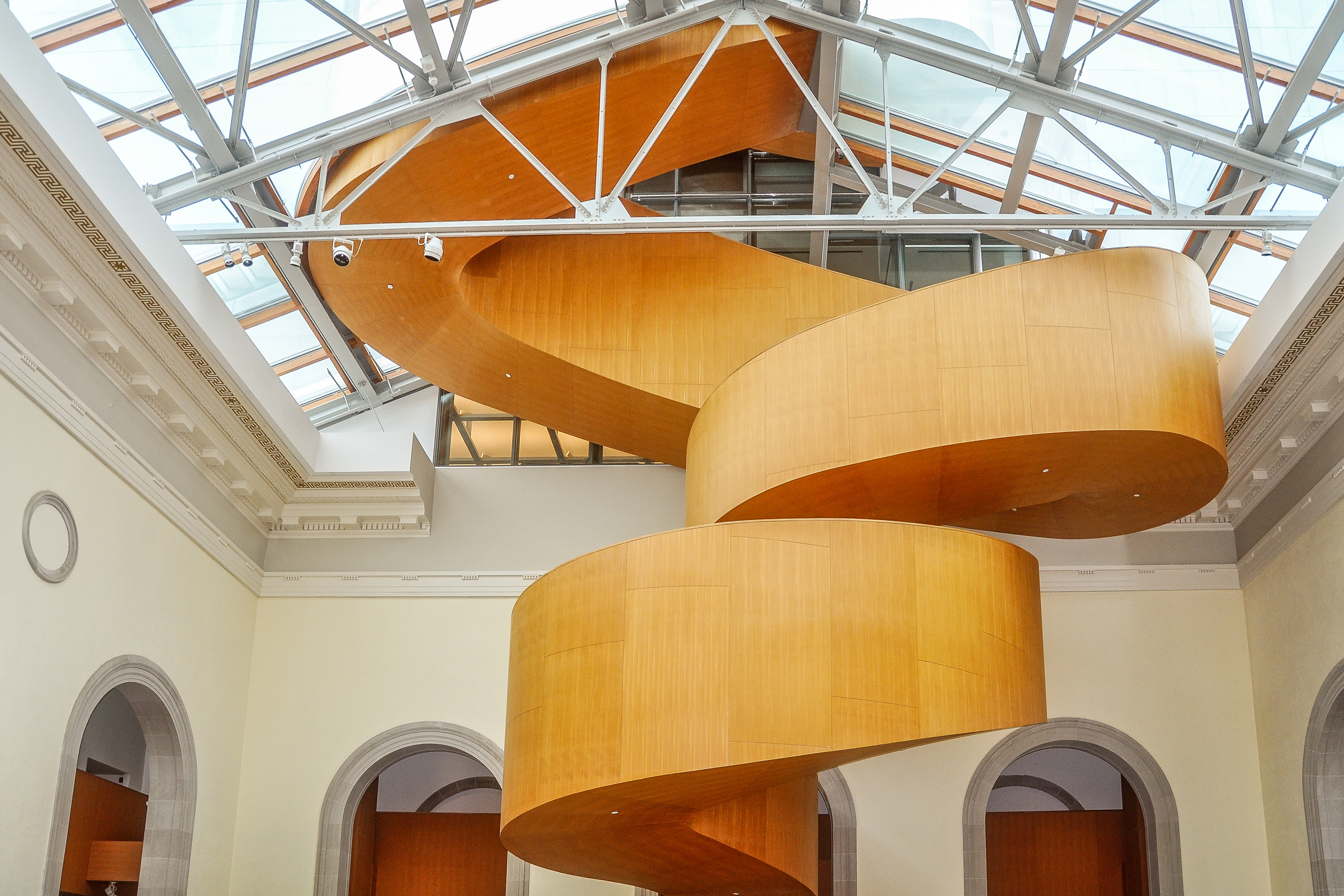 Staircase in the Art Gallery of Ontario inToronto, designed by Frank Gehry (Photo: Daniela Constantinescu/Shutterstock)
What Gehry did not design was a church, though he wanted to do so. In the 25 years Cardinal Roger Mahony served as the archbishop of Los Angeles, the building of a new cathedral was the longest shadow he cast. Decades from now, that Cathedral of Our Lady of the Angels, constructed on a magnificent site overlooking the Hollywood freeway, will remain, and those who look upon the lamentable architecture might wonder what might have been had Gehry overseen its construction.
Just a short walk from Our Lady of the Angels is the Disney Hall, which draws visitors from all over the world, even if they have no plans to listen to the Los Angeles Philharmonic inside. The building itself inspires, lifts up the spirit.
Six years ago, while still an auxiliary bishop in Los Angeles, Bishop Robert Barron wondered what might have been if Gehry had been chosen as the architect for the new cathedral. It would have been a masterpiece, a complement to the concert hall, a fruitful dialogue between faith and culture in America’s largest diocese.
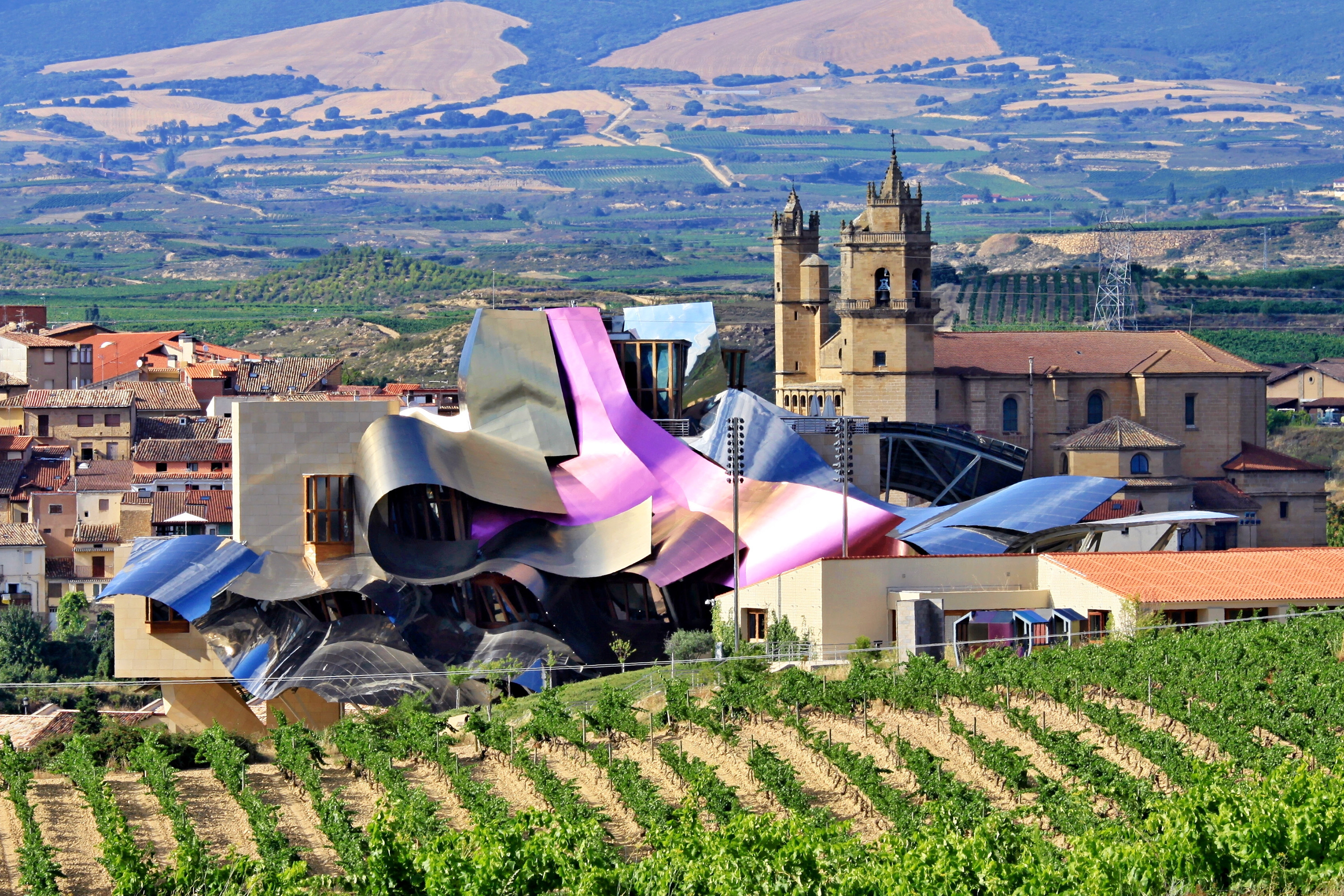 Hotel Marqués de Riscal in Elciego, Spain, designed by Frank Gehry, with the Church of San Andrés in the background (Photo: Jaroslav Hruska/Shutterstock)
Across the Pacific, the Gothic grandeur of St. Mary’s Cathedral in Sydney, Australia, contrasts with the different, but similarly soaring, grandeur of the Opera House. Los Angeles, had Cardinal Mahony had the vision for it, could have had something similar, but in a way more impressive: two 21st-century buildings conversing with each other, both innovative and inspiring, both suitable for the West Coast, both singing to the soul.
“When I’m in the city, I like to walk the downtown neighborhood,” wrote Barron in 2019:
My favorite building to look at while I’m on these strolls is the Disney Theatre, home base of the LA Philharmonic and the creation of Frank Gehry, probably the best-known architect in the world. Like many of Gehry’s other buildings, the Disney is marked by shimmering metallic surfaces, curving planes, and an overall playfulness of design. Some have suggested that the theatre’s exterior looks like the pages of a score that have just fallen from the conductor’s podium. That it is a captivating work of art is testified to by the crowds that regularly gather round it to gaze and to take photographs.
Bishop Barron diplomatically did not note that the cathedral was not his favorite building and that crowds do not gather around the hulking behemoth to gaze upon it. While in his early years Gehry did his share of modernist cubes, he turned away from them in later life as he found them unsuitable for concerts, for art galleries, for museums, for transcendent places that raise the human spirit. The Los Angeles cathedral is a perpetuation of that cube-like style on a mammoth scale, where the spirit struggles to breathe free.
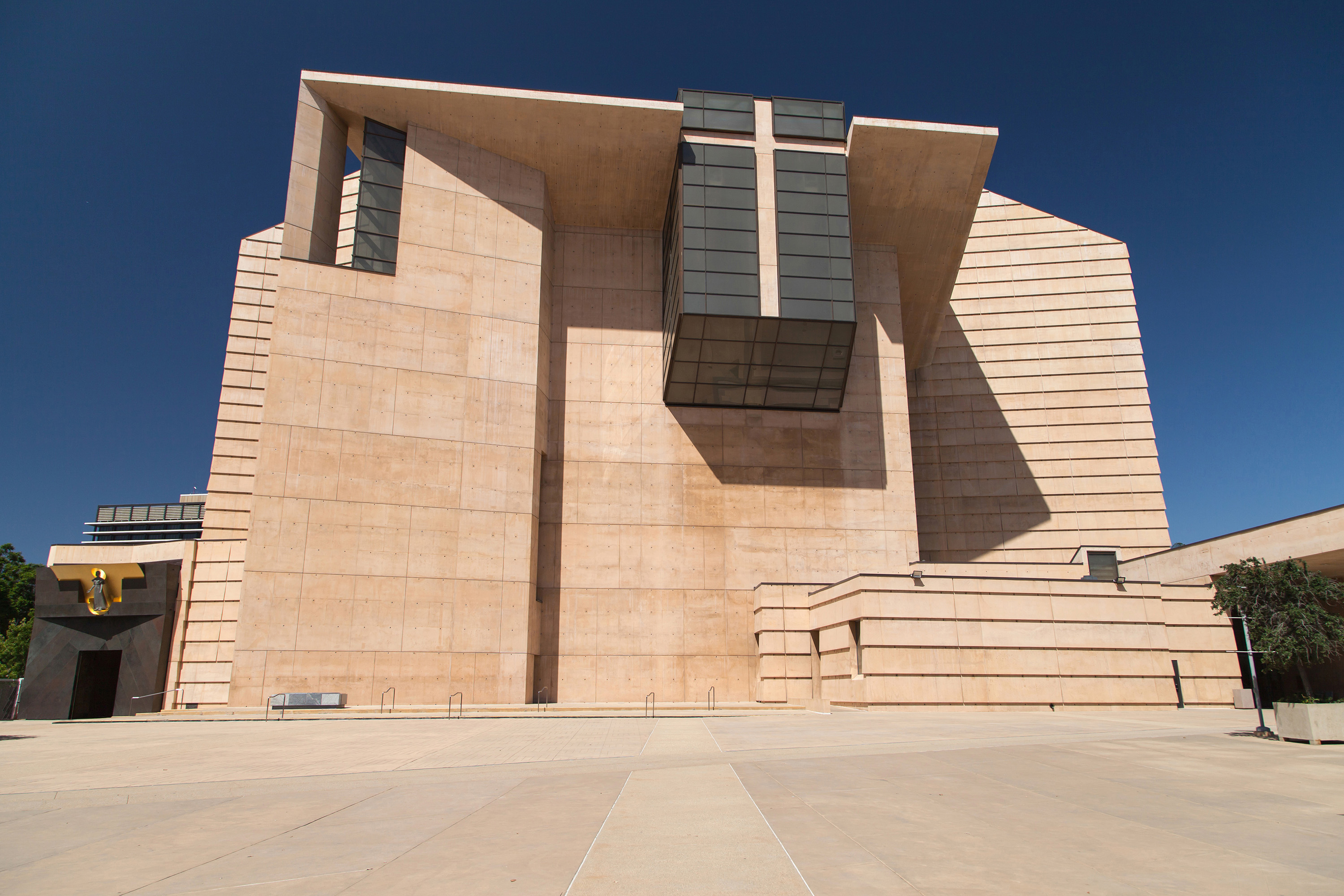 The Cathedral of Our Lady of the Angels in Los Angeles, designed by Rafael Moneo (Photo: Santi Rodriguez/Shutterstock)
“Soon after I arrived in the LA Archdiocese, I heard that Gehry was actually one of the finalists in the competition to design the new Cathedral here,” Bishop Barron wrote, evidently disappointed that he wasn’t chosen. “To say the very least, it would have been interesting to see what he would have done with that assignment.”
Bishop Barron then recalled an interview Gehry gave upon his 90th birthday. “After ruminating on his long and productive career, the architect said that he still harbored a great desire,” recalled the bishop:
I would like to design a church or a synagogue. A place that has transcendence. I’ve always been interested in space that transcends to something — to joy, pleasure, understanding, discourse, whatever a space can do to be part of the dialogue.
Could it have happened? The 1994 Northridge earthquake had damaged the original St. Vibiana’s Cathedral such that restoration was prohibitively expensive. Los Angeles had also grown immense, so Cardinal Mahony was right in deciding to build a new, much larger cathedral in a more prominent site. He was also right to avoid simply replicating on the West Coast the imposing Gothic cathedrals of the East Coast, like St. Patrick’s in New York, or even the splendid Romanesque Cathedral of St. Louis, in St. Louis.
The competition for the new Los Angeles cathedral opened before Gehry’s Bilbao took the world’s breath away, but it was already underway. Gehry had already completed plans for the nearby Disney concert hall in 1991, even though it would not open until 2003, a year after the new Our Lady of the Angels.
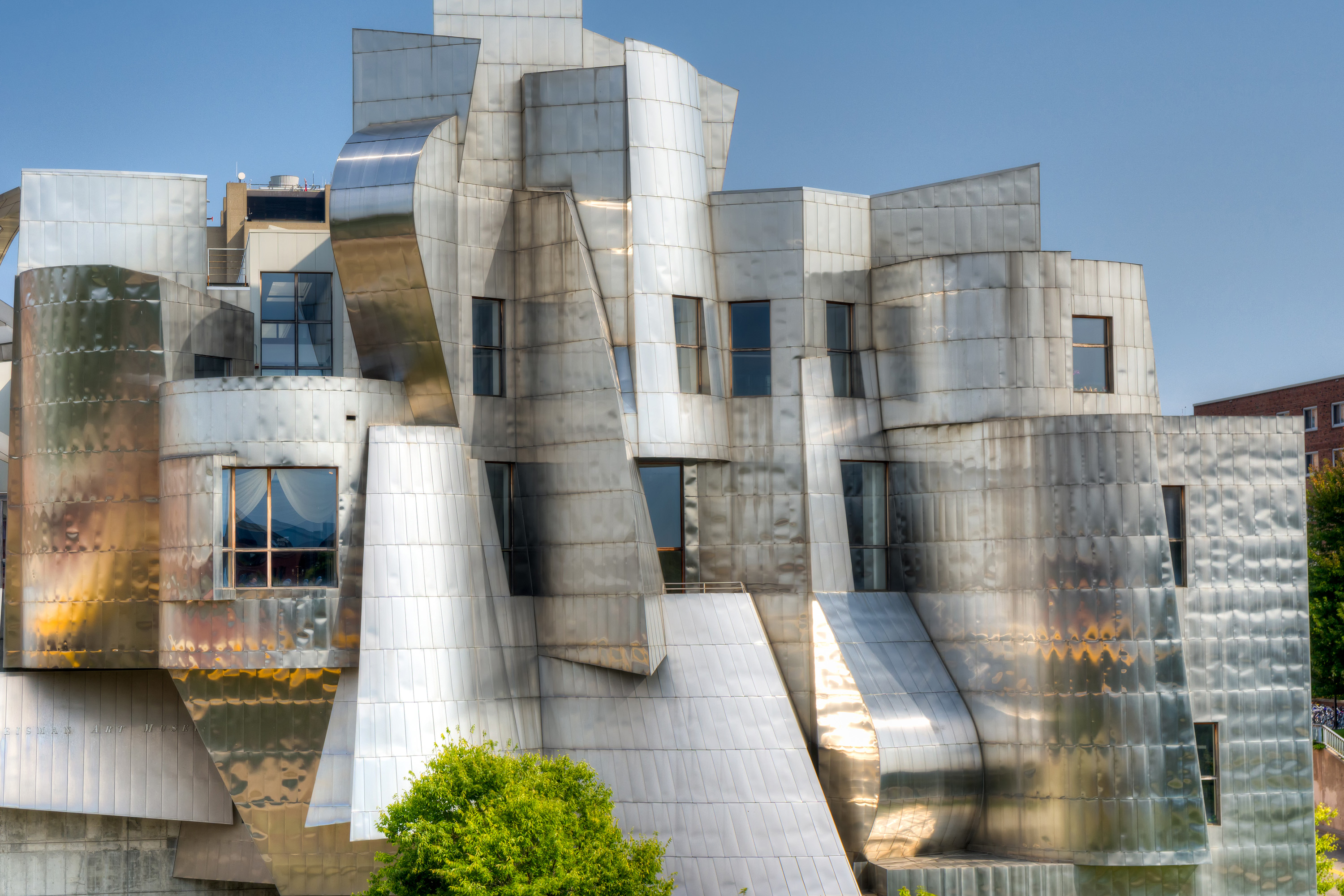 Frederick R. Weisman Art Museum in Minneapolis, designed by Frank Gehry (Photo: Ken Wolter/Shutterstock)
Moreover, Gehry had completed the Weisman Art Museum in Minneapolis in 1993, which served as test run for both Bilbao and Disney, with its curving plates of steel wrapping the galleries within.
The style of Gehry’s concert halls, galleries and museums might be considered by some to be unsuited for a cathedral church, but the choice in Los Angeles was never between Chartres or Ely and what Cardinal Mahony eventually chose, but between what he did choose and what Gehry could have done instead. It is simply impossible that the master architect, with a refined sympathy for the forms and shapes of nature, would have done worse than the eventual result, which is an enduring shame.
Gaudí was a man of fervent piety, Gehry not. In their desire to adopt in architecture the forms found in creation — there are no straight lines in nature, it is often observed — the two had a shared vision.
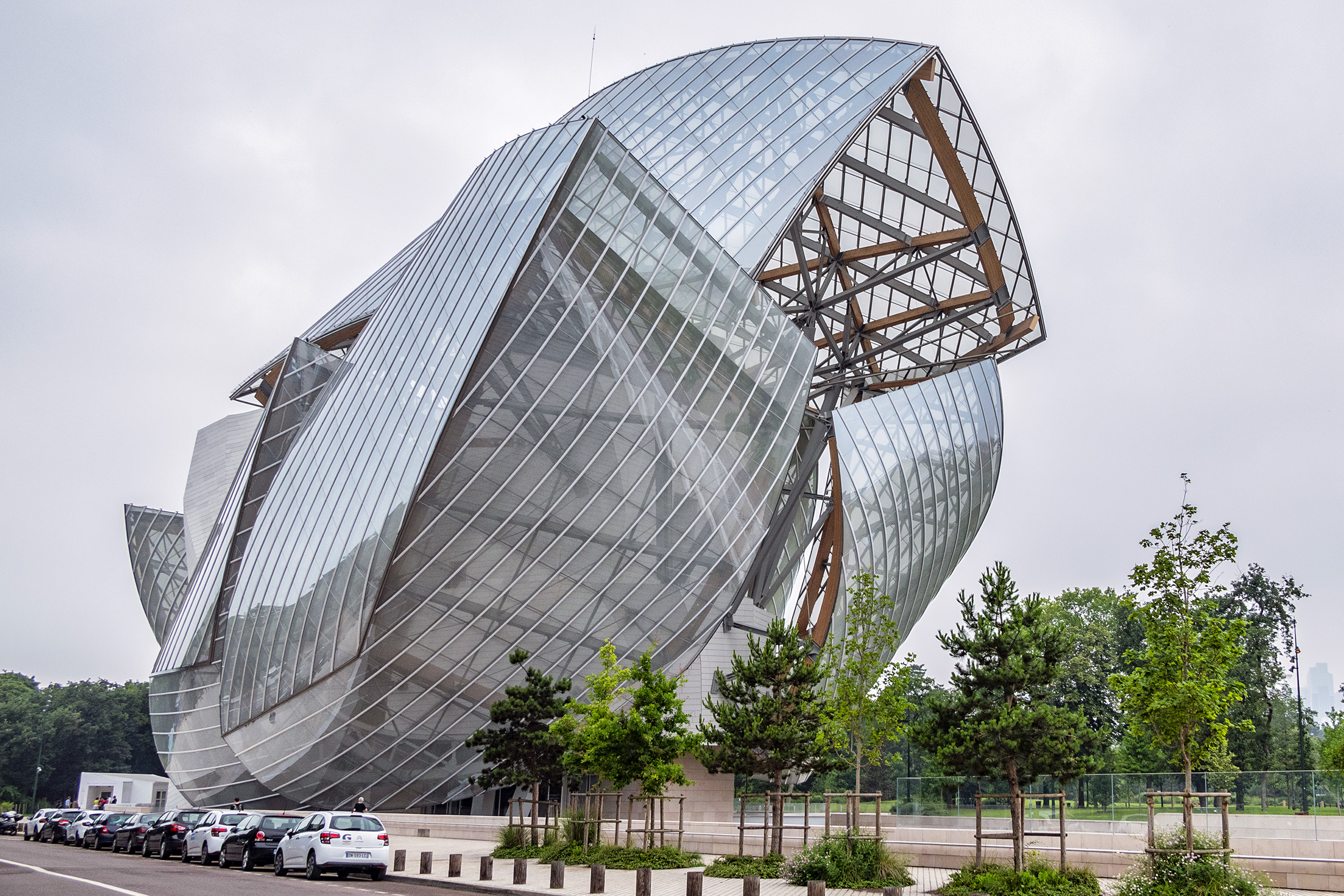 Foundation Louis Vuitton in Paris, designed by Frank Gehry (Photo: Kiev.Victor/Shutterstock)
Dying in 1926, Gaudí imagined things that could not be built with the technology of the time; the completion now of Sagrada Família depends upon advanced software designs that Gehry himself pioneered in Minneapolis, Bilbao and Disney. His Louis Vuitton building in Paris included more than 3,500 glass panels, no two of which are the same size. Such construction is only possible with digital design.
Neither Disney Hall nor Our Lady of the Angels is even 25 years old. It is already evident which one belongs to the passing fashions of the recent past, and which will endure to the delight and insight of future generations.
It remains a tragic lost opportunity, as something far better was available to the Church in Los Angeles, with a generational architectural talent working literally next door.
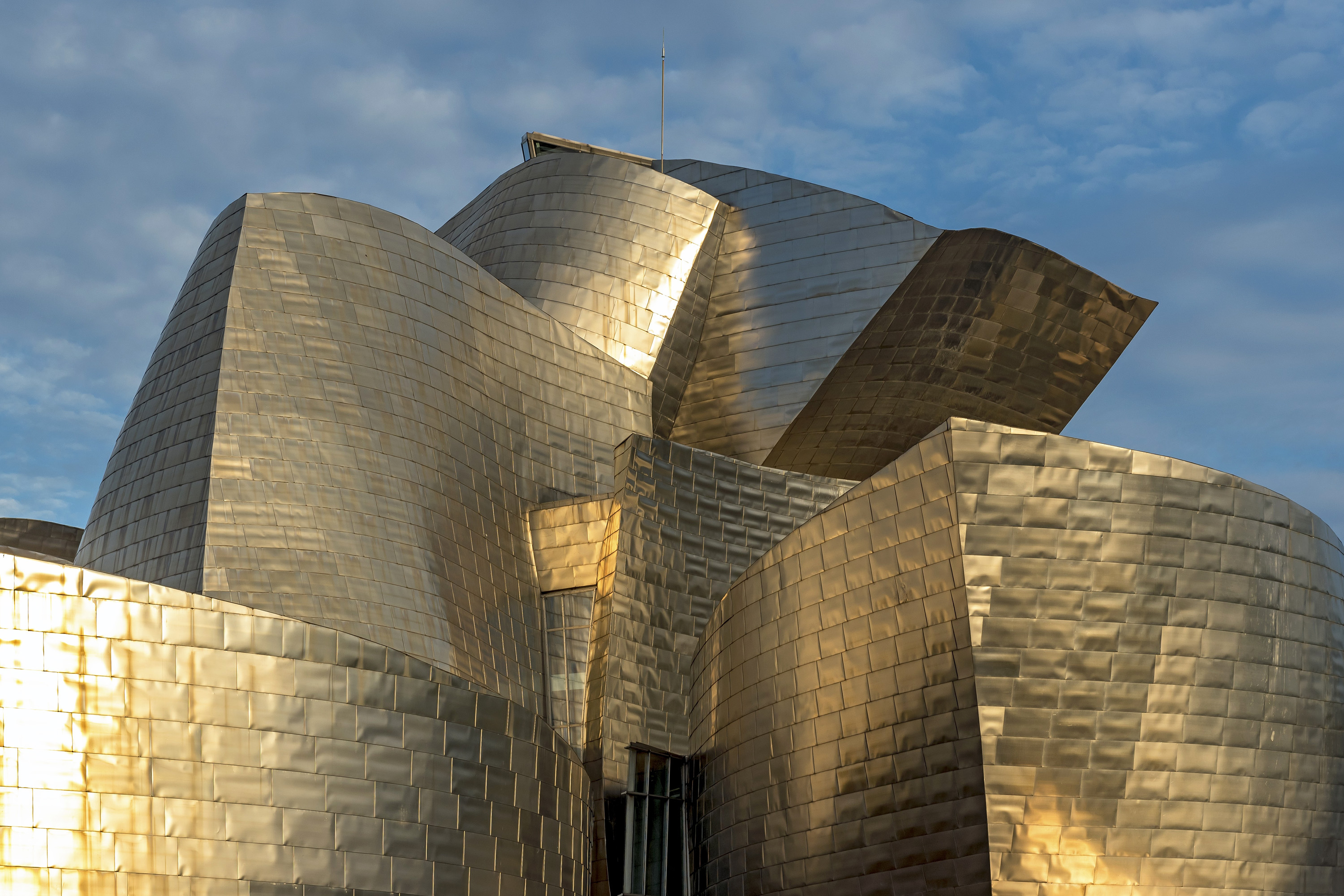 Guggenheim Museum in Bilbao, Spain, designed by Frank Gehry (Photo: imageBROKER.com/Shutterstock)