
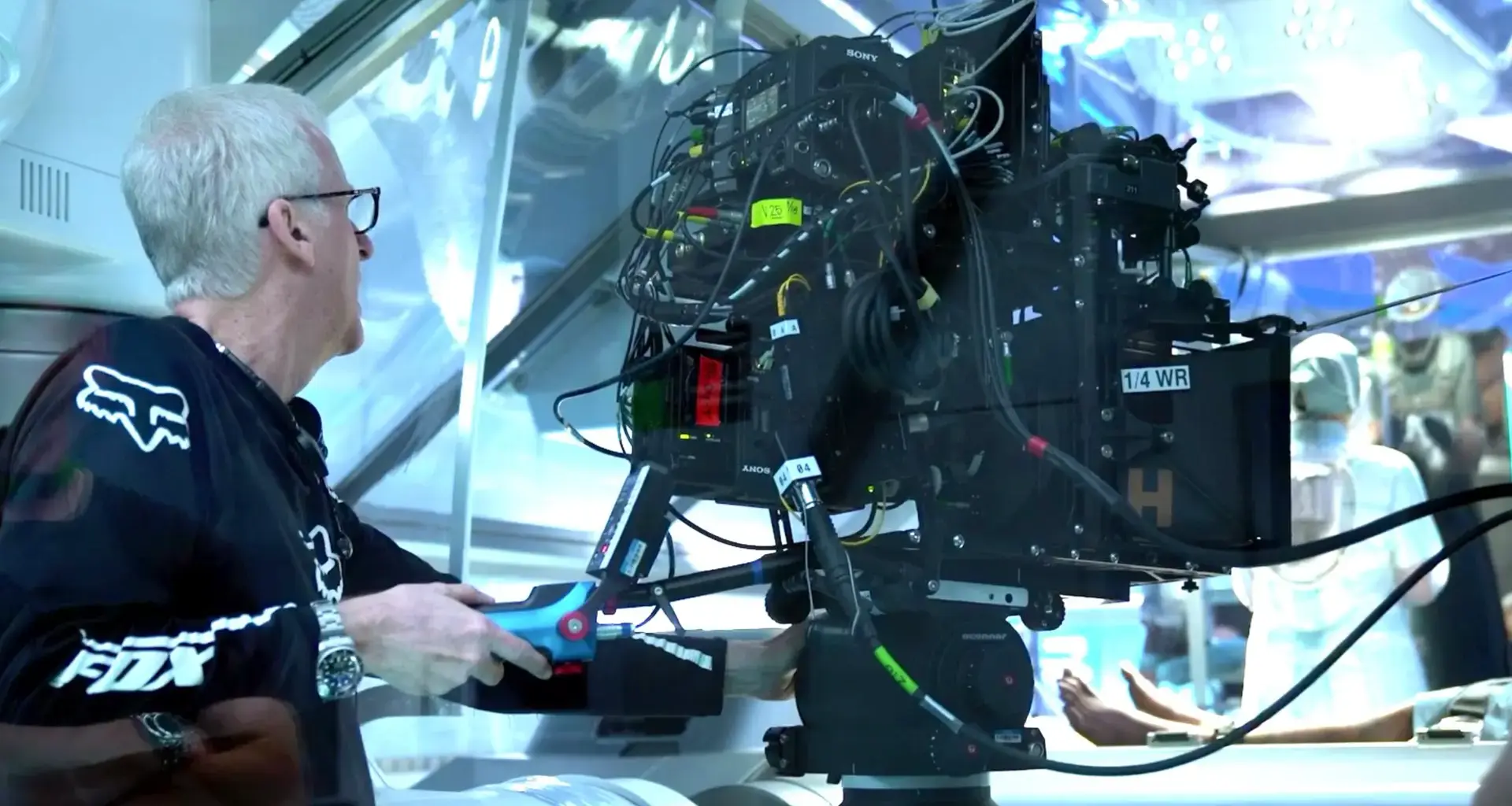
When Avatar: Fire and Ash reaches theaters, most viewers will focus on the world of Pandora, not on the camera that captured it. Yet behind that immersive experience sits one of the most advanced and purpose-built camera systems ever used in narrative filmmaking. Officially credited in technical databases as the Sony CineAlta VENICE Rialto 3D, this setup is far more than a conventional cinema camera. It is a stereoscopic vision system designed to replicate how humans perceive depth, motion, and space. Avatar 2 and Avatar 3 were shot simultaneously, which means the same camera architecture that powered The Way of Water also underpins Fire and Ash. YMCinema previously covered this system in detail in its 2022 article about the camera used on Avatar 2, and that context remains essential for understanding how Avatar 3 was made.
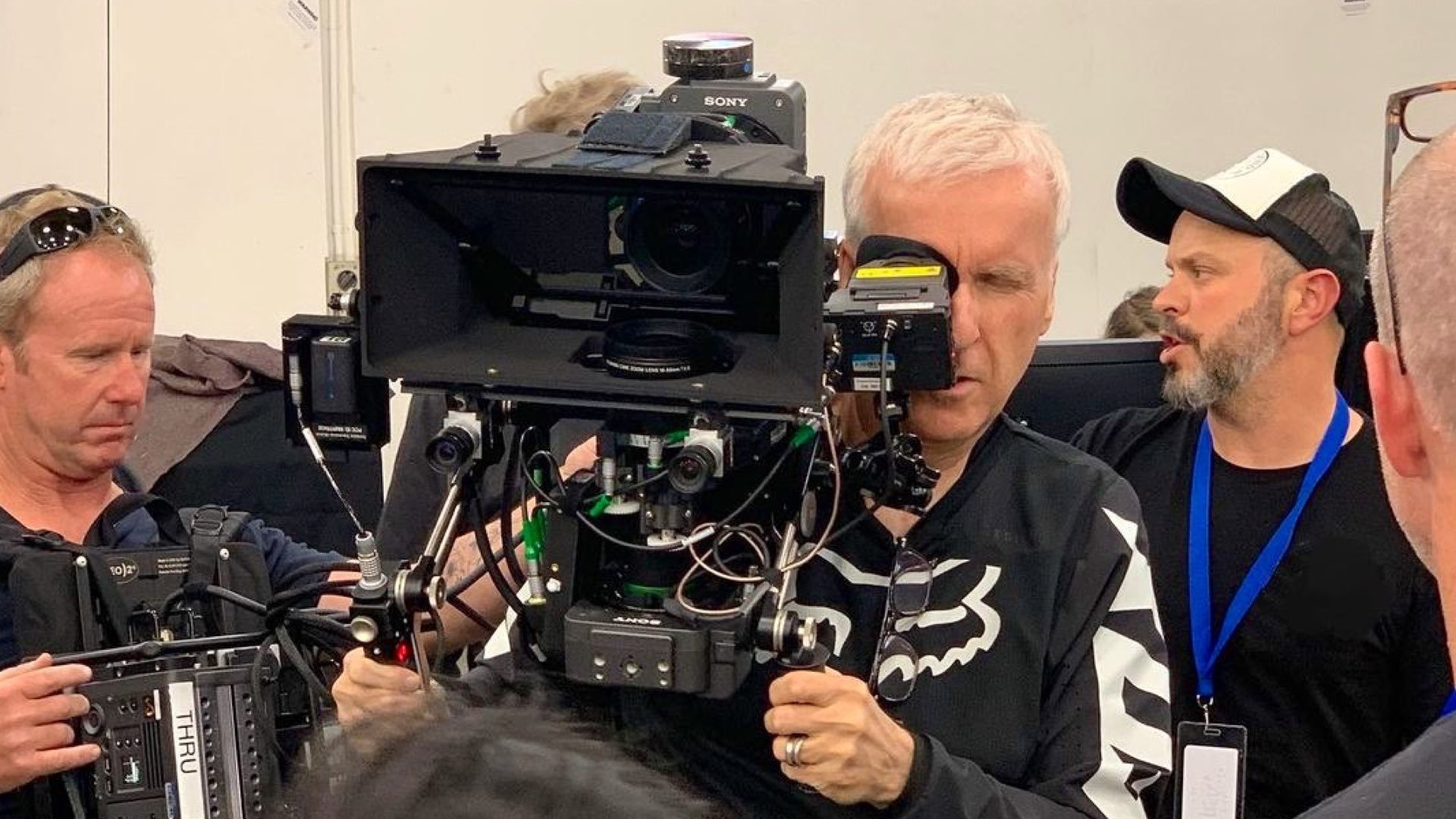 Director James Cameron with the 3D camera rig used on Avatar, Picture: Jon Landau (Producer of Avatar)
At the heart of the system is the Sony CineAlta VENICE, Sony’s flagship full-frame digital cinema platform. But calling this “the camera” is misleading. In practice, Avatar 3 was captured using two VENICE sensors working together as a synchronized stereo pair. Human vision is binocular. Each eye captures a slightly different 2D image, and the brain merges them into a 3D perception of the world. James Cameron’s approach to 3D cinema mirrors this biological process. Instead of relying on post-conversion or fixed stereo rigs, the production uses two cameras whose spatial relationship can change dynamically during a shot. This philosophy drives every engineering decision behind the system.
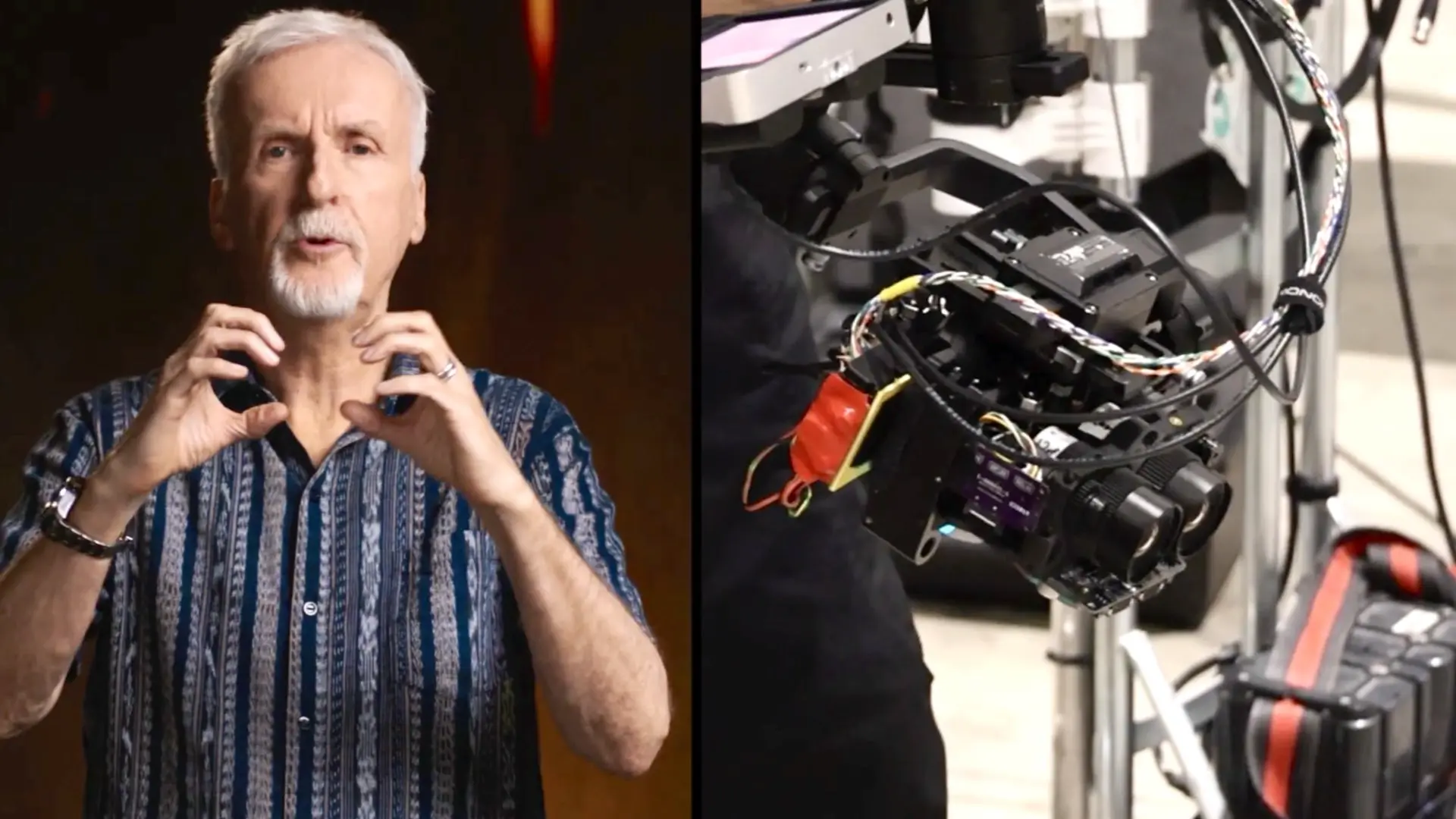 BTS of Avatar3
One of the most critical components is Sony’s Rialto extension system. Rialto allows the VENICE sensor block and lens mount to be physically separated from the main camera body via a cable. In a stereoscopic rig, this is not a convenience feature, but a necessity. By relocating the bulky camera bodies away from the lens plane, the production could place the two sensors extremely close together. This tight interaxial spacing is essential for natural-looking close-ups in 3D. Without it, faces distort, depth becomes exaggerated, and viewer discomfort increases. In practical terms, the system mounts two compact VENICE sensor heads into a beam splitter rig while the camera bodies sit off-axis. The result is a stereo camera that can behave more like human eyes than like two large cinema cameras bolted together.
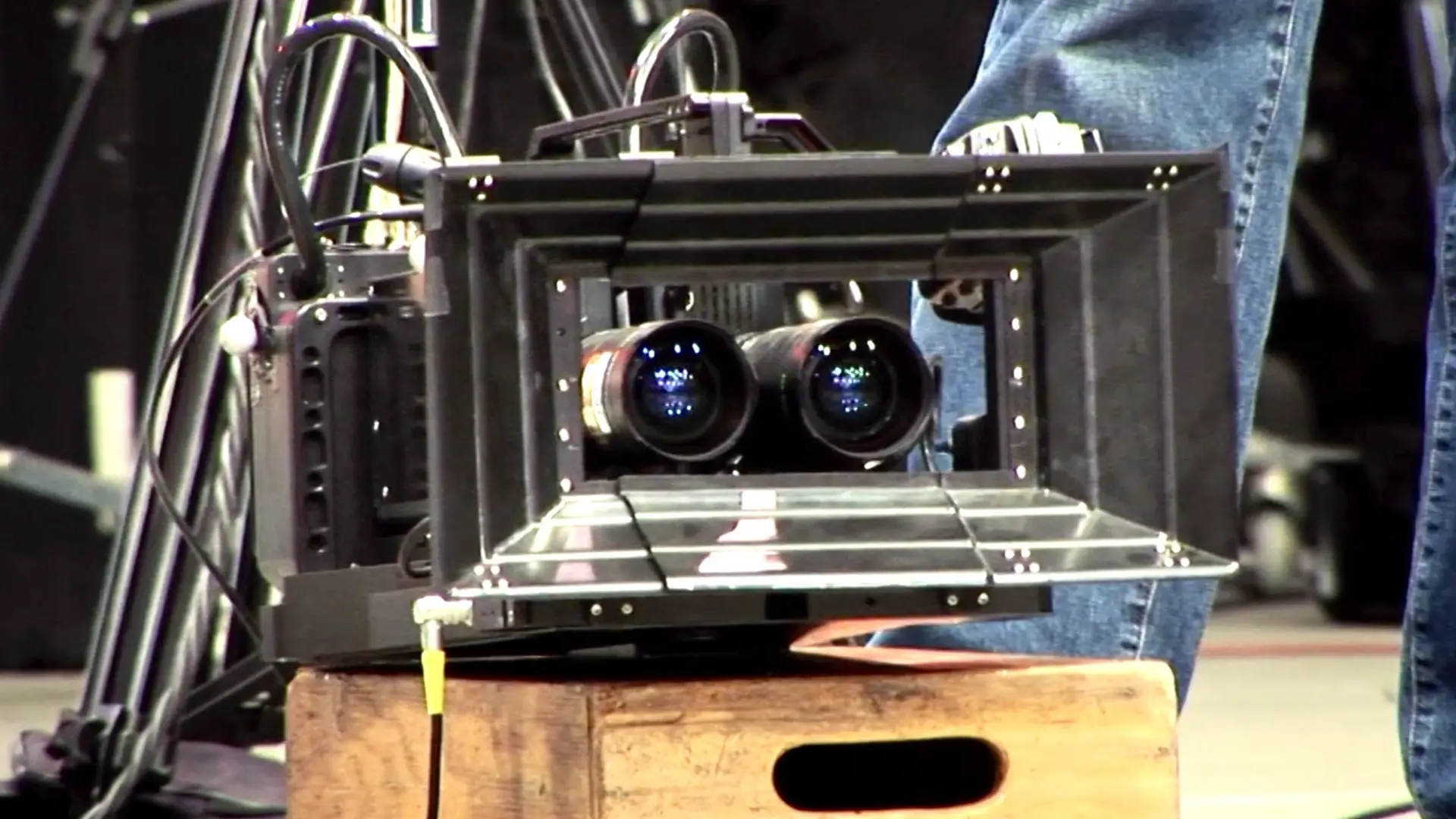 Behind the scenes of Avatar 3: The camera rig
The VENICE Rialto Stereoscopic System relies heavily on beam splitter rigs. In this configuration, one camera captures the image through a partially reflective mirror while the second camera captures the reflected image at a 90-degree angle. This allows the lenses to occupy nearly the same physical space, which is impossible with side-by-side camera placement at close distances. What sets this system apart is that the rig is not static. Interaxial distance and convergence can be adjusted during the shot using motion-controlled servo systems. As the camera moves closer to an actor, the virtual distance between the two lenses narrows. As the camera pulls back, it widens again. This continuous adjustment mirrors how human eyes naturally converge and diverge when shifting focus between near and far objects.
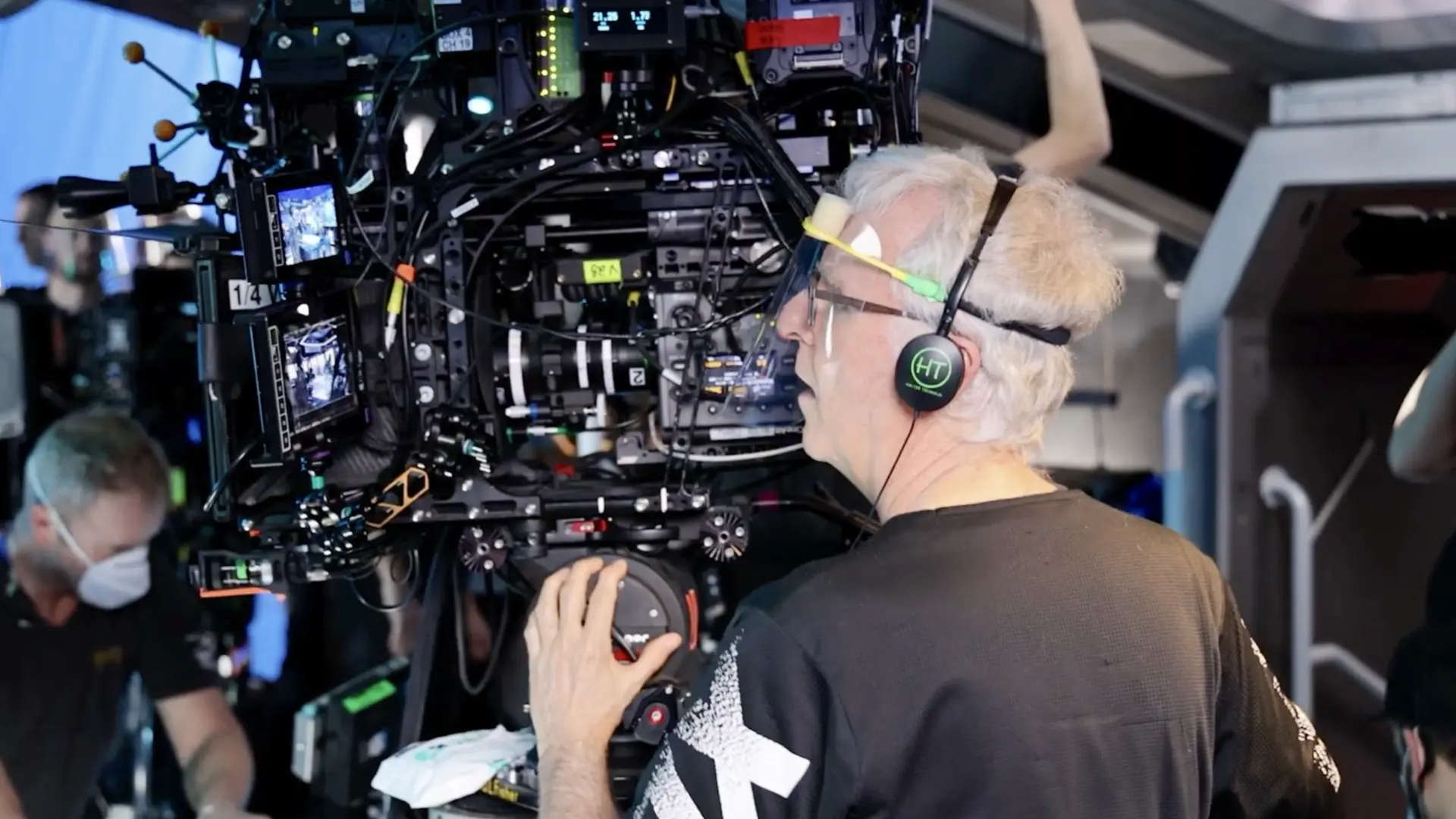 Behind the scenes of Avatar 3: The camera rig
Notably, Cameron rarely emphasizes resolution or headline specifications when discussing this camera system. That is intentional. In stereoscopic cinematography, synchronization errors are far more damaging than limited pixel counts. The VENICE platform was selected in part because of its precise sensor timing, stable color science, and predictable response to optical compromises introduced by beam splitters. In stereo capture, even slight mismatches between the left and right images can cause visual fatigue. The VENICE sensors function as tightly synchronized imaging instruments rather than independent cameras. Rolling shutter behavior, color consistency, and temporal alignment all matter more than raw sharpness.
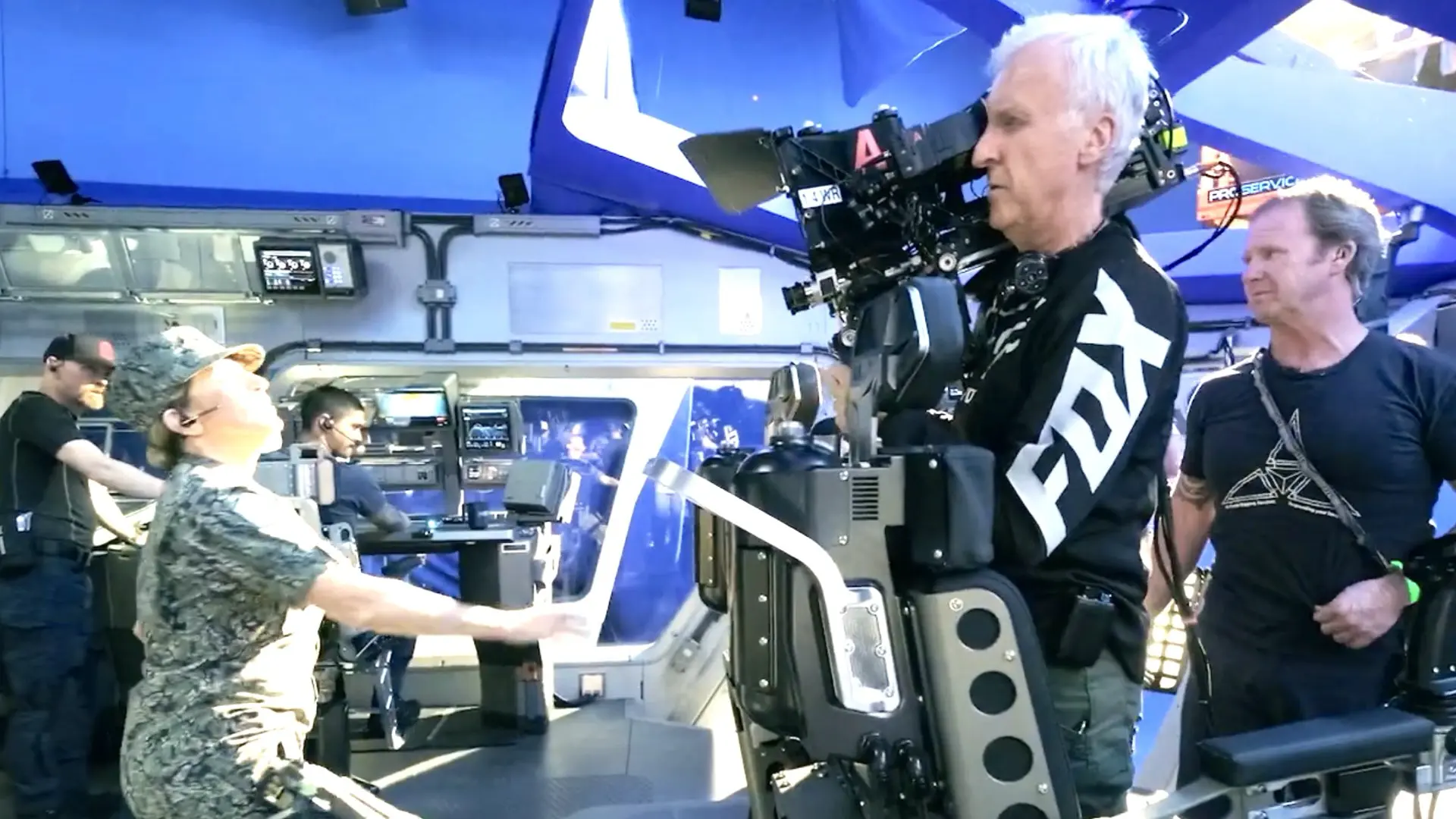 Behind the scenes of Avatar 3: The camera rig
Another key insight is that motion control is not an accessory to the camera. It is part of the camera. The stereoscopic rig incorporates multiple axes of motorized control, allowing interaxial distance, convergence, and alignment to change in real time. This data is tracked and recorded alongside the image itself, feeding directly into the visual effects pipeline. Because Avatar blends live action, performance capture, and CG environments, the camera’s spatial metadata becomes just as important as the pixels it records. The VENICE Rialto system functions as a measurement device, capturing spatial truth that visual effects artists later build upon. Moreover, in Avatar 3, live action photography often serves as a reference layer rather than a final image. Actors, sets, and lighting are captured to establish the real-world behavior of light and movement. The final imagery may be partially or fully CG, but it is grounded in data captured by the stereo camera system. This places unusual demands on the camera. It must be repeatable, calibrated, and reliable across long production timelines. Artistic quirks are less valuable than engineering consistency. The VENICE ecosystem, combined with Lightstorm’s custom stereoscopic rigs, is optimized for this kind of long-term, data-driven filmmaking.
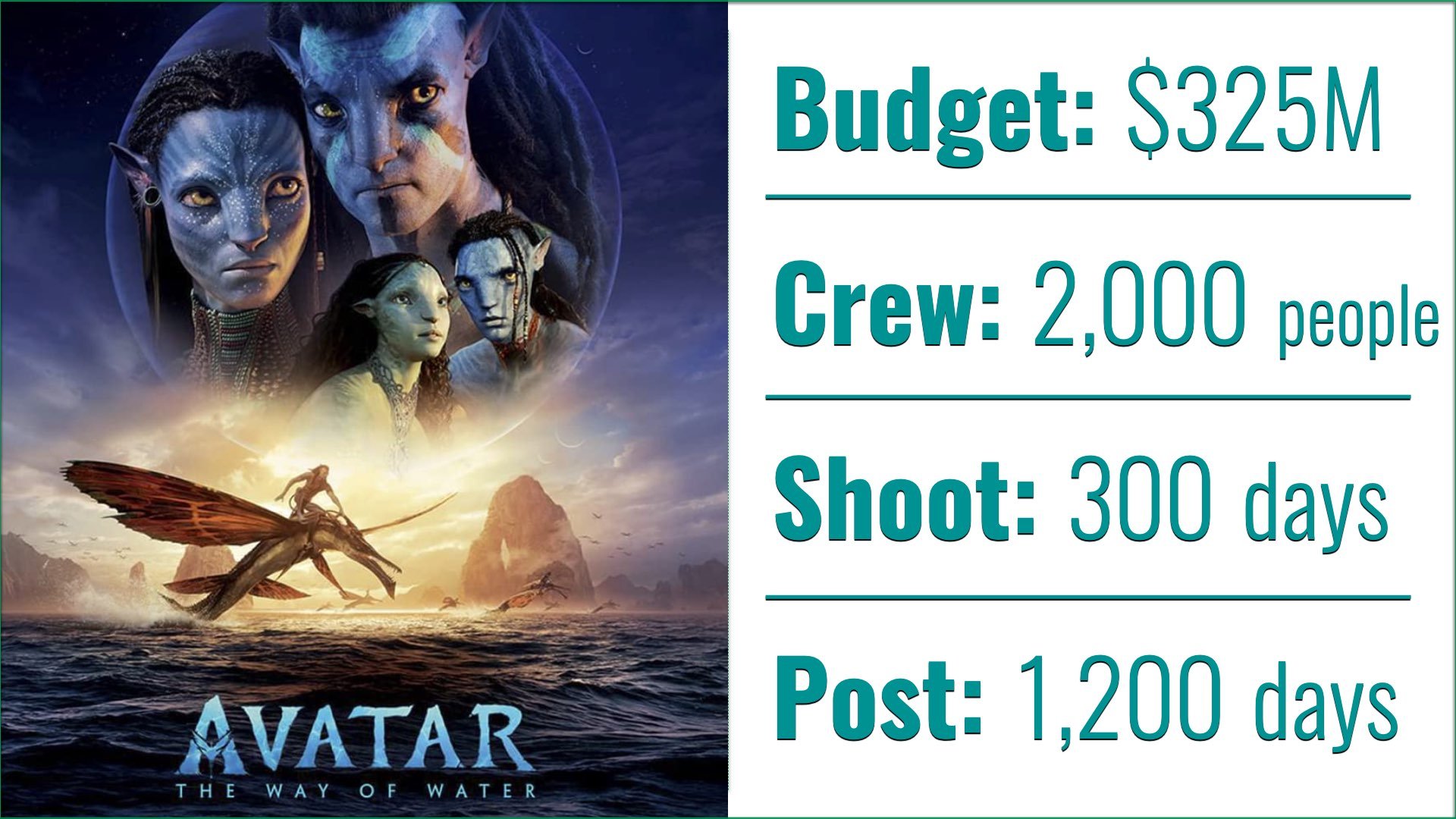 Avatar: The Way of Water: Crew, Shooting days, and Post-production
Because Avatar 2 and Avatar 3 were shot at the same time, the VENICE Rialto Stereoscopic System effectively became the backbone of both films. As YMCinema reported in its earlier coverage, this continuity allowed Cameron’s team to refine workflows, depth guidelines, and stereo comfort rules across multiple films without resetting the learning curve. Avatar 3 does not represent a radical change in camera technology. Instead, it represents a maturation of a system that has been evolving for more than 25 years. The name “Sony CineAlta VENICE Rialto 3D” is accurate as a technical credit. But in practice, the system is better understood as a stereoscopic vision platform built around Sony VENICE sensors. It is a camera designed not to show off 3D, but to make it disappear into the experience. Depth is present, but rarely aggressive. The goal is immersion, not spectacle. That philosophy, more than any single piece of hardware, is what defines the camera behind Avatar 3. Check out Camorn’s explanation below:
The Sony VENICE Rialto Stereoscopic System exists because Avatar demands it. This is not a setup most productions could justify or even operate. But for a film built entirely around presence, scale, and spatial storytelling, it is the logical endpoint of decades of experimentation. Avatar 3 was not simply shot with a camera, but was captured with a system engineered to think like the human eye, and to respect how the human brain experiences cinema.