
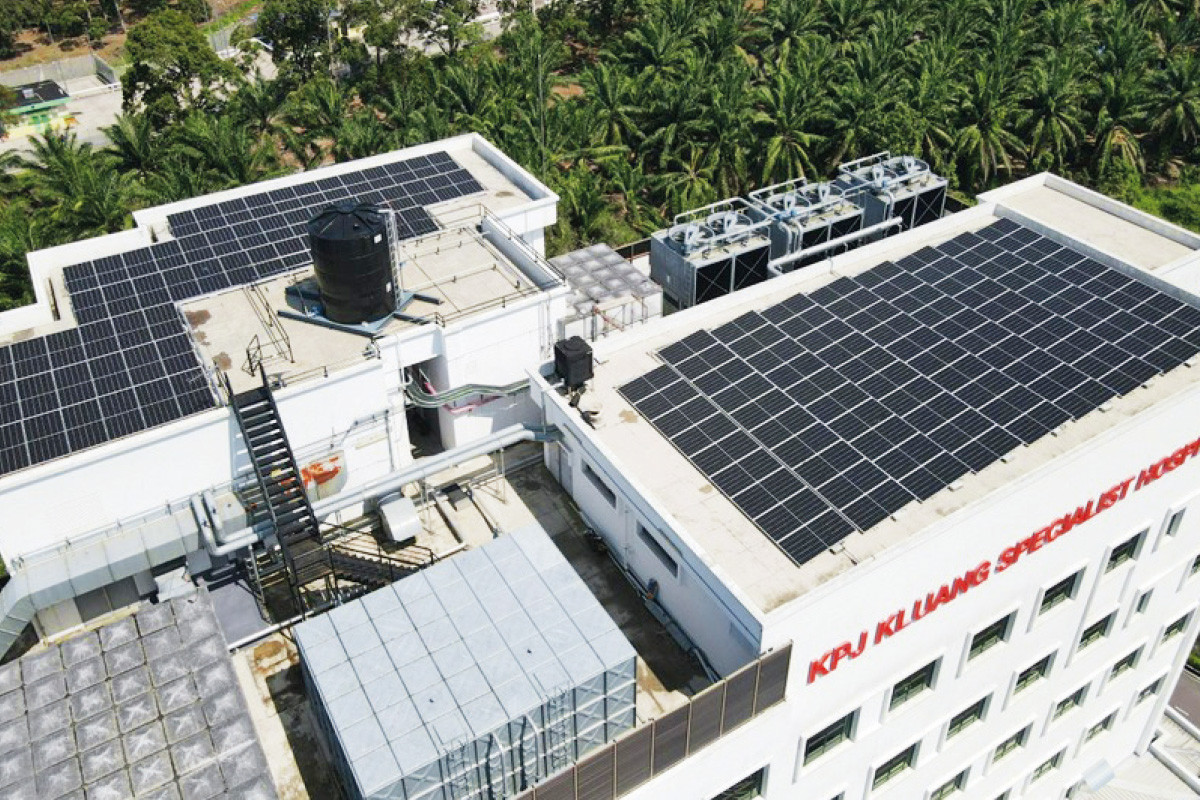
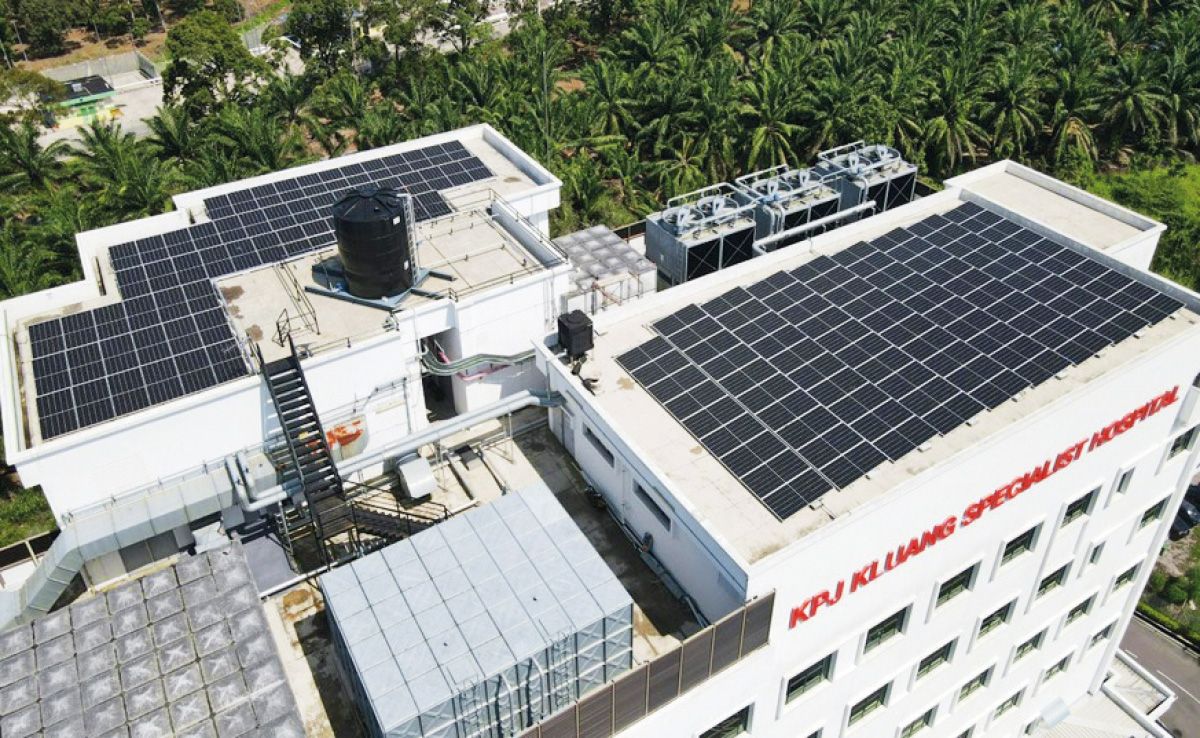
Solar panels installed at KPJ Kluang
In the rapidly evolving landscape of Malaysian corporate sustainability, the healthcare sector stands at a critical juncture. Hospitals are energy-intensive operations, running 24/7 with sophisticated equipment that demands reliable, uninterrupted power.
As the nation accelerates its transition towards a low-carbon economy, the convergence of healthcare excellence and energy resilience has never been more pivotal. Leading this charge is a landmark collaboration between KPJ Healthcare Bhd (KPJ), the nation’s largest private healthcare provider, and GSPARX Sdn Bhd, a wholly-owned subsidiary of Tenaga Nasional Berhad (TNB).
What began as a pilot initiative in late 2023 has rapidly scaled into a defining project for the healthcare industry. Following the exchange of documents at the Malaysia International Healthcare (MIH) Megatrends 2025 exhibition on Nov 25, KPJ and GSPARX have solidified an expansion plan that will see the healthcare group commanding the largest installed rooftop solar capacity among private healthcare providers in Malaysia by the end of 2026.
This partnership is not merely about installing solar panels; it represents a strategic alignment of operational efficiency and environmental stewardship, leveraging the solar energy expertise of GSPARX to allow KPJ to focus on what it does best, that is, delivering world-class patient care.
A phased approach to decarbonisation
The journey towards this renewable energy milestone began in November 2023, with the signing of the first Supply Agreement with Renewable Energy (SARE) under Phase 1 of the project. This initial phase identified five strategic locations for rooftop solar photovoltaic (PV) installation: KPJ Kluang Specialist Hospital, Johor Specialist Hospital, KPJ Bandar Dato’ Onn Specialist Hospital, KPJ Seremban Specialist Hospital and KPJ Rawang Specialist Hospital.
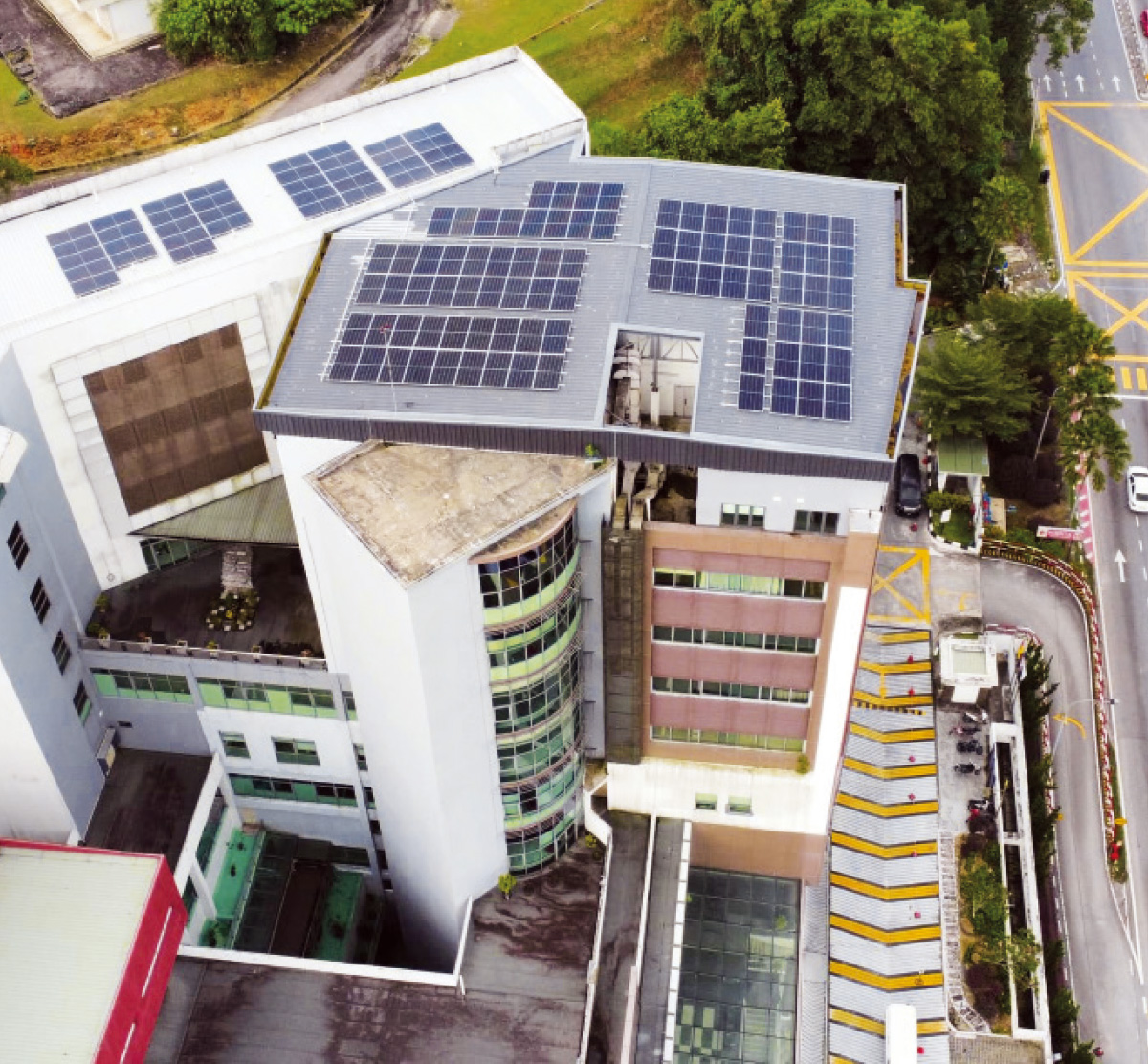
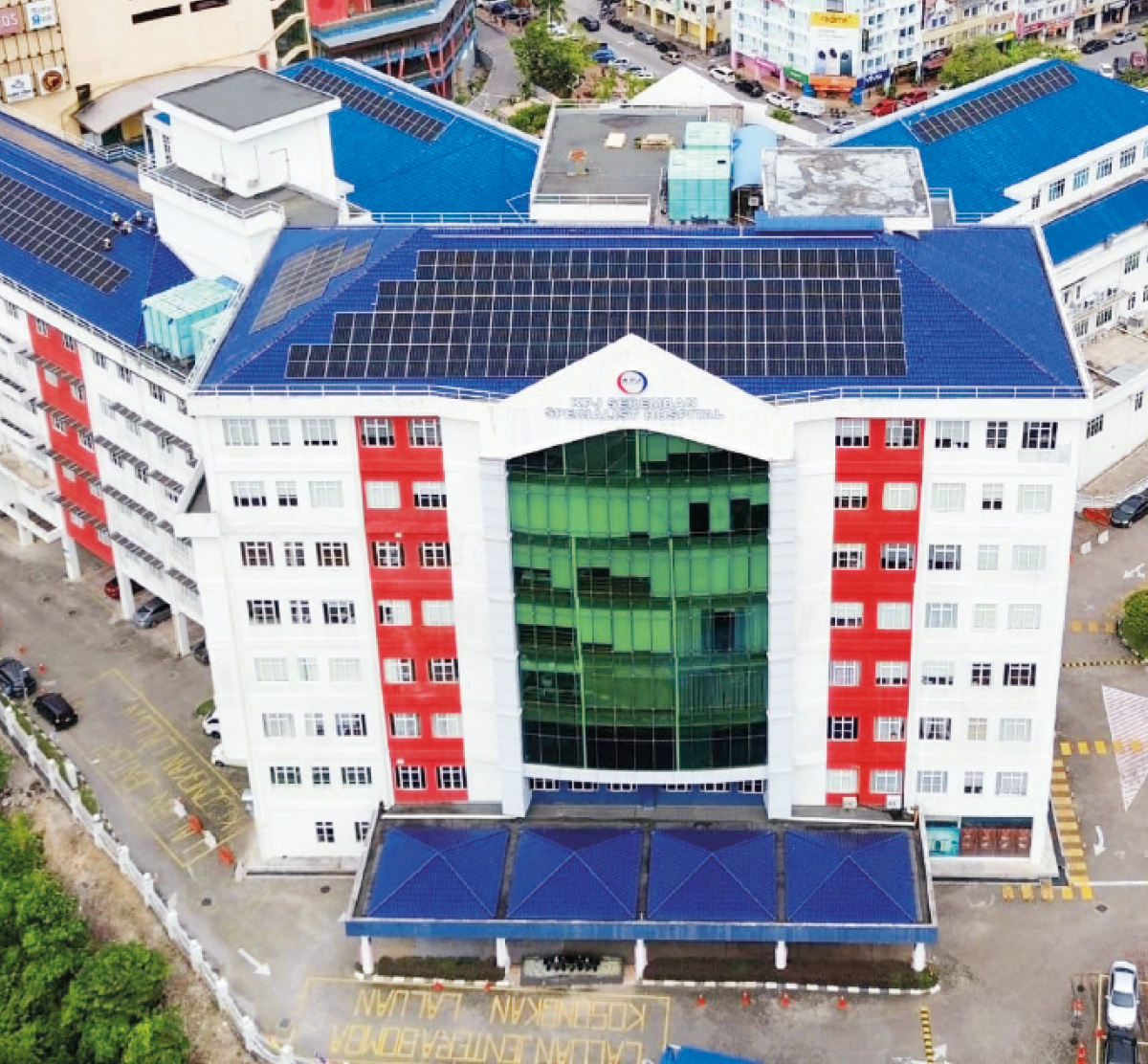
Solar panels installed at KPJ Rawang and KPJ Seremban
With a collective installed capacity of 1.19MWp, Phase 1 successfully served as a proof of concept, demonstrating the viability and reliability of GSPARX’s solutions within a critical healthcare setting. The successful deployment of this phase was instrumental in solidifying KPJ’s confidence in GSPARX’s technical capabilities, paving the way for a significantly more ambitious rollout.
The expansion, formalised recently, marks the launch of Phase 2. This new phase is substantial in scale, covering an additional 26 KPJ sites nationwide. The geographic footprint is extensive, ensuring that the benefits of green energy are distributed across the country. The expansion covers 24 sites in Peninsular Malaysia, including KPJ subsidiaries, and two sites in East Malaysia.
Upon the completion of installation works for both phases — targeted for the end of 2026 — the combined total installed solar capacity is expected to reach 5.85MWp. This figure is significant as it positions the healthcare group as a clear leader in the adoption of renewable energy assets in the sector.
The zero capex advantage
A key driver behind the rapid scalability of this project is the financial structure underpinning it. The collaboration operates under a zero capex (capital expenditure) business model, a solution that removes the high barrier to entry typically associated with renewable energy infrastructure.
For a healthcare provider, capital expenditure is often prioritised for medical equipment, facility upgrades and digital integration to improve patient outcomes. By utilising the SARE mechanism, KPJ does not need to divert critical funds towards the purchase and installation of solar assets. Instead, GSPARX absorbs the upfront costs, handling the investment, installation and end-to-end maintenance of the rooftop systems throughout the 20-year agreement tenure.

Through our Zero Capex business model, GSPARX will provide end-to-end support, including the maintenance of the rooftop installations across their hospitals nationwide.”
— Sansubari Che Mud, managing director of GSPARX Sdn Bhd
Sansubari Che Mud, managing director of GSPARX Sdn Bhd, highlights the strategic value of this model for their partners. “GSPARX is proud to onboard KPJ Healthcare as the first private healthcare provider customer with our top-of-the-line solar solutions. Through our Zero Capex business model, GSPARX will provide end-to-end support, including the maintenance of the rooftop installations across their hospitals nationwide.”
“This enables KPJ to focus on what they do best — providing excellent healthcare services to people who need it,” he says.
This model creates a symbiotic relationship, where the healthcare provider enjoys immediate electricity bill savings and carbon reduction without balance sheet stress. It essentially transforms a capital-intensive infrastructure project into an operational cost-saving measure, allowing KPJ to hedge against fluctuating energy prices while locking in a portion of its energy needs from a clean source.
Quantifiable environmental impact
The environmental dividends of this collaboration are measurable and substantial. In the context of green healthcare, reducing the carbon footprint of hospital operations is a primary metric of success.
Once all installations across the additional 26 sites are activated, the environmental attributes from both phases are expected to achieve a carbon avoidance of 4,995.8 metric tonnes per year. To put this figure into perspective, this level of decarbonisation is equivalent to sequestering carbon by growing more than 82,600 tree seedlings for 10 years or removing the emissions equivalent to powering over 1,000 homes for an entire year.
Phase 2 alone is expected to contribute approximately 3,558 metric tonnes of this annual carbon avoidance, underscoring the massive leap in impact resulting from the recent expansion.
This initiative aligns seamlessly with KPJ’s broader sustainability agenda. The group has already shown a proactive stance in renewable energy adoption; as of today, KPJ has successfully secured 25 contract accounts under the Green Electricity Tariff (GET) programme, representing a total of 8.87 GWh of green electricity secured across its operations. The transition to onsite solar generation complements this subscription, moving the group from being a passive consumer of green energy to an active prosumer.
Leadership on the agenda

As one of the first private healthcare providers to implement large-scale rooftop solar across multiple hospital sites, we are setting new benchmarks for the industry.”
— Chin Keat Chyuan, president and managing director of KPJ Healthcare Bhd
The formalisation of Phase 2 at MIH Megatrends 2025 was a fitting setting for this announcement. The event, organised by the Ministry of Health in collaboration with KPJ, focused heavily on sustainability and future-ready healthcare systems.
During the event, Chin Keat Chyuan, president and managing director of KPJ Healthcare Bhd, emphasised that the partnership is integral to the group’s operational philosophy.
“With Phase 2 in place, KPJ Healthcare continues to embed sustainability and innovation at the heart of our operations. Our collaboration with TNB demonstrates how healthcare and energy sectors can come together to deliver positive impact — improving operational efficiency while supporting Malaysia’s low-carbon transition,” he states.
He further notes the pioneering nature of the collaboration: “As one of the first private healthcare providers to implement large-scale rooftop solar across multiple hospital sites, we are setting new benchmarks for the industry.”
The partnership also serves as a case study for the wider industry, proving that green healthcare is more than an ESG slogan, but also a viable operational strategy. By integrating the latest solar technology and smart energy systems, GSPARX is confident that KPJ will accelerate its decarbonisation efforts while enjoying tangible energy cost savings.
A vision for 2026 and beyond
As Malaysia pushes towards its Net Zero aspirations, the role of government-linked companies (GLCs) and major private sector players in driving the National Energy Transition Roadmap (NETR) is crucial. The partnership between TNB, through GSPARX, and KPJ Healthcare represents a successful template for cross-sector collaboration.
With the Letters of Award now exchanged and the roadmap for Phase 2 clearly defined, the focus shifts to execution. The installation of solar assets across the 26 new sites will be a complex logistical undertaking, but one that GSPARX is well-equipped to manage.
By the end of 2026, when the final panels are installed and the systems are energised, KPJ will have effectively future-proofed a significant portion of its energy consumption. The 5.85MWp capacity from both phases would stand as a testament to a long-term commitment to clean power — a core enabler of the group’s vision for sustainable medical excellence.
For GSPARX, the project reinforces its position as the preferred partner for large-scale commercial solar deployment. For KPJ, it reinforces a legacy that began with the first specialist hospital in Johor in 1981 — a legacy of staying at the forefront of the industry, not just in medical innovation, but in responsible corporate citizenship.