
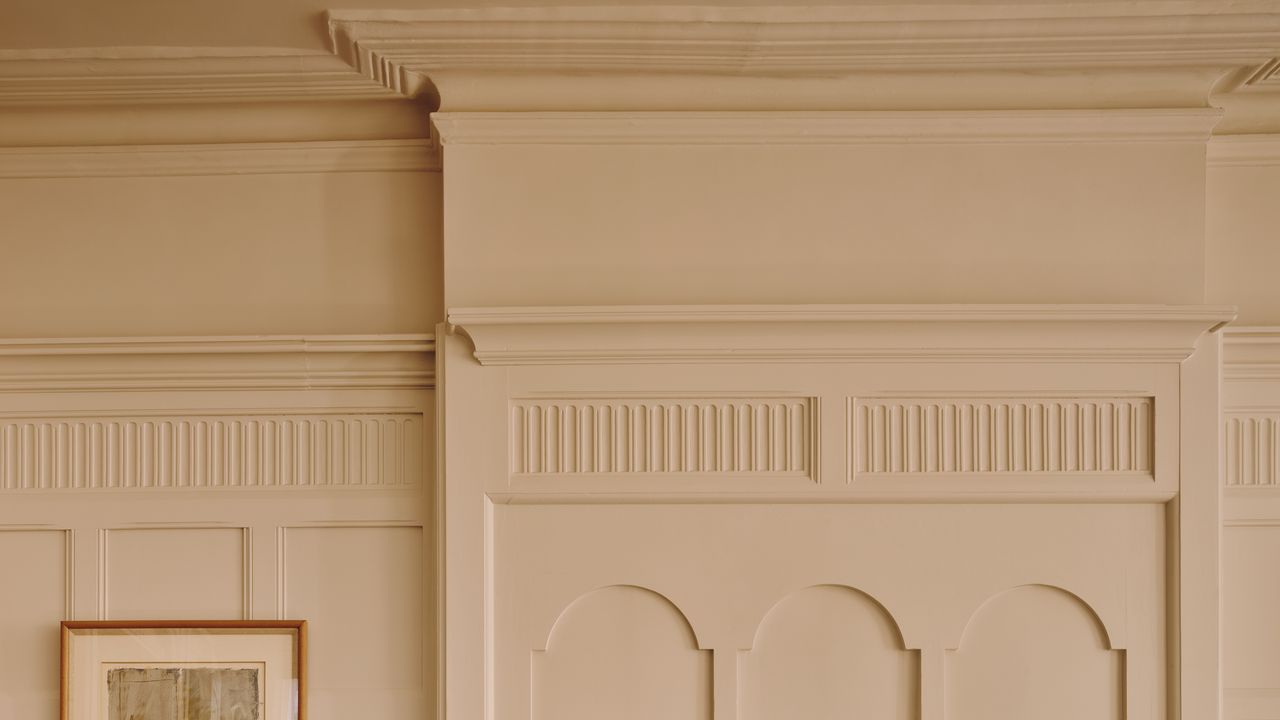
Scarlett Supple of Studio Supple is interested in how warm neutrals behave once an interior is lived in. ‘When building a room around warm, understated colours, it’s important to consider the light and how it interacts with the palette. Softer lighting can create a sense of warmth even when the space is neutral in tone,’ she explains.
‘A serene palette allows the natural elements of the room to stand out and almost sing!’ Scarlett continues. ‘It’s key to focus on materiality and textures like the flooring and wall finishes to add other dimensions to the room. It’s lovely to work with lime or textured paints, as well as aged, patinated floors when you can. A few deeper elements can also ground the palette; for example, a darker wood table or a tobacco leather chair can provide weight and balance within a space.’
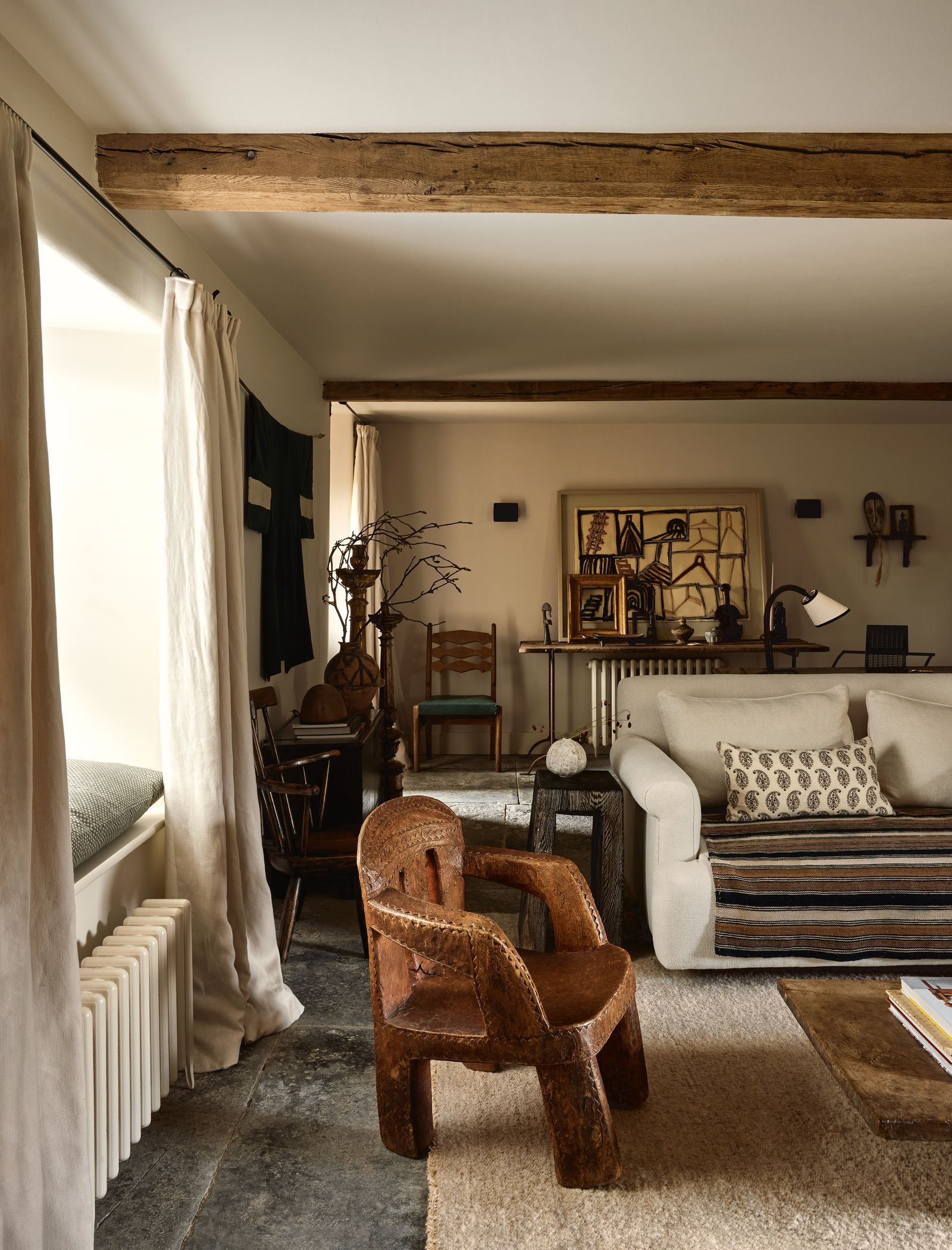
The pared-back yet irresistibly cosy living area of James Thurstan Waterworth and Scarlett Supple’s Wiltshire farmhouse.
Martin Morrell
Scarlett is also keen to stress how a degree of looseness helps prevent muted schemes from feeling overly controlled. ‘Handmade pieces, imperfect textures, and relaxed finishes add unique character to the space. For example, varying linen with different textures can look lovely; soft, heavy linen curtains can look beautifully elegant. These details make the room feel lived-in and unique.’

Light catching on surfaces in the Wiltshire farmhouse of James Thurstan Waterworth and Scarlett Supple.
Martin Morrell
Gracy Berkeley-Hawkes, co-founder of Berkeley Hawkes, sees warm neutrals as a foundation that demands careful handling. ‘They give you a cosy foundation, but the interest must come from layering. Texture is the most effective tool for creating depth, you should mix soft materials like wool, velvet, and linen in different weights and finishes. Some should be chunky, some fine, some smooth, some rough. Hard materials should follow the same principle. Use a mix of stones, metals, and woods, some raw which develop patina, others more refined.’
Playing with undertones is what holds everything together. ‘Every element should lean warm or sit in the true neutral zone, as anything cool will sit awkwardly,’ Gracy adds. ‘For instance, we would never introduce chrome in a warm scheme. Nickel paired with brass or bronze offers variation while maintaining harmony.’