
Any gadgets under your Christmas tree this year? Once upon a time, peak tech was a foot spa. But gifting has moved on, and now there’s everything from health trackers to gelato makers; infrared face masks to virtual reality headsets; massage guns to temperature-controlled coffee mugs.
Ireland goes mad for gadgets at Christmas – almost half of all small electronics here are bought between November and December, according to not-for-profit Waste Electrical and Electronic Equipment (WEEE) Ireland.
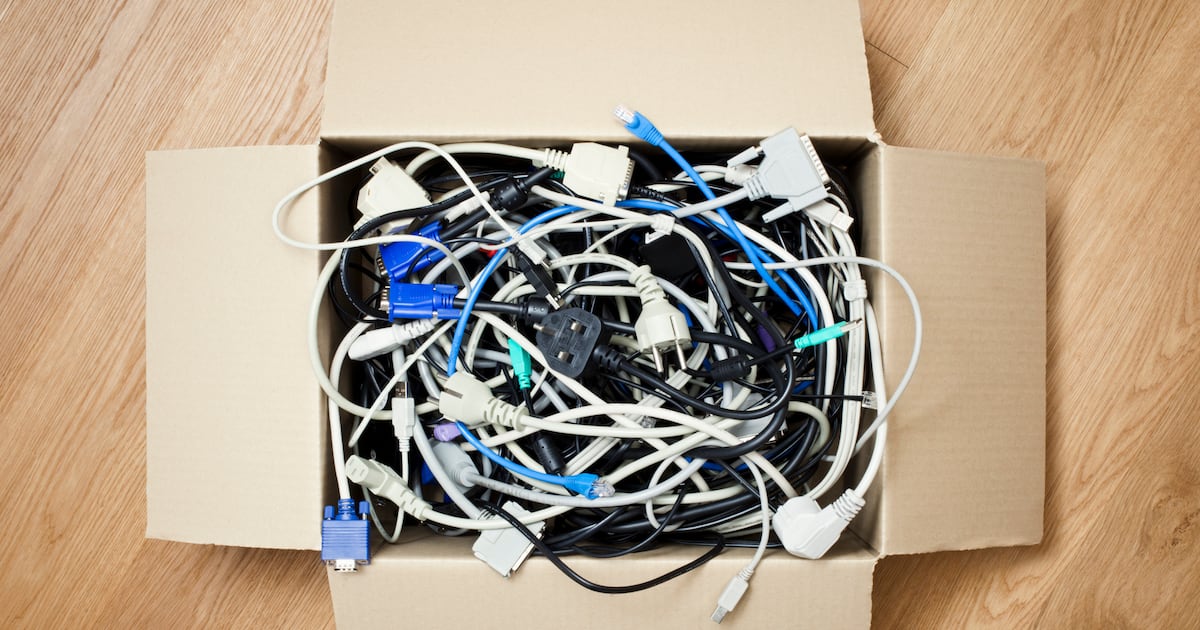
Only one in three however comes back for recycling, says WEEE. This has turned our homes into device graveyards. If you’ve got a drawer or a cupboard stuffed with old mobile phones, Blackberrys, chargers, gaming paraphernalia, cables, calculators, maybe even a Tamagotchi from Christmases-past, that means you.
Half of consumers in Ireland don’t realise the materials in their old electrical and electronic appliances contain critical raw materials. We urgently need these to manufacture new technology and renewable energy sources.
Aluminium, copper, lithium, nickel – Europe’s e-waste mountain now hides one million tonnes of these critical raw materials every year.
The materials going unused and forgotten in drawers in our homes are essential for making things like new heat pumps, wind turbines, EV chargers, servers, smartphones and defence equipment.
Recycling anything with a plug or batteries helps to lower CO2 emissions and ensures any toxic substances are safely removed, protecting our environment from harm too.
While eight in 10 of adults claim they recycle their e-waste to help the environment, only five in 10 recognise that it is essential that we recover the critical raw materials inside old devices.
“Every old and broken phone, hairdryer or game controller tucked away at home contains critical raw materials that the EU desperately needs to be less reliant on China,” says Leo Donovan, CEO of WEEE Ireland.
Europe’s e-waste is now being called “the new oil”, says Donovan. Ireland’s contribution to that well of resources can either sit gathering dust in our homes, or be mined responsibly for a circular future.
Why are we hanging on to all this stuff? A third of us are keeping it as a “back-up”, according to the WEEE research, published to mark International E-waste Day in October.
This is leaving a hidden hoard of critical raw materials gathering dust.
E-waste across Europe, in addition to the UK, Iceland, Norway and Switzerland, now contains enough embedded critical raw materials to fill 50,000 shipping containers, weighing around one million tonnes, according to a report prepared by the Futuram (Future Availability of Secondary Raw Materials) consortium for International E-Waste Day 2025.
With the Critical Raw Materials Act (2024) the EU has set a benchmark that a quarter of annual demand for critical materials is met by recycling by 2030. At the moment, just 1 per cent of requirements are met by e-waste recycling, so there’s a long way to go.
“With Irish consumers currently only recycling three end-of-life electrical items for every 10 new purchased, the potential impact of recycling is immense,” says Donovan.
[ It’s time to stop hoarding old smartphones and laptopsOpens in new window ]
The e-waste generated in 2022 alone contained one million tonnes of critical raw materials, including 29 critical elements out of 34 listed by the EU.
A concerted effort to collect and recover could extract hundreds of tonnes of reusable metals from obsolete gadgets and appliances.
So if you do one thing this January, drop off old and broken electronic devices, batteries, and cables for free recycling at one of the hundreds of local authority civic amenity centres and participating electrical retailers.
In future, try to extend the life of your gadgets by repairing them before replacing them. Pass on functioning electronics in good condition to others who might need them, and when looking for a replacement, explore nearly-new and refurbished devices first.
If you must buy new, take the old model back to the store when you purchase.