
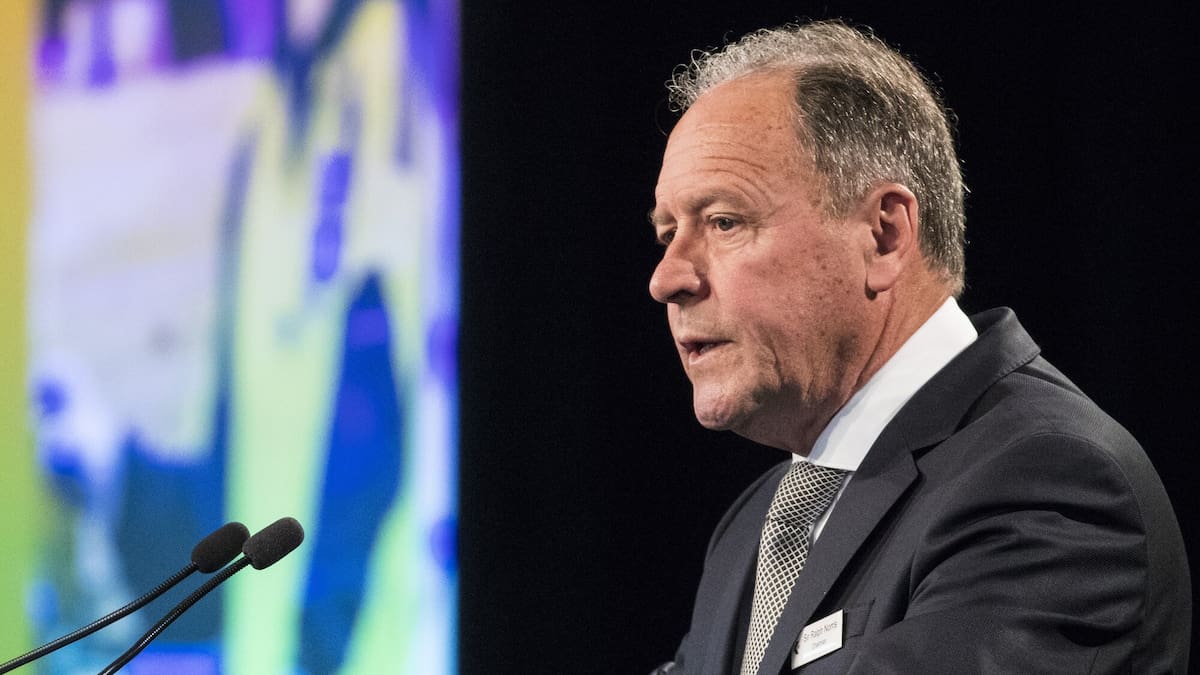
He was not aware of any victims, but at least two people – a woman in New Zealand and a woman in Australia – had lost a significant sum when scammers last used his name and likeness about 10 years ago, Norris said.
The BNZ banner has also been misappropriated in the scam ads using Sir Ralph Norris’ name and likeness.
“Unfortunately they lost $200,000 each. That was very sad.”
Norris, a former chairman of Contact Energy and Fletcher Building, currently chairs Craigs Investment Partners and the company had contacted Meta on his behalf about the scam ads and posts.
Business leader Sir Ralph Norris is warning the public of scam “ads” and posts, including this one, posted on social media promoting financial investments using his name and likeness.
It had also told the Financial Markets Authority, Norris said.
Sharesies has been informed about the use of its banner in one of the scam ads, he said.
Like in many other countries, the actions of scammers have become an increasingly worrying trend in recent years.
Using tactics such as false romances, financial fraud and contacting potential victims claiming to be from their banks, scammers are thought to steal more than $3 billion a year from consumers.
That’s a 30% increase from $2.3b last year.
Netsafe and the Global Anti-Scam Alliance’s State of Scams in New Zealand report showed scammers are getting more sophisticated – and victims are facing persistent barriers to reporting and recovering their losses.
Last month, Netsafe’s Sean Lyons told The Front Page about 82% of Kiwis reported experiencing a scam at some point in the last year.
“So this is not about occasional access, and if you extrapolate the figures, you’re probably talking about a person experiencing over 150 different scam attempts in a year,” Lyons said.
“For a lot of people, it’s probably becoming the norm.”