
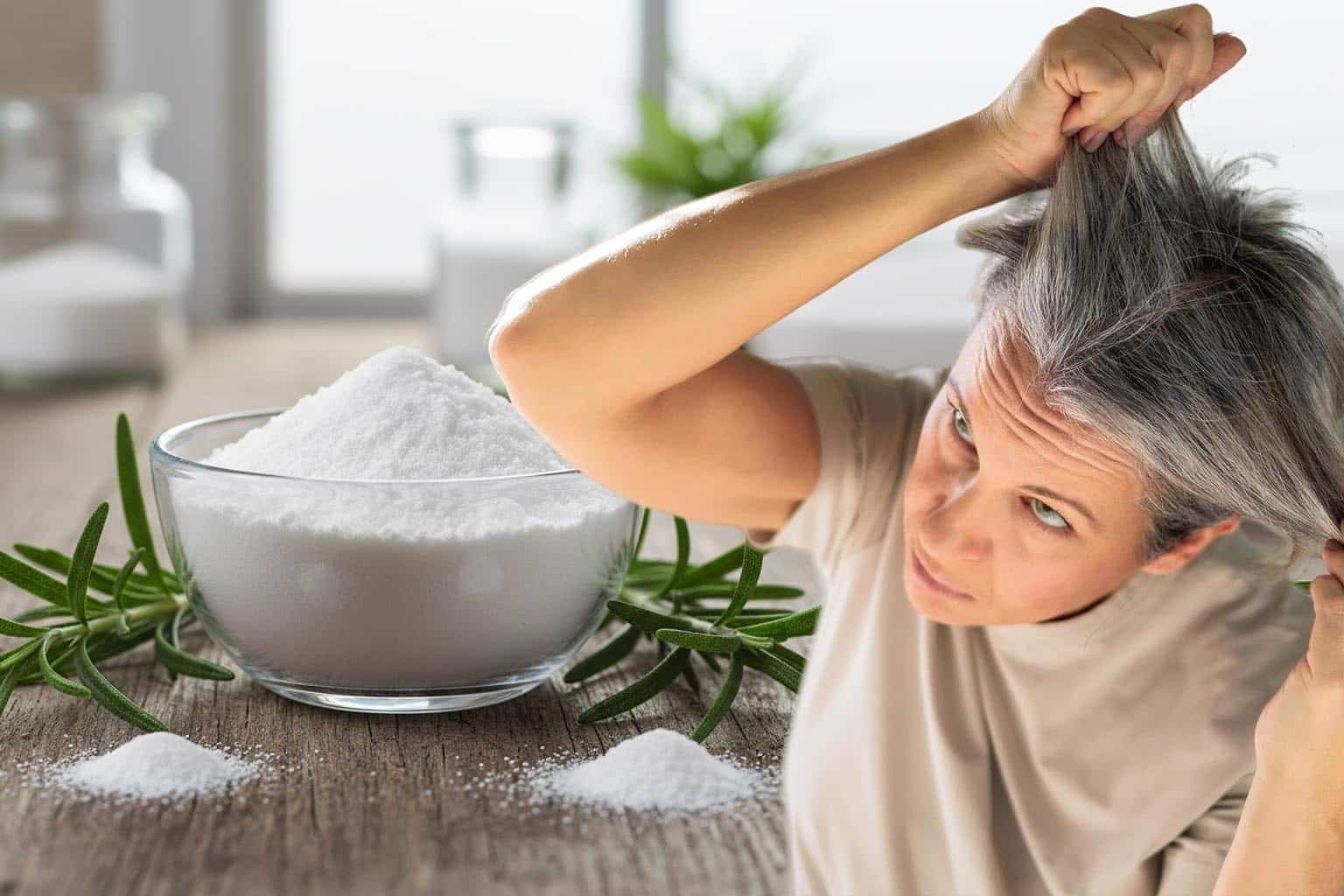
Gray hair represents one of the most visible markers of aging, prompting countless individuals to seek solutions that go beyond conventional chemical treatments. While the beauty industry offers numerous synthetic options, a growing number of people are turning to natural alternatives that promise gentler care for both hair and scalp.
Among these natural approaches, the combination of sodium bicarbonate and rosemary has gained considerable attention as a potential remedy for gradually addressing gray hair while strengthening overall hair health. This mixture appeals particularly to those seeking to avoid harsh chemicals while working with their hair’s natural processes rather than against them. However, understanding the factors that contribute to premature graying, including daily habits that accelerate gray hair, can be equally important in maintaining natural hair color.
The appeal of this home remedy lies not just in its simplicity, but in the promise of addressing multiple hair concerns simultaneously. Yet like many natural treatments that circulate widely online, the actual effectiveness and limitations of this approach deserve closer examination.
The Science Behind Natural Gray Hair Treatment
The biological process of hair graying involves the gradual decline of melanocyte activity in hair follicles. These specialized cells produce melanin, the pigment responsible for hair color. As we age, melanocytes produce less pigment and eventually stop functioning altogether, resulting in the characteristic silver or white appearance of gray hair.
According to research published in PMC, understanding hair pigmentation mechanisms is crucial for developing effective treatments. Sodium bicarbonate works by balancing scalp pH levels, creating an environment that may help preserve existing pigment production for longer periods. Research suggests that maintaining optimal pH levels on the scalp can influence various cellular processes, including those related to hair health and pigmentation.
“Hair pigmentation involves complex cellular mechanisms that can be influenced by environmental factors including pH balance and oxidative stress” – Hair pigmentation research
Rosemary brings a different set of properties to this combination. The herb contains rosmarinic acid and caffeic acid, compounds that function as potent antioxidants. These substances may help protect hair follicles from oxidative stress, one of the contributing factors to premature graying. Studies have shown that rosemary extract can stimulate circulation in the scalp, potentially supporting the delivery of nutrients to hair follicles.
Practical Application and Realistic Expectations
The preparation method for this natural treatment involves boiling water with fresh rosemary sprigs and three tablespoons of baking soda per liter. The mixture requires careful attention during preparation, with constant stirring to ensure proper ingredient integration. After cooling, the solution is applied throughout the hair, similar to traditional hair treatments.
Those who advocate for this method typically report that results appear gradually over several applications. The treatment seems most effective on naturally dark hair, where subtle pigment enhancement may be more noticeable. Individuals with lighter hair colors often report less dramatic results, suggesting that the treatment works by enhancing existing pigments rather than creating entirely new coloration.
The frequency of application varies among users, with most applying the treatment weekly or bi-weekly. Some report that consistency plays a crucial role in maintaining any perceived benefits, while others find that occasional use provides sufficient results for their needs. It’s worth noting that certain stress-related factors may counteract the benefits of any topical treatment.
Effectiveness vs. Marketing Claims
The popularity of this remedy stems largely from anecdotal testimonials rather than rigorous scientific validation. While individual success stories circulate widely on social media and natural health websites, controlled studies examining this specific combination remain limited.
Professional hair care specialists often point out that the darkening effect some users experience may result from temporary staining rather than actual pigment restoration. The rosemary infusion can leave subtle color deposits on hair strands, creating an illusion of reduced gray coverage that washes out over time.
The pH-balancing properties of sodium bicarbonate are well-documented, and maintaining proper scalp pH does contribute to overall hair health. However, the connection between pH balance and gray hair reversal lacks substantial scientific support. Most dermatologists emphasize that once melanocyte function ceases in a hair follicle, natural pigment production cannot be restored through topical treatments alone. Understanding the aging process that affects hair follicles can help set realistic expectations for any treatment approach.
The Often Overlooked Scalp Health Factor
What many discussions of this remedy fail to address adequately is the potential impact on long-term scalp health. Sodium bicarbonate, while effective for pH balancing in controlled amounts, can become problematic with frequent use. The alkaline nature of baking soda may disrupt the scalp’s natural protective barrier if used excessively.
Individuals with sensitive skin or existing scalp conditions may experience irritation, dryness, or increased sensitivity when using this treatment regularly. Studies from NCBI have documented how sodium bicarbonate can affect skin and hair when used in various applications. The concentration of baking soda in the typical recipe may be too strong for some users, leading to compromised scalp integrity over time.
Furthermore, the boiling process used to prepare the mixture can concentrate certain compounds in ways that increase their potency. While this might enhance the perceived effectiveness of the treatment, it also elevates the risk of adverse reactions. Professional hair care providers often recommend patch testing any new treatment, regardless of its natural origins.
The interaction between rosemary’s active compounds and sodium bicarbonate creates a complex chemical environment that hasn’t been thoroughly studied for long-term effects. Some users report increased hair brittleness after extended use, suggesting that the treatment may affect hair structure in ways beyond simple coloration. For those seeking natural alternatives to baking soda for various household purposes, it’s worth considering that gentler options may also exist for hair care applications.
The fundamental question remains whether pursuing natural gray hair coverage is worth the potential trade-offs in scalp health and hair integrity. While embracing natural solutions appeals to many people’s desire for chemical-free alternatives, the complexity of hair biology suggests that simple home remedies may not address the underlying mechanisms of aging as comprehensively as hoped.