
As the New Year begins, many people set goals focused on improving their health and losing weight. For those who have tried diet, exercise and even medication without lasting success, there is a newer, minimally invasive option that sits between weight loss medications and traditional bariatric surgery.
Jason Bill, MD, an interventional gastroenterologist with OSF HealthCare, offers an endoscopic bariatric procedure called endoscopic sleeve gastroplasty that helps patients jump-start long-term weight loss without surgery.
This procedure is part of the OSF bariatric program, in collaboration with OSF Mission Partners at the RiverPlex Weight Management Clinic in downtown Peoria, providing patients with both medical treatment and long-term lifestyle support.
A middle-ground weight loss option
Endoscopic bariatric procedures are non-surgical and minimally invasive, making them an attractive option for patients who want more than medication but are not ready for, or do not qualify for, traditional bariatric surgery.
Dr. Bill describes the procedure as a long-term weight loss option, designed to help patients build sustainable habits rather than relying on short-term fixes.
How the procedure works
While the procedure is non-surgical, it is still performed under general anesthesia. Patients are treated in an outpatient setting and typically go home one to two hours after their procedure.
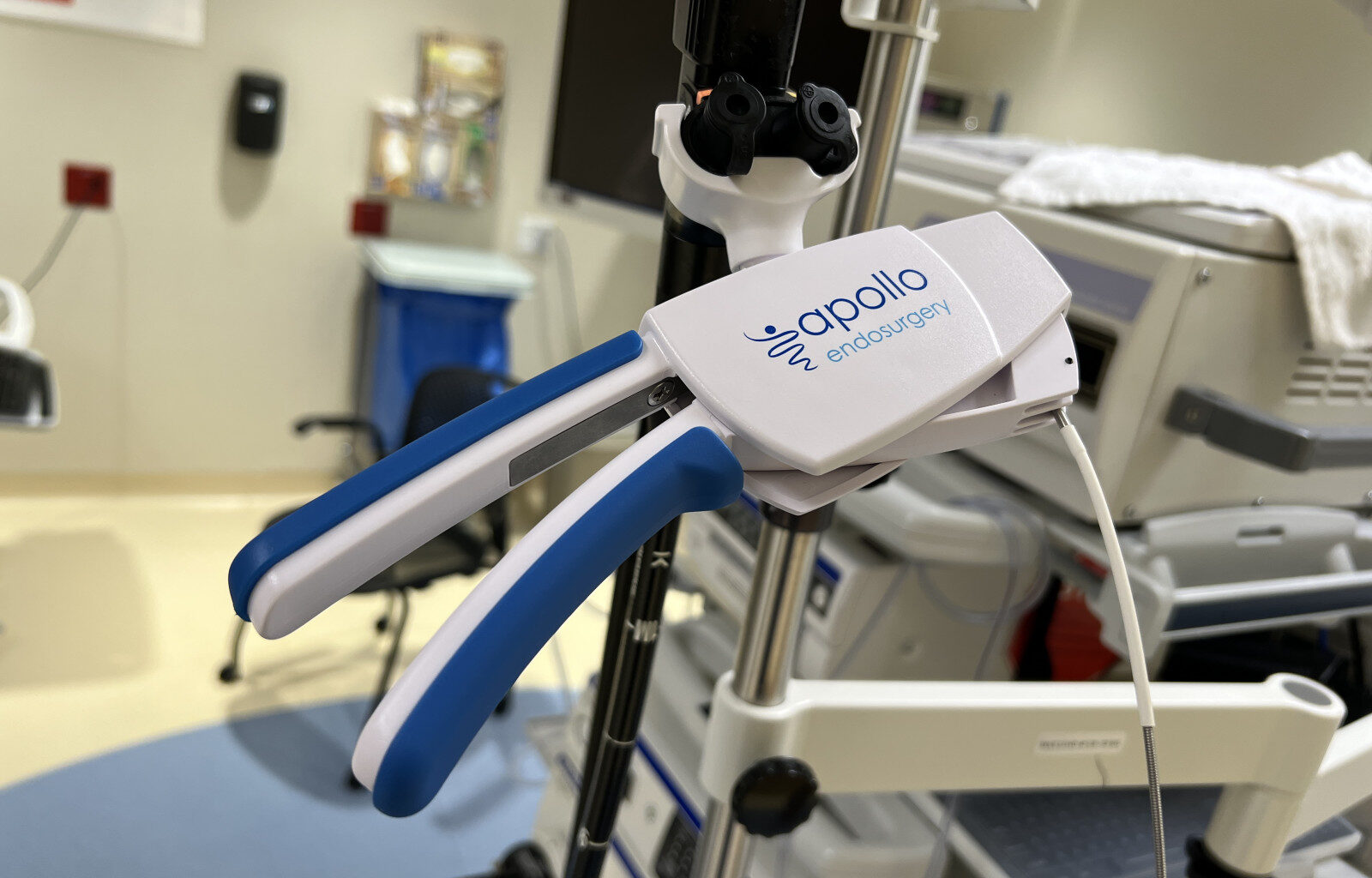
“It’s similar to any diagnostic camera test that GI doctors do every day,” Dr. Bill says. “We take a flexible tube, go down the mouth and into the stomach. Using a suturing device, we place six to eight sutures and tighten them to shrink the stomach by about 70%.”
By reducing the stomach’s size, patients feel full sooner, a concept known as early satiety, which helps reduce portion sizes and calorie intake.
Who is a good candidate?
Patients with a body mass index (BMI) between 30 and 50 are generally strong candidates for this procedure. BMI can be calculated when you divide your weight by the square of your height.
“The patients who tend to be most successful are still fairly active and fall in the BMI range of 30 to 40,” Dr. Bill adds. “They’re motivated, they’ve tried diet and exercise, but they just can’t get over that hump. This can be a great starting point.”
What recovery looks like
Recovery is typically smooth and straightforward. Mild abdominal discomfort and nausea are common for the first 72 hours, but symptoms after that are rare.
For the first six weeks, patients follow a restrictive diet, gradually transitioning to a calorie-controlled plan designed to support steady weight loss. This will look different for each individual patient, but talking it over with your OSF care team is a great start.
More Than Just Weight Loss
While patients can expect to lose approximately 15-20% of their total body weight, Dr. Bill emphasizes that the benefits go far beyond the number on the scale.
“We see improvement or reversal of diabetes, a decrease in sleep apnea and significant benefits for liver health,” he says. “For patients with fatty liver disease, we often see reversal as weight comes off.”
“In many cases, these outcomes are even more important than the weight loss itself.”
An option for those who struggle with weight loss medications
This procedure may also be a good alternative for patients who don’t tolerate weight loss medications, such as GLP-1s, very well.
“Weight loss medications have been incredibly helpful for some people,” Dr. Bill says. “But there are still big questions: What’s the endpoint? Do you take them forever? Is weight regained once you stop? We don’t yet have long-term data comparing all these methods.”
Support before and after the procedure
Weight loss doesn’t stop when the procedure is over. Before moving forward, patients meet with the Riverplex team. This includes educational classes, nutrition counseling and follow-up visits after the procedure.
Patients work closely with dietitians and nutritionists to understand what foods to prioritize, how many calories to consume and how to build habits that lead to lasting success.
A focus on long-term health
With obesity continuing to be a major health concern nationwide, Dr. Bill believes it must be treated seriously and proactively. Focusing on a well-balanced diet while living an active lifestyle are key.
For patients looking to make meaningful change this New Year, endoscopic bariatric procedures offer a powerful, supportive path forward; one that combines medical innovation with long-term guidance every step of the way.
‘;