
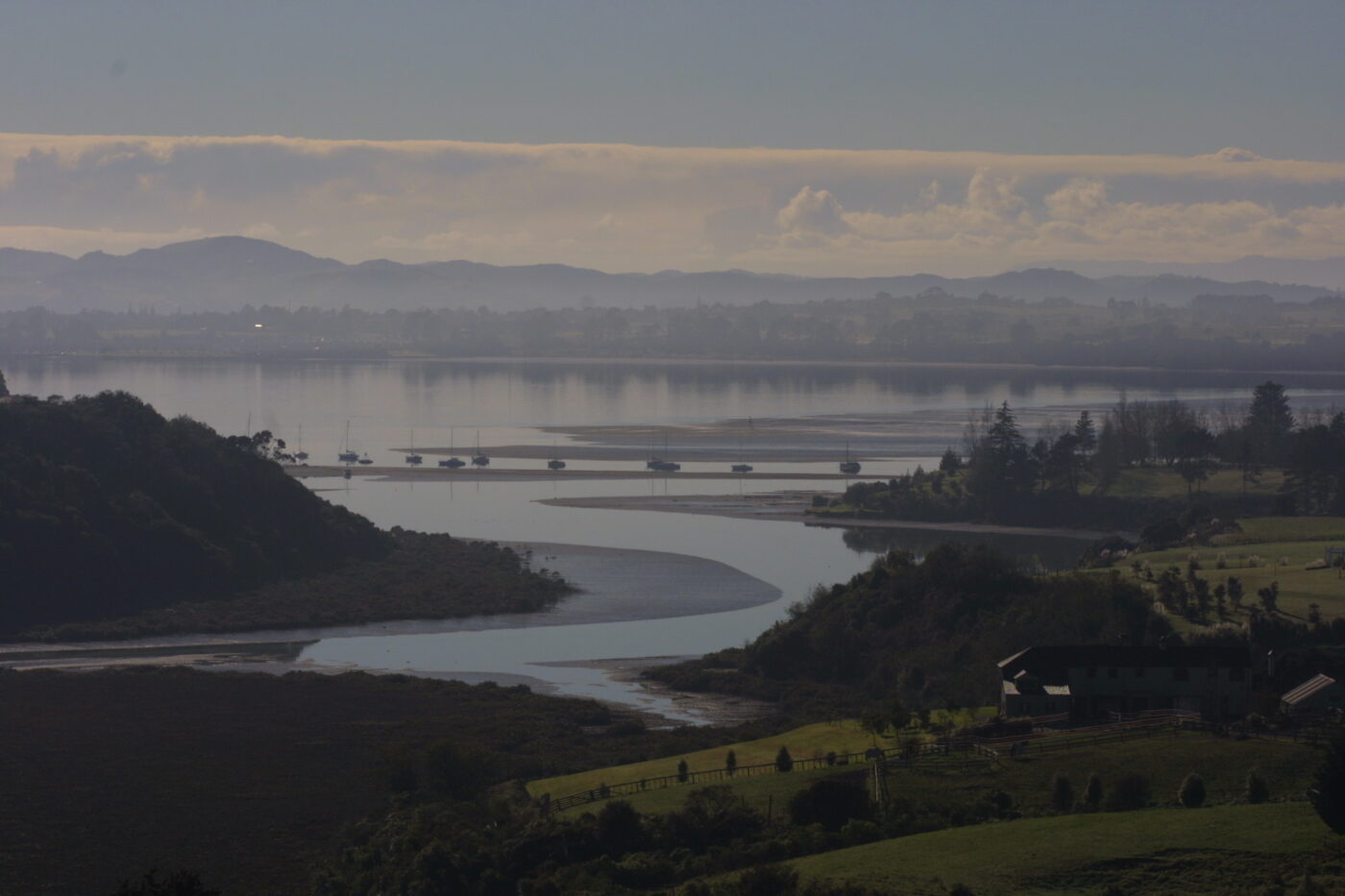
 Estuaries play a crucial role in the carbon cycle. File photo
In news that will be relevant to everyone who cares about the health of our local Tamaki Estuary in east Auckland, new research from Earth Sciences New Zealand shows degraded estuaries are less resilient to the impacts of heatwaves.
The scientific organisation says estuaries are vital to the country’s cultural and economic well-being. They also play a crucial role in the carbon cycle and can act as a carbon sinks.
However, little is known about carbon cycling in intertidal sand and mudflats or how this will be affected by climate extremes such as heatwaves.
Study lead and marine ecologist Dr Emily Douglas says such ecosystems are particularly vulnerable environments because of their dynamic nature.
“Estuary intertidal zones naturally experience large temperature changes because of incoming and outgoing tides, meaning they are exposed to both marine and atmospheric heatwaves,” she says.
“Estuaries are also threatened by sediments and nutrients from land, which results in muddy degraded habitats.”
Douglas says climate change is increasing the frequency, intensity and duration of heatwaves, so scientists want to know how temperature extremes may be impacting these ecosystems and their carbon absorption.
She and her team simulated a multiday atmospheric heatwave at two estuary intertidal flats at low tide.
One was sandy, i.e. healthy, and the other muddy, i.e. degraded. They tested how the heatwave impacted biodiversity and shellfish, as well as the uptake and emissions of methane and carbon dioxide.
“We found muddy sites emit more methane – a potent greenhouse gas – than sandy, healthier habitats.
“We also found the sandy site was absorbing more carbon dioxide, and this increased with heatwave duration.
“These results tell us climate change may alter the greenhouse gas source/sink status of our estuaries and that effects will be worse in muddy degraded estuaries.”
The researchers also found heatwaves changed the seafloor community. Again, these effects were greater at the muddy site compared with the sandy site.
“Overall, our findings indicate healthy biodiverse intertidal habitats will be more resilient to global warming, and this emphasises the importance of preventing further degradation of our estuaries,” Douglas says.
“The team are planning another heatwave experiment this summer this time focusing on the impact of heatwaves on shellfish beds.
The research was funded by Earth Sciences New Zealand’s Strategic Science Investment Fund.