
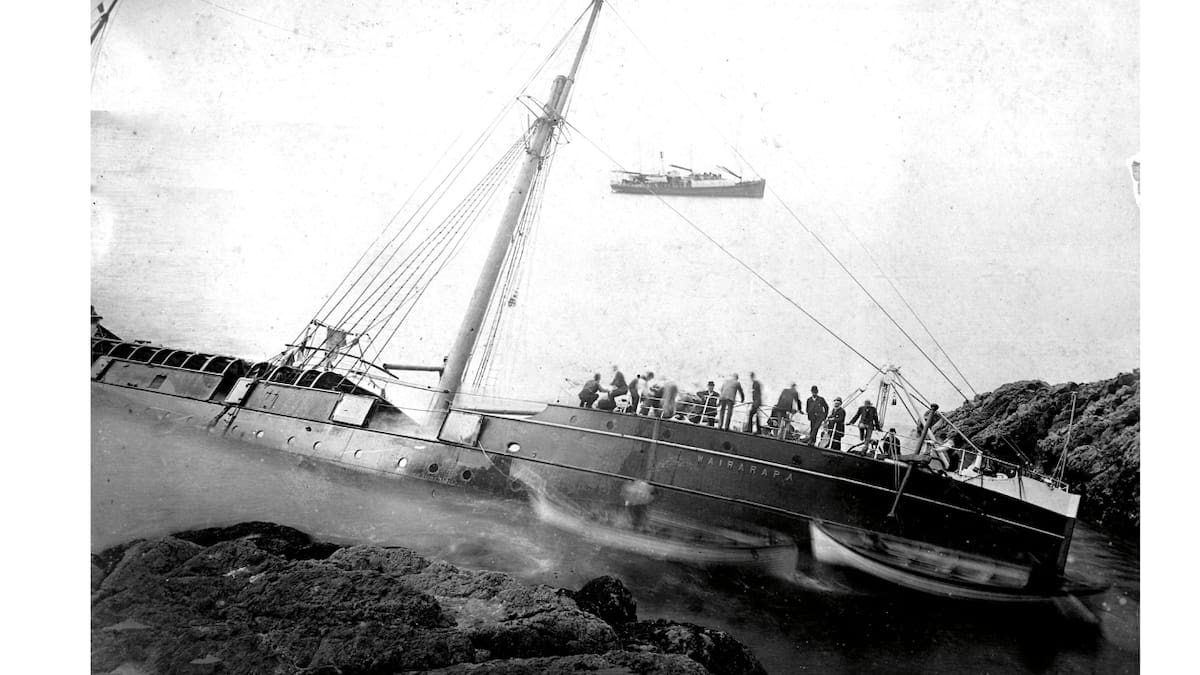
Ecologically rich, culturally vital and historically layered, the Hauraki Gulf is one of our most significant marine environments. Twenty times bigger than Lake Taupō, it stretches from metropolitan Auckland to the Mokohīnau islands and takes in Aotea Great Barrier and both sides of the Coromandel Peninsula.
After years of negotiation,
Parliament has passed legislation establishing 12 new high protection areas and five seafloor protection areas across the gulf with the Hauraki Gulf / Tīkapa Moana Marine Protection Act. High protection areas safeguard marine life, restricting fishing and allowing limited customary practices. Seafloor protection areas conserve the seabed, permitting low-impact activities such as line or spear fishing and diving but prohibiting trawling, dredging and Danish seining.
The Rewa, intentionally beached off Moturekareka Island in Kawau Bay in 1930, is a summer snorkelling mecca. Photos / Raewyn Peart
Sunken heritage provides substrates for diverse marine ecosystems. Photo / Raewyn Peart
Missing knowledge
Wreck Bay on Rangitoto Island is a graveyard for ships scuttled between 1887 and 1947. Photo / Raewyn Peart
Data trawl
SaveShare this article
Reminder, this is a Premium article and requires a subscription to read.
Copy LinkEmailFacebookTwitter/XLinkedInReddit