
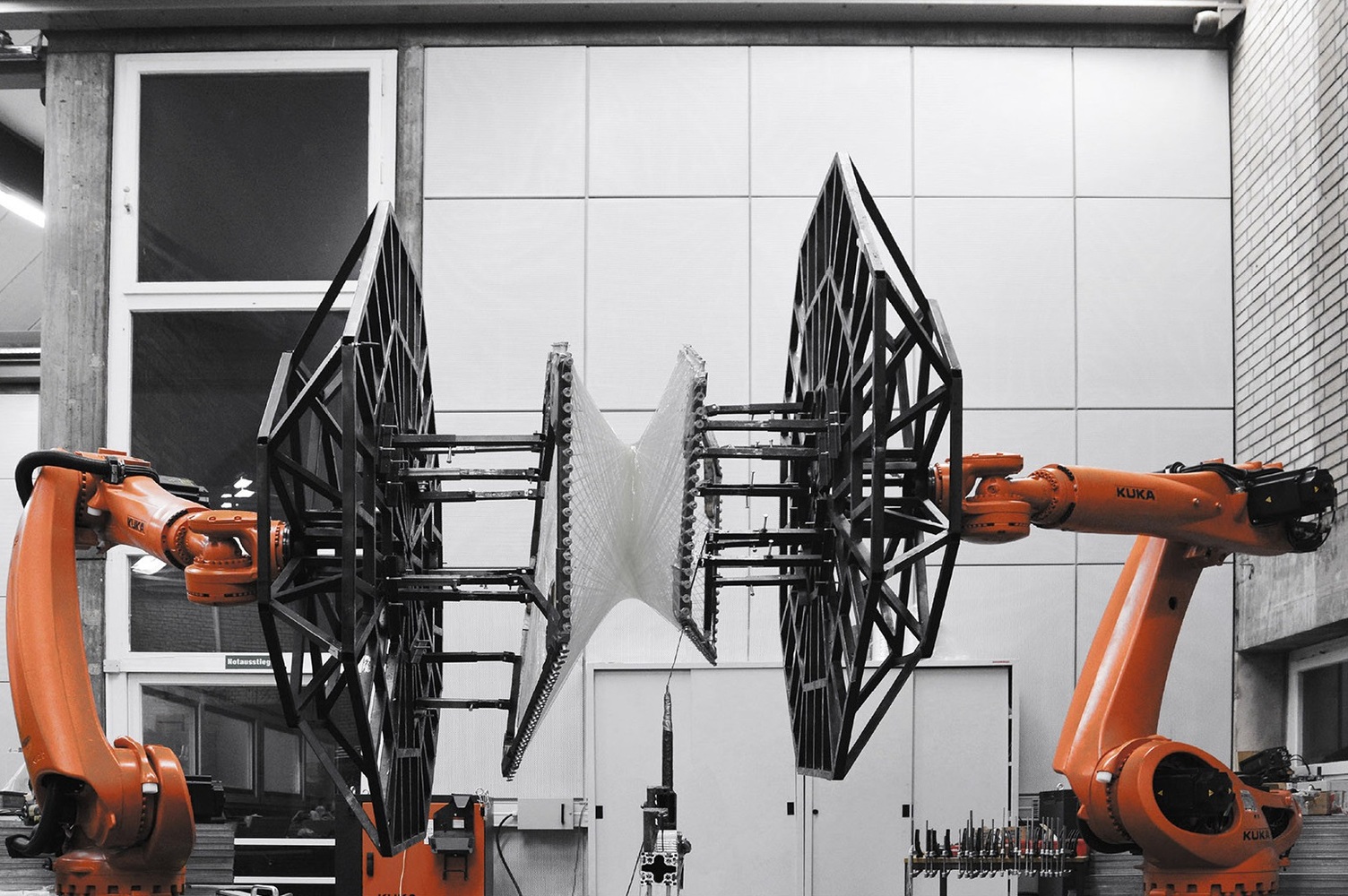
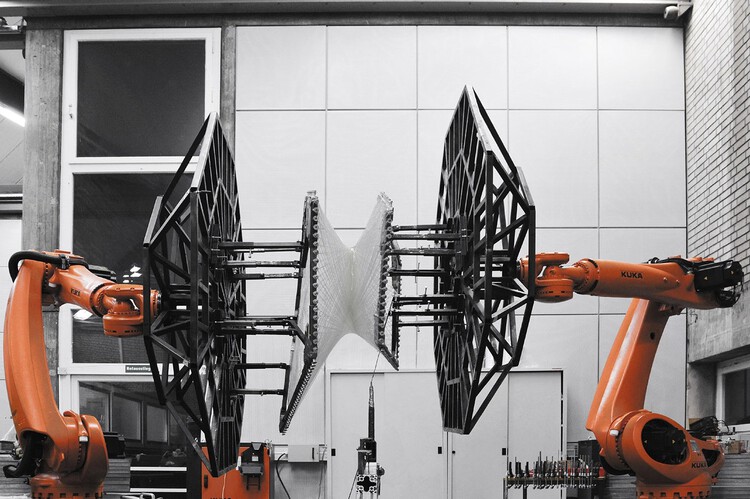
 Material Fabrication. Image © ICD-ITKE
Share
Or
https://www.archdaily.com/1037330/from-material-intelligence-to-circularity-lessons-from-architecture-in-2025
Which materials have taken center stage in the architectural discourse of 2025? Which projects have rediscovered new construction practices and methods through material innovation? While the future of building materials still appears uncertain, year after year, experimentation and research continue to reveal diverse practices, initiatives, and efforts dedicated to understanding their value and responsibility within the built environment. From agricultural waste that reduces carbon footprints to recycled plastics given new life, and living materials that engage with emerging technologies while reconnecting with nature, 2025 has highlighted and strengthened the role of architects as mediators between materials, disciplines, knowledge, and interests from diverse origins.




Beyond ongoing debates surrounding prefabrication, reuse, and glocalization, material definition in architecture today, more than ever, seeks a balance between innovation, tradition, efficiency, and identity. In a world marked by constant change and evolution, the study of material life cycles, the integration of circular construction practices, and the development of material intelligence—among other variables—aim to guide architecture toward more resilient, environmentally conscious, and livable futures. The choice of materials in a project, as well as its construction system, has the power to shape spatial experience and convey values that extend beyond comfort and interior well-being.
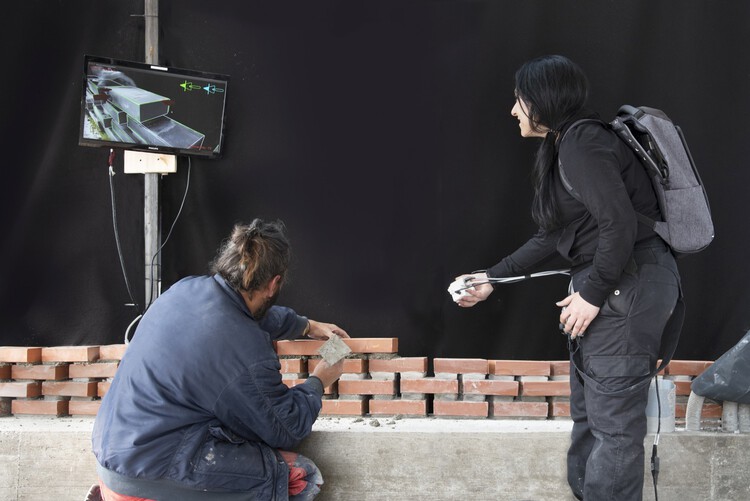 Courtesy of Gramazio Kohler Research
From examining the origin of materials and the time required for their production and application, to assessing the social and environmental impacts of supply chains and material longevity across territories, architecture is actively seeking positions that respond to the environmental crisis from multiple angles. As articulated by the concept of Slow Architecture, which calls for a deep reassessment of material and construction choices based on an ethics of time, techniques such as Wang Shu’s reuse of demolition materials or the integration of traditional systems in dialogue with contemporary technologies contribute not only to sustainable construction but also to preserving material memory and honoring craftsmanship.
Related Article Converging Architectural Trends in 2025: Circularity, Biomaterials, and Carbon-Conscious Design
Across a wide range of projects, installations, research initiatives, laboratory experiments, and critical studies, solutions involving food waste applications, the conscious use of resources, minerals, reused plastics, and carbon-calculation tools stand out among the many paths explored throughout the year. Regardless of geographic or cultural context, each material represents a new opportunity for research.
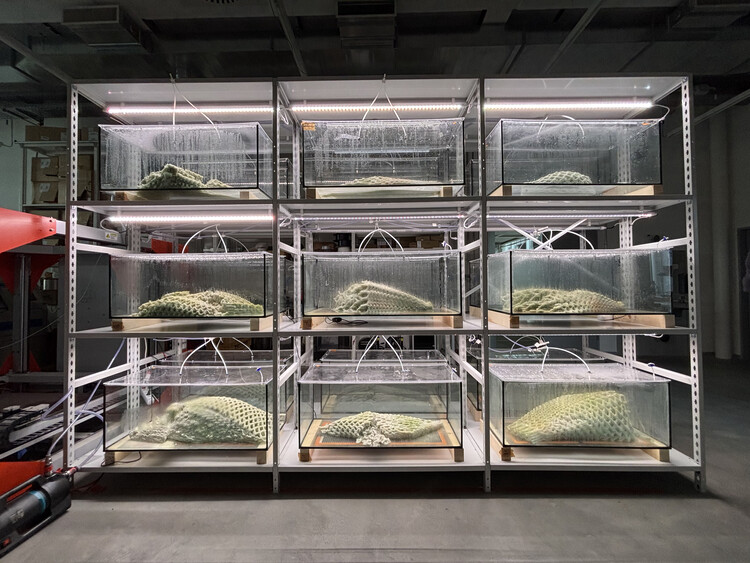 Picoplanktonics incubation chambers. Image © Clayton LeeBeyond Their Useful Life: Materials That Support a Circular Economy
In an effort to shape the architecture of the future, a range of initiatives, projects, standards, and regulations are promoting the adoption of circular approaches in construction. While early material cultures already demonstrated subtle forms of circularity, contemporary architectural practice continues to rethink the processes and methods that give rise to buildings. By recognizing plastic, food, and demolition waste as valuable resources for the industry, professionals from multiple disciplines—along with companies, agencies, and institutions—are driving this gradual shift, focused on respecting material cycles while addressing sustainability and reducing the environmental impact of construction.
From Overlooked Waste to Circular Opportunity: Plastics in Construction © ArchDailyFrom Disposable to Sustainable: The Transformation of Recycled Polyurethane into High-Performance Products
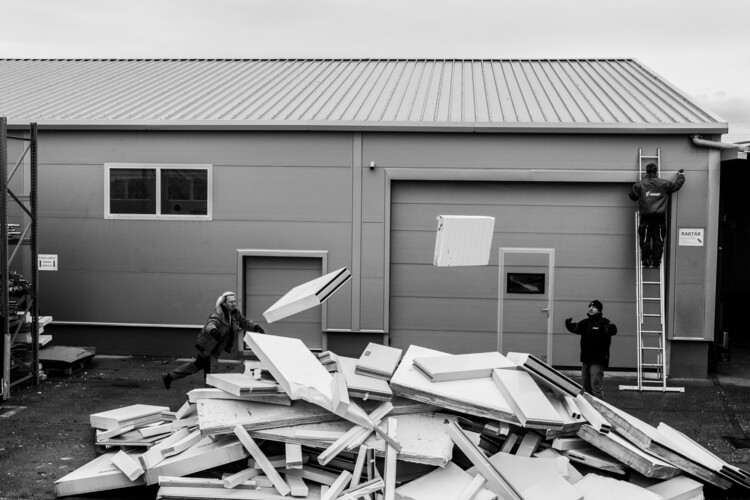 Courtesy of PurmanTerrazzo’s Sustainable Design Strategy: Integrating Tradition, Reuse, and Innovation
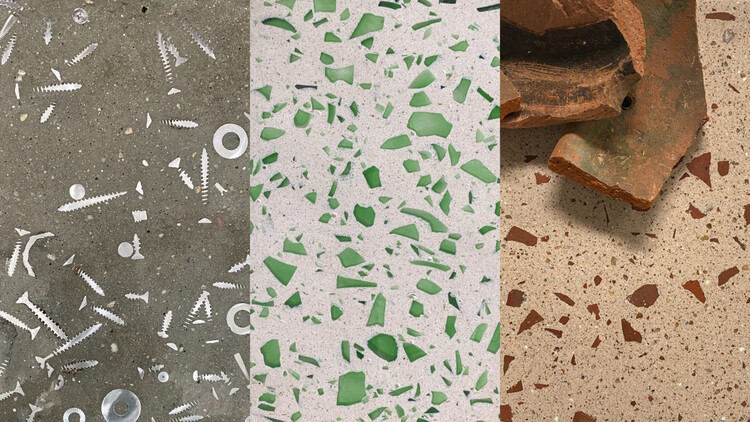 Courtesy of ForessoCan We Build with Food? Circular Experiments at the Matter Matters Lab
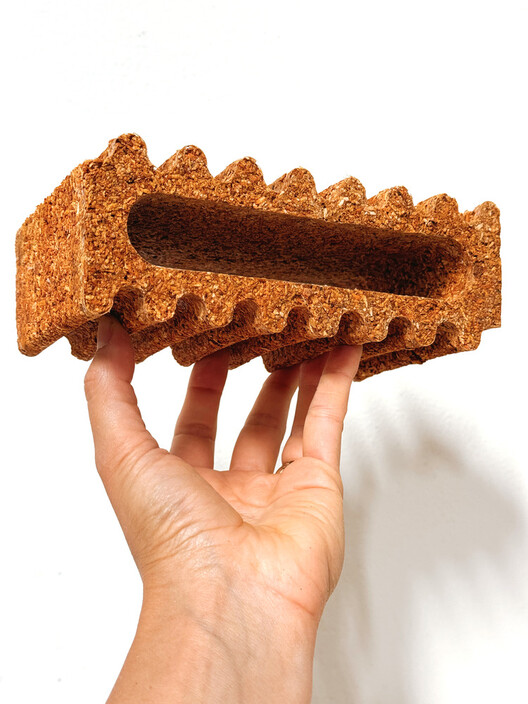 Courtesy of Matter Matters LabTurning Surfboard Waste into Climate-Resilient Homes in Hawaii
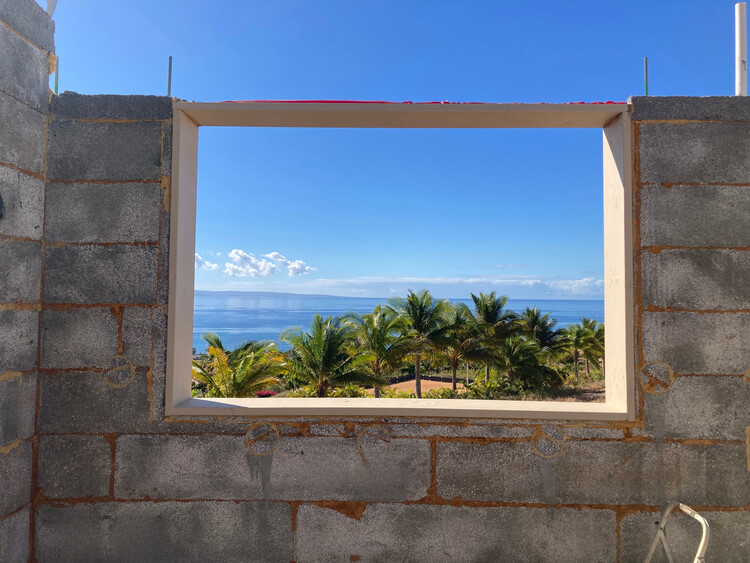 Courtesy of Surf Blocks MauiWhat If Every Brick Had a Future? Rethinking Demolition and Material Reuse in the Circular Economy
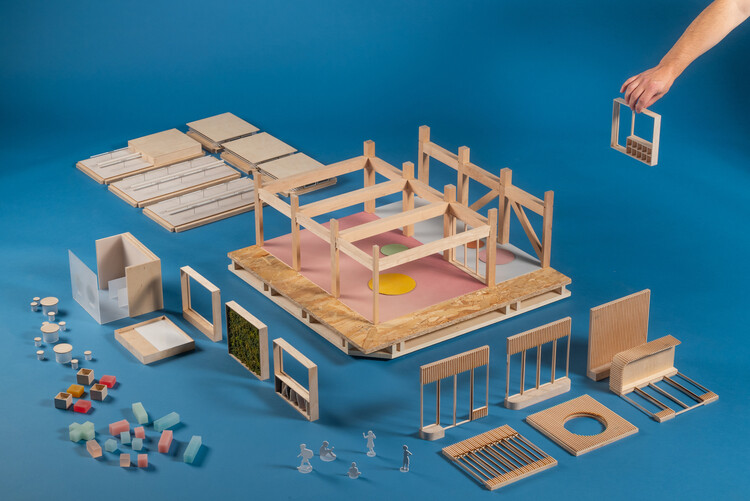 IP School Buildings Model. Image © Arthur Wong, Courtesy of OMAFrom Organic Waste to Biomaterials: Addressing Carbon Emissions Mitigation and Resource-Conscious Approaches
As the fight against carbon emissions intensifies, material reuse is widely recognized as a key strategy for reducing waste and extending the lifespan of buildings. However, it is not the only path toward achieving this goal. Full-scale prototypes, installations, and pavilions made from living materials, agricultural byproducts, and other alternative resources encourage experimentation and research, guiding architecture toward more environmentally responsible construction practices. Just as sugarcane bagasse is used to build a school in India as a low-carbon alternative to conventional brick and concrete block construction, the Canada Pavilion at the Venice Biennale is centered on marine cyanobacteria capable of capturing carbon and contributing to the material growth of the structure itself. In this way, these projects invite a rethinking of architecture as a living, evolving process—one that imagines alternative futures and actively participates in planetary repair.
Residues That Build: A School in India Made from Sugarcane Bagasse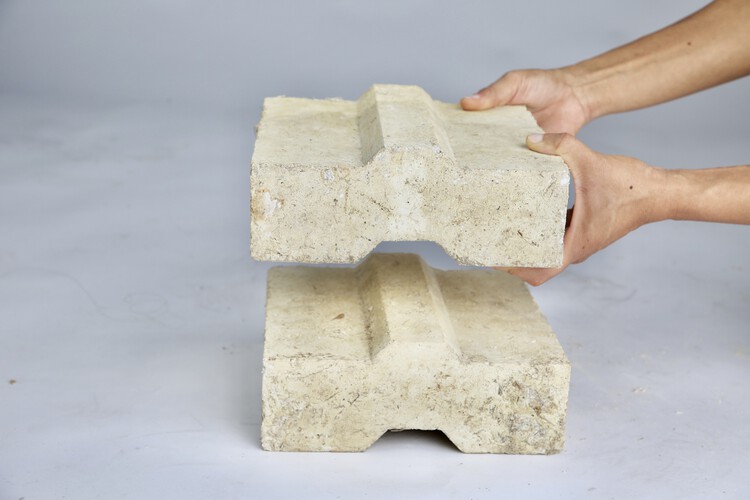 © Megan JonesDesigning a Living and Dying Structure: Picoplanktonics and the Canadian Pavilion in Venice
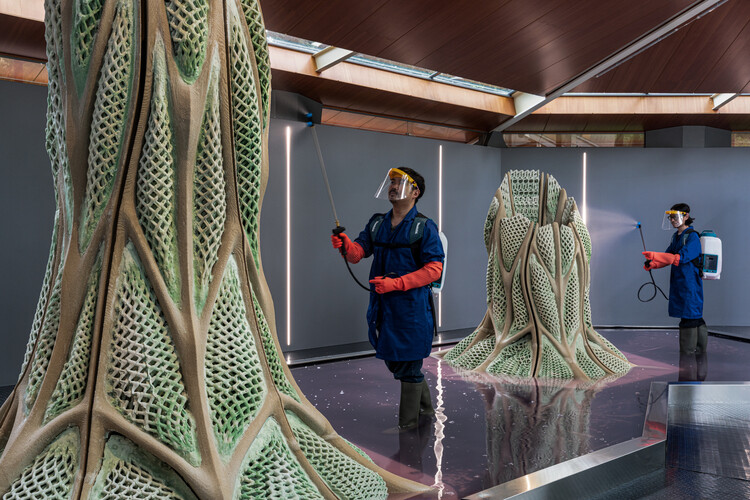 Living Room Collective: Picoplanktonics, Canada Pavilion at the Venice Biennale, 2025. Image © Valentina MoriReimagining Lisbon’s Azulejos: Regenerative Biomaterial Tiles from the Tagus River
 Bio Azulejos. Image © Jeremy MorrisSalt as a Building Material: Rethinking the Life of Minerals and Waste in Architecture with Mále Uribe
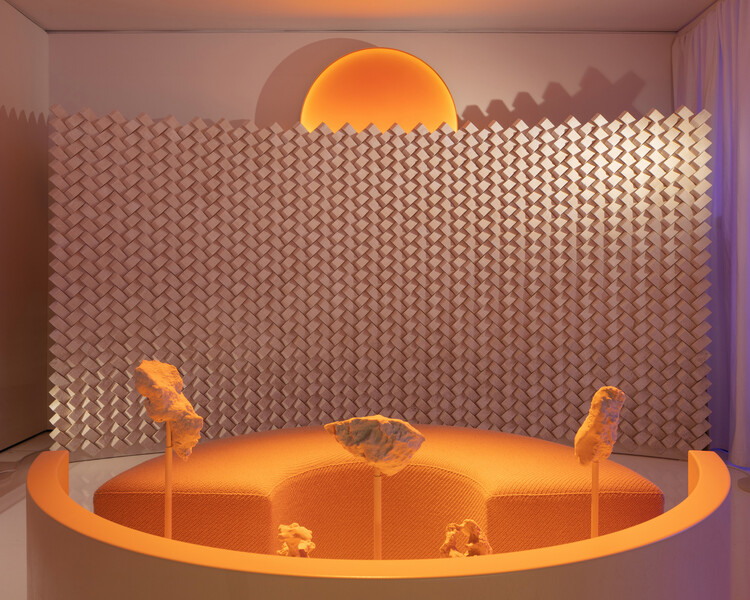 “Salt Imaginaries”, exhibition at Design Museum, London, 2020. Courtesy of Mále Uribe. Image © Francisco IbáñezExploring Living Building Materials Through Robotic Earth Printing
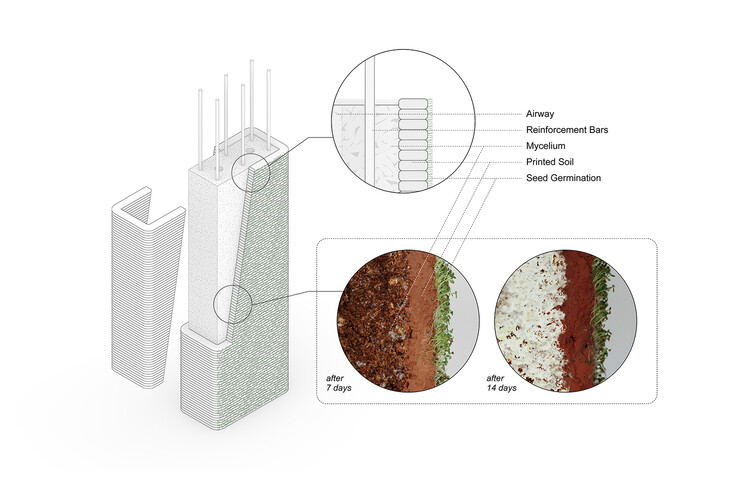 The schematic diagram to develop a wall section based on eco-resilient tectonics. ImageShould Buildings Be Designed to Decay?
 Santa-fé Grass Roof. The Nest / Porky Hefer Design. Image © Katinka BesterAdvances in Technology: Redefining the Role of Materials in Construction
At the intersection of science, technology, and design, innovation in construction materials involves applying principles and knowledge that often include interaction with and experimentation in biological, chemical, computational, and related processes. For years, devices, structures, and software have supported the work of many architecture professionals focused on material manipulation and creation as part of their creative practice. Just as metamaterials offer properties rarely found in nature, this year highlights how diverse tools such as 3D printing, artificial intelligence, and robotics are moving beyond purely optimization-driven roles to open up new design pathways that add value to regenerative approaches.
Beyond Matter: How Far Can Material Intelligence Go?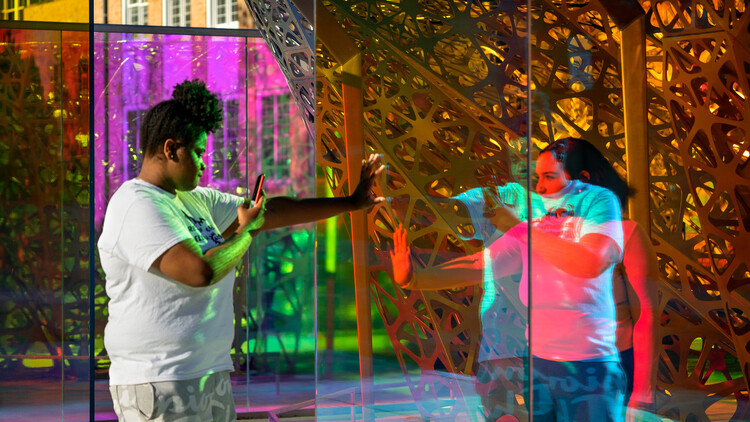 Project by Sabin Design Lab Cornell University and the DEfECT Lab at Arizona State University. Image © John MunsonFrom Concrete to Cultivation: How AI and Robotics Are Rewriting Architecture’s Material Logic
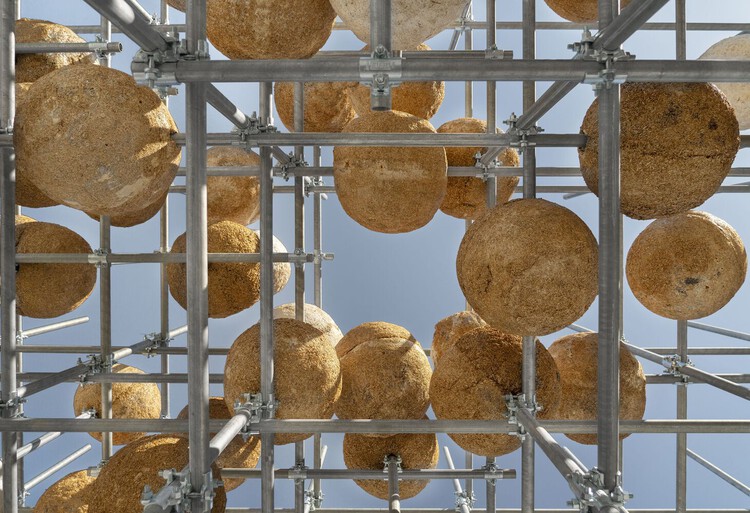 Growing Matter(s) Pavilion / Henning Larsen Architects. Image © DLS StudioWhat Are Metamaterials? Innovations in Architecture from Acoustic Invisibility to Seismic Protection
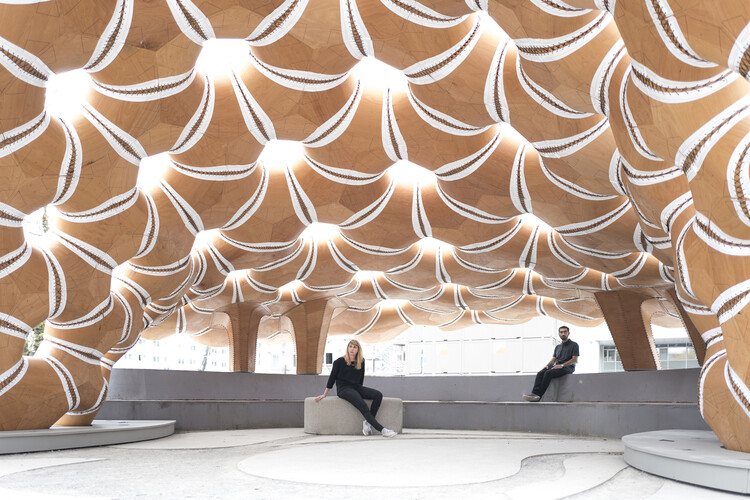 ICD-ITKE Research Pavilion 2015-16 / ICD-ITKE University of Stuttgart. Image © ICD/ITKE University of StuttgartThe Tactile Twin – Why Models Still Matter in a Virtual World
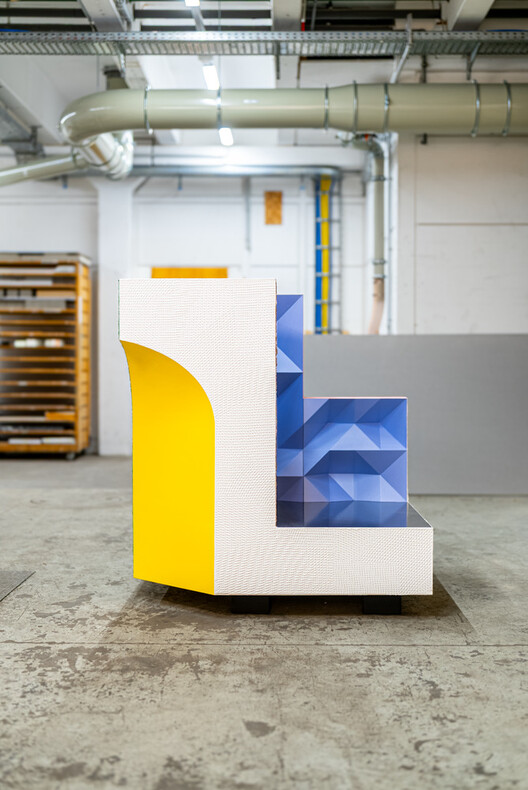 Courtesy of StoCarbonSpace: Designing with Carbon from the First Sketch
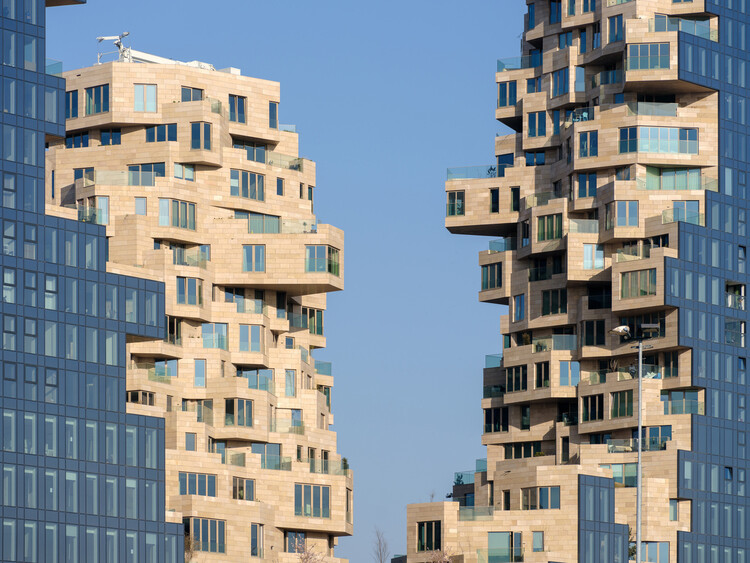 Valley Towers / MVRDV. Image © Ossip van Duivenbode
This article is part of the ArchDaily Topic: Year in Review, proudly presented by GIRA.
GIRA sets the standard where architectural design meets intelligence. From the defining moments of 2025 to the innovations shaping 2026, we create smart solutions that elevate living and working environments with timeless aesthetics. Join us in shaping the future of architecture and interior design — where vision becomes reality.
Every month we explore a topic in-depth through articles, interviews, news, and architecture projects. We invite you to learn more about our ArchDaily Topics. And, as always, at ArchDaily we welcome the contributions of our readers; if you want to submit an article or project, contact us.