

Familiar camera hardware
The camera system on the Poco M8 Pro is made up of bits and pieces we’ve seen on other Pocos and also some Redmis, and who knows where else as well. It’s a straightforward setup with a wide and ultrawide module on the back (no telephoto at this level), joined by one of the most widely used selfies cameras.
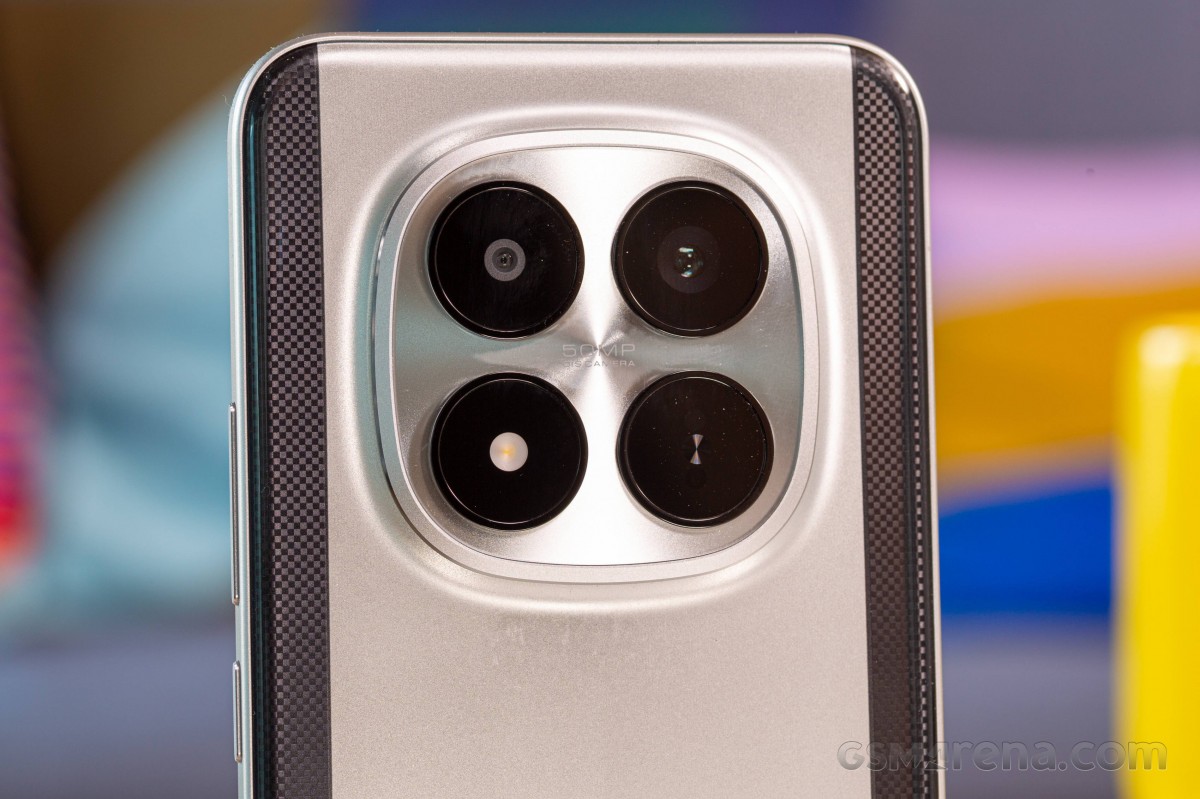
The primary camera on the back uses the Light Fusion 800 sensor, which is a fancy name for what’s reported as the OmniVision OVX8000, itself supposedly a customized version of one of OmniVision’s mid-range sensors (maybe the OV50E). It’s been a staple of Pocos for several generations, found in the F6 Pro, F7 Pro and F7 Ultra, and now the F8 Pro – so it’s a more upmarket imager than what an M-series model would normally get. It’s got a fairly standard 24mm equivalent lens with an f/1.6 aperture and optical image stabilization. The otherwise very similar in hardware Redmi Note 15 Pro+ is based on a somewhat more advanced 200MP 1/1.4″ sensor.
The Poco’s ultrawide camera has a fixed focus lens, predictably. It’s a simple 8MP unit that earns the M8 Pro a checkmark in the specsheet without really elevating it too high into cameraphone territory. It’s also a fairly popular choice among Redmis and Pocos alike.
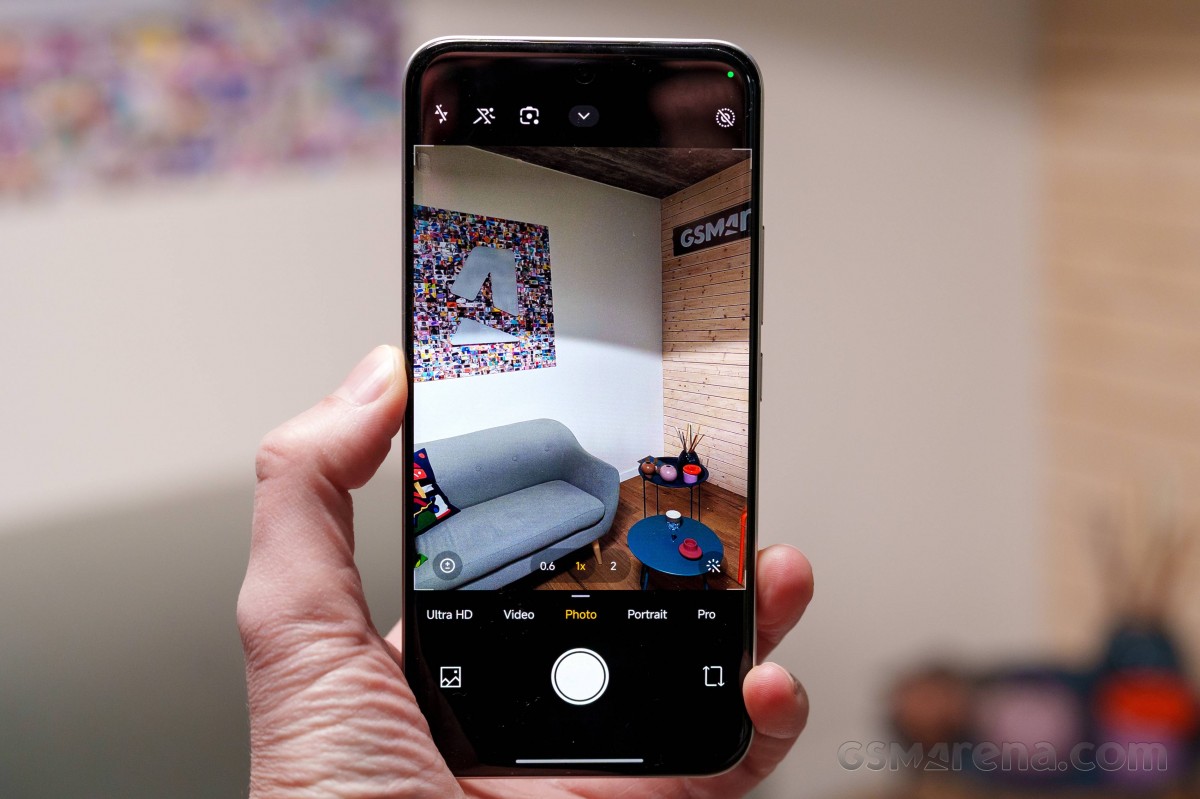
It’s a similar story with the front-facing camera. The 32MP fixed-focus unit has been found in one way or another in dozens of models from various price tiers and we’ve rarely liked any implementation. Let’s see how we like this one.
Wide (main): 50MP OmniVision OVX8000 (1/1.55″, 1.0µm-2.0µm), f/1.6, 24mm, multi-directional PDAF, OIS; 4K@30fps/FullHD@60fps
Ultrawide: 8MP OmniVision OV08F (1/4.0″, 1.12µm), f/2.2, 15mm, fixed focus; FullHD@30fps
Front camera: 32MP OmniVision OV32D (1/3.6″, 0.61µm-1.22µm), f/2.2, 22mm, fixed focus; FullHD@60fps
Daylight photo quality
Main camera
In broad daylight, the Poco M8 Pro’s main camera captures very good images for the class. Dynamic range is great and even in the demanding conditions of these overcast days we’ve been having we got great exposures with little to complain about in shadow or highlight development.
Outdoor white balance is on point with indoor shots getting a bit more mixed results, but we did have to fire up some artificial lighting for some of those, so we’d give the Poco a pass. Saturation is really likeable too.
Detail is very good overall, and even though there’s a bit of grit in the darker areas, we wouldn’t be too worried about it.
Some decent closeups are also possible with the main camera – it’s no ‘macro’, but it’s not half bad.











Daylight samples, main camera (1x)
People shots turn out good as well. Skin tones look lively and natural, facial detail is rendered well. The Portrait mode’s blur action is good for the most part, but there’s a bit of a softening when it comes to subject detail. Again, less than ideal white balance in the first scene with the artificial lighting, but it’s fixable if needed.




Human subjects, main camera (1x): Photo mode • Portrait mode
The full-res mode doesn’t bring anything to the table in terms of detail, but it does mean narrower dynamic range, so we can’t see it being of much use.








Daylight samples, main camera (1x), 50MP
The 2x zoom results may not be pin-sharp, but they do offer pretty decent quality. Close-ups are also not half bad. For what it’s worth, we wouldn’t say the 200MP main camera on the Redmi Note 15 Pro+ is any better at 2x.











Daylight samples, main camera (2x)
People shots at 2x are pretty good in Photo mode when you have good lighting, and less so in Portrait mode or in dimmer settings. The better perspective of this zoom level could still make it worthwhile, even if absolute quality isn’t top-notch.




Human subjects, main camera (1x): Photo mode • Portrait mode
Since we mentioned the 2x performance in comparison with the Redmi Note 15 Pro+, we’ll also say that the Poco’s 4x zoom results aren’t nearly as good as the Redmi’s – finally, the Note 15 Pro+’s extra resolution pays off. That said, the Poco doesn’t have a 4x shortcut in the viewfinder (the Redmi does), so in a way, you’re not getting any false promises.








Daylight samples, main camera (4x)
Ultrawide camera
The ultrawide camera is an unassuming piece of kit and if you approach it not expecting much, you shouldn’t be disappointed. Its photos are on the soft side and detail looks like it’s been applied with a paintbrush. Dynamic range is pretty good though, and color rendition is also not giving us much ground for complaint.








Daylight samples, ultrawide camera (0.6x)
Selfies
The Poco’s selfie camera is one of those ubiquitous 32MP units and it captures relatively unremarkable shots, as is typically the case. Sharpness is pretty meh, and even if you were to downscale the needlessly high-res files, things don’t get much better. On a positive note, dynamic range is good and skin tones are also looking nice.







Selfie samples
Low-light photo quality
Main camera
The Poco M8 Pro’s main camera captures good photos at night. It’s got excellent dynamic range and we’re looking at well developed shadows and highlights even in difficult conditions – particularly dark or contrasty scenes. The auto white balance is dependable and colors generally likeable, if a touch conservative with the saturation. Sharpness is more like so-so – these are certainly not the sharpest images we’ve seen, but they’re not too bad either. The Redmi Note 15 Pro+ has a minor advantage in sharpness, but is otherwise very similar.







Low-light samples, main camera (1x)
2x zoom shots at night maintain great global properties, while detail can be described as acceptable – there can be a somewhat digital, almost pixelated, quality to it. It’s at this zoom level that the Redmi picks up a more tangible advantage in most conditions though it can be a bit harsher with its highlights, so 200MP isn’t necessarily better than 50MP.







Low-light samples, main camera (2x)
As established, the Poco doesn’t have a 4x shortcut in its viewfinder, but here’s a set of low-light shots for completeness sake. For what it’s worth, 4x zoom shots are slightly less bad on the Redmi than they are on the Poco, but neither will get you nighttime photos that you’d actually like at that zoom level.







Low-light samples, main camera (4x)
Ultrawide camera
The ultrawide camera’s low-light results are quite soft, but that was the case during the day already, so no surprises there. Dynamic range is pretty great though, even at night, and color rendition is also very good.







Low-light samples, ultrawide camera (0.6x)
Photo quality verdict
The Poco M8 Pro is no camera powerhouse, but it delivers adequate performance in stills. The main camera’s sharpness is very good at its native focal length both during the day and at night, with 2x zoom being good in daylight and acceptable after dark. The ultrawide is on the soft side in all lightning conditions. Both rear cameras offer great dynamic range across the board and generally good color rendition. Selfies are just about average for the class.
Video quality
The Poco M8 Pro’s main camera can record video up to 4K30 but it can also do 1080p at 60fps. The ultrawide is capped at 1080p30 with no 60fps capability even at a lower resolution (720p is still an option at 30fps). The selfie camera does offer 1080p at 60fps, for what that’s worth.
There’s the usual selection of codecs – h.264 for wider compatibility, h.265 for smaller files. There’s no HDR video recording capability.
You can check out the playlist below, which includes multiple video samples.
The 4K30 footage from the main camera at 1x is actually very good, with nice detail, wide dynamic range and lively colors. Zooming in to 2x, you could still get decent clips. The ultrawide’s footage, on the other hand, is much too soft for our liking.
After dark, the main camera maintains its composure and delivers quite good results for the class, with wide dynamic range, great colors and decent sharpness. The 2x zoom clips are usable in a pinch if you don’t look too closely, while the ultrawide’s low-light footage belongs in the garbage.
Video quality verdict
The Poco M8 Pro’s video capture capabilities are pretty basic, with no HDR recording and 4K resolution only available on the main rear camera. Still, that main camera’s doing great at its native zoom level both during the day and at night, and stabilization is alright too. But that’s about it – 2x zoom is decent at best, while the ultrawide is nearly useless for video.