
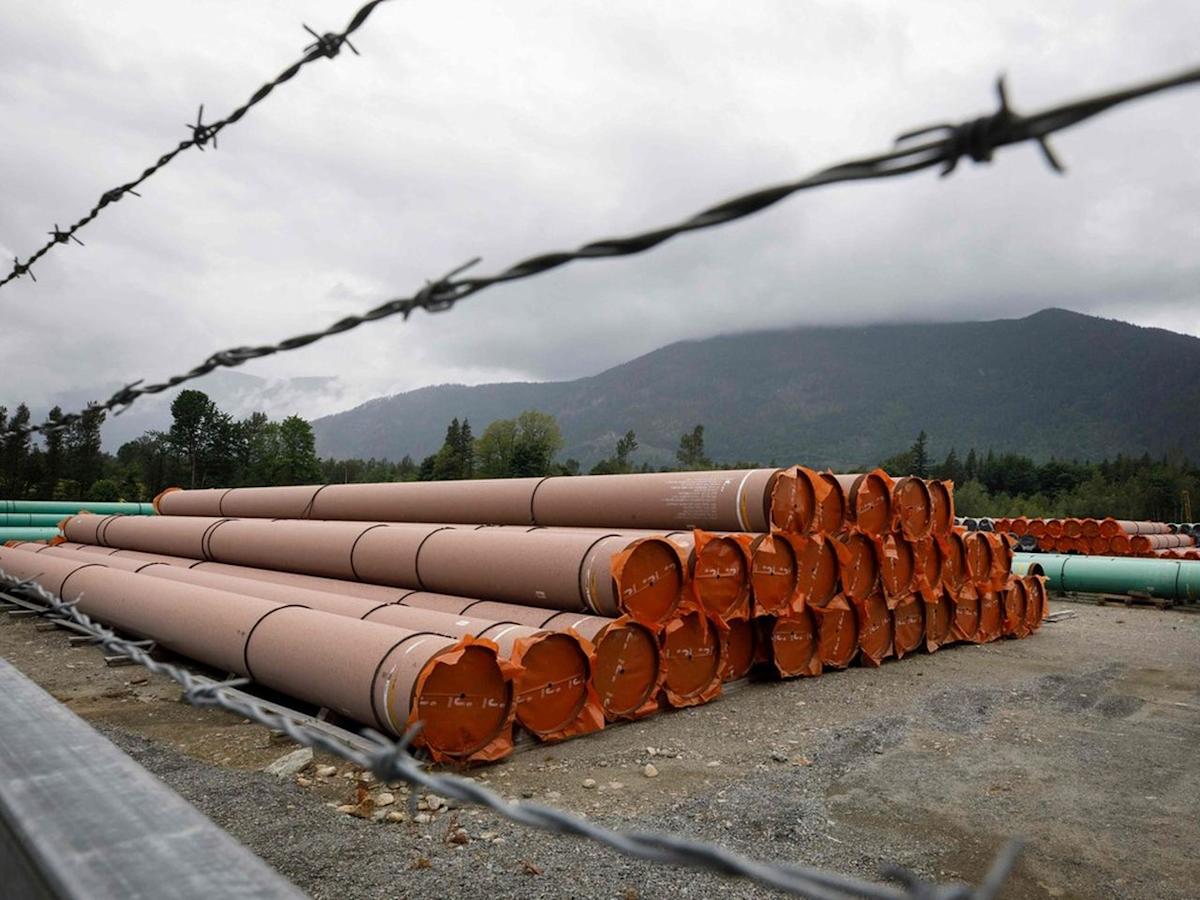
 Government subsidies don’t eliminate project risk, they merely pass it on to taxpayers, who should insist governments weigh risks carefully before burdening them this way. (Credit: COLE BURSTON/AFP via Getty Images/Postmedia files)
A recurring theme in FP Comment concerns the risks governments take when they invest public funds in projects traditionally undertaken by private investors. Prime Minister Mark Carney’s efforts to make Canada an “energy superpower” by endorsing and in some cases funding major new energy infrastructure are a case in point.
Carney’s goals, if taken at face value, stand in stark contrast to Liberal policies under Justin Trudeau’s leadership. In the Trudeau years, by one estimate, federal government decisions cost Canada almost 30 major energy infrastructure projects — including oil and gas developments, pipelines, LNG plants, ports and mines that were either cancelled or significantly delayed as a direct result of federal government decisions — with an aggregate value of hundreds of billions of dollars. Yet now the Carney government and its new Major Projects Office say federal funding and faster regulatory review will accelerate energy projects deemed to be in the national interest.
This new gung-ho approach may be as unwise as the Trudeau government’s investment aversion. Energy markets are inherently risky. Investors must deal with the uncertainties of markets, policies, geopolitics, technologies and more.
Prices for oil, natural gas and coal are set through the interaction of international supply and demand. In spite of efforts to reduce oil use and related greenhouse gas emissions, global demand for oil and gas liquids like propane and condensates has grown by an annual average of more than one million barrels per day since 2012. And production has more than kept pace.
In fact, despite production cuts by OPEC and sanctions on Russia and Venezuela, the world faces an oil glut. The U.S. Energy Information Administration expects the price of North Sea Brent Crude to fall to about US$52 per barrel this year. That will stress producers in Canada and elsewhere, reducing both the private funds available for capital investments and the royalties and taxes producers will pay to governments. Geopolitical developments involving Russia, Iran, Venezuela and others could have important impacts on the oil industry investment outlook, as well.
As for natural gas, North American prices that fell from historic highs in 2022 have recovered and are running at about US$4.50 per million BTUs. But gas prices are especially vulnerable to variation due to supply conditions in the United States, our only export market.
On top of all this market uncertainty, Canada’s climate policies add further risk. The Trudeau government aimed to reduce the use of fossil fuels for electricity generation while at the same time largely electrifying the economy. Doing so would replace energy sources mainly produced by private companies with those produced by government utilities. The cost of generating renewable energy has been declining but the costs of transmitting, distributing and storing it remain very high. Utilities and the governments that own and regulate them routinely pass the much higher costs of low-emissions electricity on to consumers. In Canada, our emissions-intensive industries — mining, smelting and manufacturing — cannot remain competitive if they have to pay much more for electricity than their competitors in other countries, especially the United States.
Probably the largest uncertainties in energy involve the effects of rapid technological change: which existing technologies will be made obsolete by new discoveries? Many innovations are in play: hydrogen, carbon capture, various battery technologies, including the lithium-ion ones so favoured by governments, but also solid-state, sodium-ion and lithium-sulfur batteries that either have lower-cost components or much higher energy density.
In his efforts to prove how different he is from Justin Trudeau, Mark Carney seems desperate to show that, whatever the risks, his government favours economic development, including precisely the types of projects Trudeau long blocked. But feeling you must act no matter what is not a good frame of mind for making reasoned judgments. A private investor, faced with all the uncertainties to which energy investment is currently subject, would probably be cautious when deciding whether and when to undertake multibillion-dollar investments in pipelines, transmission lines or other remote infrastructure. Government subsidies don’t eliminate project risk, they merely pass it on to taxpayers. Those taxpayers should insist their governments weigh risks carefully before burdening them this way.
Robert Lyman is a retired energy economist.