
If you’re reading this on the web or someone forwarded this e-mail newsletter to you, you can sign up for Globe Climate and all Globe newsletters here.
Good afternoon, and welcome to Globe Climate, a newsletter about climate change, environment and resources in Canada.
Today we’re taking a step away from Earth. We’re shifting focus to the science of space, and one mission happening right now that researchers hope will mean that atmospheric conditions on exoplanets can be studied in a meaningful way – and maybe we can learn more about our planet while we’re out there.
Now, let’s catch you up on other news.
Noteworthy reporting this week:Global co-operation: Trump pulls U.S. out of 66 international organizations, including UN climate treatyWater: Northern Ontario First Nation begins evacuation amid critical issues with water treatment plantOpinion: Addressing the health impacts of plastics is becoming more urgent, writes André PicardAgriculture: Canadian agtech firm using AI to help swine, chicken farmers keep track of animal feedHome of the week: An eco-friendly home on Nova Scotia’s Mahone Bay with a giant-sized dockFood and drink: How one of Spain’s top winemakers is preparing for wine’s futureA deeper diveOpen this photo in gallery:
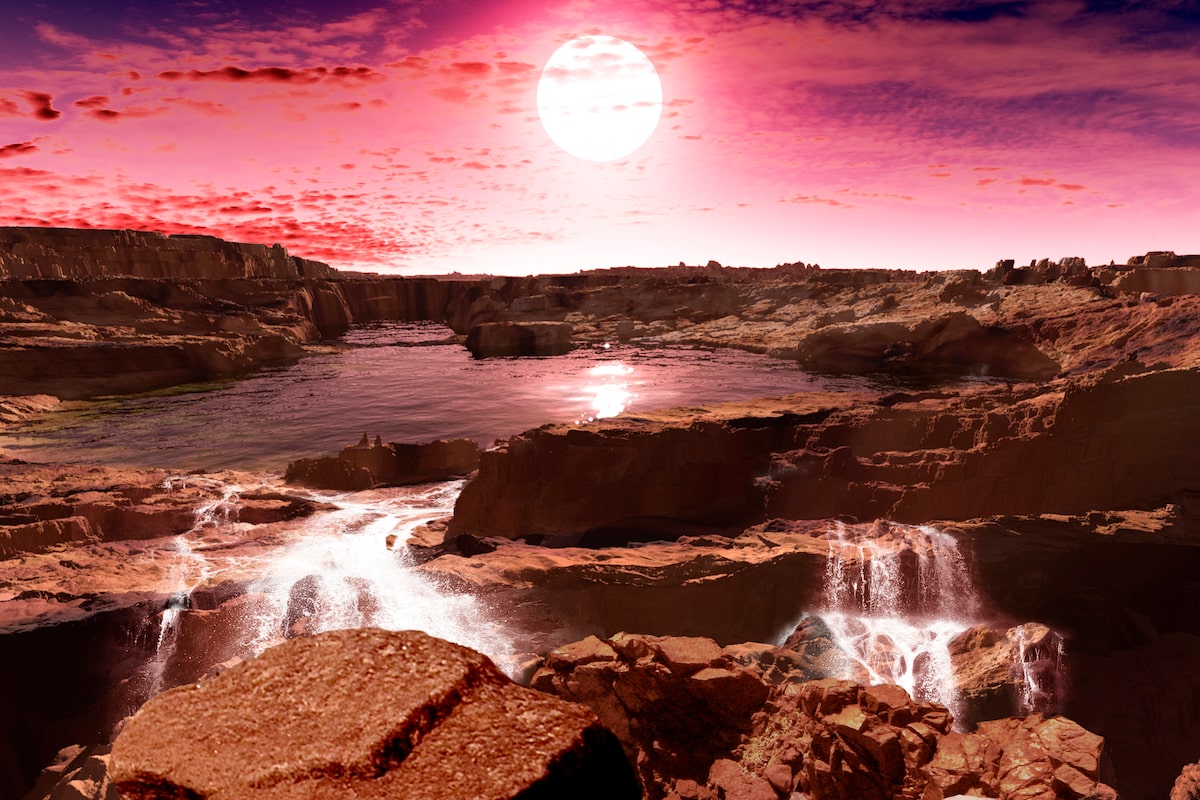
Illustrators can only imagine the surface of L 98-59 b, a rocky exoplanet orbiting a red dwarf star, but NASA’s new Pandora mission hopes to get more evidence to deduce what’s really out there.Science Photo Library/Reuters
Pandora the explorer
For this week’s deeper dive, a look at the research that is studying the environment of other planets – and one project that can help us learn about our own.
A NASA mission just recently hit the space waves with the purpose to help answer one of the biggest mysteries of all: Is there life out there?
Pandora is a satellite built to analyze the atmospheres of planets orbiting distant stars. It hitched a ride to space on Sunday aboard a Space X rocket.
The question of life on other worlds has become a serious area of research, writes science reporter Ivan Semeniuk. Over the past 30 years technology has enabled the detection of thousands of such exoplanets far outside our solar system.
Up until now astronomers (and even the mighty James Webb Space Telescope) faced a barrier that makes it difficult to say with confidence what these distant worlds are like – the data about other planets is often hard to separate from the busy and unpredictable flickering of the stars those planet orbit.
One important piece of information that can be affected in this way is whether or not a planet’s atmosphere contains water and other molecules that are necessary for life.
One of Pandora’s spheres of interest is WASP-69b, a Jupiter-like ‘tadpole planet’ with a tail of gas.Reuters
Pandora is a surprisingly small spacecraft. In orbit, the microwave oven-sized machine will essentially operate as a solar-powered telescope, equipped to perceive its targets in a way that no other exoplanet mission can.
Today, Jason Rowe, a Canadian science team member with Pandora and professor at Bishop’s University said that the probe appears to be in good health after communications were established overnight.
Also hitching a ride on the same flight yesterday was Toronto-based aerospace company Kepler Communications Inc. which has pioneered the use of optical communications in space. They launched 10 satellites, making it operator of the largest fleet of Canadian-built spacecraft to date.
Kepler aims to improve real-time awareness of conditions around the globe. The satellites’ AI-powered processing enables the information to be assessed and transmitted in real time, with the optical communication links between them enabling continuous coverage.
One example of application? According to Mina Mitry, Kepler’s chief executive officer, the satellites carry a client’s thermal imagers that can scan the landscape below to detect and monitor the development of wildfires.
What else you missedOpinion and analysis
Vancouver must go wild – for the good of us all
The dizzying pace of change in Vancouver is disorienting for human and avian inhabitants alike.
— Margaret Munro, Vancouver-based freelance journalist.
Changes to Canada’s anti-greenwashing law will increase risk for companies
Clear, credible sustainability communication is not a regulatory burden – it is a competitive advantage. But only if it can withstand scrutiny.
— Conor Chell, partner and national leader of sustainability, environment and regulatory law at KPMG Law LLP.Business and investing
Alberta argues claims of unfair treatment of Montana electricity providers
Alberta is disputing the Trump administration’s claim that the province is treating Montana power providers unfairly, a sore point that has been singled out ahead of the renegotiation of the North American free-trade agreement.
In its original complaint, Berkshire Hathaway Energy Canada accused Alberta’s grid operator of limiting electricity imports from Montana, thereby jeopardizing renewable power investment in the state and potentially costing Alberta consumers billions of dollars.
Elsewhere:
The Climate ExchangeWe’ve launched the The Climate Exchange, an interactive, digital hub where The Globe answers your most pressing questions about climate change. We have been collecting hundreds of questions and posing them to experts. The answers can be found with the help of a search tool developed by The Globe that makes use of artificial intelligence to match readers’ questions with the closest answer drafted. You can ask a question using this form.Photo of the weekOpen this photo in gallery:
People wait to obtain water during water shortage in Ankara, Turkey on Jan. 8, 2026. Because of this shortage, some neighbourhoods are experiencing water cuts for several hours a day, and many residents are forced to wait in line at public fountains to fill their containers.ADEM ALTAN/AFP/Getty Images
Guides and ExplainersCatch up on Globe Climate
We want to hear from you. E-mail us: GlobeClimate@globeandmail.com. Do you know someone who needs this newsletter? Send them to our Newsletters page.