
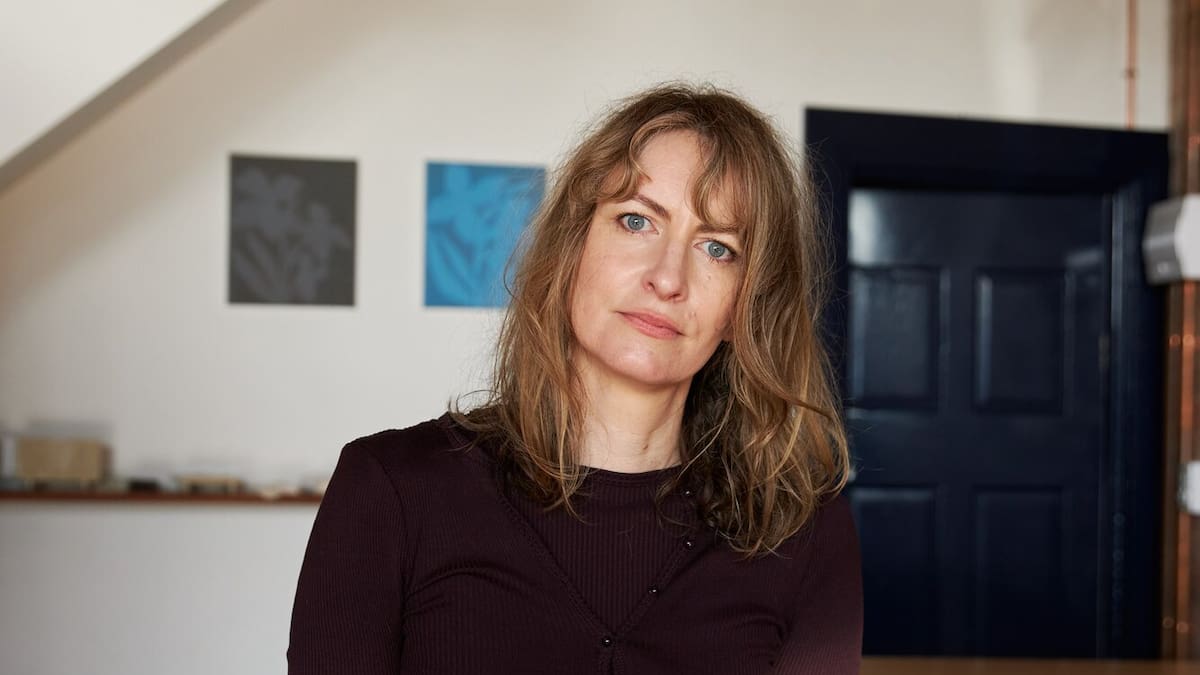
The designer talks to Madeleine Crutchley about her move to a bigger stage, the ins-and-outs of making local production work and embracing positivity in the next chapter.
Kate Megaw of Penny Sage designs for New Zealanders who want to dress smart.
She embraces natural, breathable fibres, blends
wonderful fabrications with wearable cuts, and aces academic plaids.
When the label first launched, journalist and editor Zoe Walker Ahwa called the designer “quietly intelligent”. It’s an apt characterisation and one that has stuck – Penny Sage pieces are clever, easy-to-wear and always interesting. Megaw is an achiever who affects modesty often and works hard behind closed doors.
This year will be her 14th in business. It’s a fresh era for the label. In October, Megaw made the move from a smaller space in Kirk St, a studio tucked around a corner and with minimal signposting.
Now, Penny Sage sits on a historic Grey Lynn block alongside fellow new generation New Zealand designers Dominique Healy and Rachel Mills.
Renovations at her last location stirred a craving for change that continued to build in 2025.
“It almost spurred me to move on because it was so fun and inspiring.”
Photo / Greta van der Star
The designer was unsure what this change might look like. Design on a smaller scale? Try something bigger?
Then, Megaw visited designer Thom Morison in the Great North Rd spot, as he was winding down his namesake label in April. She queried who would be picking up the lease – he passed on quiet encouragement that she could. After a few weeks of rumination, she took up the offer.
“I always wanted a storefront.”
The store is wooden and warm, produced by Hannah Broatch and Mason Rattray of Hatch Workshop. Artworks by collaborator Briana Jamieson hang on the walls and the “spooky” florals also haunt velvet garments stocked on the racks (artist collaborations are frequent for Megaw). A central table presents accessories made from off-cuts and slow production values.
Photo / Greta van der Star
We’re tucked in the workroom upstairs – a space that is increasingly rare to have in-house in Tāmaki Makaurau Auckland. There is a huge bench in the centre of the room, rolls of fabric piled underneath. Under the window, which frames a glimpse of the city skyline, sewing machines and spools lie in anticipation. Coffee in tulip cups plucked from Florets next door clink as we chat.
This new location on Great North Rd, among the busiest streets in the city, will introduce Penny Sage to people beyond those trekking the back streets. Put simply, it’s a bigger stage. Why this spot? And why now?
The roomy second-floor workroom was a draw. But, it’s also reflective of an attitude shift Megaw is sensing in herself and her surrounds. She references a sense of momentum but also a want to buy in and support the local fashion scene.
“I guess it’s our way of being like, we believe in this city and we want to be a part of it.”
Photo / Greta van der Star
Making the most is a familiar idiom for Megaw. She’s worked in local fashion since the 2000s. At Miss Crabb, she was a workroom assistant – Kristine Crabb also invited the budding “clothes-obsessed” designer to retail early designs in store.
“Kristine really took a chance on me – when I think back, I was really underqualified and she was so open. She was always really supportive and I think that gave me a chance to explore and try it out. I was so naive … I’m so grateful for that time.”
Penny Sage look from the Greathounds show at New Zealand Fashion Week Kahuria 2025.
Then, a “serious” job as a cutter and pattern maker at Karen Walker, where she worked closely with head pattern makers and mentor Jean Peters.
In between, there was an internship in Belgium for designer Christian Wijnants. It was “amazing” but also affirming for what Aotearoa had to offer.
“It really opened my eyes to the international fashion industry and made me realise, too, that what was happening here was quite special.”
She launched Penny Sage in 2011 with the help of a New Zealand Trade & Enterprise grant. This, Megaw says, was pivotal.
“I would never have been able to do it without that. I’ll definitely be advocating for them, for the future generation.”
“It’s definitely a bit of a forgotten industry.”
Megaw is quick to acknowledge the challenges of working in New Zealand fashion right now. Last year saw big closures and the shrinking of related industries (production, media and PR). Materials are increasingly difficult to get. Zips, as Megaw points out, are no longer made in Aotearoa – order wait times have increased from one to six weeks, meaning forward planning needs to be more rigorous.
Photo / Greta van der Star
“Over time, I’ve learned to adapt … I’ve just watched the industry shrink before my eyes.”
But Megaw works smart. Many of her garments are made from deadstock sourced through local suppliers and she’s assured of the quality of any imported materials, like cotton shirting from Japan. To create points of difference, small batches are custom-dyed – the summer collection has a ‘dahlia’ pink check coloured in Australia.
“I’ve just become so used to working with what we have. So, if there’s these ideas of things I want to make, they change a bit because of what I end up sourcing.”
“I’ve become really accustomed to [the environment]. I think because I’ve always been reasonably small and able to be agile in that way – I think I’m a really good problem solver, because I’ve had to be, to survive.”
For spring and summer, Megaw exhibited this resourcefulness in the fashioning of champagne celebration for everyday wear. In sourcing for the collection, she came across deadstock fabrics destined for occasion wear. Her touch made them wearable.
There were pairs of high-shine shorts, rendered in chartreuse, sage green and amber orange. A mini skirt with glimmering stripes to contrast emerald green. There were Penny Sage-specific takes on dressing up too; a mini dress in orange-aqua taffeta named for the 1995 film Party Girl.
It’s fizzy and uplifting, and the response has been the same.
“Maybe it is to do with the economy and everyone feeling a bit drab – but people have said they love that it’s got texture and shine,” Megaw says of a maxi dress that begins with a rib knit bodice and concludes with a plummy taffeta skirt.
In defining her approach to Penny Sage now, Megaw says she’s seeking garments that feel grounded.
“I try and stay really honest when I’m designing. I can imagine somebody, either a customer or a friend [will wear it] – it feels like real life, somehow.”
There are other inspirations. Her mother’s wildflower garden in the Pukeokahu countryside supplies a love of colour and other sensory delights. Informal film study provides cinematic scope – those gleaming shorts are named ‘Delphine’ for the character in French 1986 film Green Ray.
The largest influence comes during hyper-local production process. Megaw runs the sampling and works closely with pattern makers, cutters, knitters and machinists, who are all based within 30km in Auckland (some working from home). This proximity creates a really dynamic process that informs design – there’s room to experiment and play, and if something isn’t working, it changes quickly.
Megaw also drives pieces from maker to maker, encapsulating the cottage industry of fashion in Aotearoa. The designer is humbled by those professionals but also worries about the future of production.
“It’s pretty amazing. Most of the people we’ve been working with since we started … There’s not very many young people doing those bits.
“It’s so skilled and it’s such an underappreciated set of skills.”
Photo / Greta van der Star
Making design and production in New Zealand work now means embracing and enduring challenges. Working smart and hard. Showcasing courage and enthusiasm. Megaw’s doing it all.
“I feel like we’re really coming out of something, especially in our industry. [I’m] just believing in it and trying to be positive and making things that feel positive.”
More local fashion
From city-centric style to slow fashion practices.