
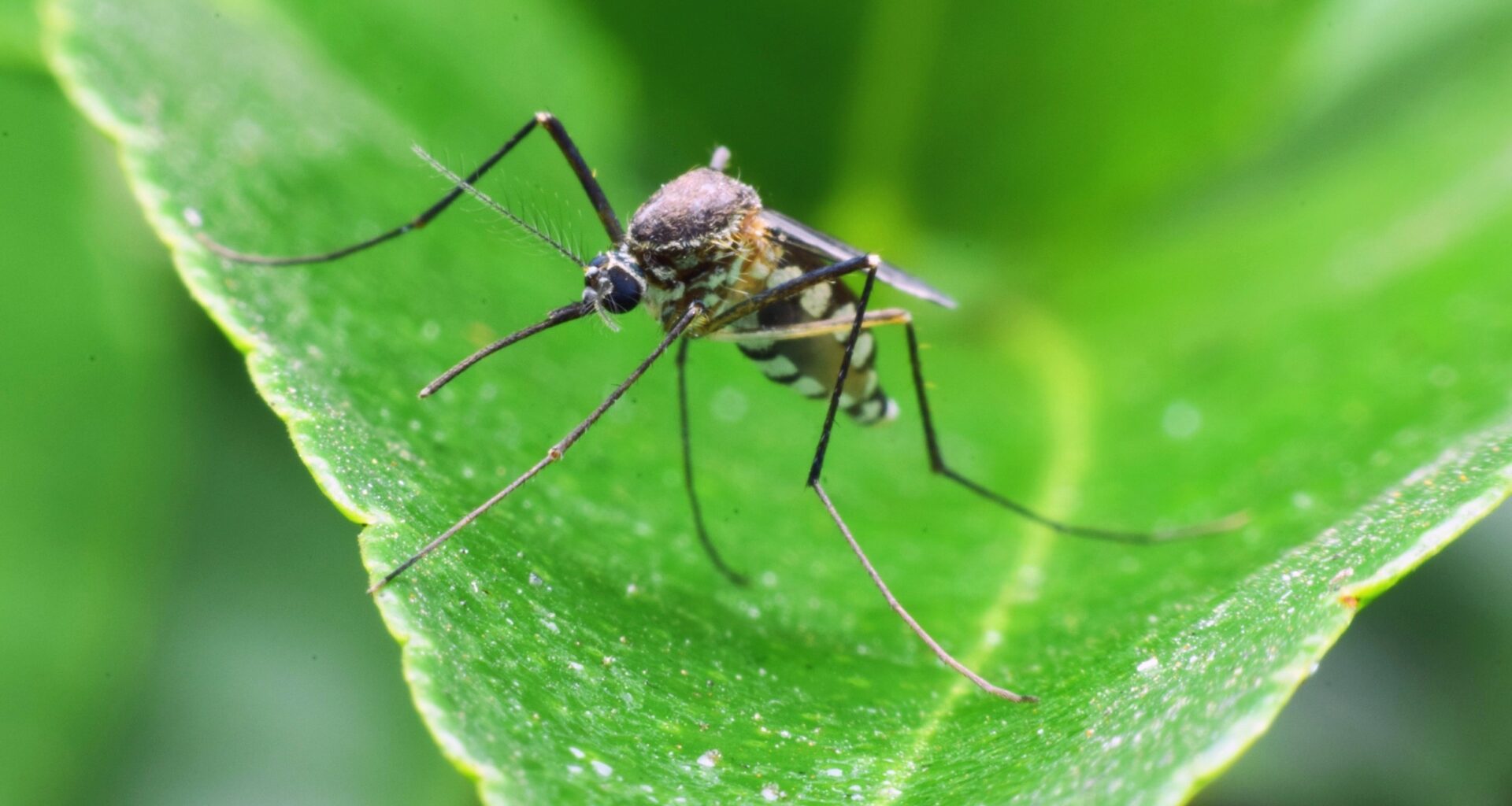
In the shrinking fragments of Brazil’s Atlantic Forest, mosquitoes aren’t just biting whatever animal is nearby.
A new study suggests many of them are actively feeding on people, even in places where plenty of wild hosts should still exist. That shift matters because it could make it easier for viruses to move from forest ecosystems into nearby communities.
The research was focused on mosquito blood meals collected inside two protected reserves in the state of Rio de Janeiro.
The team found that, among the meals they could identify, human blood dominated – an unsettling signal in a region already known for mosquito-borne diseases.
An increasingly fragmented forest
Stretching along Brazil’s coastline, the Atlantic Forest holds extraordinary biodiversity, from birds and amphibians to mammals and fish.
But decades of human expansion have carved it into scattered remnants. Only about a third of the original forest area is still intact. That kind of fragmentation doesn’t just remove trees. It disrupts the entire food web.
Animals lose habitat, move away, or disappear locally. And when the usual hosts become rarer or harder to find, blood-feeding insects may start taking the easiest option left.
“Here we show that the mosquito species we captured in remnants of the Atlantic Forest have a clear preference for feeding on humans,” said study senior author Jeronimo Alencar, a biologist at the Oswaldo Cruz Institute in Rio de Janeiro.
“This is crucial because, in an environment like the Atlantic Forest with a great diversity of potential vertebrate hosts, a preference for humans significantly enhances the risk of pathogen transmission,” noted Dr. Sergio Machado, an expert at the Federal University of Rio de Janeiro.
What mosquitoes were feeding on
To see what mosquitoes were feeding on, the team set light traps in two natural reserves: Sítio Recanto Preservar and the Guapiacu River Ecological Reserve, both in Rio de Janeiro state. They captured mosquitoes in the field, then brought them to the lab.
There, they focused on engorged females – the ones with visible blood in their abdomens. From those blood meals, they extracted DNA and sequenced a specific gene used as a kind of species “barcode.”
By comparing those barcodes to reference databases, they could match the blood inside the mosquito to the vertebrate it came from.
This approach doesn’t just guess based on what animals live nearby. It gives a direct record of what the insect actually fed on.
A strong pull toward humans
In total, the researchers collected 1,714 mosquitoes from 52 species. Only 145 females were engorged with blood, and the team could identify the source for 24 of those meals.
Even with that limited subset, the pattern was striking. Of the identifiable blood meals, 18 came from humans. The remaining meals came from a small mix: one amphibian, six birds, one canid, and one mouse.
A few mosquitoes had mixed meals, which can happen when an insect feeds more than once or is interrupted mid-bite.
One mosquito identified as Cq. venezuelensis had both amphibian and human blood. Mosquitoes in the species Cq. fasciolata showed mixed feeding too – one had fed on both a rodent and a bird, and another on both a bird and a human.
To the researchers, this points to mosquitoes behaving flexibly, but with a strong pull toward human hosts in these forest remnants.
Forest mosquitoes targeting humans
The team argues there isn’t a single simple reason that forest mosquitoes would target human blood. Some mosquitoes may have evolved tendencies toward certain hosts, but real-world feeding often comes down to opportunity.
“Mosquito behavior is complex,” Alencar said. “Although some mosquito species may have innate preferences, host availability and proximity are extremely influential factors.”
Thus, even if a mosquito species can feed on many animals, it will often choose whatever is easiest to find and safest to bite. As humans move into forest edges and animals retreat, people can become the most reliable option.
“With fewer natural options available, mosquitoes are forced to seek new, alternative blood sources. They end up feeding more on humans out of convenience, as we are the most prevalent host in these areas,” Machado explained.
Implications for public health
A mosquito bite is not just an annoyance in regions where multiple viruses circulate. In the areas studied, mosquitoes can transmit pathogens linked to serious disease, including Yellow Fever, dengue, Zika, Mayaro, Sabiá, and Chikungunya.
These infections can range from acute fever and pain to complications that linger long after the initial illness.
The bigger worry is what happens when forest dynamics change. If mosquitoes that normally feed across many wild species increasingly feed on humans, the bridge between wildlife pathogens and human outbreaks can become easier to cross.
That doesn’t guarantee an outbreak. But it can raise the odds, especially near the forest edge where people, mosquitoes, and displaced wildlife overlap.
That’s why the team frames mosquito “foraging behavior” as more than a biological curiosity. Understanding who mosquitoes bite helps predict where diseases are most likely to spill over and spread.
More research is needed
The researchers are careful about what the study can and can’t say. The proportion of engorged mosquitoes was relatively low – just under 7% of all captured mosquitoes.
Among those with blood, the team could only identify the host in about 38% of cases. That doesn’t invalidate the pattern they found, but it does show how hard this work is.
Blood meals degrade quickly, and mixed meals can be difficult to resolve with methods that aren’t optimized for multiple-host detection.
The team suggests future research should collect larger datasets and use techniques better suited to untangling mixed blood meals, so that more feeding events can be identified and compared across seasons, habitats, and degrees of forest disturbance.
What this could mean for prevention
Even with its limits, the study has practical value. If mosquitoes in a given forest fragment are frequently feeding on people, that’s an immediate warning signal for disease surveillance.
The research also helps public health teams decide where to focus monitoring and prevention efforts, rather than spreading resources thinly.
“Knowing that mosquitoes in an area have a strong preference for humans serves as an alert for transmission risk,” Machado pointed out.
“This allows for targeted surveillance and prevention actions,” Alencar added. “In the long term, this may lead to control strategies that consider ecosystem balance.”
As the Atlantic Forest continues to shrink and fragment, the boundary between “forest disease” and “human disease” can get thinner.
And sometimes, that shift starts with something as simple – and as dangerous – as who a mosquito decides to bite.
The study is published in the journal Frontiers in Ecology and Evolution.
—–
Like what you read? Subscribe to our newsletter for engaging articles, exclusive content, and the latest updates.
Check us out on EarthSnap, a free app brought to you by Eric Ralls and Earth.com.
—–