
In Argentina, nationally, from Epidemiological Week 1 to Epidemiological Week 53 of 2025, 86 confirmed cases of hantavirus were reported, of which 28 died, representing a case fatality rate of 33.6%.
However, if you look at the current epidemiological season 2025-2026 (Epidemiological Week 27/2025 to Epidemiological Week 26/2026), 52 hantavirus cases have been reported, including 9 in the last week of 2025, placing it at the alert threshold compared to expected cases in previous years.
The largest proportion of cases for the current season (July to December 2025) is found in the Central region (62%), followed by the Northwest region (29%) and the Southern region (8%). The highest cumulative incidence is observed in Salta and Entre Ríos.
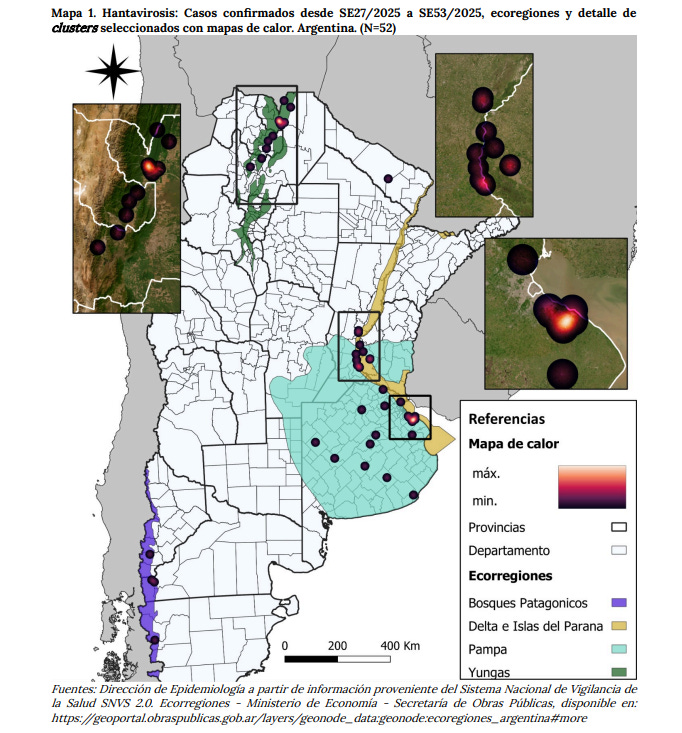
The description of cases by ecoregion allows for the identification of specific risks in each region, determined by the ecology and behavior of the reservoirs and by the exposure patterns associated with human activities.
The distribution of hantavirus cases is associated with that of the reservoir, although the distributions of rodents in general are more extensive and can be considered the maximum potential endemic area.
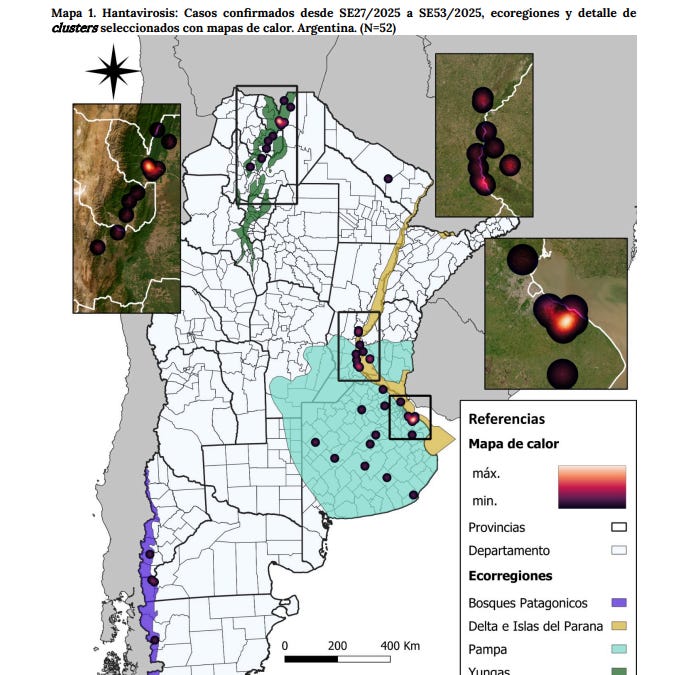
In northwestern Argentina (NOA), the 13 cases correspond to departments located in the Yungas region. In the Southern region, the cases are located in the Patagonian Forests (4 cases). In the Central region, the highest concentration (19 cases) is linked to the gallery forest of the Paraná Delta and Islands, which includes the Samborombón wetlands and areas near La Plata.
Furthermore, 7 cases from the interior of Buenos Aires province are associated with the Pampean ecoregion, and one case is in the Chaco region (Formosa).
Nationwide, the median age for confirmed cases this season was 34 years, with 74% (32) of the cases concentrated among those aged 20 to 49 years. These age groups also had the highest cumulative incidence rates per 100,000 inhabitants during the period.
Between weeks 27/2025 and 53/2025, 92% of cases (n=48) presented information on signs and symptoms, the five most frequent being: fever greater than 38.5°C (94%), myalgia (69%), headache (56%), arthralgia (52%), and vomiting (38%). Each case may present one or more signs or symptoms.
Between weeks 27/2025 and 53/2025, 17 deaths were reported, with a median age of 40, which is higher than in previous seasons, and a case fatality rate of 32.7%, also higher than in previous seasons. The highest fatality rate was observed in the 50-59 age group (75%). The only child under 10 years old diagnosed with the disease died.
Health officials say given that the highest incidence of this disease is concentrated between October and May, it is important to strengthen prevention measures during the coming months. These include cleaning and disinfecting homes with bleach, prolonged ventilation of enclosed spaces, rodent control, and proper handling of dead animals, since infection can occur through the inhalation of particles present in the environment, even without direct contact with the animal. If you experience a fever higher than 38.5°C (101.3°F), muscle pain, joint pain, headache, and vomiting, and have had possible contact with rodents, areas where these animals live, or with confirmed cases of hantavirus, it is essential to consult the health system immediately.