
Opinion: Each new year brings a new round of predictions about which sectors will surge in the year ahead. We’re told to expect more AI, more climate tech, more biotech, more digital health. These lists give the impression that economic change follows neat industry lines.
But New Zealand’s experience in recent years tells a different story. The biggest challenges, and the biggest opportunities, do not lie within sectors, but in the gaps between them. These are spaces where systems fail to align: where responsibility is blurred, information doesn’t flow, and no single institution has a complete view. These gaps are becoming a strategic frontier for entrepreneurs and firms willing to operate across boundaries.
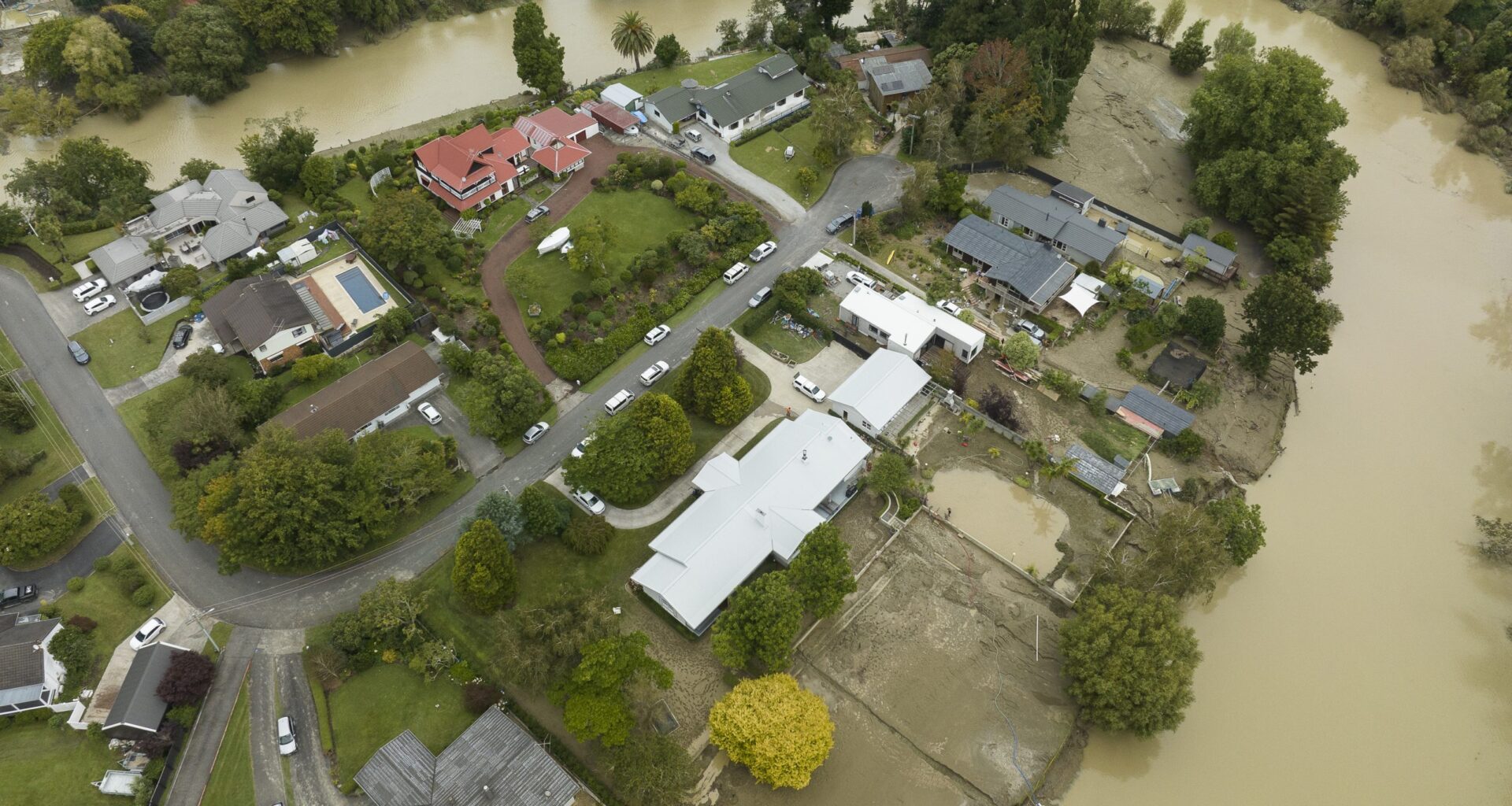
Climate resilience offers an example. After Cyclone Gabrielle, it became obvious that coordinating the response was painfully challenging. Councils, central government, insurers, infrastructure providers, emergency management bodies and community organisations were each responsible for part of the system but accountable for little beyond their own boundaries. Decisions that required multi-party coordination often stalled in the spaces where there was no natural owner.
Similar misalignments appear in youth mental health, where schools, primary healthcare, digital platforms, and community services operate on separate tracks.
Workforce participation spans immigration settings, training pathways, childcare, transport and health, yet these levers are rarely aligned.
Housing intersects with health, energy efficiency, climate risk and social wellbeing, but governance remains fragmented. In each case, the gaps between organisations matter as much as the systems themselves.
These gaps have grown as society has become more complex. In my opinion, they now represent some of the most significant unclaimed opportunity spaces in the economy.
What makes 2026 a turning point?
First, there’s technological convergence. Artificial intelligence intersects with healthcare diagnostics, education, environmental monitoring and public administration. Emissions data feeds directly into insurance pricing. Housing quality affects hospital admissions. Workforce technologies depend on immigration flows and training systems.
The most significant innovations now emerge where these domains overlap, rather than within any one of them. Yet our institutions remain structurally siloed.
The second is institutional mismatch. Much of New Zealand’s public-sector architecture was designed for problems that were linear, slow and neatly categorised. Reviews of emergency management, infrastructure governance and the broader public service have repeatedly highlighted fragmentation as a critical barrier to effective delivery.
When responsibilities are split, gaps form. These gaps widen as complexity increases, creating friction that no existing agency is mandated to resolve.
The third reason there’s more of an opportunity for entrepreneurs in this area in 2026 is the changing nature of social need. An ageing population, remote and hybrid work, rising inequality, and increasingly fragile households mean that people’s real challenges, from mental health to employability to climate exposure, cut across multiple domains at once. Yet support pathways remain organised around the categories of past decades.
The entrepreneurs who will matter most in 2026 and beyond are not sector specialists. They are boundary-spanning problem-solvers who operate in the interstices. They build solutions either because no one owns the problem or because it falls between institutional mandates. These ventures will translate across systems, knitting together technologies, policies and communities that were not designed to align.
This kind of entrepreneurship is especially important in New Zealand. A country of five million can’t afford the luxury of highly siloed systems. Fragmentation is more visible here. It’s also more costly. But it creates opportunities for those who can connect institutions rather than replicate them.
Research on entrepreneurial ecosystems reveals that in small economies, the ability to bridge structural holes, areas where information, incentives, or responsibilities are misaligned, is a significant driver of innovation.
Because small countries can’t maintain deep specialisation in every domain, system connectors become more valuable than system owners. When gaps become too large for public institutions to navigate, entrepreneurs often step in first.
Yet our policy settings still assume that innovation comes from within sectors. Funding programmes, procurement pathways and regulatory frameworks all require applicants to define themselves as health, technology, education, climate, or housing. Ventures that deliberately span these boundaries often struggle to obtain support because they don’t fit neatly into a category.
If New Zealand wants to unlock innovation in the areas between our well-defined sectors, we will need to change how we recognise and support it. For example, multi-agency procurement and innovation grants could explicitly support cross-boundary solutions rather than forcing applicants into predefined boxes. Universities could train entrepreneurs who are fluent in multiple domains and literate in the institutional logics of different systems.
The interstices economy will not resemble the sector-driven innovation of the past. It will emerge at the boundaries where systems fail: between insurers and councils, schools and health providers, regulators and platforms, climate models and urban design. These are precisely the places where the need is greatest and where established institutions are slowest to act.
As we look to 2026, the entrepreneurs who will make the biggest difference won’t be the ones who choose the right sector; rather, it will be those who choose the right gap.