
asymmetrical volumes shape café by KQI Architect in vietnam
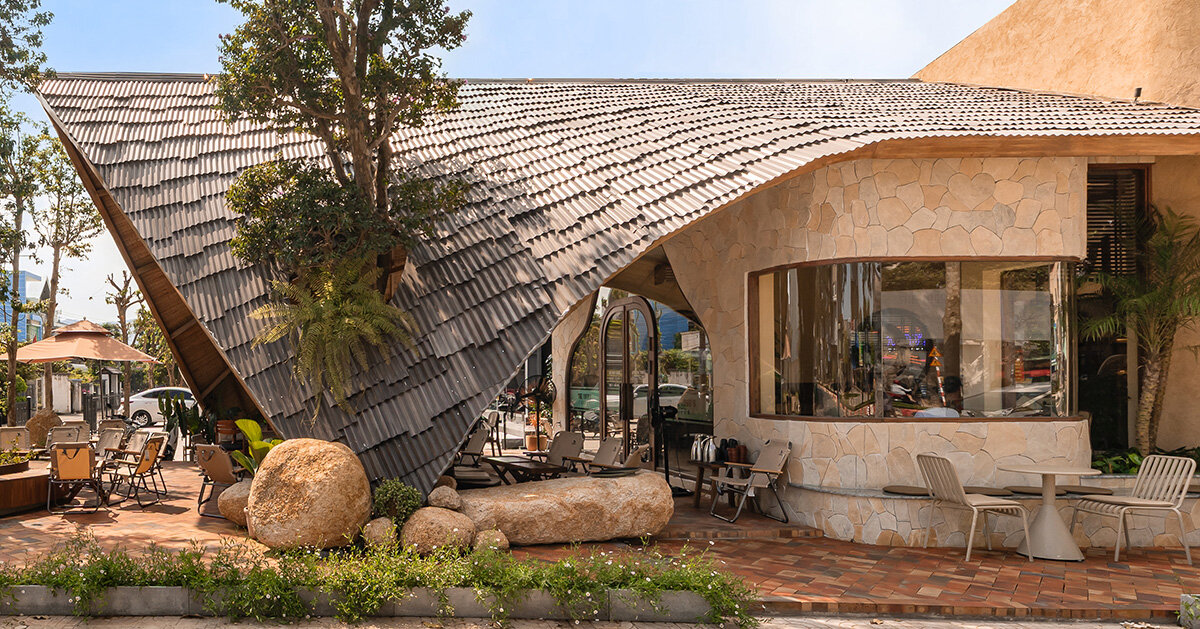
On a prominent corner lot along one of the busiest streets of Bà Rịa Ward, Ho Chi Minh City, KQI Architect completes The 1999’s Coffee, a 210-square-meter café led by architect Kiến Quân. The project is conceived as an architectural gesture that mediates between the speed of the city and the slower rhythms of everyday pause.
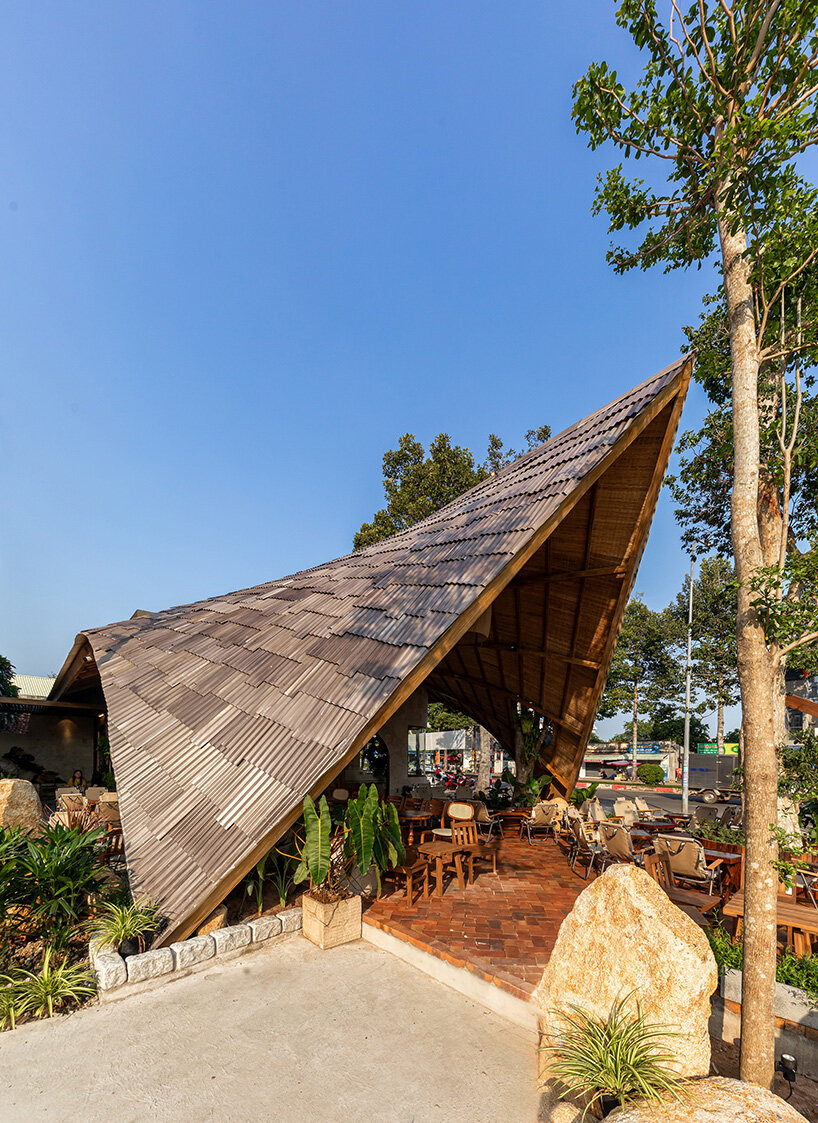
Taking advantage of its corner condition, the design opens toward multiple directions, allowing the café to receive natural light throughout the day. A long, westward-extending sloped roof acts as a continuous sun-shading device, shaping the silhouette of the building while protecting interior spaces from harsh afternoon exposure. Beneath this roof, interlocking asymmetrical volumes establish a dynamic composition, avoiding a single frontal orientation and instead encouraging movement around and through the structure. The roofline is clad in small metal sheets of varied colors, shapes, and sizes, layered like fish scales to create a textured surface that shifts subtly with changing light conditions.
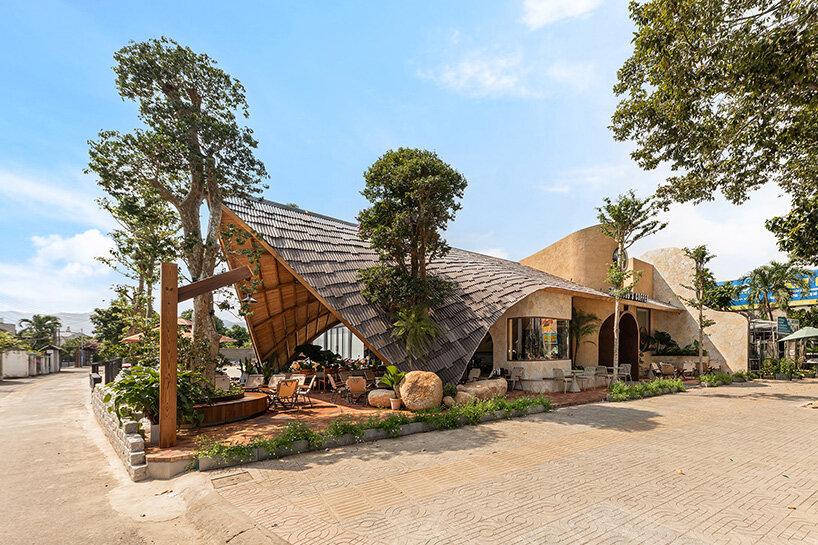
all images by Minq Bui
1999’s Coffee explores material warmth through stone and brick
The Vietnamese team at KQI Architect combines stone, baked brick, woven reed panels, natural wood, and rammed-earth textures, choosing finishes that preserve their raw and tactile qualities and introduce a sense of familiarity and craft. The palette emphasizes sensory experience, roughness, warmth, and weight, reinforcing the café’s role as a place of physical and perceptual slowing down.
This material language continues inside 1999’s Coffee with a restrained palette of neutral tones, soft yellows, and natural wood finishes. Large windows draw daylight deep into the compact interior, extending the space outward visually while maintaining a sense of enclosure. The interiors avoid strong contrasts or decorative gestures, instead relying on light, proportion, and texture to shape atmosphere.
Through its open geometry, tactile materials, and controlled light, the project proposes architecture as a way to gently recalibrate it, offering visitors a place to slow down, breathe, and momentarily step outside the rhythms of the street.
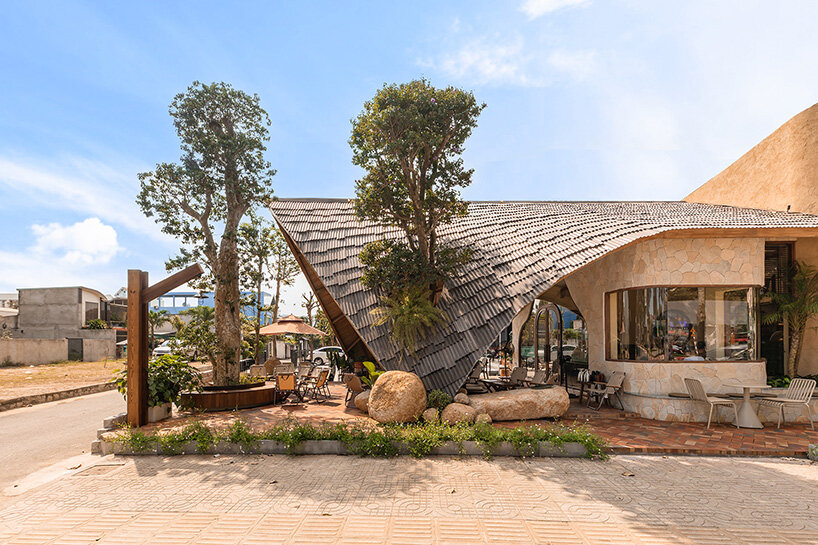
the café’s rippling metal roofline folds toward the street
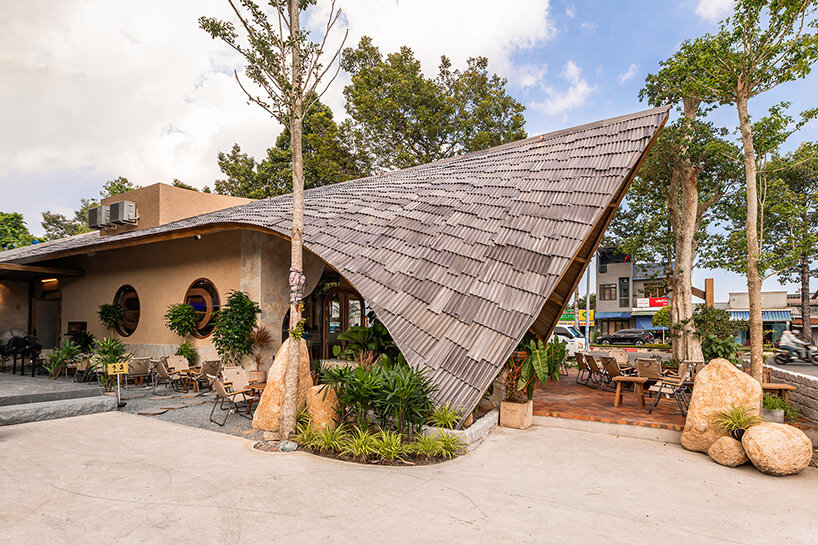
creating a shaded outdoor seating area at the corner plot
stone-clad walls and curved openings soften the building’s edges