
If you didn’t understand what the term “AI slop” was meant to indicate, Jeanswest just did you a big favour. Its recent ad campaign, and I use that term loosely, has become the industry reference point for what happens when marketers run headlong into badly done AI advertising.
The struggling fashion retailer—fresh from its second collapse into administration and conversion to online-only operations—recently posted two 20-second spots on Instagram. They feature two blonde women strolling on a beach and hanging in a cafe, both in identical outfits.
The women were AI-generated. Obviously. Painfully. Their movements were blurry and unnatural. Weirdly, they appeared to be the same person but a few years and sizes apart. Their faces had that cartoonlike quality that screams “I am not really here”—occasionally dissolving for a half-second into something semi-demonic before snapping back to unreal catalogue model.
The best bit? The background music featuring a singer crooning: “A warm, cozy Australian cafe atmosphere with relaxed indie, folk vibes.” The fucking prompt, in other words. Someone generated an AI song and left the instruction text in the actual lyrics.
ADVERTISEMENT
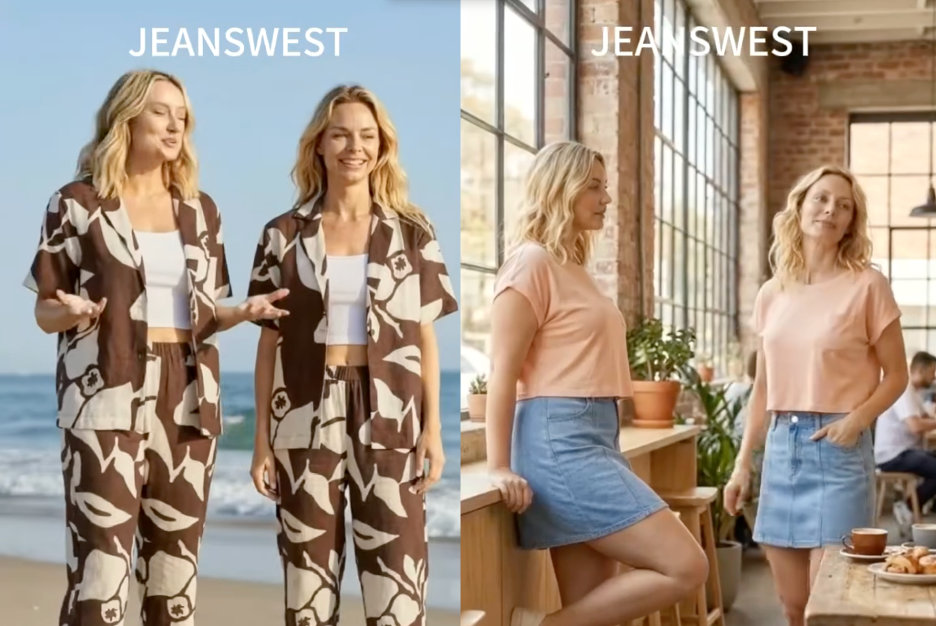
Occasionally demonic: The Jeanswest “advertising”
The critical response was merciless. Consumers jumped onto Instagram to call the ads “insane,” “embarrassing,” and a “marketing fail.”
Professor Nitika Garg, a consumer expert, told Yahoo Lifestyle that this kind of AI approach carried serious risks.
“People can be tempted by that easy fix without being mindful of the downsides,” she said.
One consumer named Levina was more direct: “This has 100 per cent put me off shopping at Jeanswest in the future. Australian customers deserve better.”
But is that really true? We are at a crossroads on brand damage. Many marketers were told it took years to build a brand and only a few careless moments to destroy it. But in the Trumpian world of the Kardashians, can we still make that claim? Or is all publicity actually good publicity because—to use the hoary old quote—“at least they are talking about us”?
I’ve developed a simple model to determine whether bad publicity will actually hurt a brand, or potentially do it some good. It has three dimensions: Fame, Blame, and Same.
Fame? If a brand is relatively unknown, even bad publicity is good news because it generates awareness among the 99.9% of the market who didn’t know it existed. An east London bakery attracted indignation and graffiti from locals upset by the gentrification of their once-gritty neighbourhood last year. Sales rocketed despite the negative headlines because suddenly Londoners learned about a new sourdough option.
Blame? Did the brand shoot itself in the foot, or was it caught up in an external crisis? Gerald Ratner calling his own products “total crap” was self-inflicted damage—he destroyed his company with his own words. Contrast that with Tylenol during recent Presidential criticism. The brand wasn’t to blame and did nothing to incur Trump’s wrath, so the crisis largely passed.
Same? Does the bad publicity undermine what the brand stands for? Is it antithetical to the brand’s core positioning? Elon Musk’s increasingly erratic political behaviour isn’t just embarrassing—it’s indelibly antithetical to what Tesla once stood for. Not that long ago the brand was built on environmental progressivism. Its core customers were centre-left, ecologically minded liberals. Musk’s sudden MAGA alliance was a direct betrayal of that positioning. Sales dropped and the “I bought this before Elon went crazy” bumper stickers proliferated.
So where does Jeanswest fit?
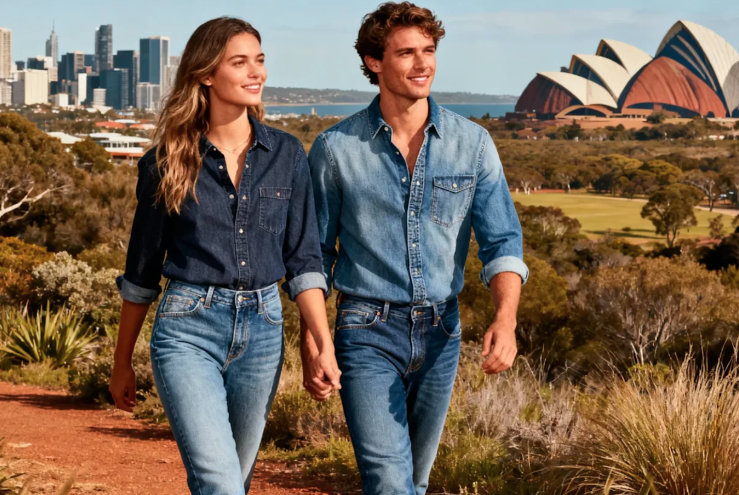
Jeanswest has now taken down this mad AI melange of outback and Sydney (Jeanswest)
Fame: Most Australians know the brand. This isn’t an obscure company gaining awareness—it’s an established brand getting mocked. It has more to lose.
Blame: Entirely self-inflicted. Nobody forced them to post AI-generated horseshit. As several consumers noted, why not just use real models? They loaded a synthetic gun, aimed it at their actual foot, and pulled the trigger.
Same: What does Jeanswest stand for? Traditionally it was authentic Australian fashion. Relatable style. The brand was built on accessibility and genuineness. And what did they deliver? Fake people. Fake settings. Fake music with accidental prompt text.
So we probably have a rare case of bad publicity being bad for the brand. It certainly won’t help the retailer re-establish itself with consumers. And when your own marketing does your brand damage, you really have hit a new low.
That said, Jeanswest is such a busted flush these days the damage is likely to be minimal. The commercial footprint of the once-significant retailer is so small that the subsequent impact of this terrifying and hilarious advertising will be tiny too.
AI didn’t destroy Jeanswest’s brand. The decision to use bad AI reveals a brand already destroyed. The matching-outfits-on-a-fake-beach videos aren’t the cause of decline. They’re the symptom.
Mark Ritson is a former marketing professor, award-winning columnist, and founder of the Mini MBA in Marketing. The next program kicks off in April. He frequently finds himself singing “A pointy unpleasant article about marketing mistakes written by an annoying pom in a blue suit, la la la.”